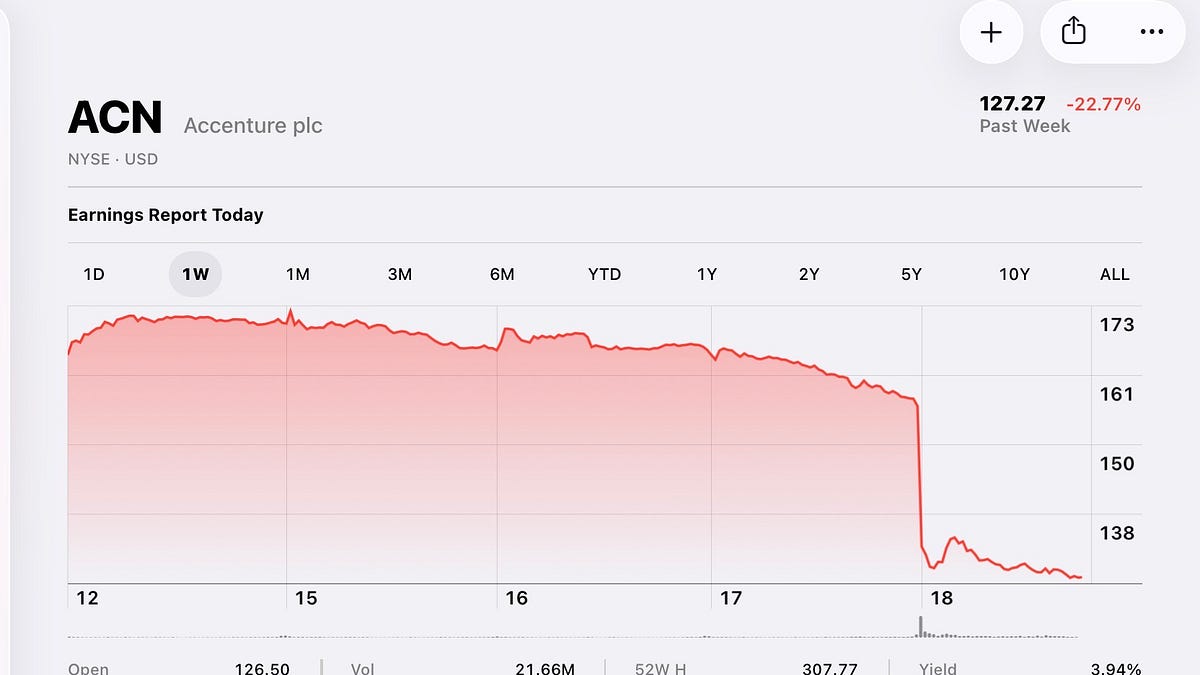
Accenture finds itself in one of the more ironic positions in corporate history: selling the very technology that investors fear will undermine its business model. The world’s largest IT consultancy has seen its shares decline more than 30% as the market prices in a future where AI automates the kind of junior-level work that has been the bread and butter of consulting firms for decades.
The numbers tell a split-screen story. Accenture posted Q2 fiscal 2026 revenue of approximately $18 billion, an 8% year-over-year increase. Advanced AI bookings hit $2.2 billion in Q1 of the same fiscal year. And yet the company lowered its full-year growth forecast to a range of 3% to 5%, a figure that landed below analyst expectations and sent an already nervous market into a fresh round of selling.
The AI paradox eating consulting alive
Accenture has trained hundreds of thousands of employees on AI technologies and established partnerships with industry leaders like OpenAI and Anthropic. It is positioning itself not as a victim of the AI wave but as a surfboard manufacturer.
The company has also made an interesting accounting decision: it stopped reporting AI revenue and bookings as a separate line item, stating that AI is now integrated across the enterprise. Eliminating the one metric that was showing explosive growth removes a data point that investors were using to track the company’s transformation progress.