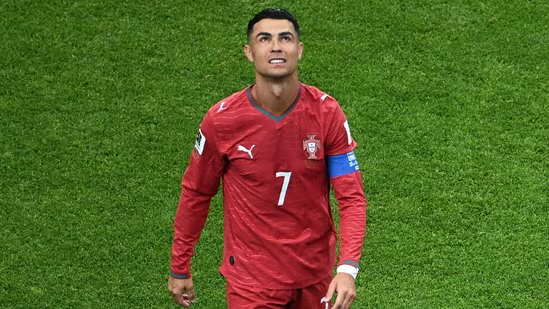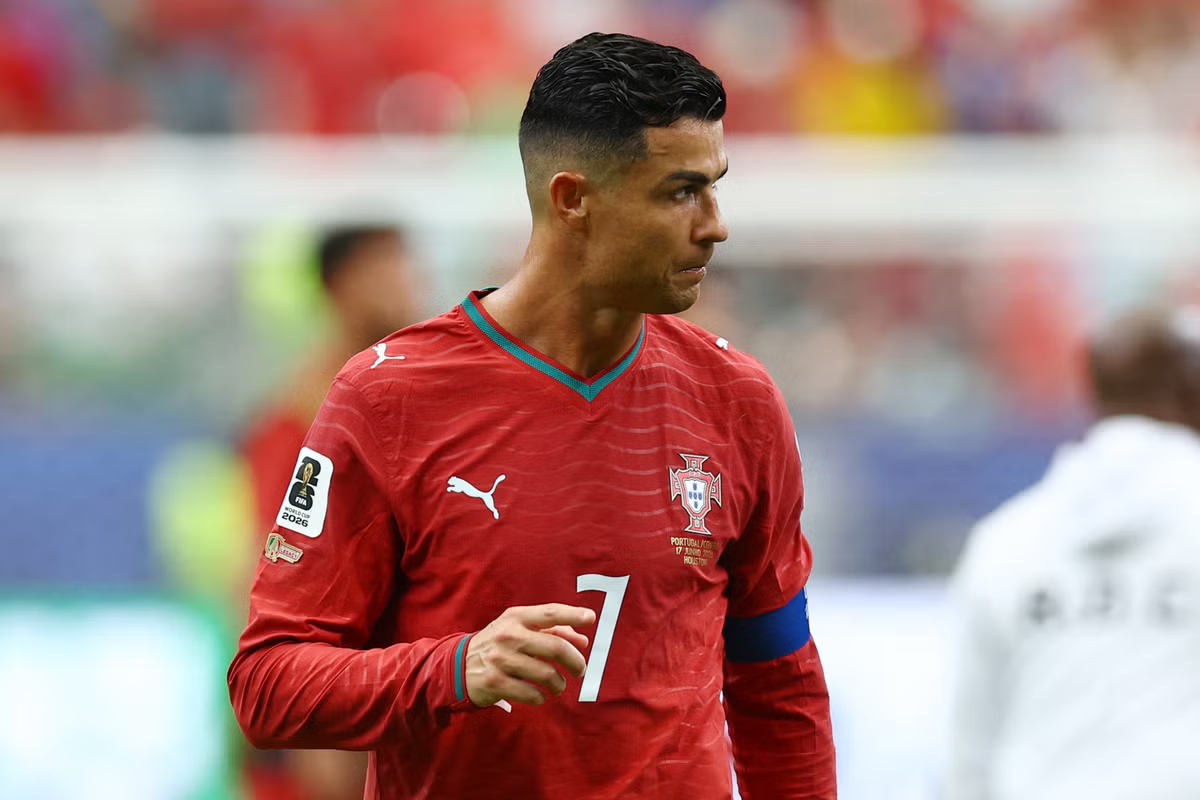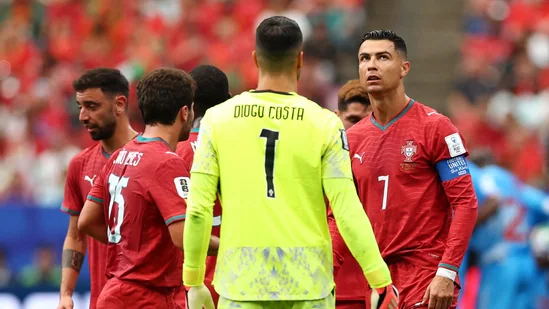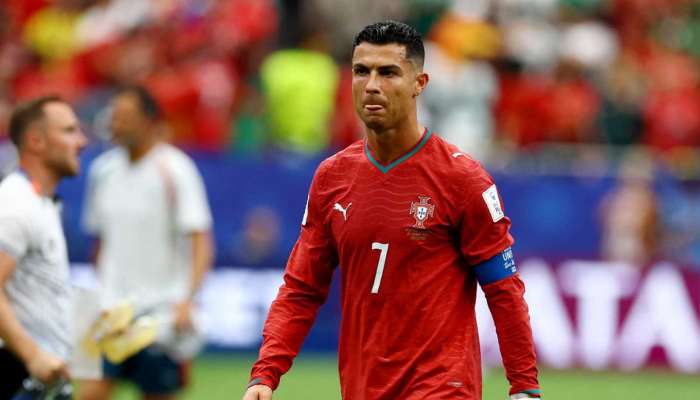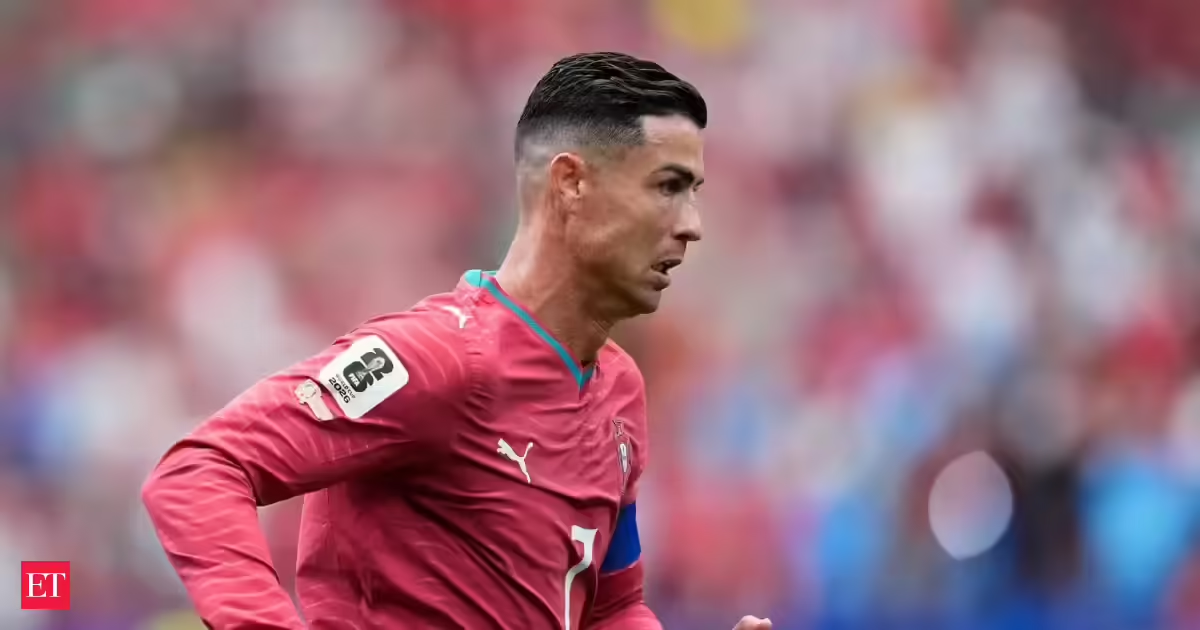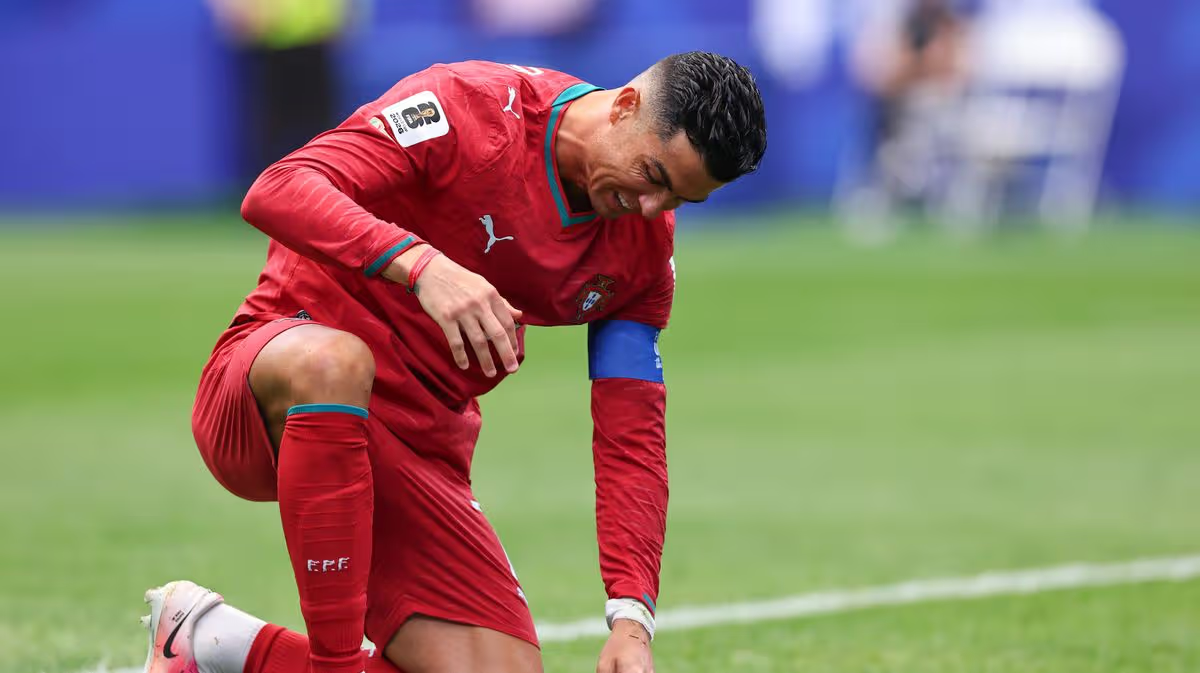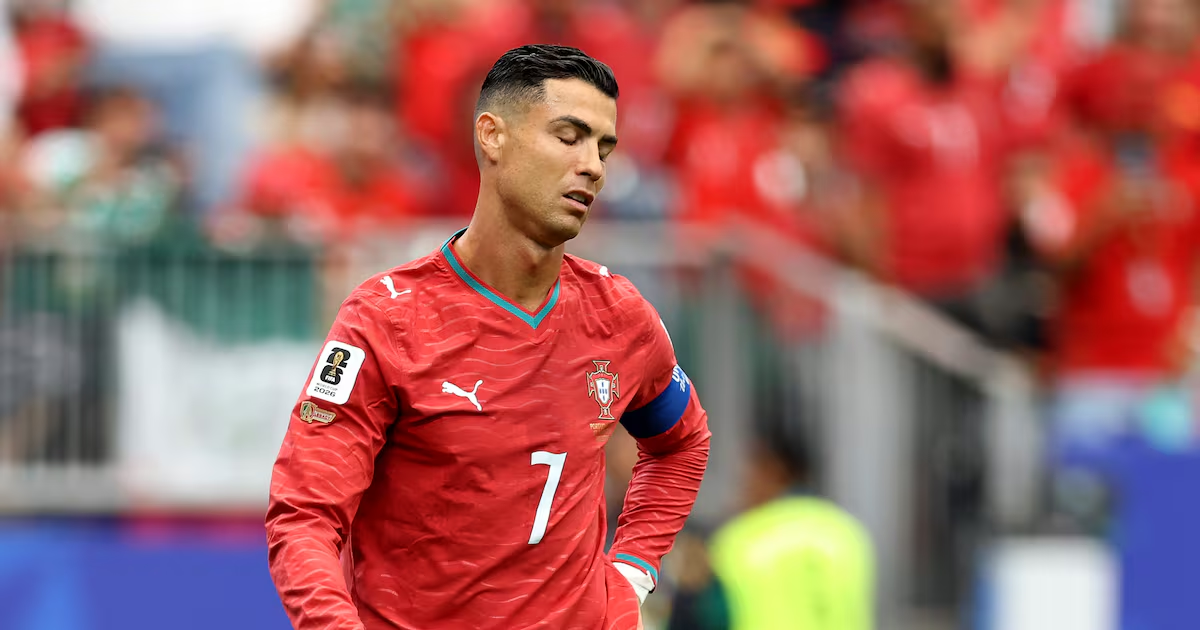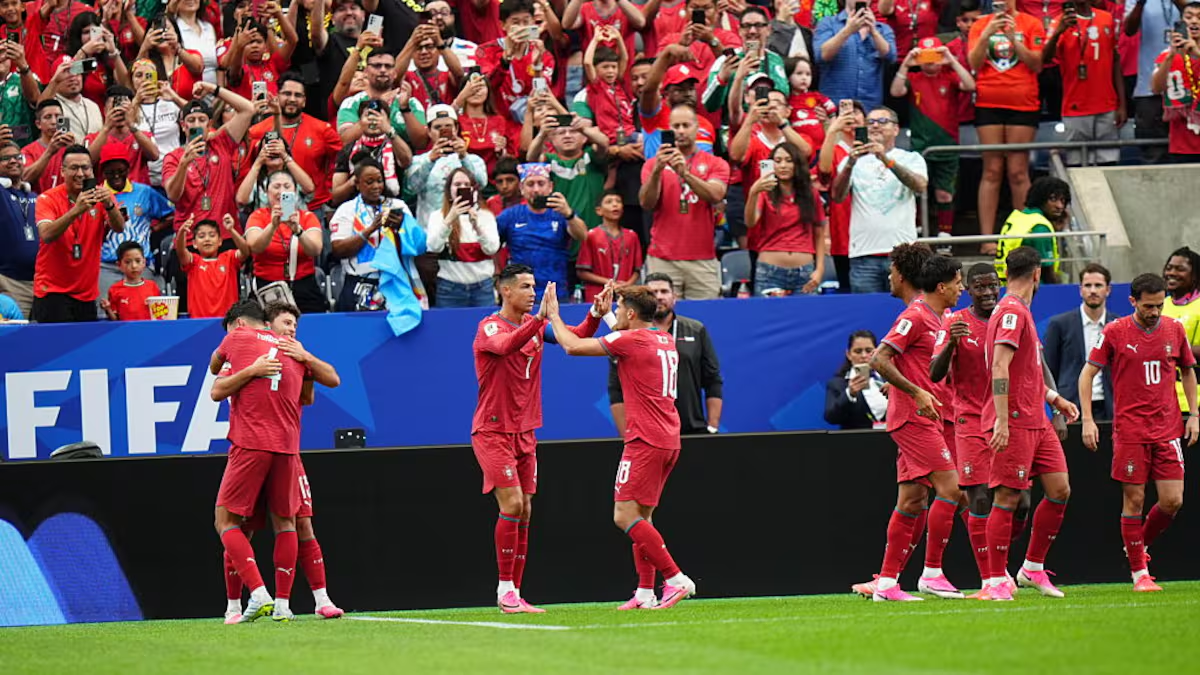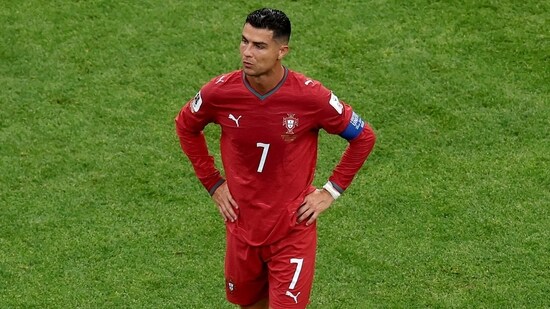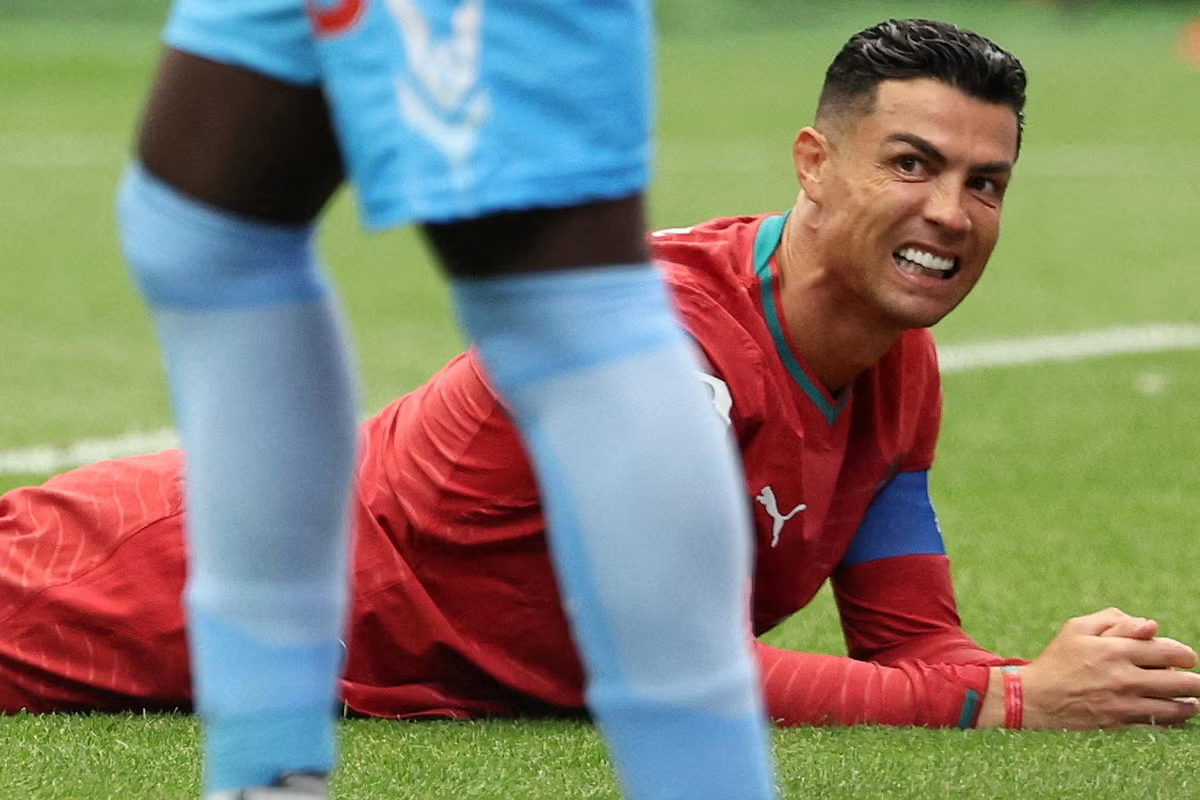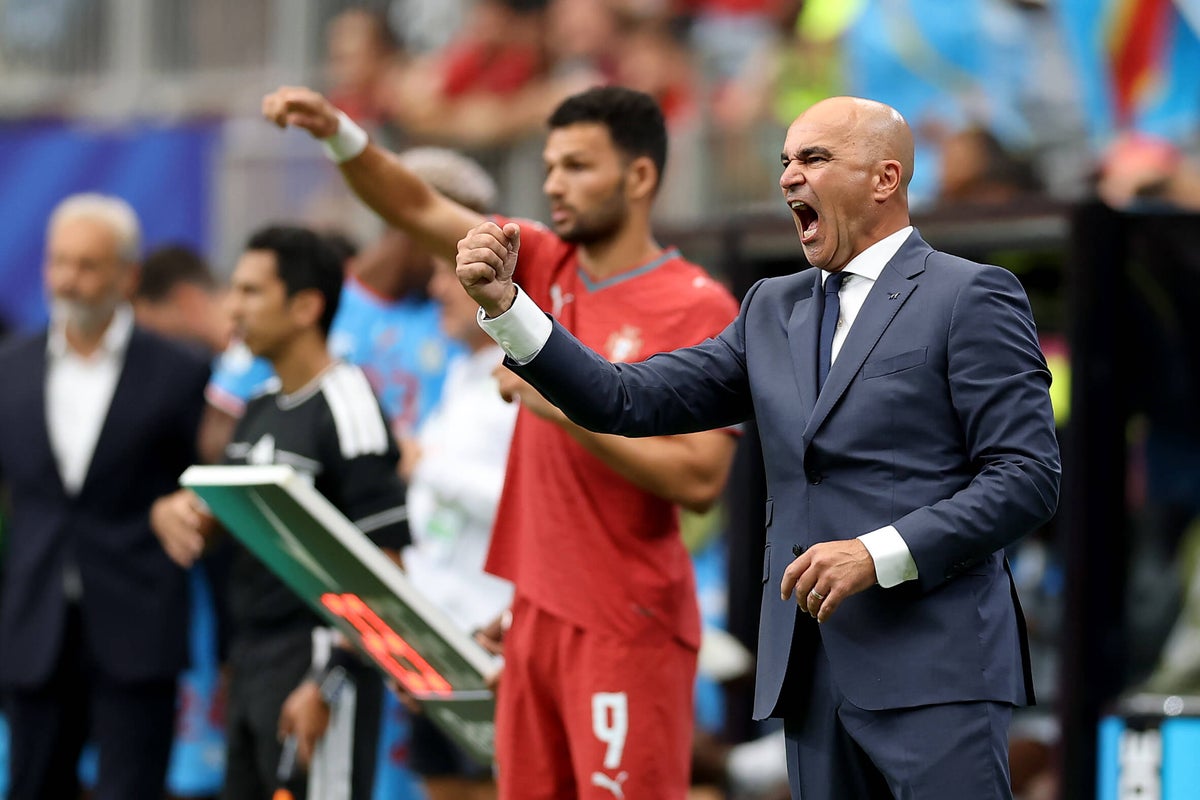
Cristiano Ronaldo struggled against DR Congo.The 41-year-old, playing in his 23rd World Cup match, 20 years after his first one, was restricted to three shots (all off target) and 25 touches (the third-lowest among all 22 starters) in Portugal’s 1-1 draw in Houston on Wednesday.And his ineffectiveness as a poacher has been amplified by the performances of other big names in the competition’s opening week.Harry Kane and Lionel Messi wandered all over the pitch to get on the ball and propel their England and Argentina to success, while also scoring twice and three times respectively. Kylian Mbappe of France and Norway’s Erling Haaland also got two goals each with the kind of mobility and killer instinct that Ronaldo has simply not shown in recent major tournaments.All the others have thrived in systems that move and adjust to their superstar’s attributes, maximising his output. Portugal coach Roberto Martinez managed that during qualifying, deploying an attack that featured wide combinations focused on finding one of the sport’s greatest ever goalscorers in the box.The second half against DR Congo hinted, though, that Martinez needs other tricks up his sleeve if Portugal are to go a long way in this World Cup.Portugal’s sixth-minute opener — scored by Joao Neves — came from a move their fans will be familiar with.In the screengrab below, they overload the left side while Ronaldo and Bernardo Silva occupy the centre-backs, enabling a switch to Joao Cancelo.The pass out to him allows the Portuguese to load the box. Cancelo’s cross flashes across the area, but when possession is worked back to Vitinha, they have five players still in the box, including two open options on the left, with DR Congo continuing to defend deep.Vitinha duly passes left, Nuno Mendes’ presence frees up Pedro Neto to cross, and Neves (highlighted above) is in the perfect position to head his delivery in.Throughout the first half, Portugal matched DR Congo’s back five with five players of their own, as Cancelo or Mendes – sometimes both, to give them a spare man — pushed forward from full-back. While DR Congo’s front five covered ground to press, their defence stayed pinned back, as seen below, giving Portugal easy options to circulate possession.Sebastien Desabre’s side were reluctant to follow players when they dropped into pockets to pick up the ball. That proved to be Portugal’s best avenue towards overloading the sides and getting crosses into the box, like the one below. They often targeted Ronaldo, who began moves in offside positions and let play catch up to him as the ball went wide.However, Portugal’s commitment to getting players forward meant they ran the risk of being overwhelmed on the counter.DR Congo, through Newcastle forward Yoane Wissa and an energetic midfield, had scattered moments and shots on the break throughout that first half. One of those moves, in stoppage time, was crucial.In the sequence below, Bernardo miscontrols a cross-field pass, and when left wing-back Arthur Masuaku wins possession, Cancelo has already committed forward with four others in red. With one pass to striker Cedric Bakambu, Masuaku takes out three more Portugal players.Portugal’s panicked recovery defending sees them drop too deep, leaving Samuel Moutoussamy open to shoot from the edge of the box.His effort was deflected for a corner, which was also cleared behind — before Wissa provided the game’s turning point by scoring from the second delivery.DR Congo then grew in confidence during the second half, even as Portugal continued to dominate possession.Compared to the example from the first half, notice in the image below how much higher DR Congo’s defensive line looks early in the second half. Centre-back Steve Kapuadi even pushes out from the five-man rearguard to follow Bruno Fernandes. As a result, Ronaldo has to jog back to get onside rather than just take a few steps.This strategy meant Portugal could not access their midfielders easily anymore. Vitinha, Neves and Fernandes had 218 combined touches in the first half (39 per cent of their team’s 561). That dropped by half to 109 (29 per cent of the team’s 378) after the break.After forcing Portugal wide, often to the left side, DR Congo went for defensive overloads. Moutoussamy and either Wissa or Bakambu joined right wing-back Aaron Wan-Bissaka in closing down passes to win the ball. Wan-Bissaka led his team in tackles (two), clearances (seven) and recoveries (five), while also making one of their three interceptions.Portugal needed to prevent DR Congo’s fast breaks but also get their own creative players on the ball. Attempts to do so led to Martinez’s side often dropping back and playing quick passes to wingers making runs in behind. While this strategy created a few openings, they could not get players up the pitch at pace to attack passes into the box.In the example below, Portugal have just two players in the penalty area against DR Congo’s six outfielders — a significant contrast to the lead-up to Neves’ early goal.Make no mistake, though, Ronaldo does deserve criticism for his second-half performance.Against a more aggressive defence, he was even more peripheral than in the first half because his back-to-goal game, at this point in his career, is non-existent. He had just nine touches in the second half, but two of those were shots from Francisco Conceicao cutbacks that he skewed wide.Ronaldo was responsible for 0.46 of Portugal’s 0.57 second-half expected goals figure (a measure of the quality of chance creation). Getting on the end of those chances is a small part of his role in this Portugal system — finishing them off successfully is the bulk of it.Martinez, though, failed to adapt once DR Congo became more aggressive.How FIFA was CorruptedTifo FootballHe stuck with the ploy of attacking from wide, despite Portugal’s failure to consistently create quality chances via that route. In addition to taking his midfielders out of the areas where they could be most creative, the safety-first approach did not stop DR Congo causing them issues on the break, either.Portugal were slow, predictable and shaky. Since the 2018 World Cup, 29 teams have attempted 650 or more passes in a game at the tournament. None attempted fewer shots than Portugal’s seven yesterday — DR Congo, with 118 pass attempts, had eight shots – and only one (Croatia against Brazil in a 2022 quarter-final) created less than their 0.65 xG.Ronaldo’s performance in Portugal’s opening Group K game has perhaps understandably grabbed all the headlines, but Martinez being tactically outfoxed by Desabre is an equally — if not more — significant concern for them.
Cristiano Ronaldo wasn’t Portugal’s only problem. Roberto Martinez got his tactics wrong, too
Wednesday's 1-1 draw with DR Congo at the World Cup saw the Portuguese struggle to create chances, and their coach failed to adapt
1,084 words~5 min read