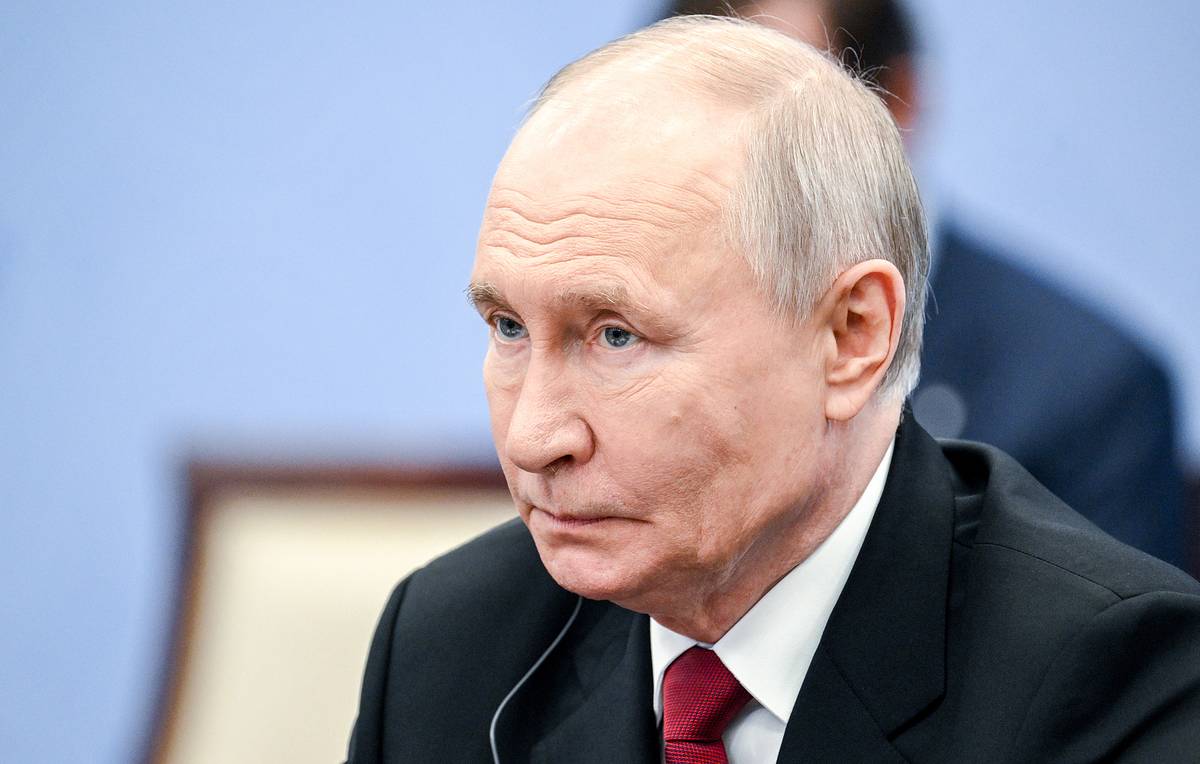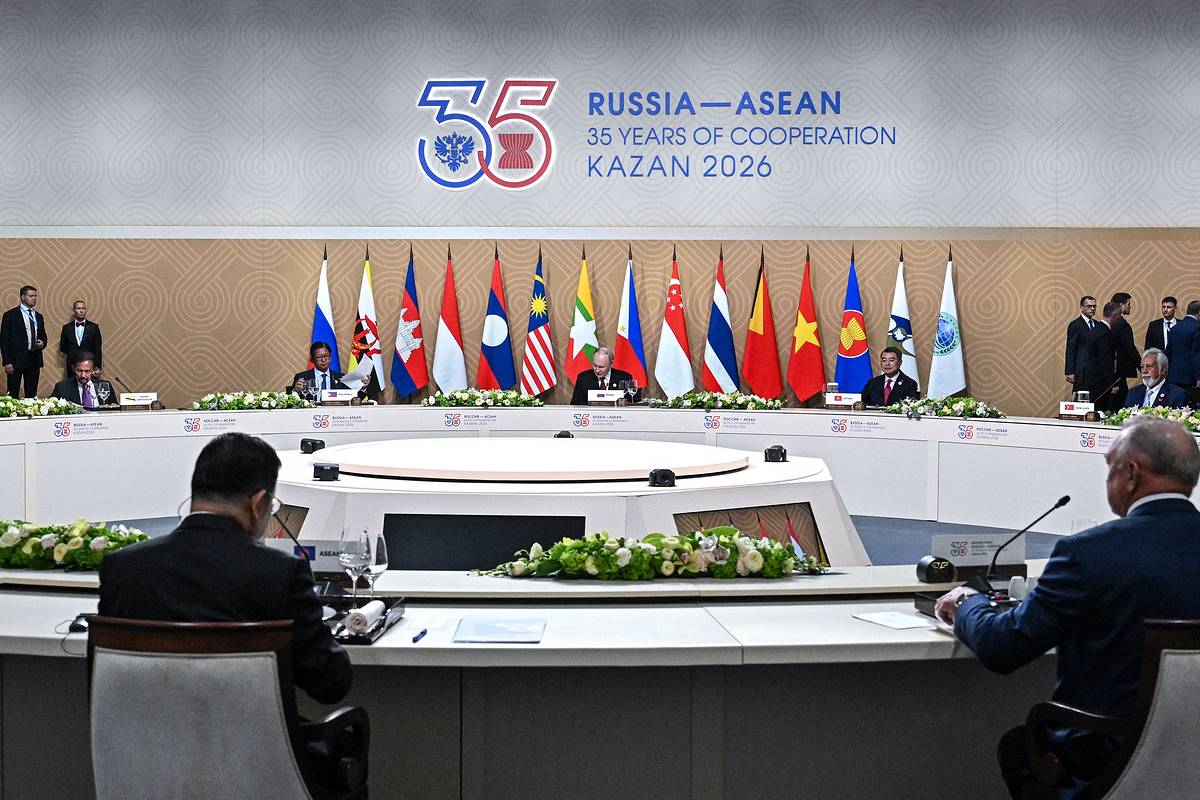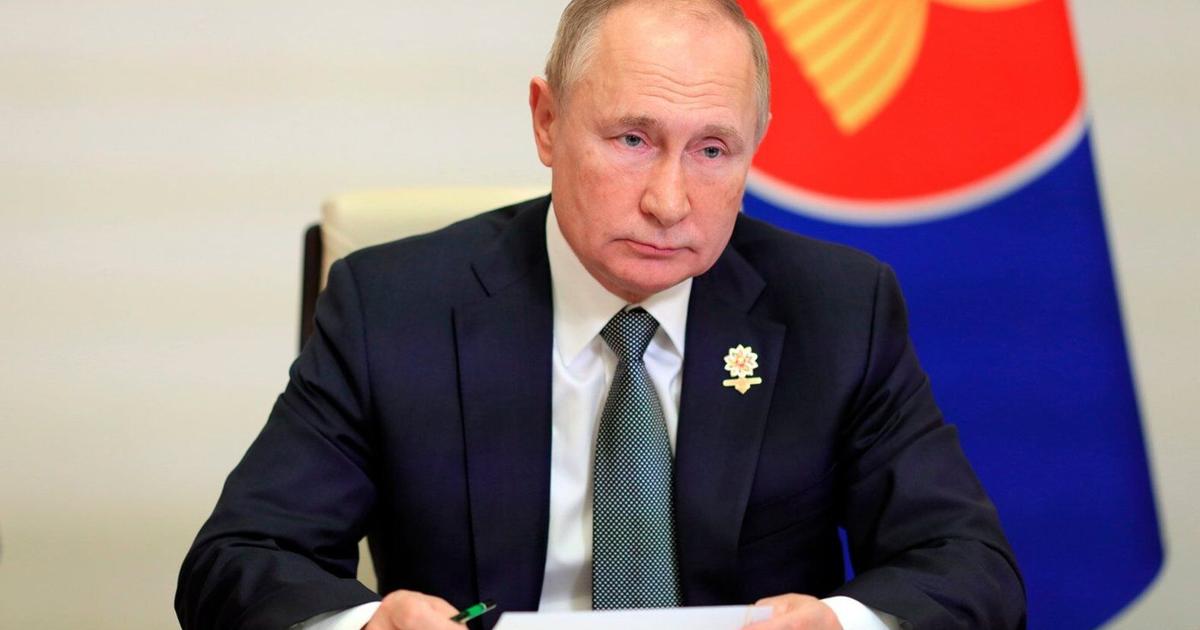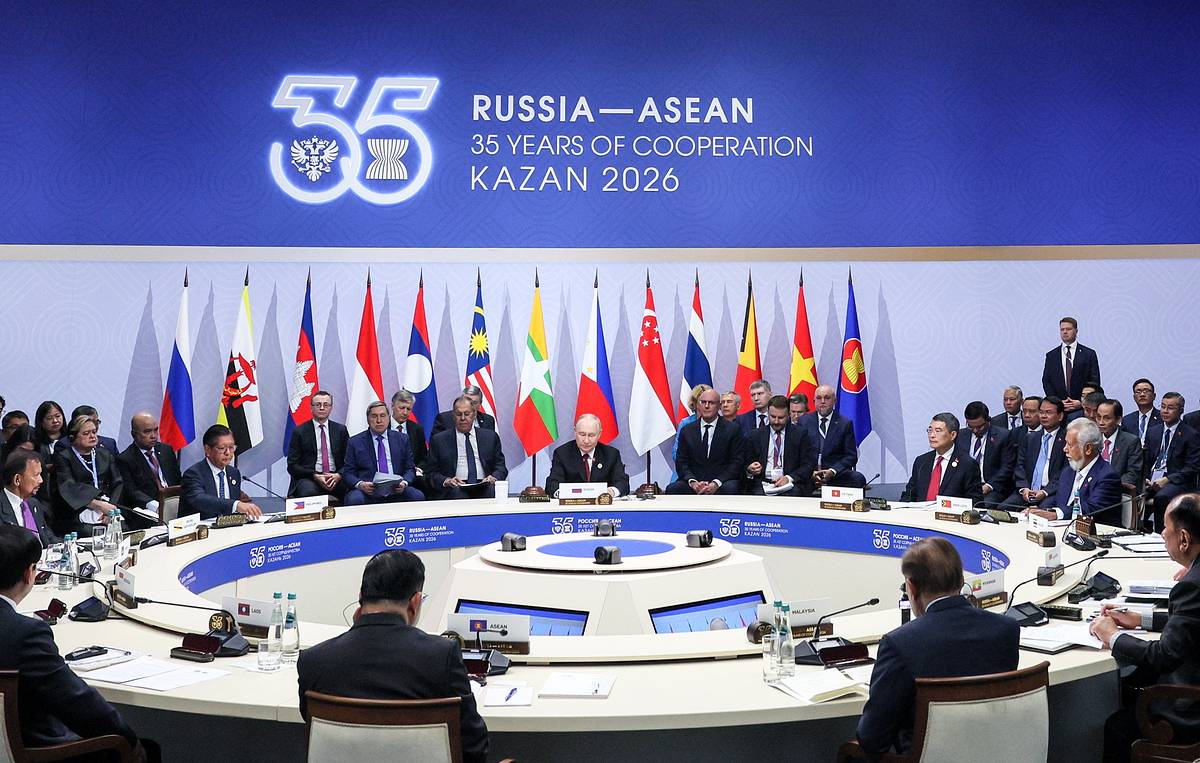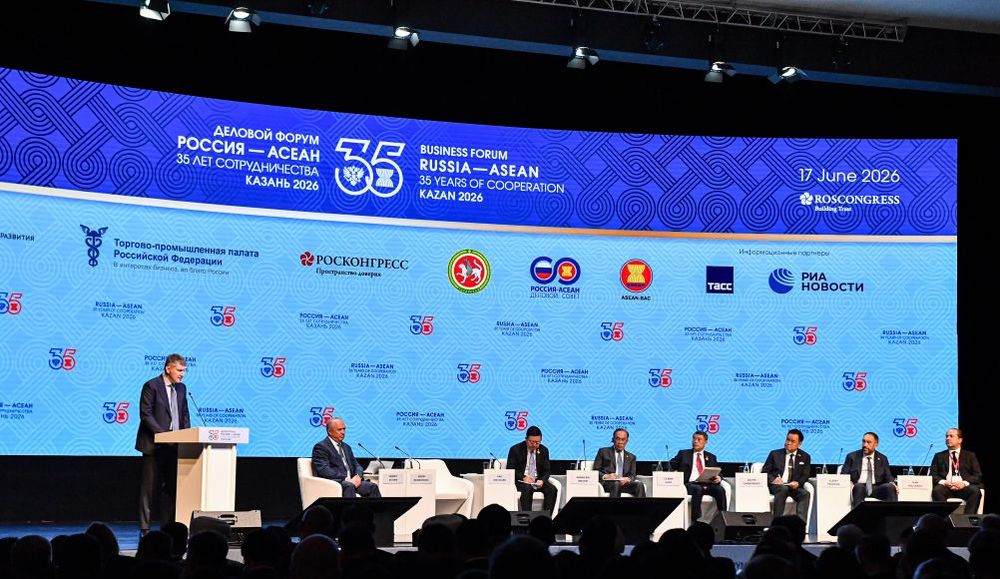
Russia's Minister of Economic Development Maxim Reshetnikov (at podium) reads out Russian President Vladimir Putin's greeting message during the Russia-ASEAN Business Forum in Kazan, Russia, June 17, 2026. The Russia-ASEAN Business Forum opened in Kazan on Wednesday on the sidelines of the Russia-ASEAN Summit. This year marks the 35th anniversary of Russia-ASEAN relations.
Those who have spent years watching Russia's foreign policy pivot from the inside understand something that Western commentary consistently misreads: Moscow does not pursue relationships it cannot sustain. The warm optics of the Anwar-Putin bilateral in Kazan this week were real, but what matters far more than the handshake is the institutional scaffolding being quietly assembled behind it. Russia is not courting Southeast Asia out of isolation-driven desperation. It is executing a long-planned eastern reorientation that the pressures of the past four years have simply accelerated and Malaysia, under Anwar Ibrahim, has become its most strategically articulate partner in the region.
The summit's choice of Kazan is itself a signal worth reading carefully. This is not Moscow. This is the capital of Tatarstan, Russia's most significant Muslim-majority republic, an oil-producing heartland, and a city just named the Islamic World Cultural Capital for 2026 by the Organisation of Islamic Cooperation. Anwar explicitly congratulated Kazan on that recognition, calling it a reflection of the city's role as a centre of Islamic scholarship, culture and innovation. Holding the Russia-ASEAN summit here, in a city that bridges Russian state power and Islamic civilisational identity, is a deliberate message to every Muslim-majority nation in Southeast Asia: Russia is not a distant European power asking for your tolerance of its geopolitical situation. It is a civilisational partner with deep roots in the world you inhabit.