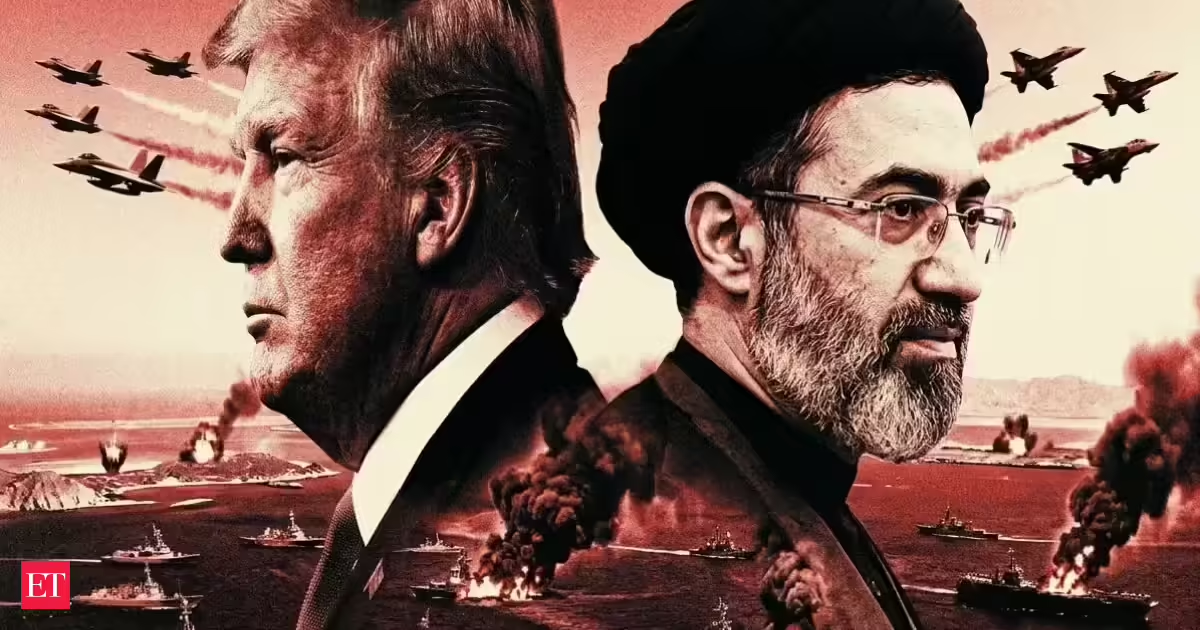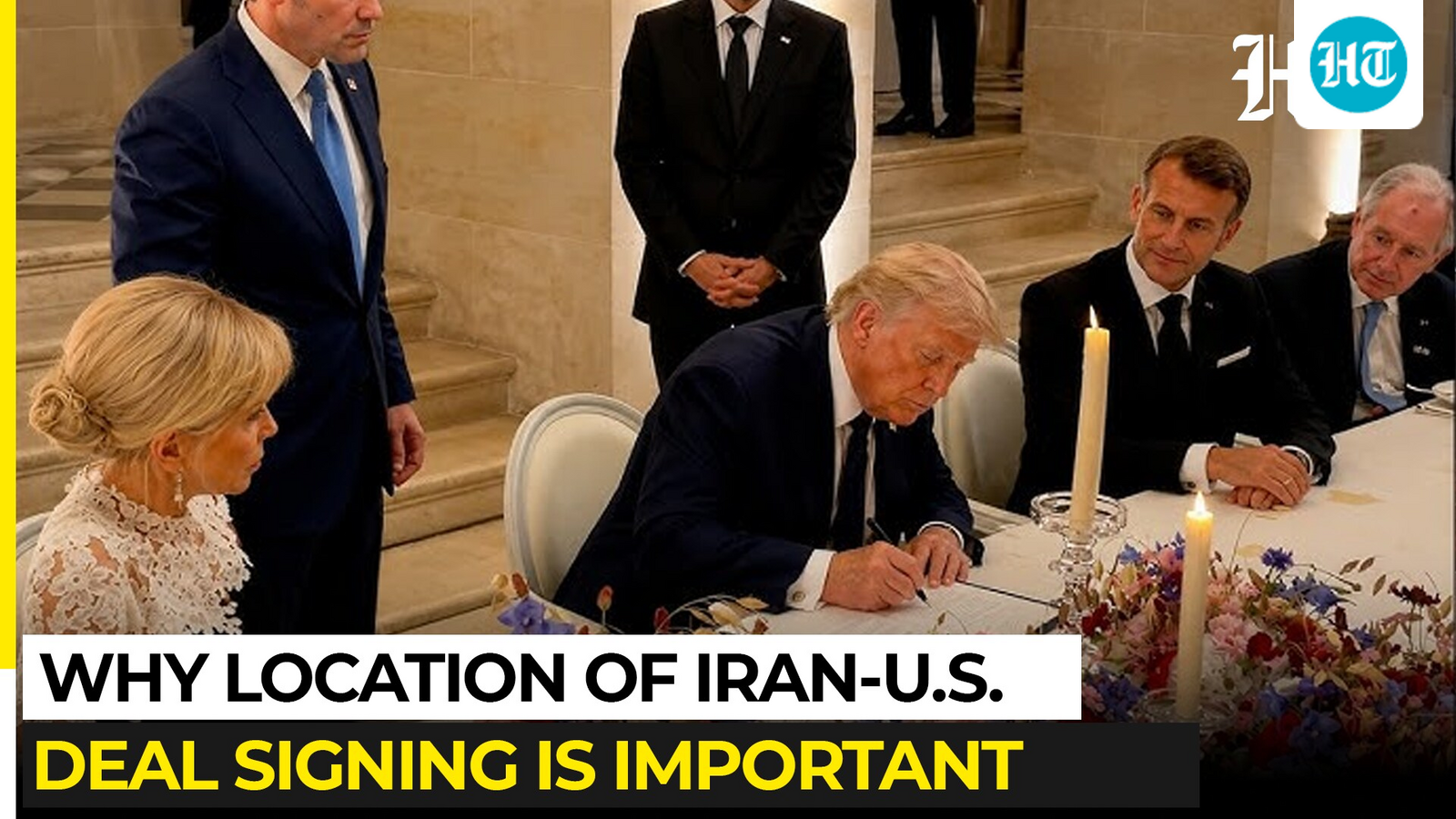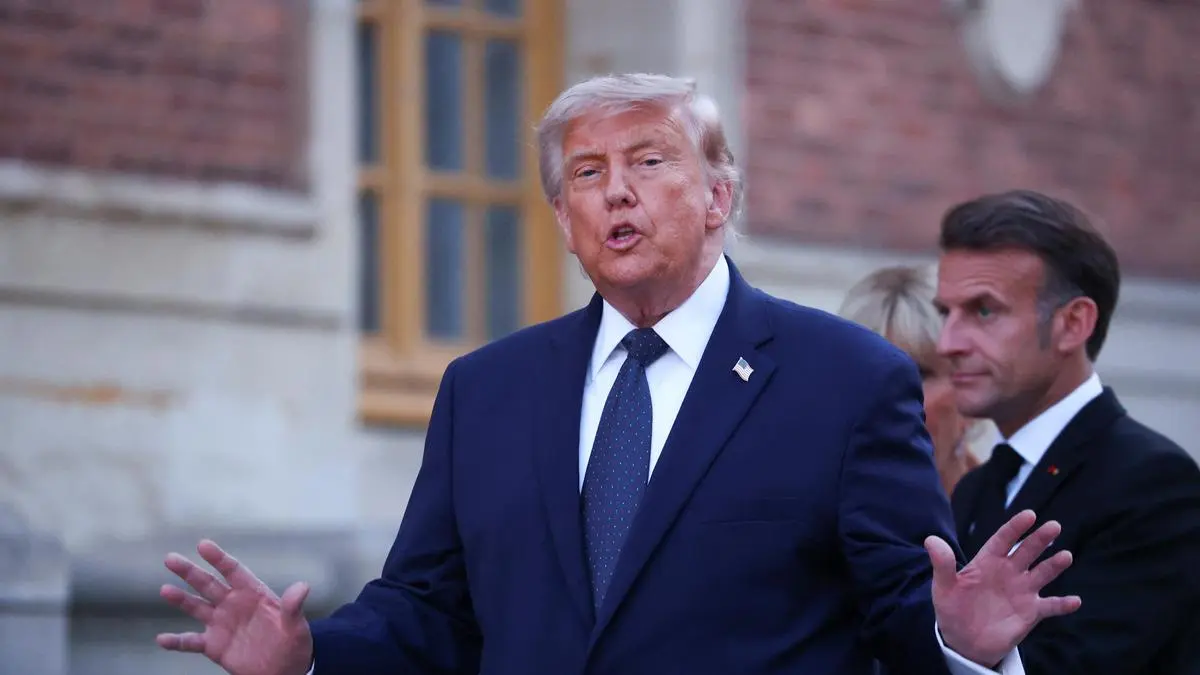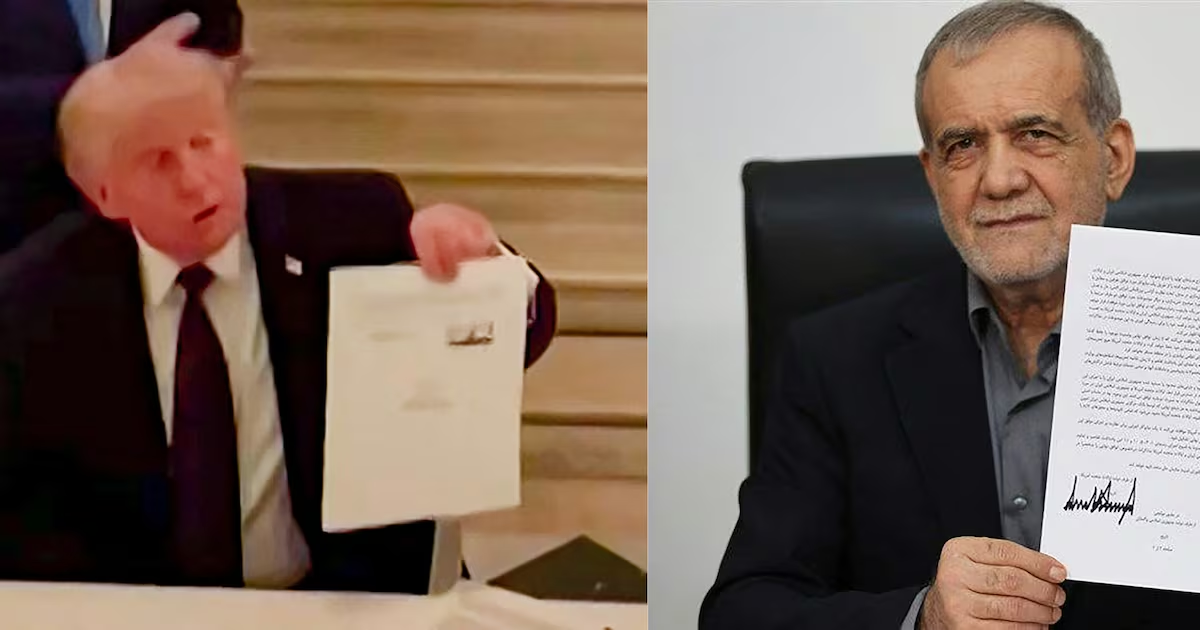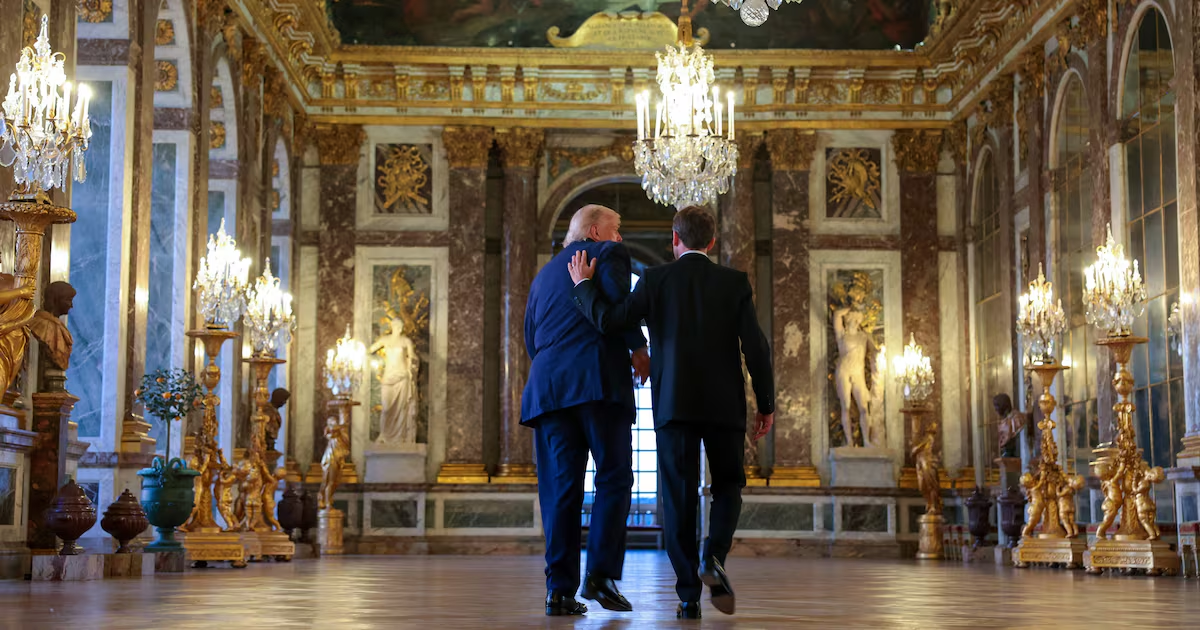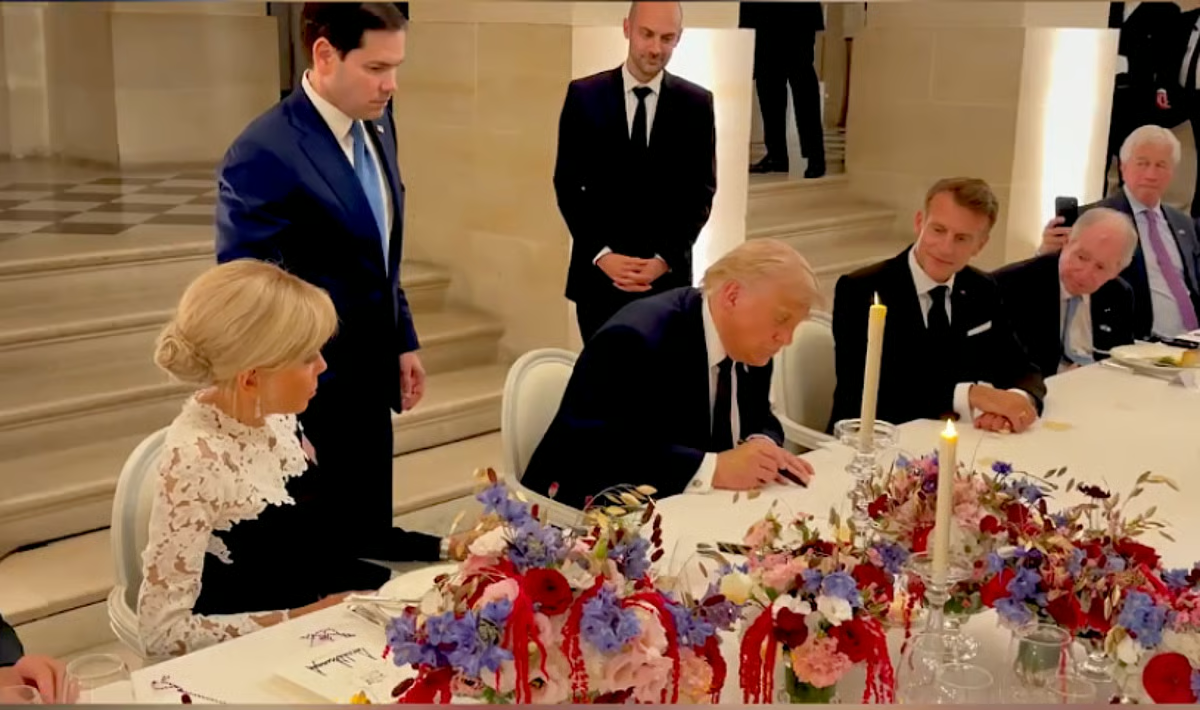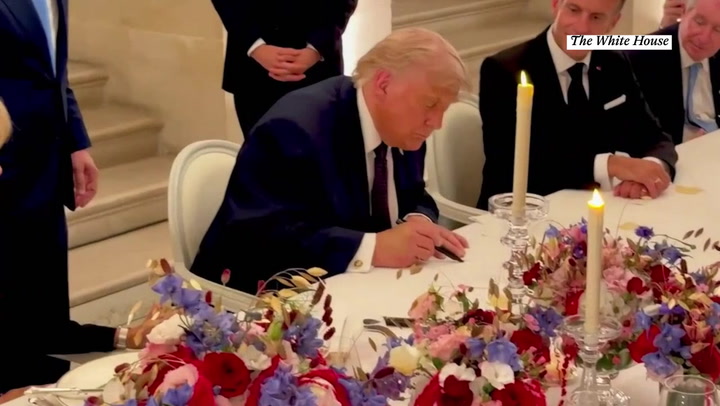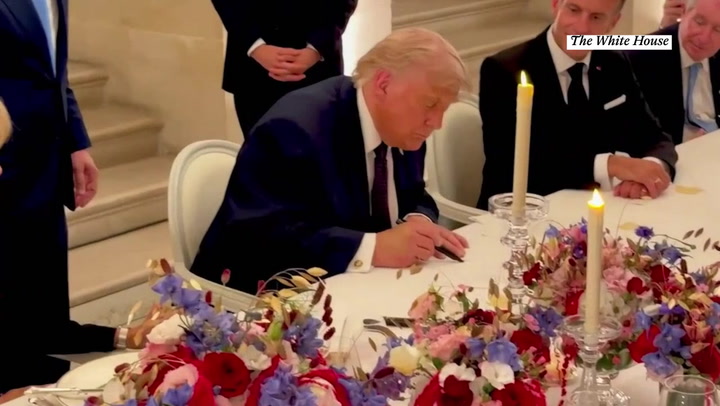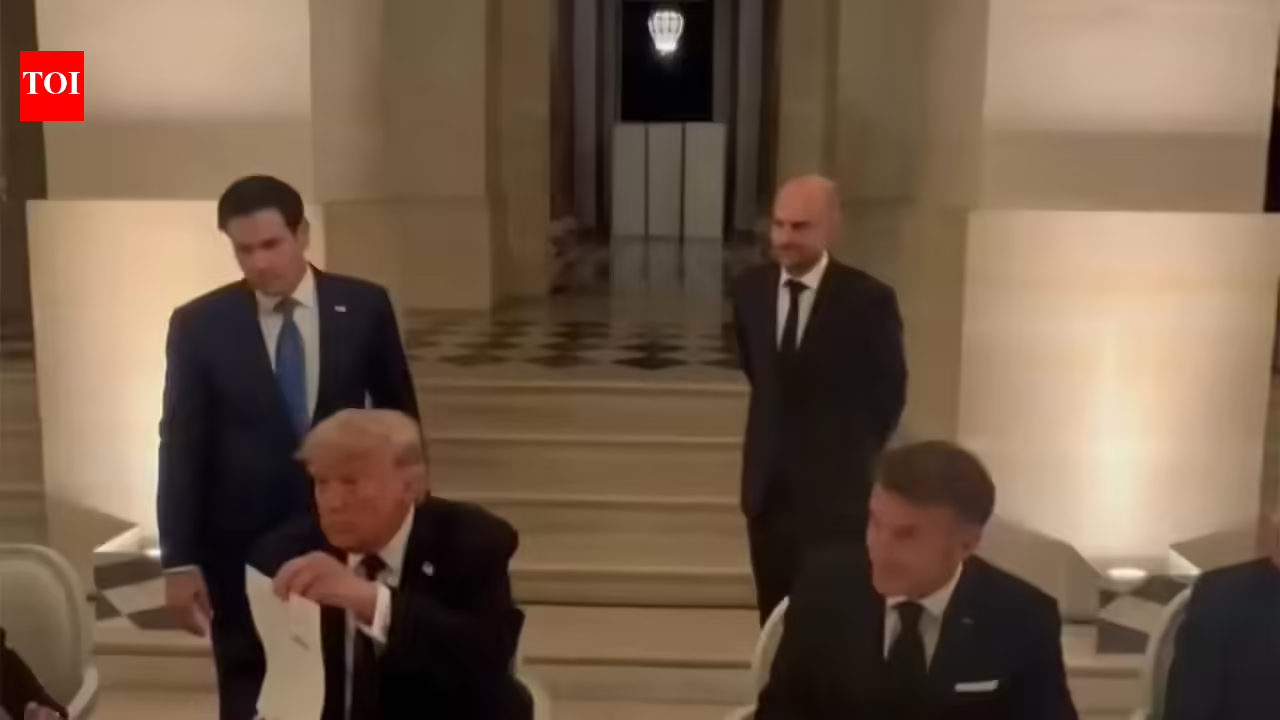
Photo credit: ANIUS President Donald Trump and Iranian President Masoud Pezeshkian have signed a 14-point Memorandum of Understanding (MoU) at France's Palace of Versailles, a venue closely associated with some of the most consequential treaties and diplomatic agreements in modern history.The agreement, signed digitally by both sides and later endorsed by Trump during a dinner hosted by French President Emmanuel Macron at Versailles, aims to end hostilities between Washington and Tehran and lay the groundwork for a broader peace settlement.The 14-point framework calls for an immediate cessation of military operations, including in Lebanon, and commits both countries to negotiating a final agreement within 60 days. The memorandum states that Iran has reaffirmed it will not develop or acquire nuclear weapons.The deal also includes provisions for the removal of the US naval blockade, safe passage for commercial vessels through the Strait of Hormuz, phased sanctions relief, the release of frozen Iranian assets, and a US-backed economic development programme for Iran valued at at least $300 billion.Why Versailles?The decision to sign the agreement at the Palace of Versailles carries considerable symbolic weight.Located about 20 kilometres southwest of Paris, Versailles began as a hunting lodge under King Louis XIII before being transformed by King Louis XIV into one of the world's most famous royal palaces. From 1682 until the French Revolution in 1789, it served as the political centre of France.Over the centuries, Versailles has become synonymous with diplomacy, peace negotiations and geopolitical change. Agreements signed at the palace have often marked turning points in international affairs, making it a natural venue for a deal intended to reshape relations between two long-time adversaries.Treaty of VersaillesTreaty of Versailles (1757)One of the earliest major agreements signed at Versailles was the Treaty of Versailles of 1757 between France and Austria during the Seven Years' War.The treaty formalised an alliance between the two powers against Prussia and its ally Great Britain. France agreed to provide military assistance to Austria, and both nations committed to coordinating military operations against Prussia.The agreement was part of the wider diplomatic realignment known as the Diplomatic Revolution, which reshaped European alliances before one of the eighteenth century's largest conflicts.Treaties of Versailles (1783)The Treaties of Versailles of 1783 were signed between Great Britain, France and Spain as part of the broader settlement that ended the American Revolutionary War.While Britain recognised the independence of the United States through the Treaty of Paris, the agreements signed at Versailles restored territories and privileges to France and Spain in return for their support of the American cause.The treaties helped redraw the balance of power among Europe's major colonial empires.Treaty of Versailles (1871)Following the Franco-Prussian War, a preliminary peace agreement was signed at Versailles in 1871 between France and Prussia before the final Treaty of Frankfurt was concluded later that year.France accepted a ceasefire, agreed to hold elections for a national assembly to negotiate peace and acknowledged Prussia's military gains. The war led to the loss of Alsace and parts of Lorraine to the newly unified German Empire and imposed a substantial financial indemnity on France.The conflict transformed the European balance of power and marked the emergence of Germany as a major continental power.Treaty of Versailles (1919)The most famous agreement associated with Versailles is the Treaty of Versailles signed on June 28, 1919, between Germany and the Allied Powers after the First World War.Signed exactly five years after the assassination of Archduke Franz Ferdinand, the treaty imposed severe conditions on Germany. It stripped the country of territory and overseas colonies, restricted its military capabilities and required it to pay heavy reparations.The treaty also included Article 231, known as the "War Guilt Clause", which assigned responsibility for the war to Germany and its allies. It established the League of Nations, the first major international organisation created to preserve global peace.Although intended to secure long-term stability, many historians argue that the treaty's punitive measures fuelled resentment within Germany, contributing to the rise of Adolf Hitler and ultimately the outbreak of the Second World War two decades later.A new chapter at VersaillesThe signing of the US-Iran Memorandum of Understanding adds another chapter to Versailles' long diplomatic history.Whether the agreement ultimately succeeds in transforming relations between Washington and Tehran remains uncertain. Yet by choosing Versailles as the venue, both sides have linked their accord to a centuries-old tradition of treaties and negotiations that sought to redefine relations between nations and shape the international order.
US-Iran Peace Deal :New deal at an old venue: From world wars to US-Iran peace, why Versailles matters | - The Times of India
International News: US President Donald Trump and Iranian President Masoud Pezeshkian have signed a 14-point Memorandum of Understanding (MoU) at France's Palace of Versa.
732 words~3 min read