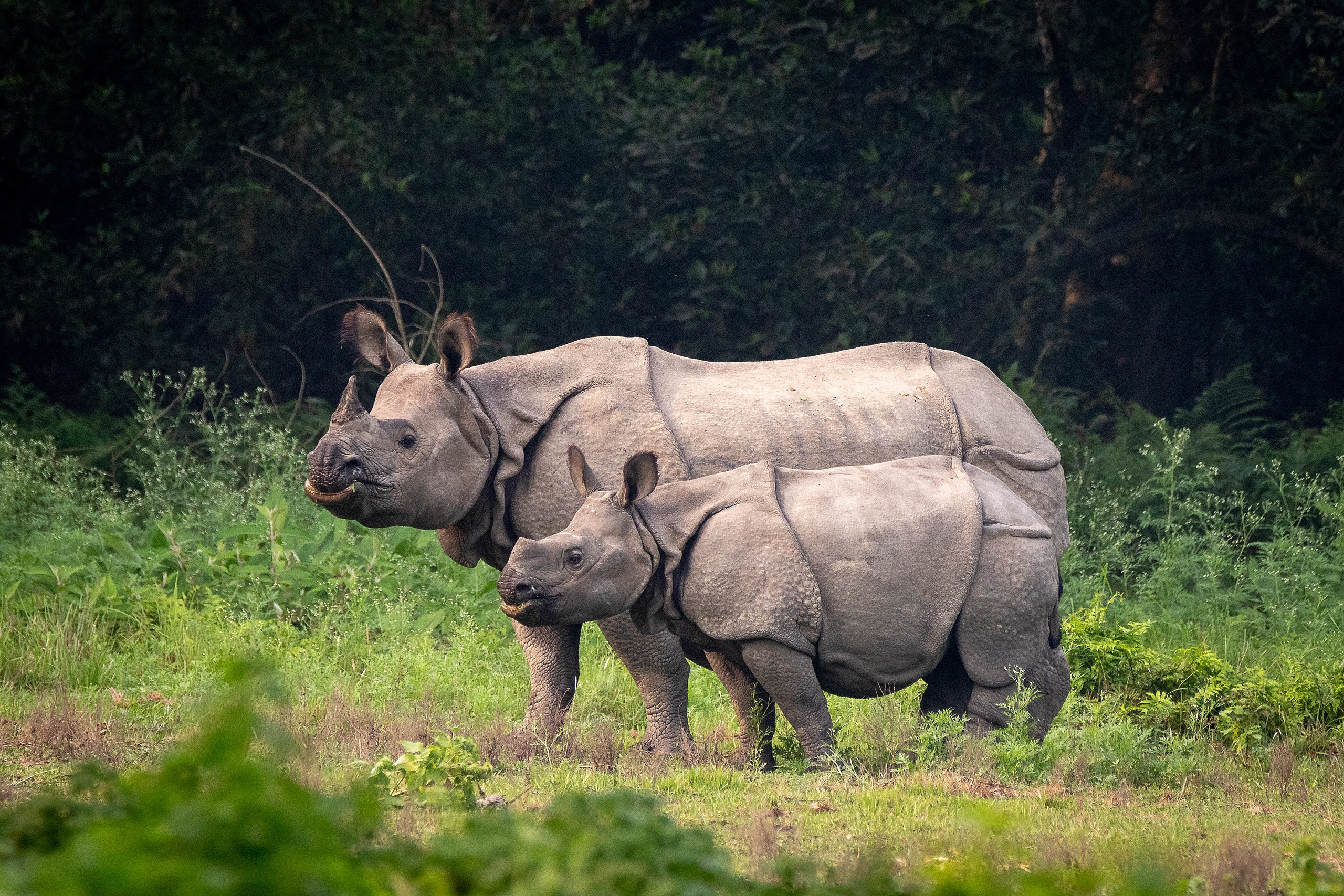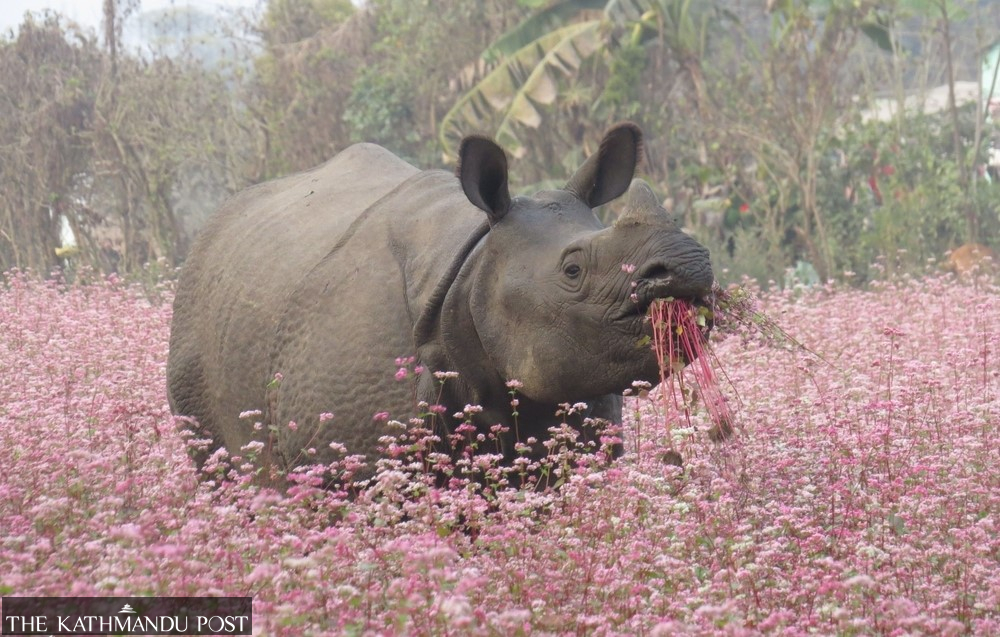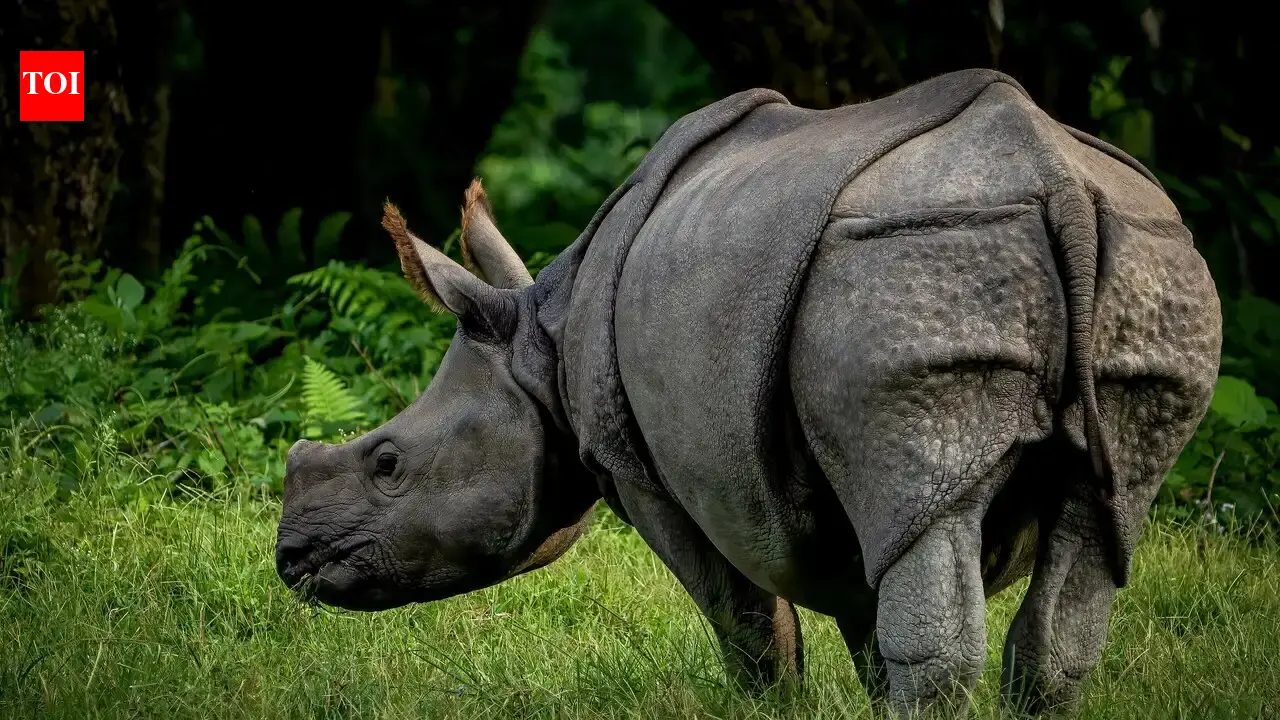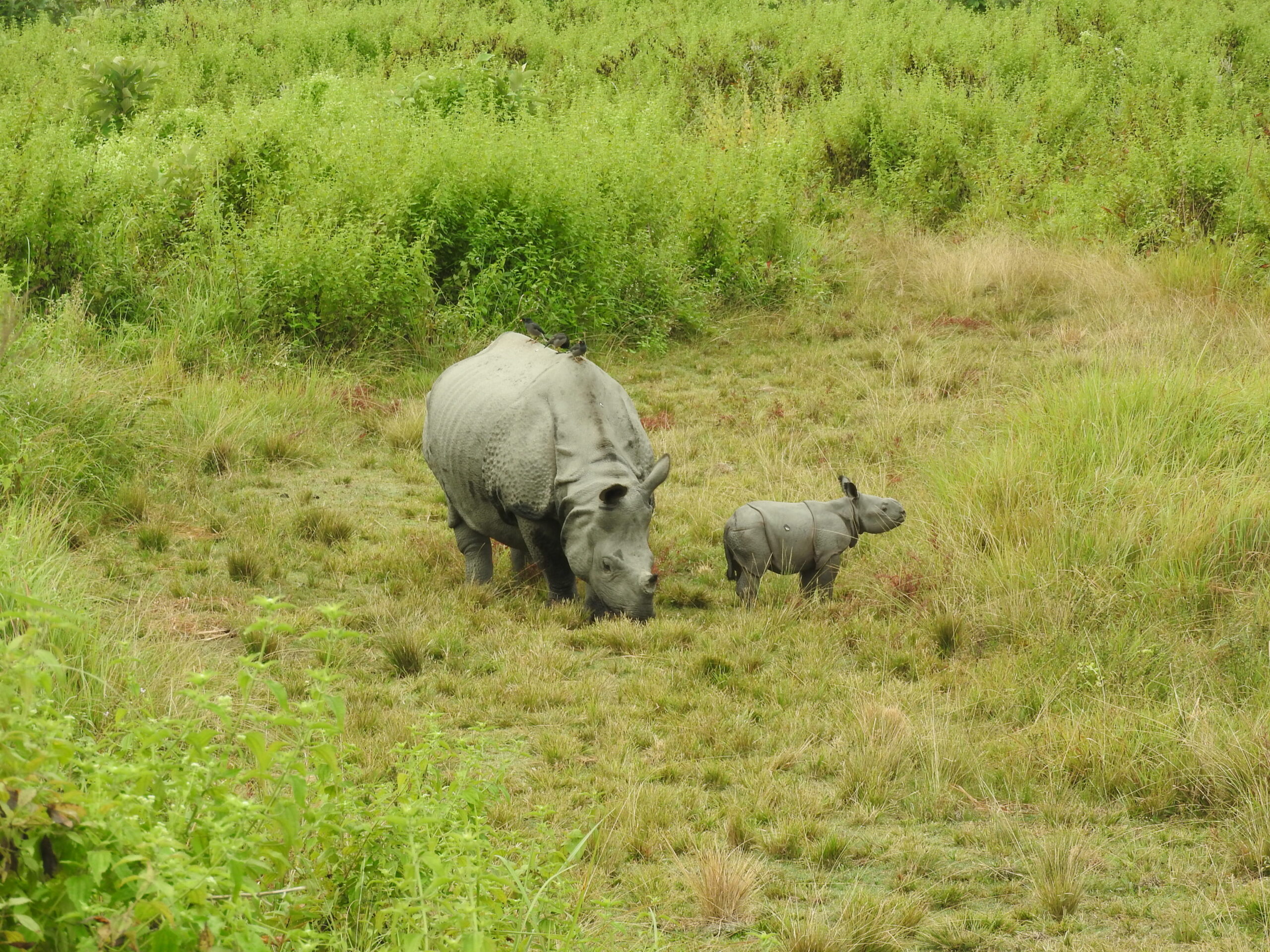
A new study suggests that habitat degradation has reduced the suitability for rhinos in Babai Valley of Nepal’s Bardiya National Park, forcing them to range widely.Researchers note that prolonged dry periods in the area could potentially increase ecological stress by reducing access to water, forage and wallowing sites.Locals say that many rhinos are now sighted in community forests in the fringes of the national park, with sporadic incidents of human-wildlife conflict.Experts stress that translocation is not simply about releasing animals and that long-term post-release monitoring is needed to assess behavioral patterns and identify necessary interventions.
KATHMANDU — Nepal’s ambitious efforts to establish a viable population of the vulnerable greater one-horned rhinoceros in western Nepal’s Bardiya National Park 40 years ago has been seen as a conservation success. The park, which didn’t have a surviving population until the 1980s, is now home to 38 individuals, as per recent census.
But a new study shows that the translocated animals are wandering far outside their release zones in search of food and water, suggesting the habitat may not be healthy enough to keep them there.
Researchers, who GPS collared five of the eight animals translocated from Chitwan in central Nepal in 2016-17, found that the larger home range of the reintroduced rhinos (Rhinoceros unicornis) in Babai Valley (one of the two habitats, the other one being the banks of Karnali River) of Bardiya National Park was primarily due to limited grassland, fragmented riverine forests and seasonal scarcity of water and forage.