You're building an API and defaulting to JSON because everyone does. The endpoint works fine. Then it needs to handle large payloads at high throughput, and suddenly the bottleneck is payload parsing. Or you're writing a config file and three months later a new team member can't figure out what half of it means because there are no comments allowed. Or you're exporting data to finance and the CSV import broke because one field contained a comma.
Every data format is a tradeoff. JSON is not always the right answer. Neither is anything else. The question is which tradeoffs match your actual constraints.
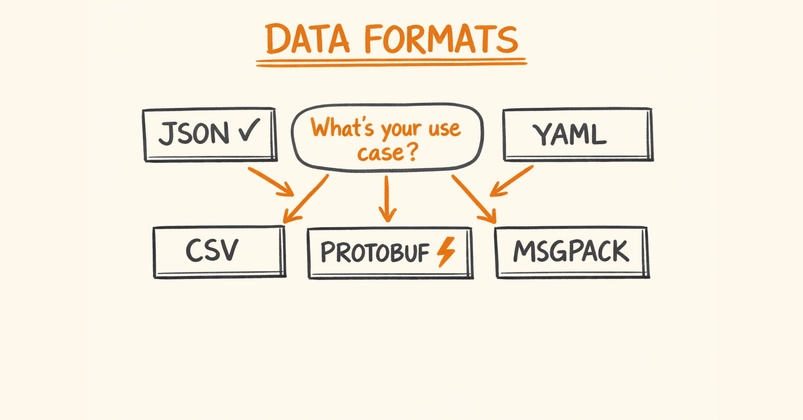
This guide covers six formats you'll encounter in production work — what each one is, where it fits, and how to recognize when you're reaching for the wrong tool.
JSON — The Default
JSON (JavaScript Object Notation) is the lingua franca of the web. It's human-readable, supported natively in JavaScript, and has library support in every language worth using. Every REST API you interact with today almost certainly speaks JSON.