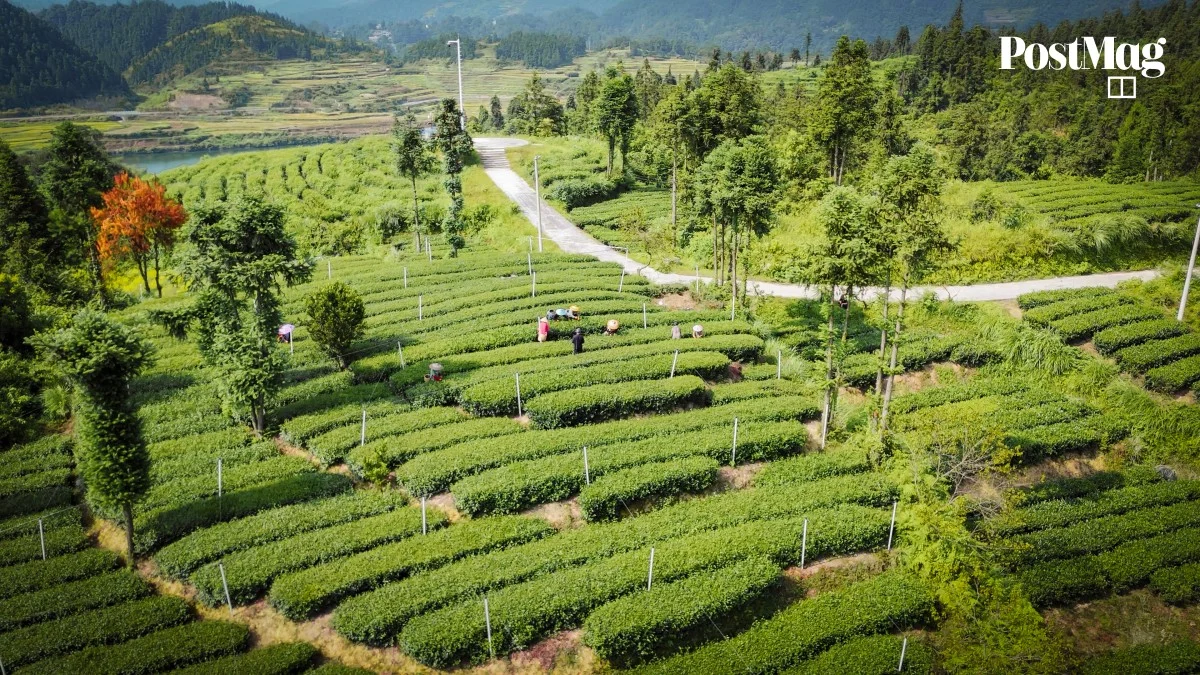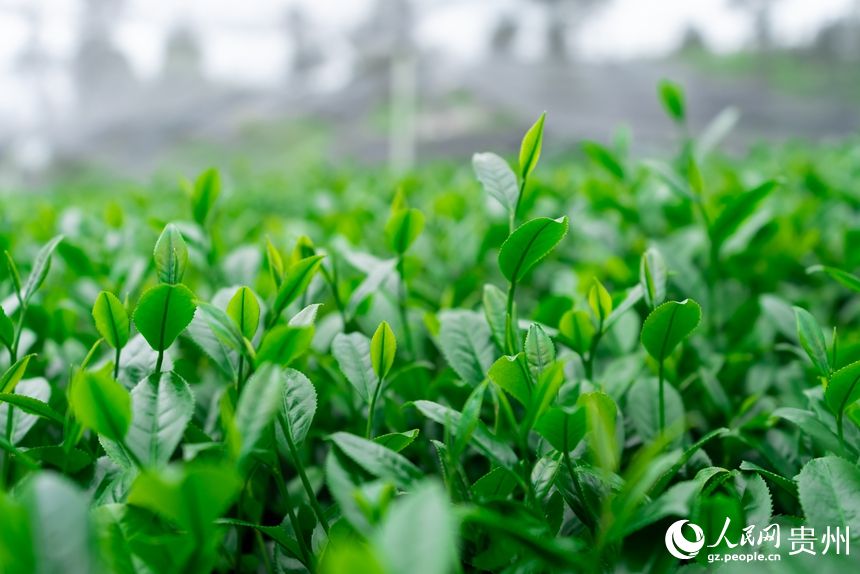
Tea trees grow at a tea garden on Jiulong Mountain in Bapan town, Jiangkou county, Tongren city, southwest China's Guizhou Province.
China produced over 12,000 tonnes of matcha in 2025, accounting for nearly 70% of global output, with the industry posting an average annual compound growth rate of 28.67% over the past nearly five years, according to the newly released 2026 China Matcha Industry Development Report.
Industry insiders said the surge in orders for Chinese-made matcha worldwide is no coincidence, but the result of demand, supply and cultural storytelling converging at the right moment.
Traditional tea-growing regions across China are racing to reinvent themselves. Wuyi county in Jinhua, east China's Zhejiang Province, long known for premium traditional teas, is among those leading the shift.
"Traditional premium teas are labor-intensive to produce, output is limited, and the market is nearing saturation," said Zhou Xiaofen, head of the county's tea technology service station.