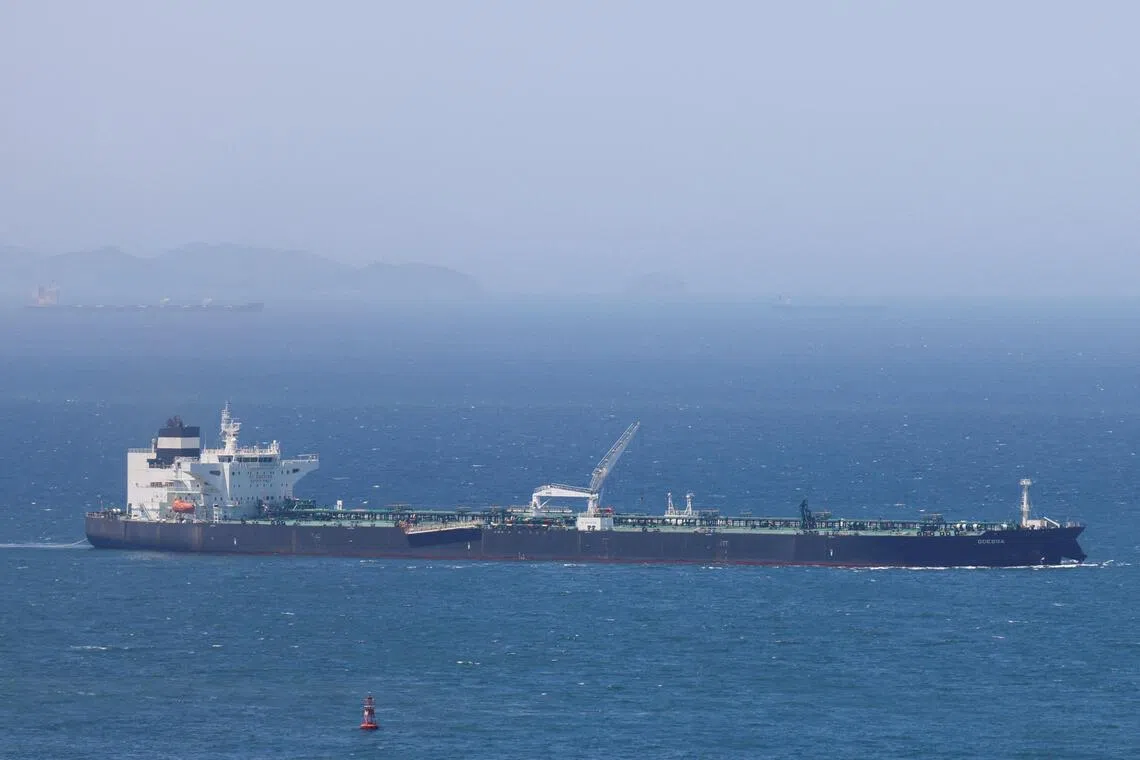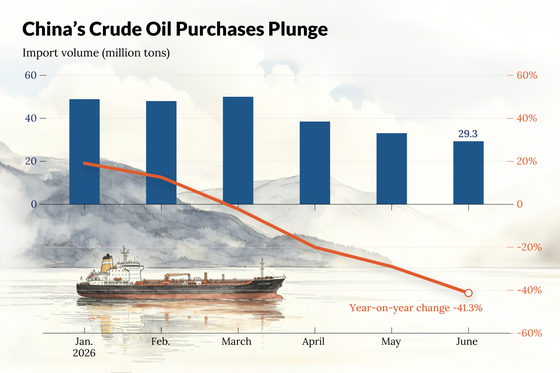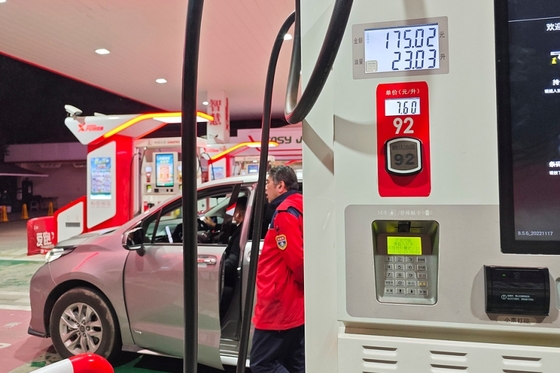
1. The Iran war is in its fifth week, with the Strait of Hormuz navigation crisis ongoing; despite agreements by three Asian countries for vessel passage, traffic remains far below normal, pushing international oil prices near $110 per barrel.[para. 1]2. Elevated oil prices are suppressing global economic growth, hitting small, open economies hardest.[para. 2]3. China's economy is relatively insulated from the energy shock compared to peers; Goldman Sachs cut its China GDP growth forecast by 20 basis points, versus 40 for the U.S. and 70 for other emerging Asian economies.[para. 3]4. Goldman Sachs identifies key factors enabling China to better endure the oil supply disruption.[para. 4]5. China's diversified energy mix features crude oil and LNG at only 28% of primary energy consumption in 2024 (low globally), with renewables (nuclear, wind, solar, hydro) generating 40% of electricity, up from 26% a decade ago.[para. 5]6. China boasts ample oil reserves (strategic and commercial), sufficient for over 110 days of consumption even if crude imports drop to zero.[para. 6]7. China can source oil and gas from non-Middle East suppliers like Russia, Australia, and Malaysia.[para. 7]8. A Fitch Ratings study confirms China would be least affected in a worst-case scenario, unlike South Korea, the U.S., and Turkey.[para. 8]9. High oil prices impact growth and inflation; for China, they may end producer-price deflation.[para. 9]10. Goldman Sachs predicts China's 41-month PPI deflation streak will end as early as March, advancing prior forecasts by 6-9 months.[para. 10]11. Despite investor doubts, historical data (e.g., 2011, 2017-2018, 2021) shows rising PPI linked to strong profits and share buybacks amid cost-push inflation.[para. 11]12. Post-Iran war outbreak, Goldman Sachs raised China's nominal GDP growth forecast by 0.8 percentage points, boosting corporate revenues, upstream profitability, countering deflationary mindset, lowering real rates, and spurring capex and stock investments.[para. 12]13. As the top oil and LNG importer, China leads global alternative energy investment in generation, infrastructure (e.g., crude carriers, transmission, storage), and petrochemicals.[para. 13]14. Hormuz disruptions elevate energy independence and resilience as security priorities, reinforcing China's alternative energy policies and creating opportunities for related firms domestically and abroad.[para. 14]15. Too soon to confirm Middle Eastern capital inflows to Hong Kong from tensions; however, Hibor at seven-month low, stable southbound volumes, robust HK stock turnover, and high-end real estate recovery suggest early international fund entries.[para. 15]16. Prolonged Middle East economic issues might curb regional investors' capital deployment into Chinese assets, where they have been active in private and public equity.[para. 16]AI generated, for reference only
China’s Economy Better Insulated Than U.S. Against Oil Shock, Goldman Sachs Says
A diversified energy mix and robust stockpiles provide Beijing with a buffer against supply disruptions in the Strait of Hormuz, while the U.S. and other nations face steeper growth downgrades
410 words~2 min read