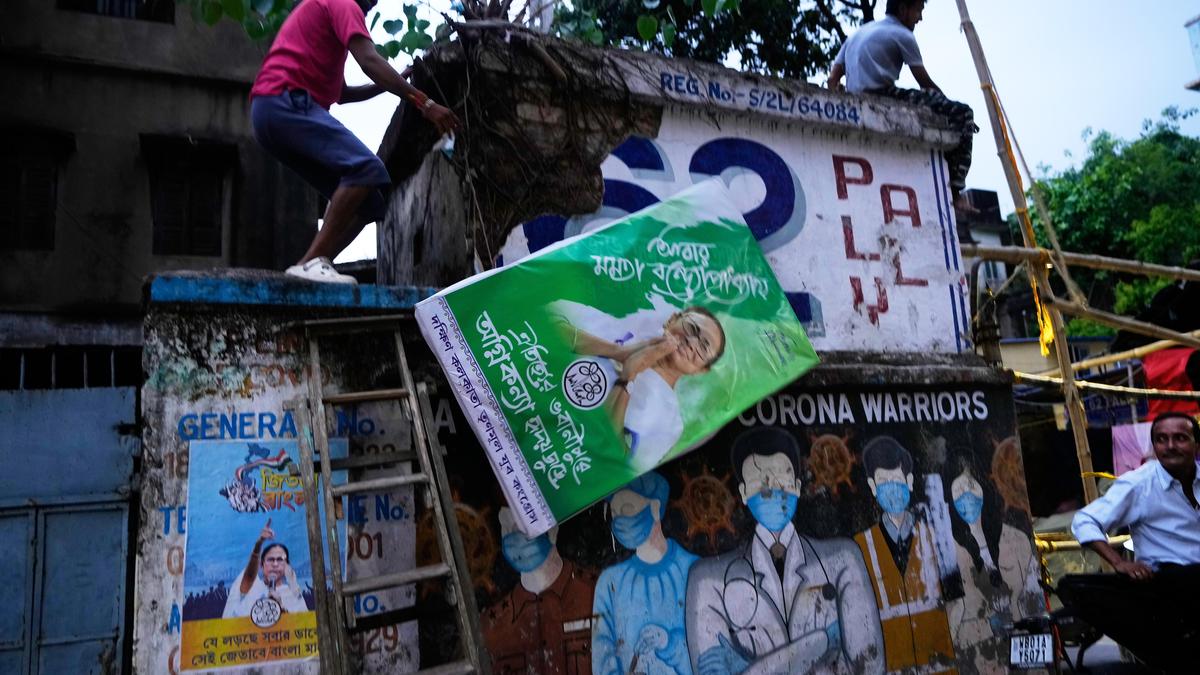
West Bengal’s post-election drama is more consequential than the familiar story of Indian political defection. The developments unfolding around the Trinamool Congress after its defeat by the Bharatiya Janata Party in May’s Assembly elections point to a newer mechanism of power consolidation.The immediate facts remain fluid. On Tuesday, rebel Trinamool leader Ritabrata Banerjee claimed to have the support of 65 of the 80 MLAs elected to the Assembly on the party’s ticket. The crisis has also moved to Parliament. Twenty of the 28 Trinamool MPs in the Lok Sabha have expressed their desire to merge with a little-known ally of the BJP-led National Democratic Alliance from Tripura, a rebel MP said.Already, three of the 10 TMC Rajya Sabha MPs resigned from the party and the Upper House.India is familiar with individual defections. Turncoats have allowed the recipient party to benefit from the votes, the organisation and the skills they brought with them. But the mechanism of switching parties is surrounded by legal constraints. It used to cause misgivings among voters and is ultimately very time consuming.However, what is now happening in Bengal points to something more ominous. The object is not only the politician. It is the party, or at least enough of it to ruin its political relevance.Dozens of TMC MLAs and MPs have rebelled recently, flooding newsfeeds with stories about the collapse of the Trinamool Congress. But is this really the end for TMC supremo Mamata Banerjee?@AnantGuptaAG unpacks in this week's Chronology Samajhiye. pic.twitter.com/2RXTheOVND— Scroll.in (@scroll_in) June 11, 2026
West Bengal to Maharashtra, party absorption threatens to disintegrate India’s opposition
Instead of the legal constraints of defections and splits, this new strategy makes the defeated opposition useful to the ruling establishment.
1,141 words~5 min read