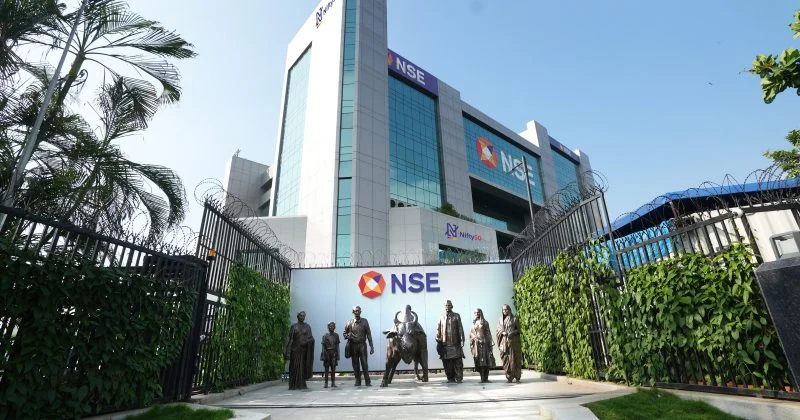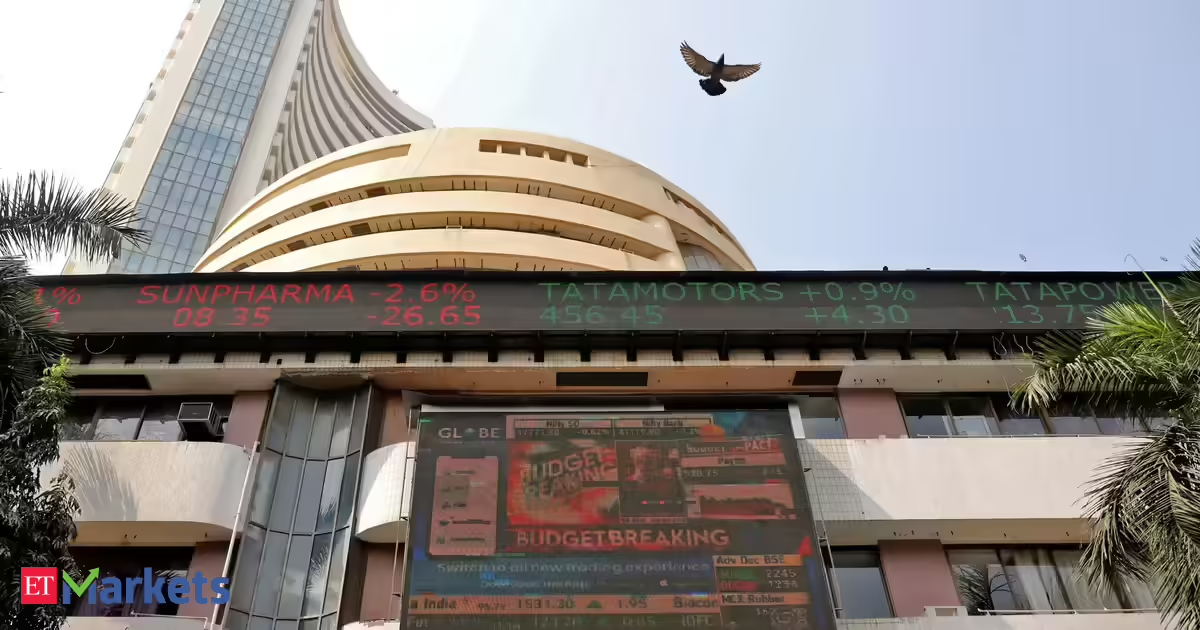
Shares of BSE will be in focus heading into trade on Thursday after its competitor NSE filed its DRHP with Sebi to float an initial public offering (IPO), which will be the largest ever in India’s capital market history. For shareholders of BSE, NSE's listed rival, the bigger question is no longer whether the listing happens, but what it means for a stock that has already run up sharply on that very expectation.Paresh Bhagat, Chairman of Mangal Keshav Financial, said investors reassessing their holdings in BSE simply because a direct competitor is set to go public is "a fairly natural knee-jerk reaction." However, he noted that the development does little to alter the fundamental outlook for BSE's core business.What the listing does bring, Bhagat said, is a direct market-based valuation benchmark between India's two stock exchanges. Until now, investors have largely relied on estimates and unlisted market valuations to assess NSE. He expects BSE's stock to remain sensitive to headlines through the Sebi review process and the eventual NSE listing later in 2026.According to Bhagat, once the uncertainty surrounding the listing process is removed, investor focus is likely to shift back to business fundamentals.NSE IPO details The proposed IPO is entirely an OFS of up to 14.89 crore equity shares with a face value of Re 1 each, representing nearly 6% of NSE's paid-up equity capital. The issue size has been fixed at 6% of the exchange's paid-up capital.NSE's shares will be listed on BSE, mirroring the arrangement under which BSE's own shares are listed on NSE.India's largest stock exchange by cash market turnover, equity derivatives turnover and exchange-traded currency derivatives turnover, NSE has also been a strong cash generator for shareholders. The exchange paid a dividend of Rs 35 per share in both FY25 and FY26, while the FY24 dividend stood at Rs 18 per share on a bonus-adjusted basis.According to the World Federation of Exchanges, NSE retained its position as the world's largest equity derivatives exchange, with more than 36.99 billion contracts traded during Fiscal 2026, including activity on NSE International Exchange (NSEIX). As of March 31, 2026, it was also the largest exchange in India by cash market turnover and the third largest globally by number of trades in cash equities.5 PSUs sell stake in NSE IPO Five public sector entities, including State Bank of India, IDBI Bank, SBI Capital Markets, IFCI and Bank of Baroda, are set to partially monetise their holdings in the National Stock Exchange through the bourse's long-awaited initial public offering.According to NSE's Draft Red Herring Prospectus (DRHP) filed with market regulator SEBI, the five government-owned entities together hold approximately 2.37 crore shares that are part of the proposed offer-for-sale (OFS).Among them, IDBI Bank is the largest PSU shareholder participating in the share sale with 74.15 lakh shares, followed by SBI with 64.28 lakh shares, SBI Capital Markets with 53.62 lakh shares, IFCI with 34.32 lakh shares and Bank of Baroda with 10.98 lakh shares.Notably, Life Insurance Corporation of India (LIC), one of NSE's key shareholders, will not participate in the share sale. Premji Invest, which owns a 2.35% stake, and investor Radhakishan Damani, who holds 1.58%, are also retaining their holdings and will not sell shares in the IPO.(Disclaimer: Recommendations, suggestions, views and opinions given by the experts are their own. These do not represent the views of The Economic Times)
BSE shares in focus as rival NSE files DRHP with Sebi for mega IPO
BSE shares are under scrutiny as rival NSE files for India's largest IPO. While some see this as a natural reaction, experts believe it offers a direct valuation benchmark. The NSE's IPO, an offer-for-sale by several public sector entities, is expected to list on BSE itself. Investors anticipate a return to fundamental analysis post-listing.
559 words~3 min read