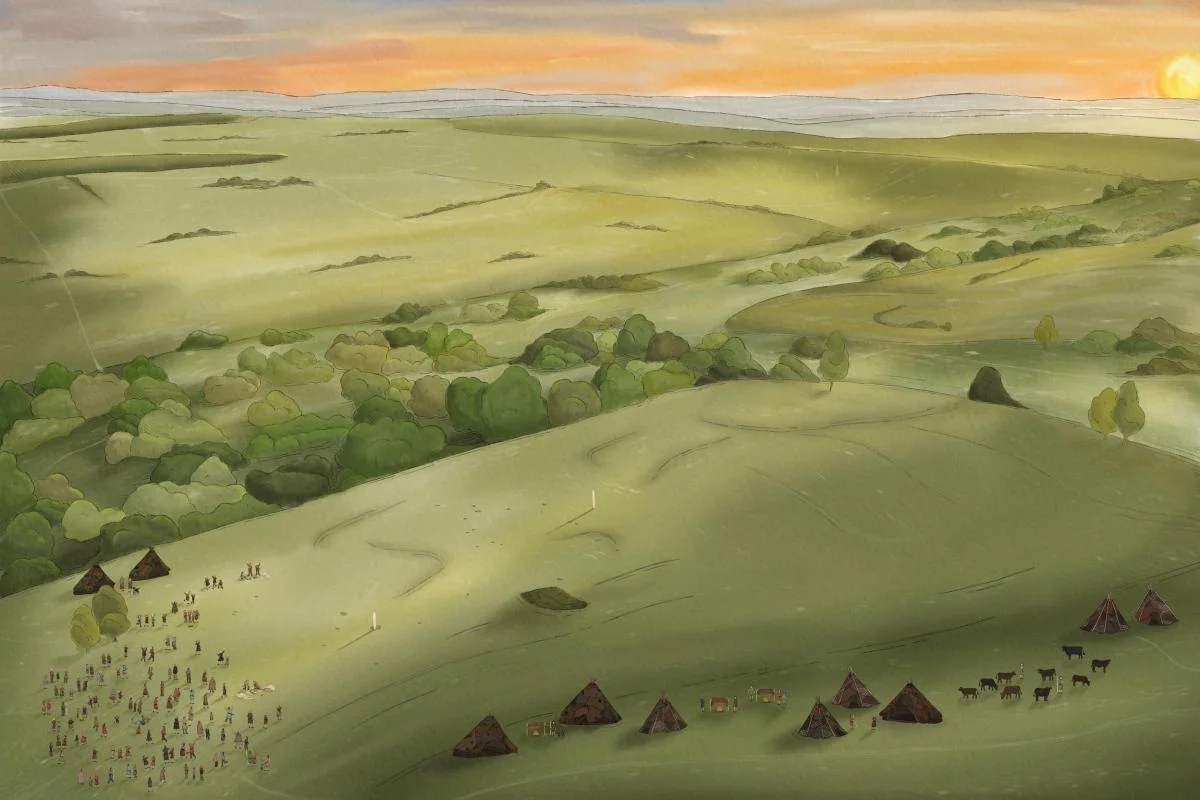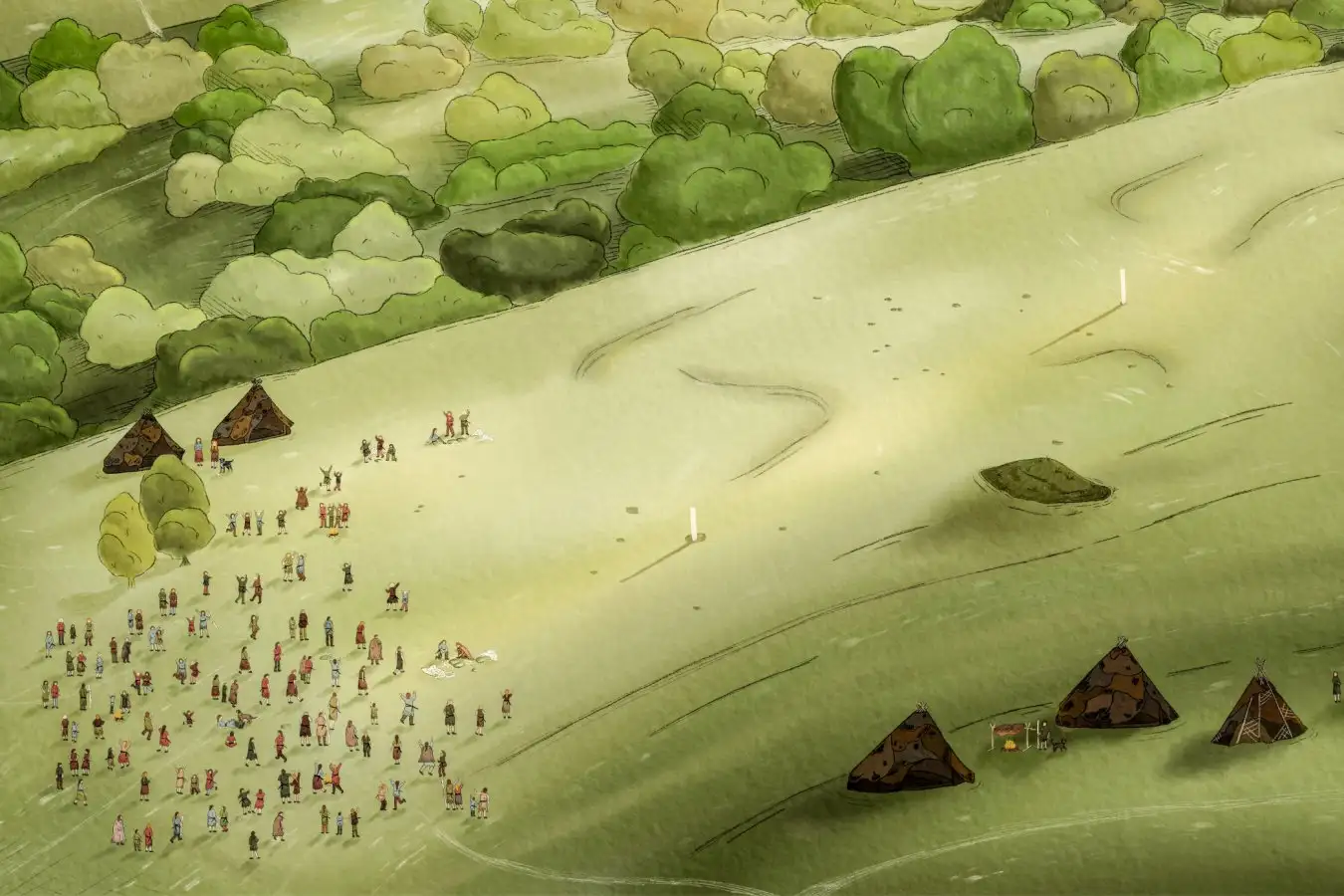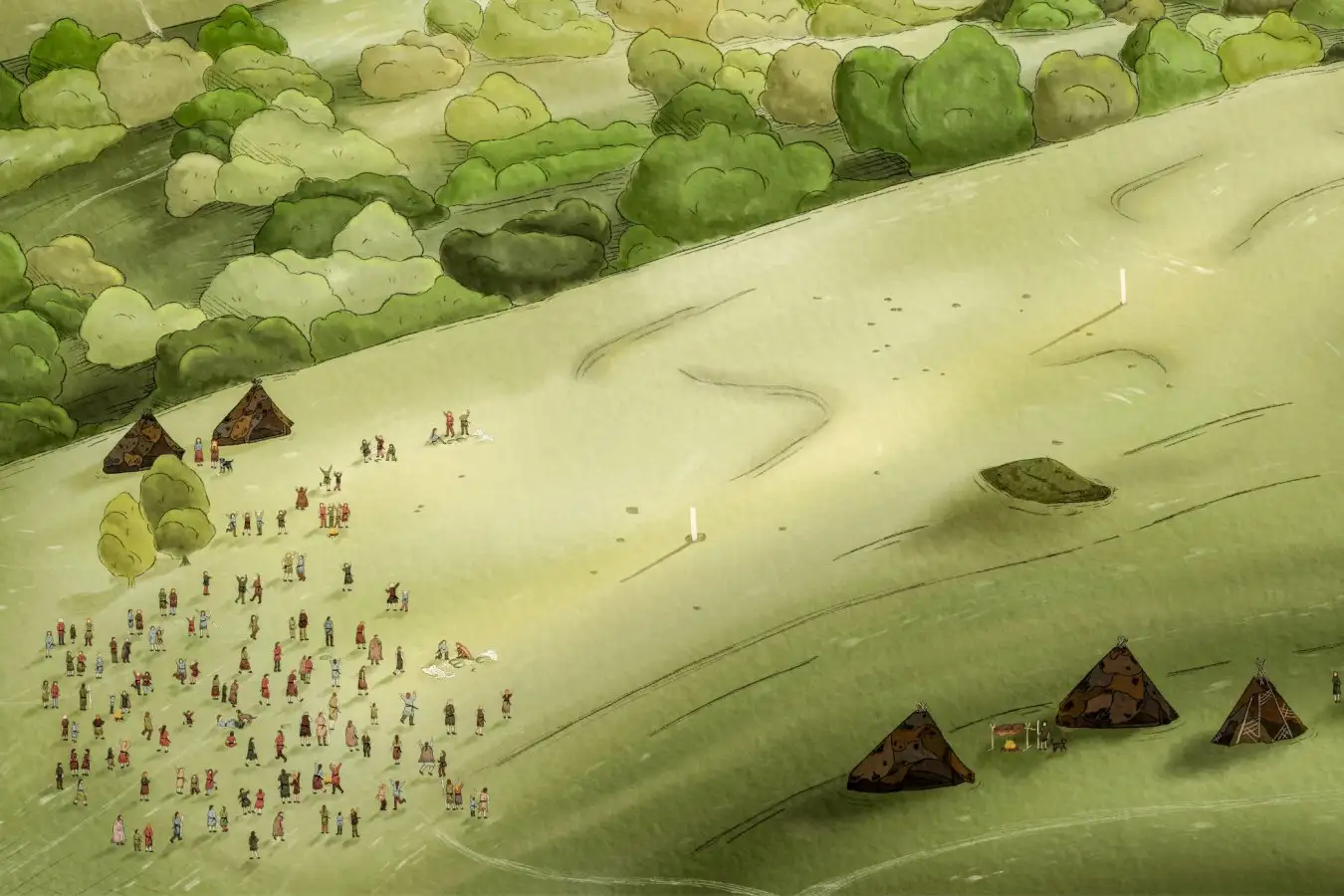
A reconstruction of the summer solstice celebrations as they might have appeared at Bulford thousands of years agoMarijane Porter, Wessex Archaeology
Stone Age peoples in Britain built a wooden monument to mark the summer solstice, 500 years before they began building the stone circle at Stonehenge.
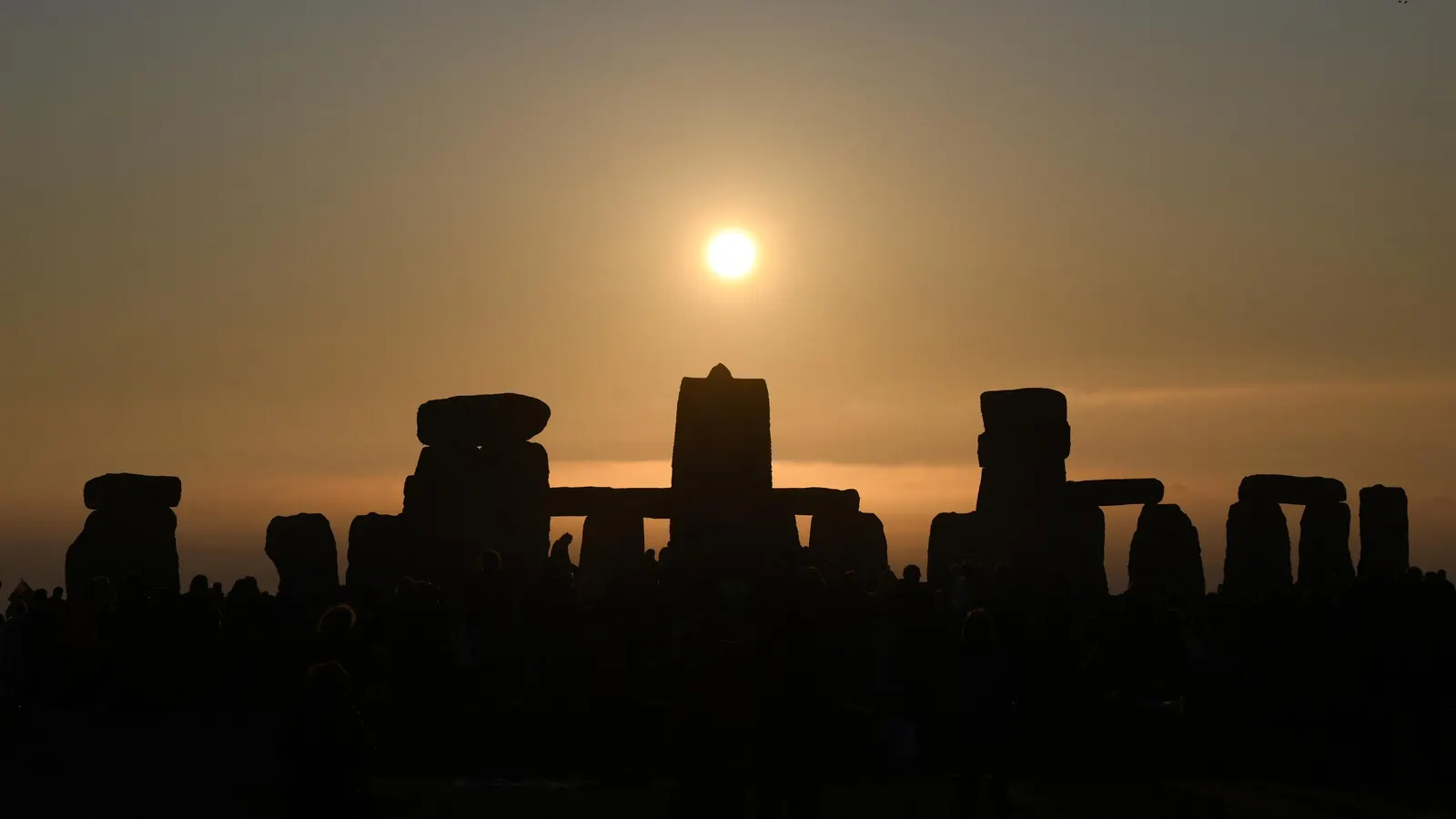
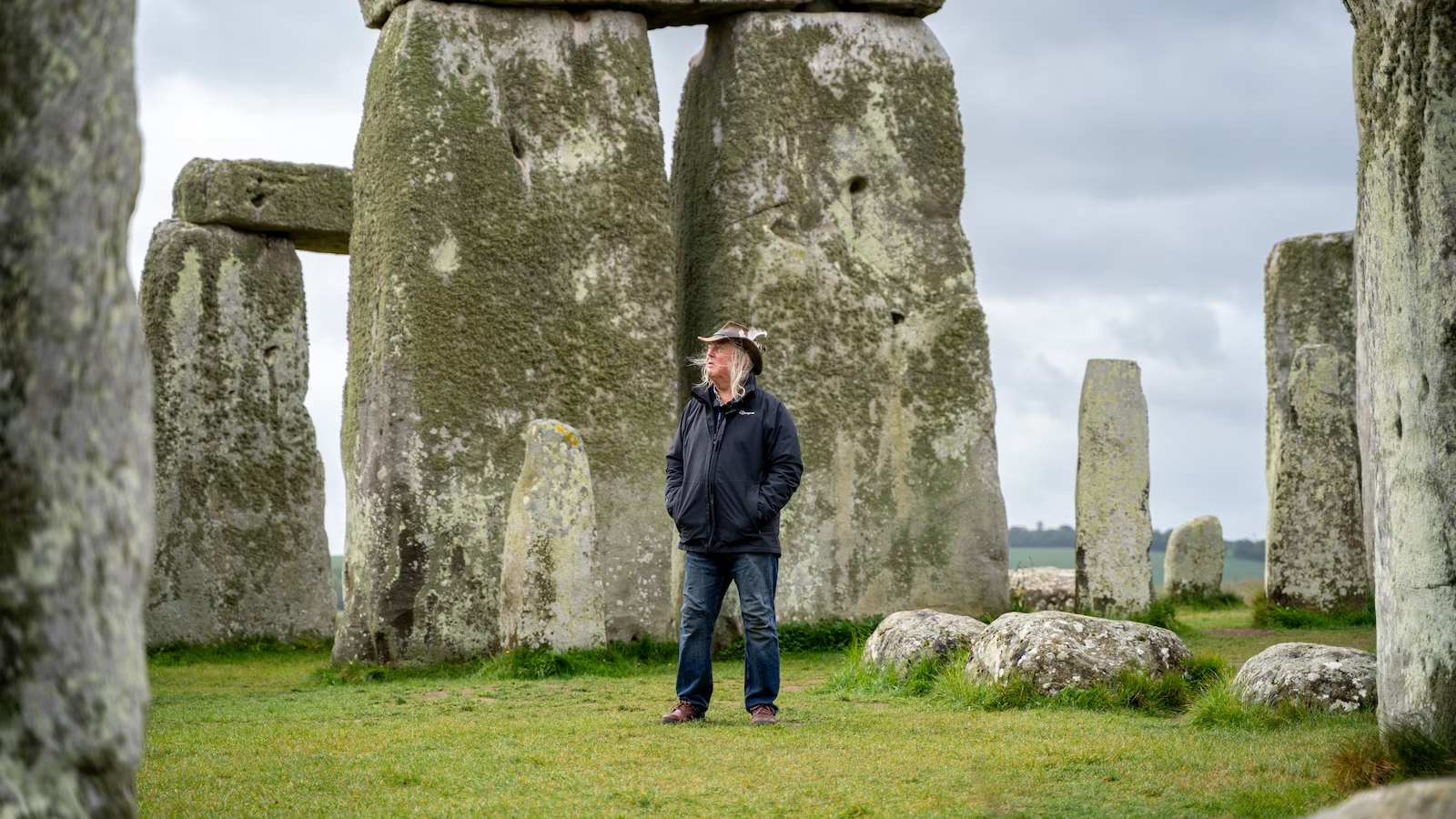
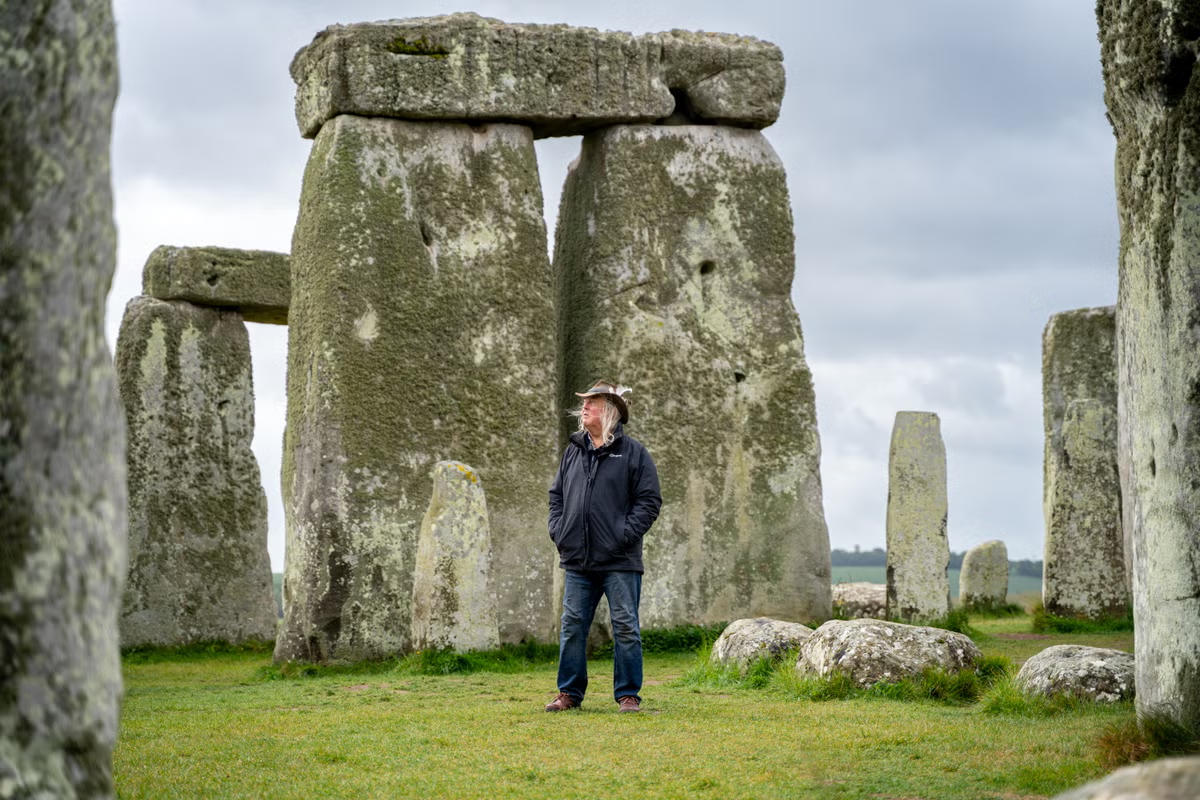
Stonehenge is also aligned to the summer solstice, and the wooden monument may have been an early prototype of this. It is one of the earliest examples of a monument aligned to an astronomical phenomenon in the British Isles.
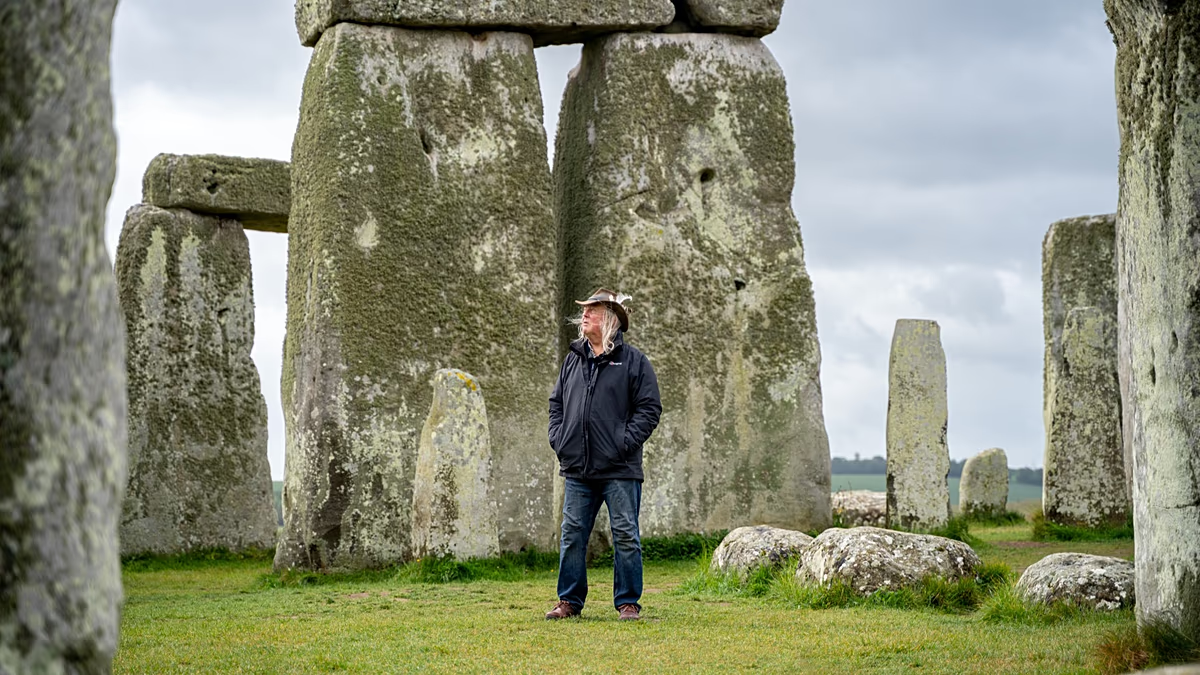
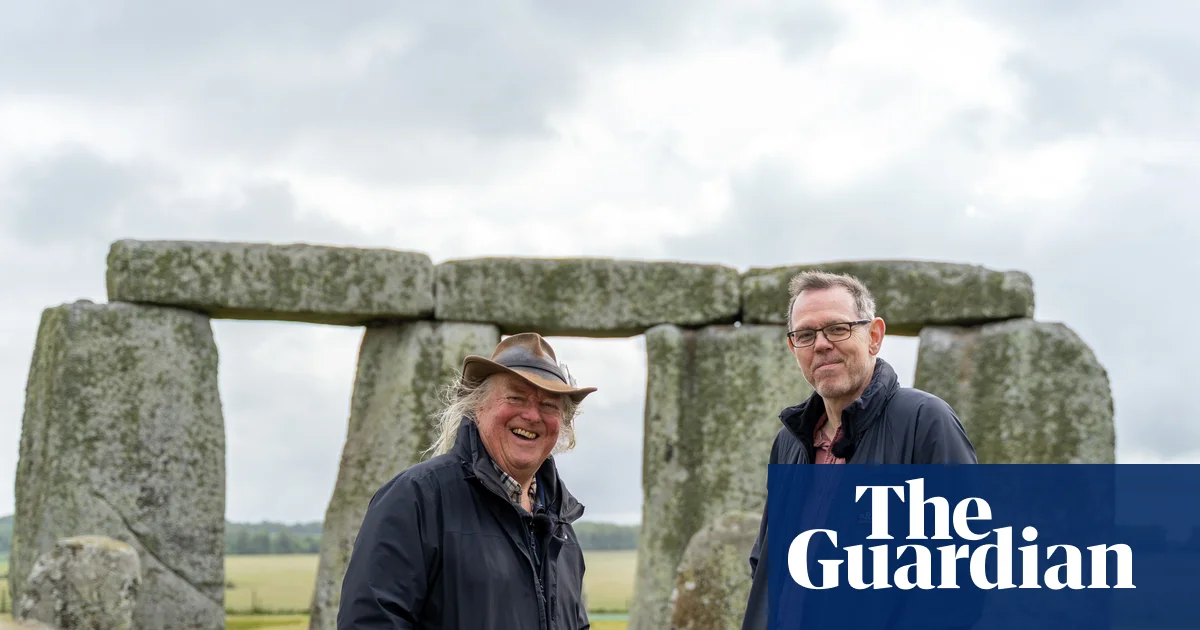
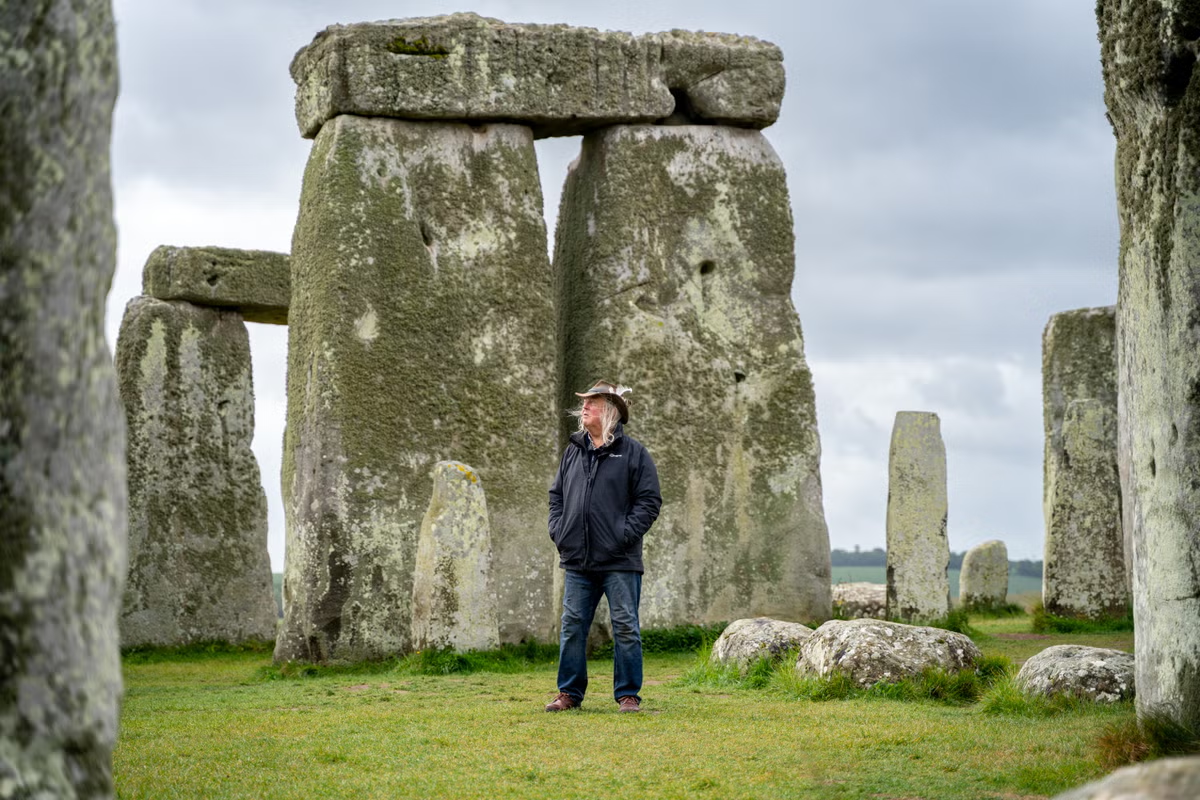
“What we have now, for the first time, is actual proof that these people were capable of capturing the movement of the sun,” said Phil Harding at Wessex Archaeology, who led the excavations, at a press conference announcing the discovery.
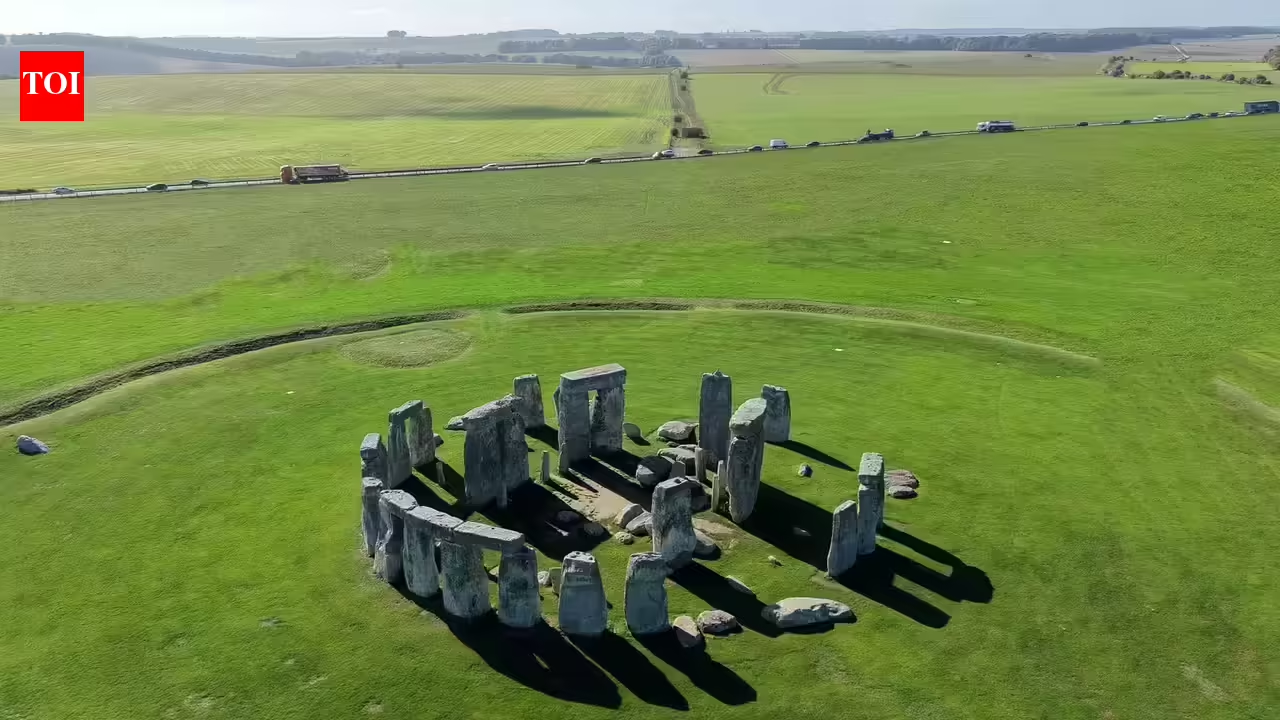
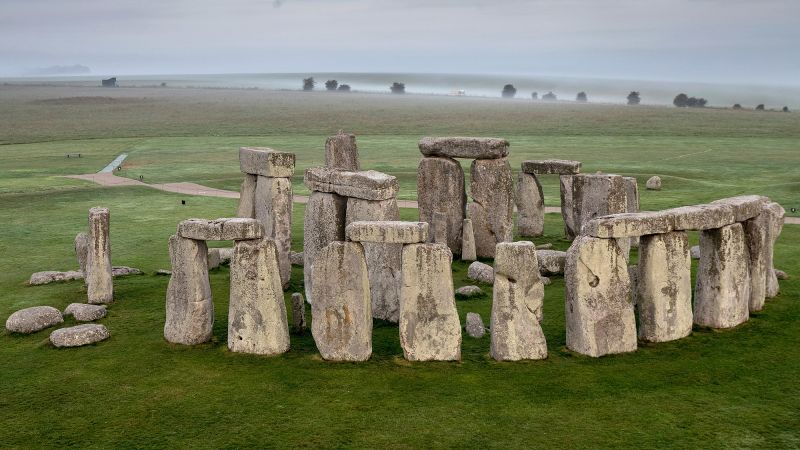
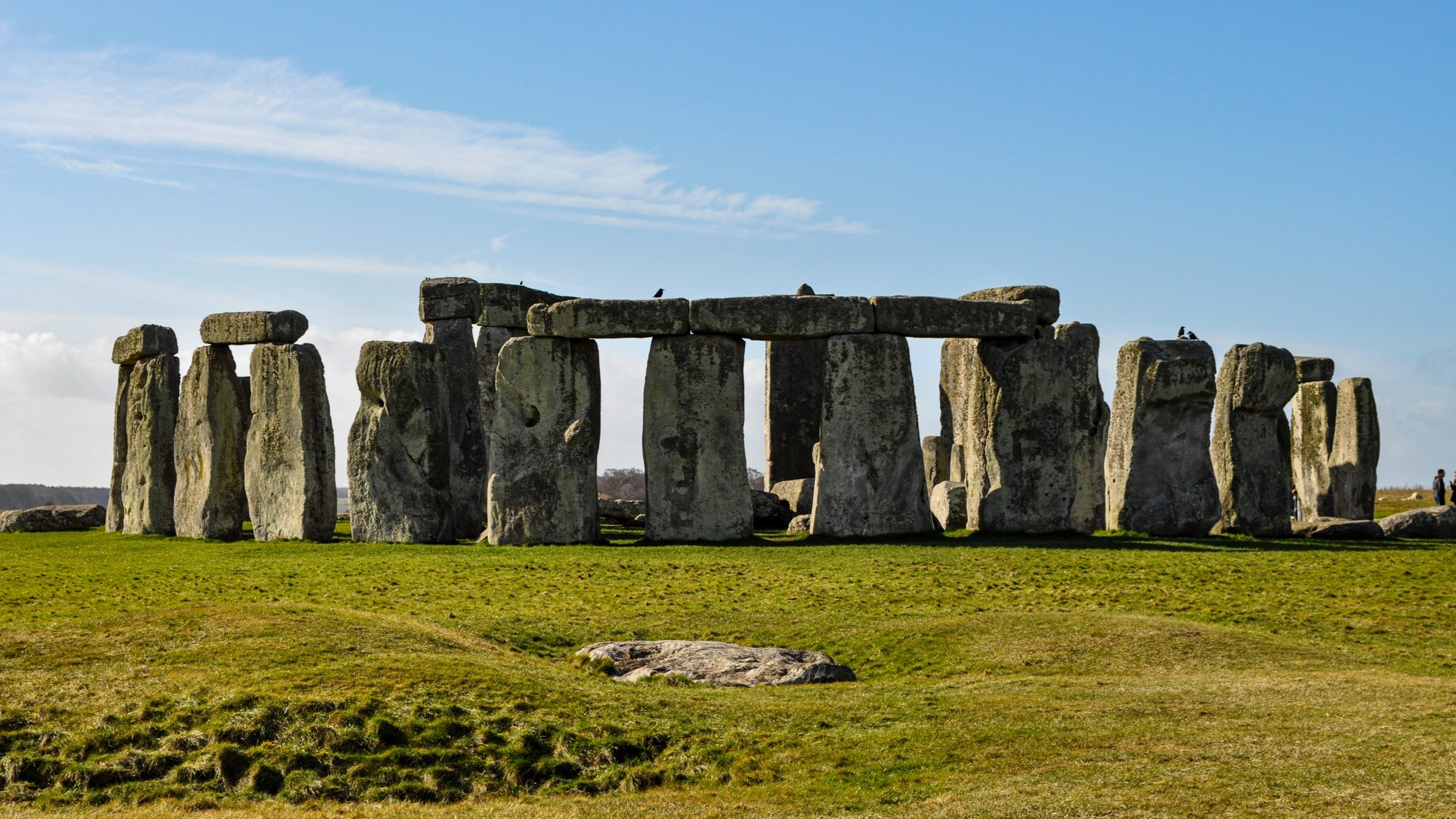
Stonehenge is a monument built during the Neolithic, the very end of the Stone Age. Situated on Salisbury Plain in the UK, it consists of an outer ring of vertical sarsen stones topped by horizontal lintels, a smaller inner ring of vertical bluestones and several other stones. These are surrounded by an earth bank and a ditch. This is the oldest part, built around 3100 BC, with the stones being placed over the centuries up to 1600 BC.