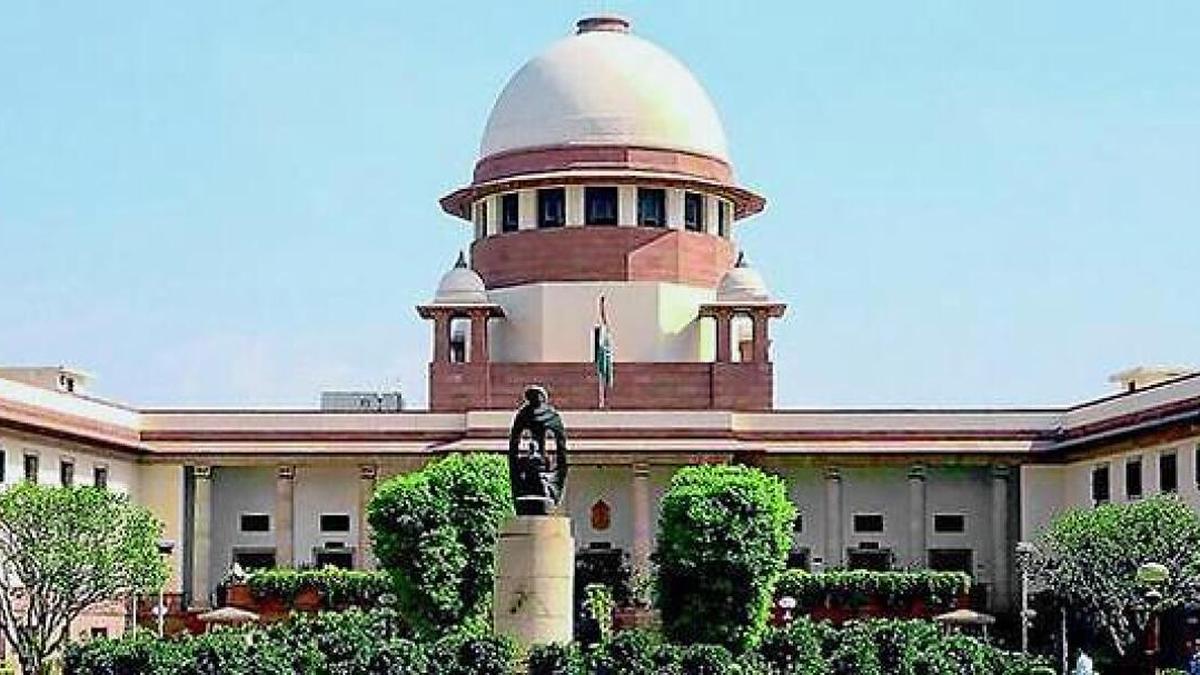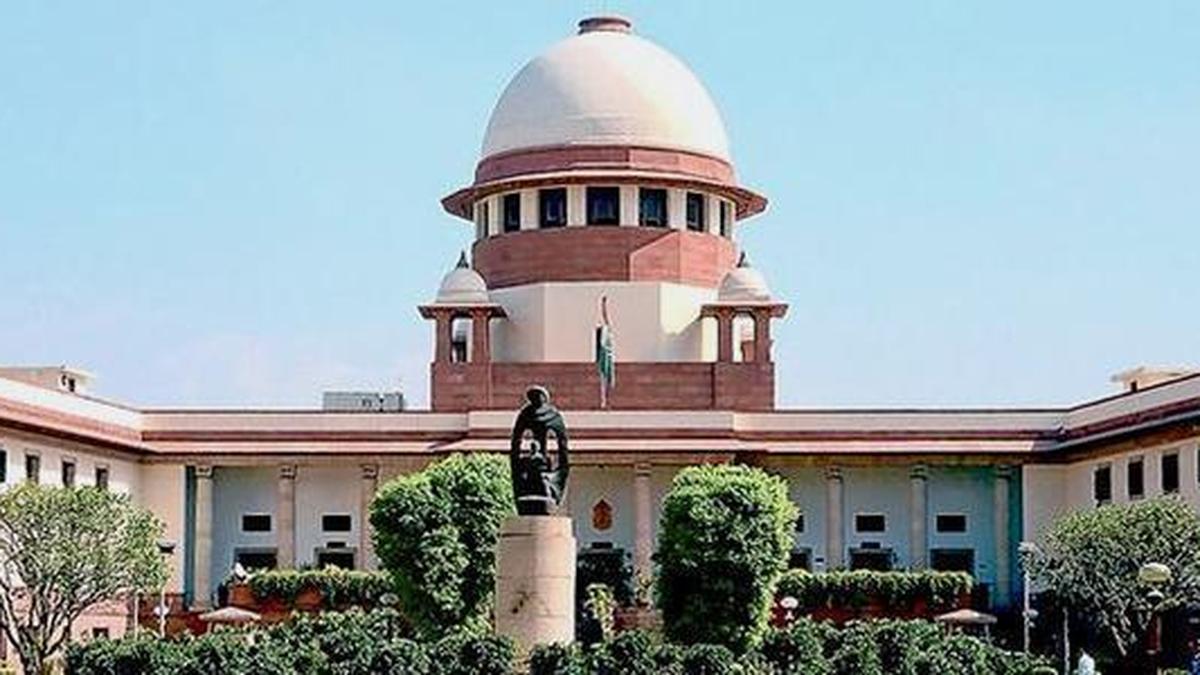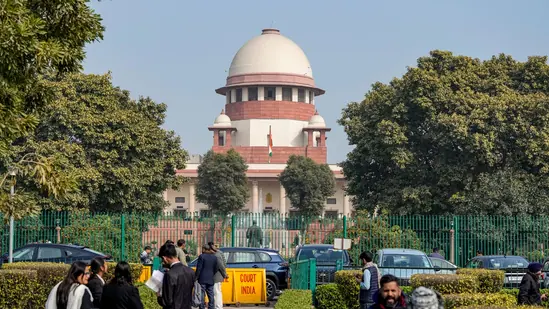
A well-reasoned decision is pronounced by a trial court in Andhra Pradesh, but the case laws referred to in the judgment turn out to be non-existent and mere Artificial Intelligence (AI) hallucinations. The Supreme Court of India noted this in Gummadi Usha Rani vs Sure Mallikarjuna Rao (2026) and voiced its concern and the need to protect constitutional mandates. The Supreme Court's draft AI regulations could perhaps pave the way for a much-awaited parliamentary foray into enacting laws to regulate AI. (PTI)The case triggered a seminal move — the Supreme Court issued the draft Regulations for Use of Artificial Intelligence in Courts, 2026 (AI Regulations, hereafter). A possible trendsetter, the Supreme Court’s binding AI Regulations, once passed go well beyond existing precedents such as the UK’s Guidance for Judicial Office Holders (2025) and Singapore’s Guide on the Use of Generative Artificial Intelligence Tools by Court Users. It could perhaps pave the way for a much-awaited parliamentary foray into enacting laws to regulate AI.The Supreme Court balances constitutionality with adoption of technology in decision-making through its stated objective of “innovation over restraint”, in its responsible exploration, development and integration of AI systems and tools. It has adapted, and expanded, the Organisation for Economic Co-operation and Development (OECD)’s AI Principles of fairness, non-discrimination, transparency, explainability, accountability, data protection and privacy. It assures purpose limitation and proportionality.ALSO READ | What Supreme Court’s proposed regulations for AI use in courts meanTo obviate cases such as the oft-quoted Roberto Mata vs Avianca Inc, (2022) — in which a US district court dismissed a personal injury case against Avianca, a Colombian airline, and fined the plaintiffs’ lawyers for submitting fake, AI-generated precedents — the Supreme Court’s AI Regulations mandate full and transparent disclosure of submissions that are AI-generated [Regulation 20(h)] and also, for accountability, of judicial officers using AI tools [Regulation 8]. It specifically invalidated basing any defence claims on the fact that an output is from an AI system, its hallucination or opaqueness.Judgments from American courts, including in State v. Loomis (2016), reiterated the need for human oversight of AI use in judicial decision-making. Though the Wisconsin Supreme Court upheld the constitutionality of the Correctional Offender Management Profiling for Alternative Sanctions (COMPAS) — a controversial recidivism-predicting AI tool — the court laid down guardrails.Similarly, the AI Regulations emphasise that AI is subservient to human judgment and judicial authority [Regulation 4] and places accountability squarely on the judicial officer [Regulation 8]. It also mandates transparency through full disclosure that AI tools were used in submissions made to courts [Regulation 20(h)].ALSO READ | Sarvam AI, and India’s role in the future of high technologyPermitting AI use for administrative functions such as case management is a crucial step towards solving persisting systemic ailments such as the country’s mammoth backlog. The Supreme Court has already adopted AI in its SUVAS (translation tool) and SUPACE (research and workflow tool) projects. The AI Regulations expand the scope for such positive adoption of AI [Regulation19].The use of the heading “Prohibited Use of AI” in Regulation 20 may be misleading, as not all provisions of the regulation prohibit absolute use of AI tools or systems, despite the provision explicitly stating that the regulation is strictly “absolute and non-derogable”. For instance, Regulation 20(a) prohibits use of personal data to train, test, or refine AI systems, but this can be allowed with prior approval of the appropriate authority or as under applicable laws. Similarly, Regulation 20(h) permits submissions made using AI tools, with due disclosures. While Regulation 20(b) and (c) restrict algorithmic decision-making and adjudication or sentencing, respectively, they do so with the qualifier that the human judicial authority shall determine adjudicative decisions and adjudication shall be mandatorily done by the human-in-the-loop, with AI output being merely advisory. These provisions are reminiscent of the “High Risk” category under the European Union’s AI Act. The use of generative AI by the Punjab and Haryana High Court — reportedly to understand “jurisprudence on bail when the assailants assaulted with cruelty” while rejecting bail, but qualifying AI usage as merely advisory — is illustrative of the above provisions.Provisions such as risk scoring to evaluate flight risk, recidivism, bail eligibility, or determination of credibility of parties or witnesses; use of undisclosed, opaque, or unexplainable AI systems in court processes; predicting, profiling, or inferring future conduct or behaviour of parties, accused persons, witnesses, or legal representatives in court processes using AI systems; surveillance or continuous monitoring of judicial officers, advocates, litigants, or persons in court premises or court processes, except as permitted under applicable laws; and use of AI systems that compromise the confidentiality of judicial deliberations or the independence of judicial decision-making — Regulation 20 (d) to (g) and (i) — are absolutely prohibited. It is necessary to delineate those provisions that set limited prohibitions from ones mentioned herein above.ALSO READ | India’s AI regulation may be built through its ecosystemSimilarly, understanding the risk not just of AI bias but also of AI outcomes prejudicing judicial decisions — as the ProPublica report on COMPAS cautions against — will be necessary while permitting high-risk usage.Advocating the need for a sovereign cloud set-up to process sensitive judicial data is a welcome recognition of evolving data sovereignty principles, especially if private entities are engaged.However, “developing” AI systems and tools being left out of the scope of the AI Regulations seems an inadvertent miss, and should be addressed soon, as all components, including explainability, transparency, intellectual property rights, data ownership, purpose limitation, and usage, apply from development to deployment. Establishment of sandboxes and centres of excellence show forward-thinking. Specificity and harmonisation of definitions, building or clarifying litigant consent, maintenance of AI incident repositories apart from sharing of such repositories, balancing transparency with security, and providing for cyber security beyond the confidentiality-integrity-availability (CIA) triad are some critical areas that need to be addressed before the AI Regulations attain finality.The AI Regulations are a much-needed initiative; that they stem from the Supreme Court will lend weightage to further development of laws governing AI in India. The true test of the AI Regulations, however, lies in how effective they prove in implementation, especially in alleviating the plight of the millions of litigants in India, by reducing the pendency of cases.NS Nappinai is senior advocate, Supreme Court of India, and founder, Cyber Saathi, a non-profit organisation. The views expressed are personal.
Real test of AI regulations: Reducing pendency of court cases
The Supreme Court’s draft AI Regulations go well beyond existing precedents from other countries. But a few critical areas still need addressing. | India News
1,054 words~5 min read