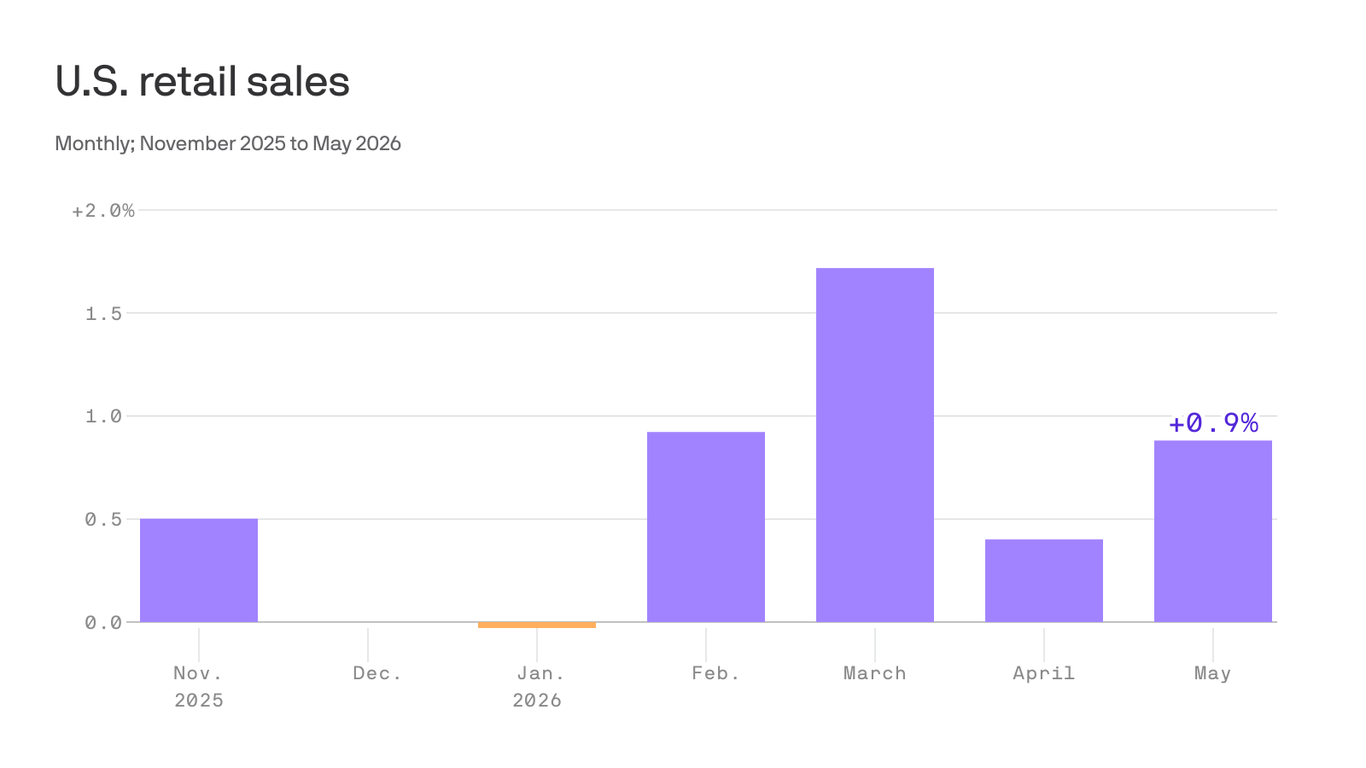
Fresh retail data is out from the U.S. Census Bureau, and overall sales were up 0.9% in May, reflecting a consumer economy that’s resilient in the face of inflation. One highlight was a big jump in sales at stores that sell sporting goods, craft supplies, books and musical instruments, up 11.3% year over year. In other words, Americans are spending more on their hobbies.Travoris Hipkins stands in Tochterman’s Fishing Tackle, holding a new rod.Stephanie Hughes/MarketplaceAt Tochterman’s Fishing Tackle in Baltimore, Maryland, Travoris Hipkins stopped in to get new line for his rod on Wednesday. While salesperson Craig Brewer put the line on, Hipkins shopped for another rod — a longer one, that’ll let him fish in deeper waters.Hipkins said he spends at least $1,000 per month on fishing, including bait, gear, and boat fuel. He’s 24 years old, and has been fishing since he was 6. “It keeps me out of trouble, it's a way that I can, you know, get away from the internet,” he said. “I love being outside, and it's just honestly peaceful and relaxing.”The store’s owner, Tony Tochterman, said revenue has been up this spring. He said some of that is inflation — they were hit by tariffs and had to pass those costs on to consumers. But also, people are buying more. “The hobby business was up because people want to escape, they wanted away from the pressures of work or the pressures of the news,” he said.More on the hobby economy:A year ago — From game stores to remote control car aficionados, hobby lovers are hit by tariffs“This Is Uncomfortable” — Can I monetize my hobby without killing the joy?Remember when? — 2020, the year of the pandemic, and pandemic hobbiesThis tracks with research done by Katie Thomas, who studies consumer behavior at the consulting firm Kearney.“People are seeking community, belonging, and physical experiences,” she said.So, they’re spending on sports and books and hobbies that bring them together with other people.“You know, maybe I can't afford to go to the World Cup, but I can buy myself some new gear, or buy my kids an outdoor activity,” Thomas said.Natasha Ibrahim stands in her store, Local Stitch, in Baltimore. She opened the shop this March, and some of the fiber she sells is hand-dyed in-house.Stephanie Hughes/MarketplaceOr an indoor one. Just around the corner from Tochterman’s is a brand new store called Local Stitch, which sells yarn and books.Nicolas Medina stopped in because he wants to try an embroidery technique called “sashiko.”“It's visible mending, so you can mend your clothes as they get worn … but, like, in a very, I guess, I don't know, stylish way,” he said.Medina said he’s interested in making his clothes last longer because he’s spending more on other necessities, like food and insurance. “It's kind of like wearing your hobbies on your sleeve,” he said.A knitted "emotional support chicken" is on display at Local Stitch in Baltimore.Stephanie Hughes/MarketplaceLocal Stitch owner Natasha Ibrahim teaches classes at the shop. “I frequently notice this light goes off in peoples’ heads … the first time they make something with their own hands, and they're like, ‘I can do this,’” she said.As they improve, she said, they can make things that are better than what they can buy.
Consumers are spending more on their hobbies
According to the latest Census report, sales at sporting goods, hobby, musical instrument, and book stores were up 11.3% in May from the same time a year ago.
543 words~2 min read