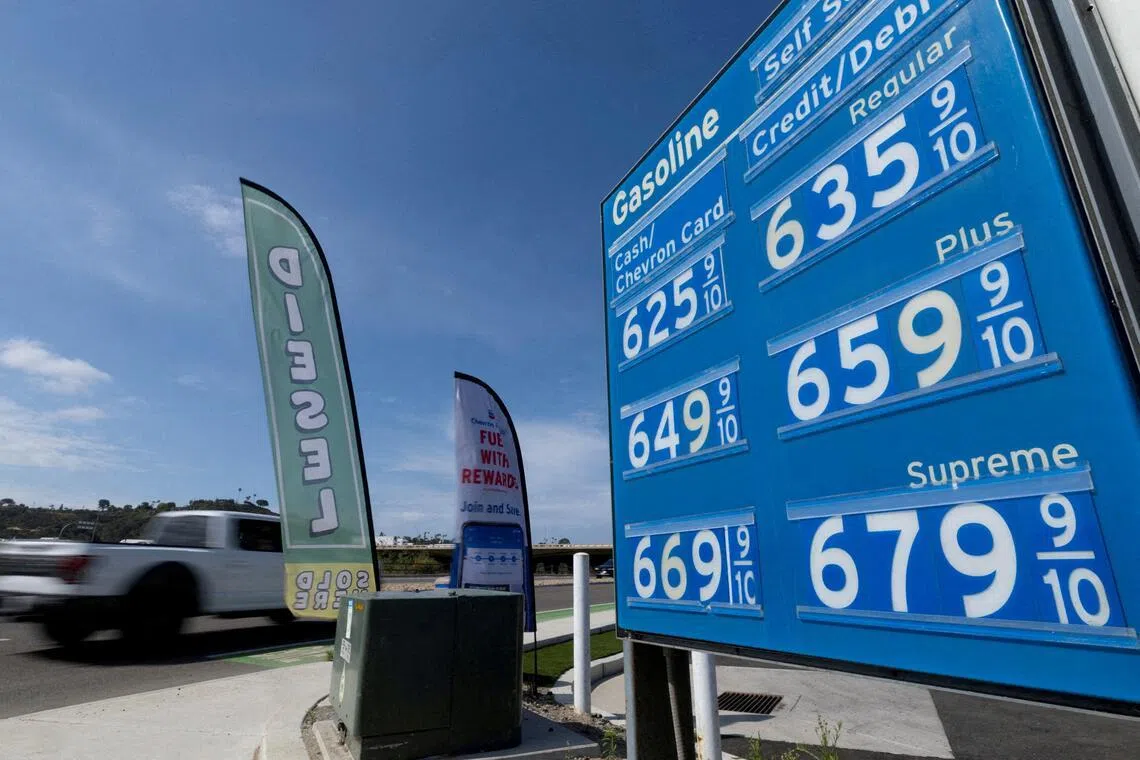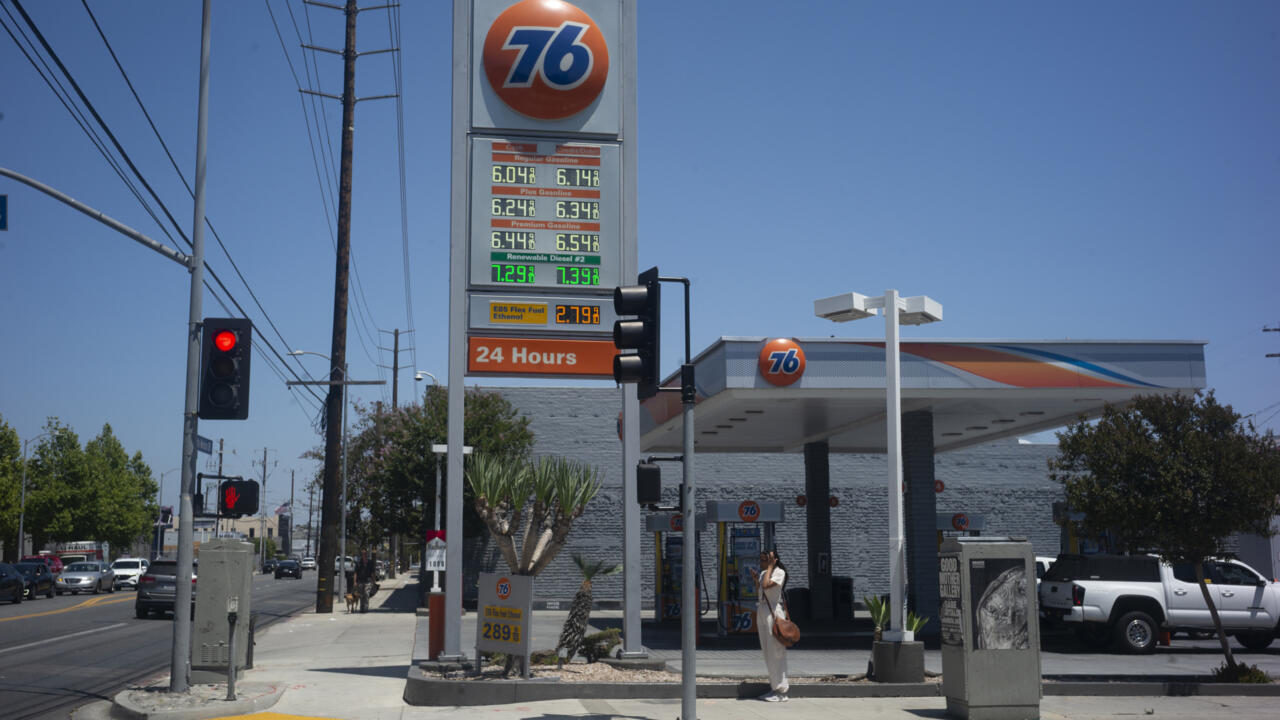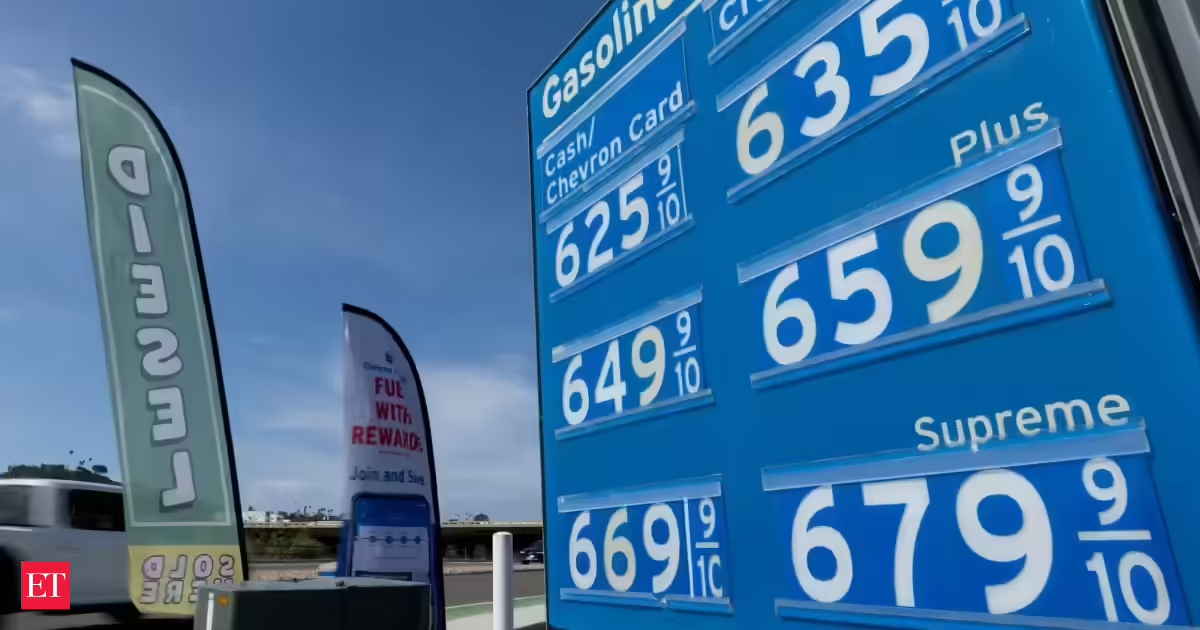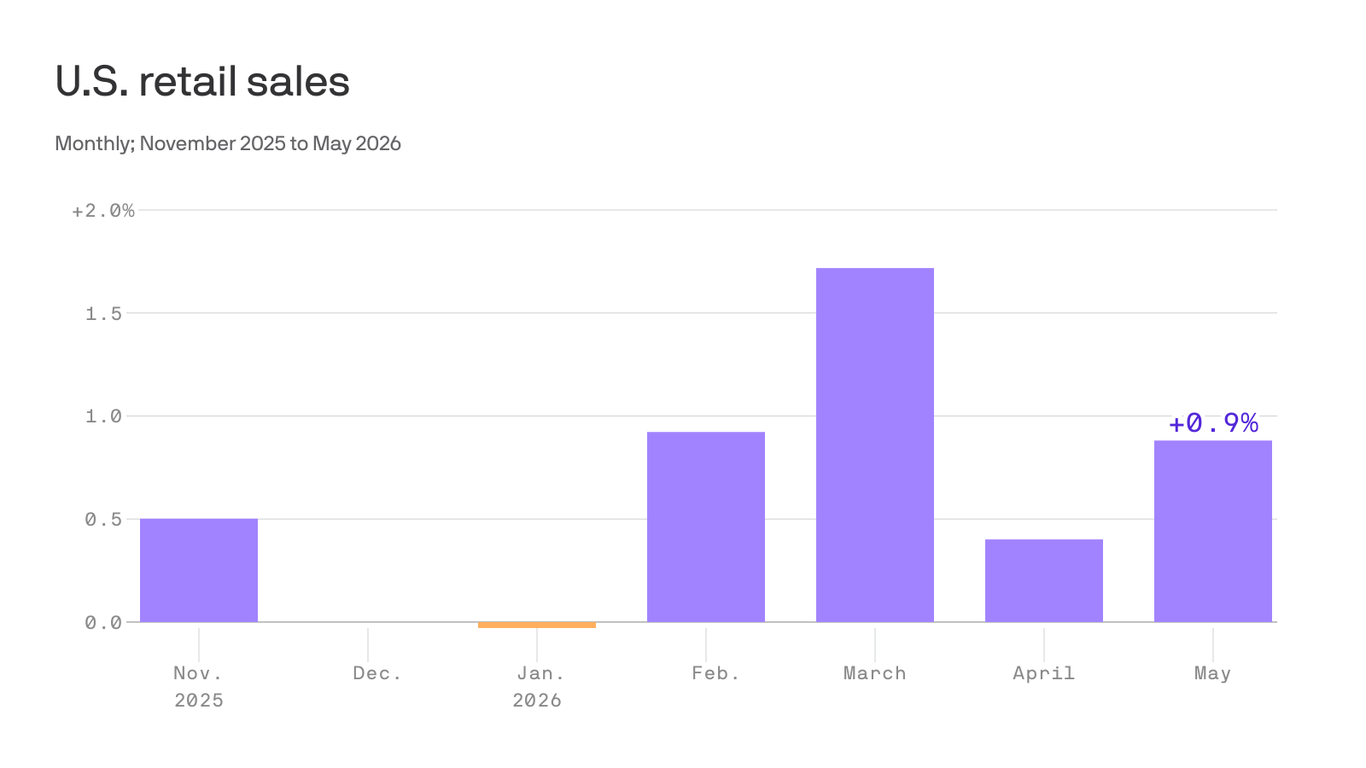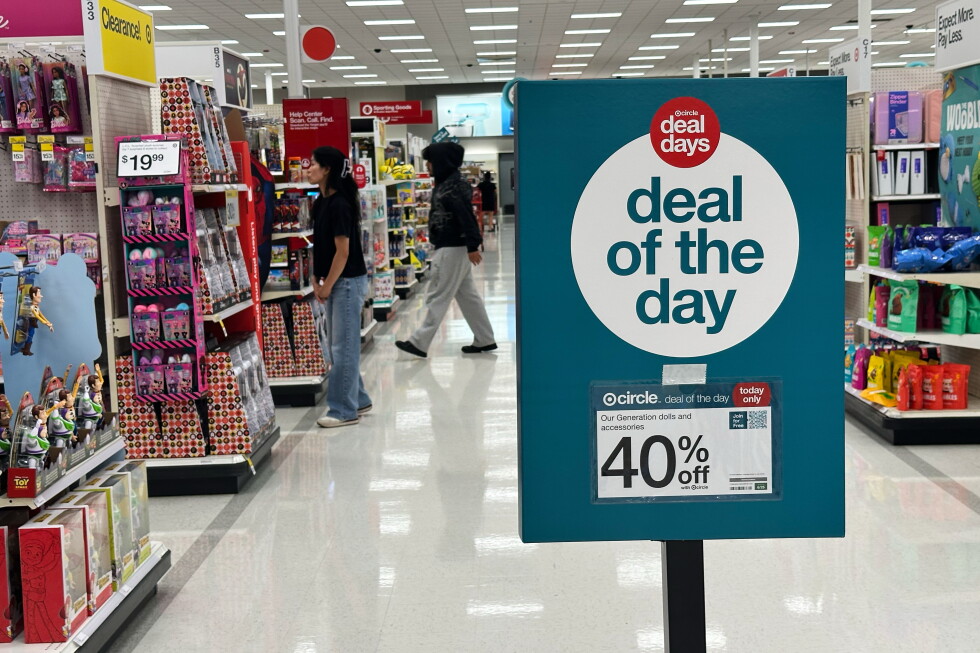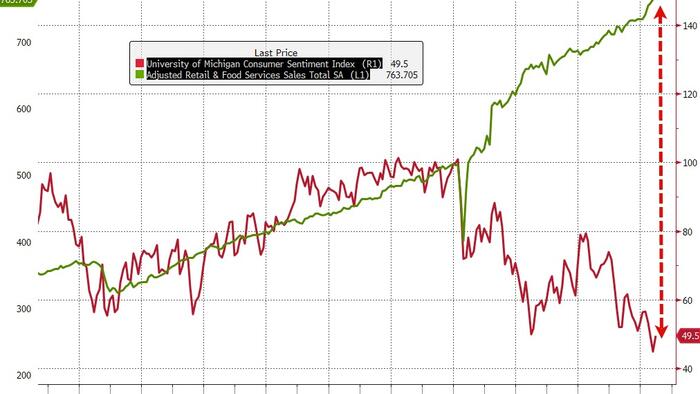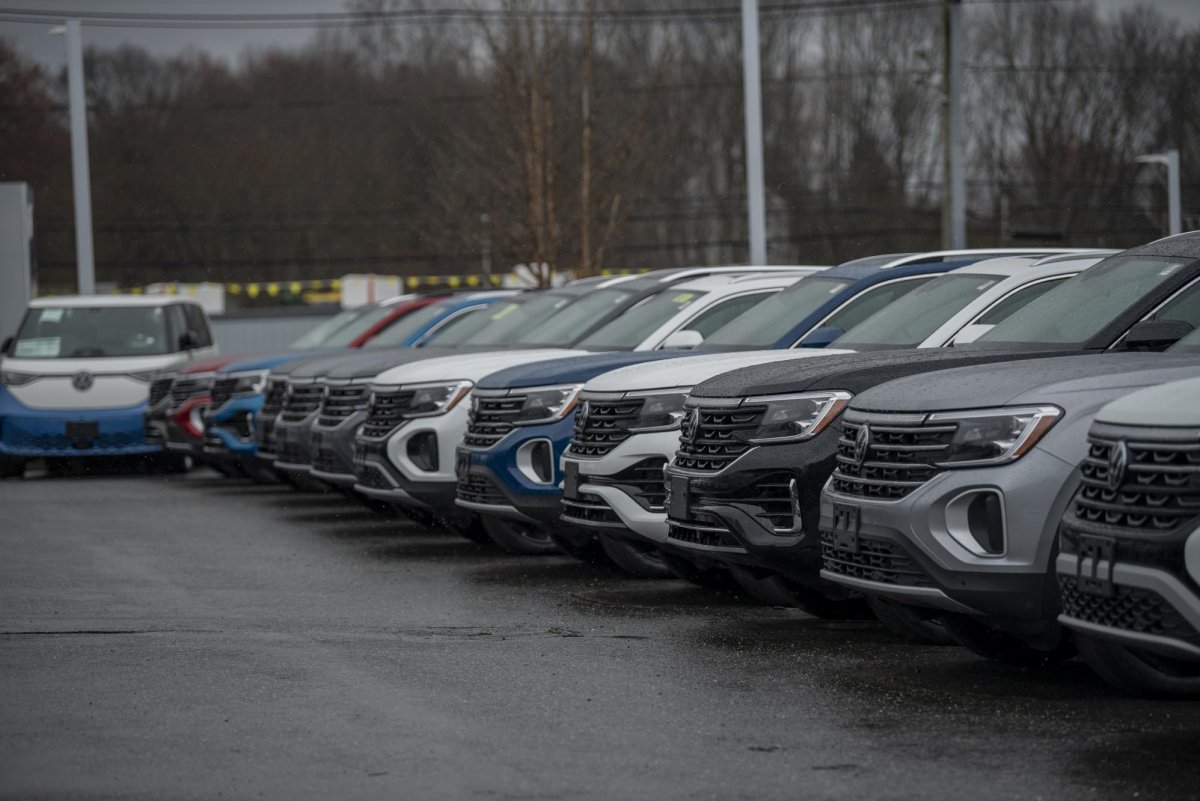
The U.S. consumer: resilient, unvanquished, indefatigable.The May retail sales report released on Wednesday from the U.S. Department of Commerce says as much. Overall sales were up 0.9% from April, way more than economists expected.Of course, some of that was soaring gas prices. Consumers spent 3.4% more at gas stations in May than they did in April and 26% more than they did in May 2025 (that’s thanks to the war in Iran).But spending was also up at stores that sell clothes, health, and personal care products, as well as hobby shops and the like.So, in the face of rising prices, high interest rates, and economic and geopolitical uncertainty, how are consumers finding the capacity to keep spending in such a resilient, unvanquished, and indefatigable manner? The May retail rebound was more than a pleasant surprise for Kathy Bostjancic, senior vice president and chief economist at Nationwide. “It was strong and broad-based,” Bostjancic said. “Consumers continued to spend quite freely despite higher gasoline prices.”Keep in mind that retail sales are not adjusted for inflation, so they go up when people buy more and also when prices rise. But Thomas Ryan, an economist at Capital Economics, said inflation was not the only cause of the May increase.“This wasn’t just a case of people being forced to spend more on gasoline,” he said. “There was also strength everywhere you look. Motor vehicles were up, furniture sales [were up].”More on retailFrom May 2026: Will higher costs for retailers be passed on to consumers?From April 2026: With retail spending on the rise, what's keeping the U.S. consumer going?From December 2025: Retail job cuts are up from last yearRyan said we’ve seen this pattern repeat over decades.“When the American consumer is faced with a hit to their real incomes, they tend to absorb that hit, lower their saving rate, and maintain spending levels, rather than cut back on discretionary spending,” he said.That’s exactly what happened in April: When gas shot up, the savings rate went down. Bostjancic expects it fell even more in May.“Consumers do feel miserable,” she said. “They’re not happy with higher energy prices.”But they’re still spending it up — backed by some strong economic tailwinds: “Larger tax refunds this year, strength in employment, and also continued gains in the equity market,” Bostjancic said.Which especially helps upper-income households, which are key to this retail resurgence, said Kayla Bruun, head of economic analysis at Morning Consult.“Each individual higher-earning household can punch above [its] weight,” Bruun said. “They have more spending power. Added up into an aggregate of total retail sales, high-earners account for a lot of that spending.”It’s that K-shaped economy again: The wealthy, unworried about gas prices and inflation, can spend money on high-priced airfares and new cars while everyone else is operating way closer to the bone.“For lower-income adults, the labor market is really essential to whether they even can do discretionary spending,” Bruun said.As long as unemployment remains low, this strong retail run could last awhile.
How do consumers manage to keep spending?
Overall retail sales in May were up 0.9%, much more than economists expected. And it’s not just because things were more expensive.
494 words~2 min read