Show Caption
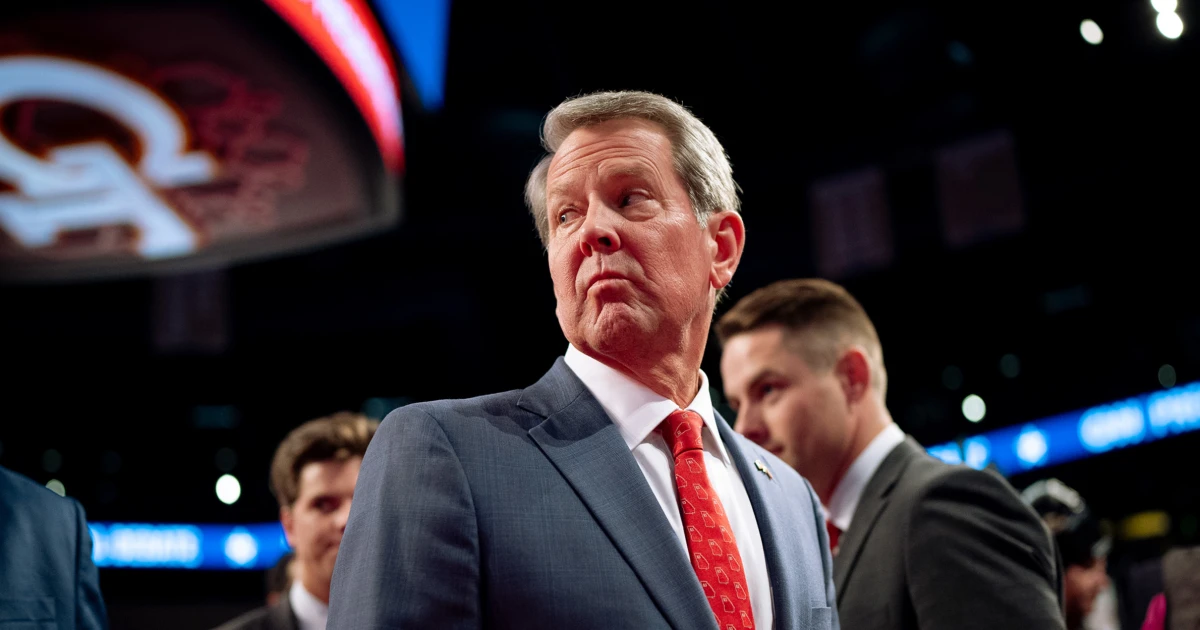
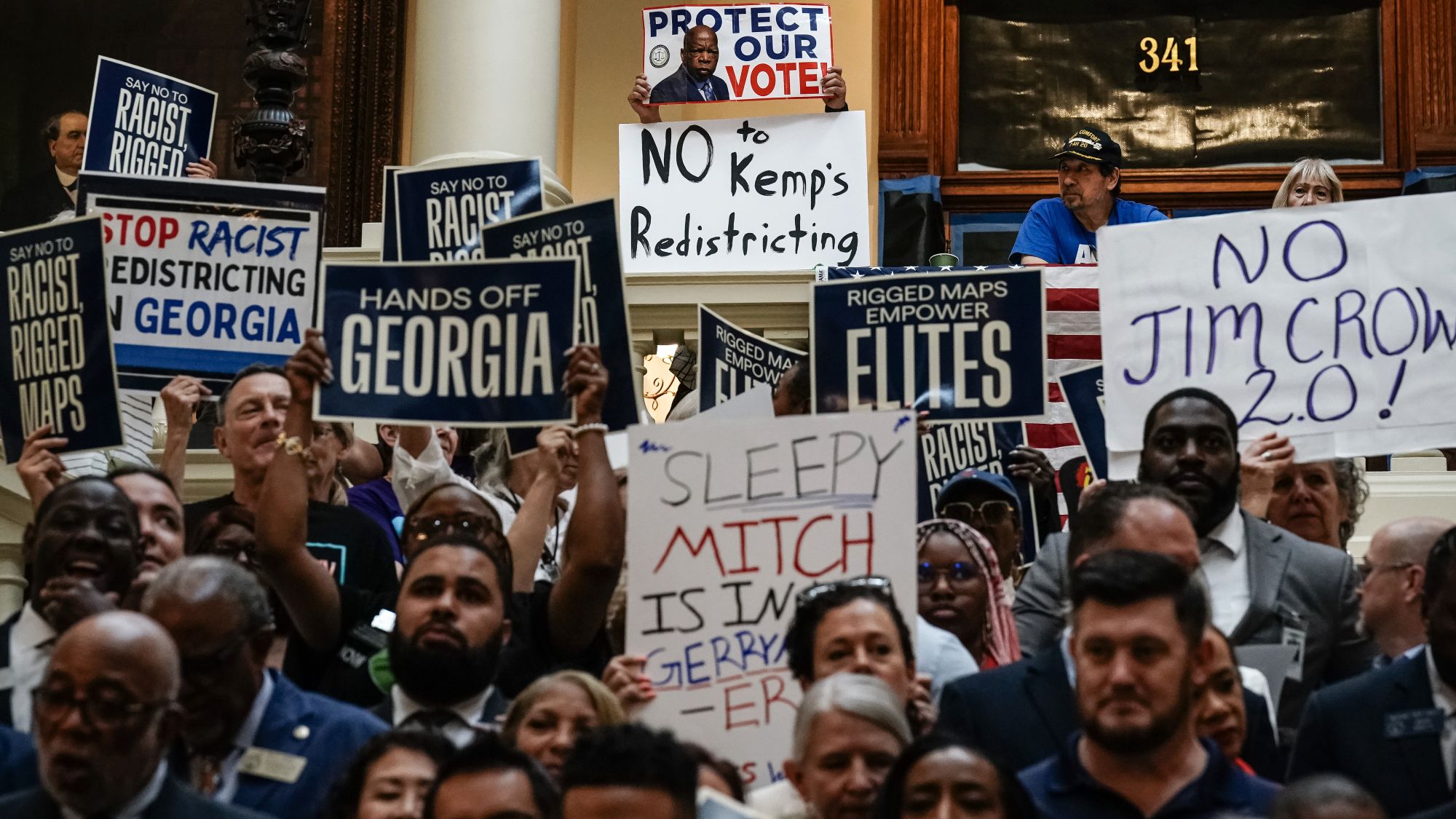
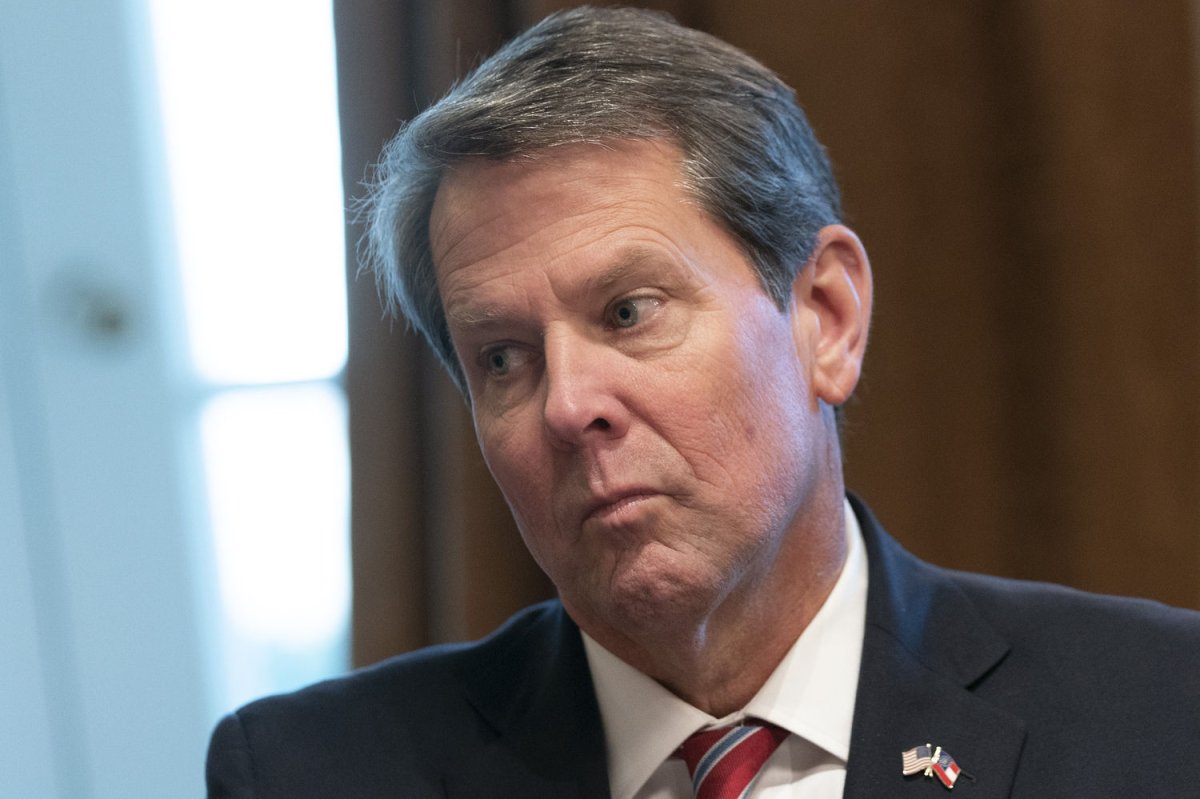
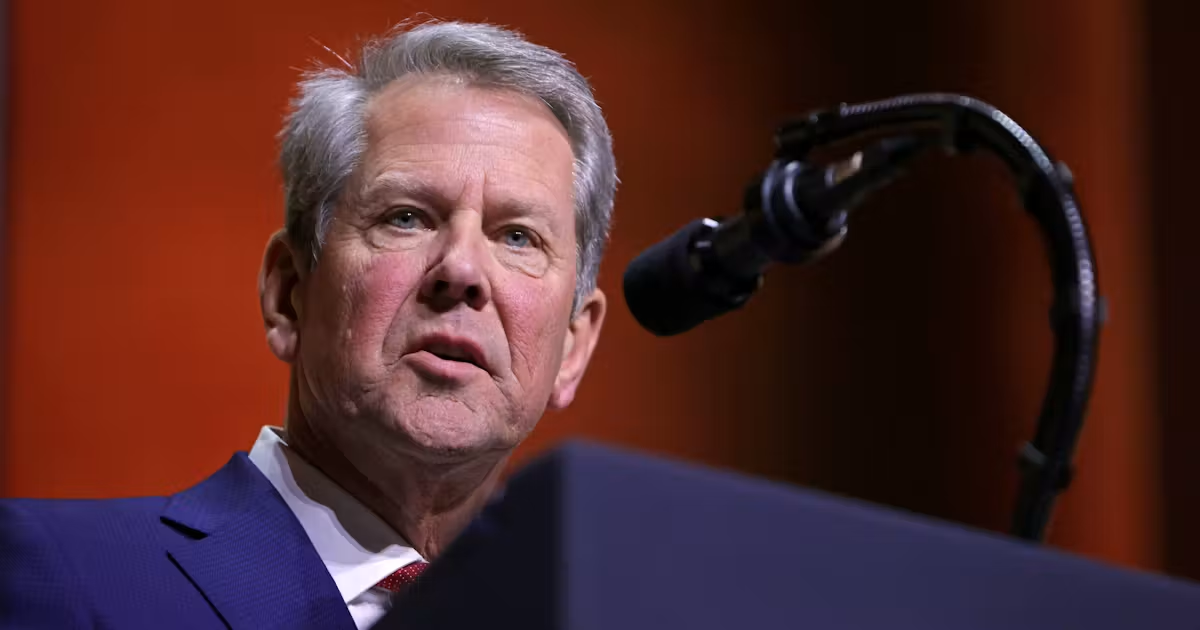
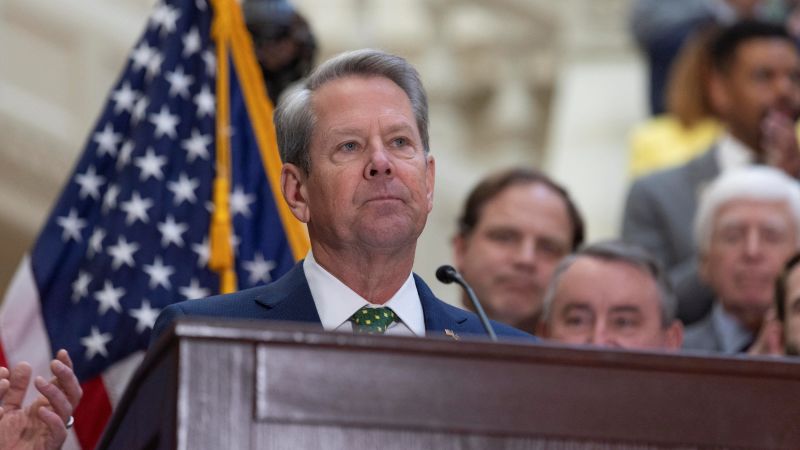
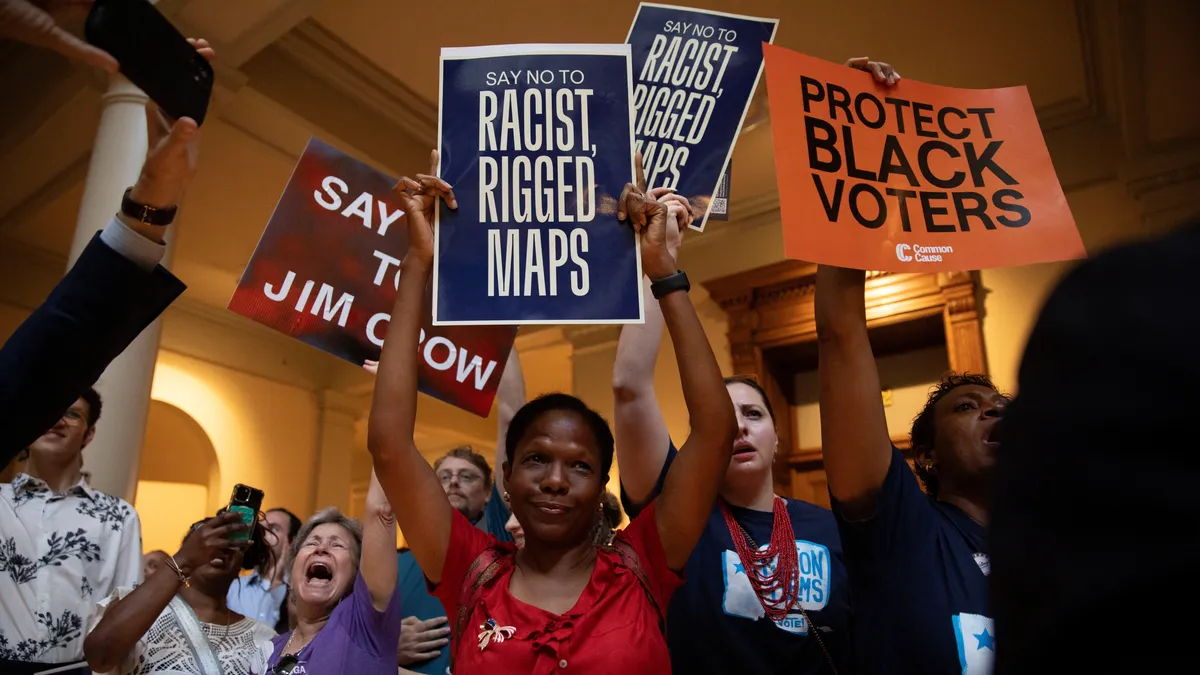
Georgia lawmakers ditched plans special to redraw the state's political maps.The special session was initially called by Georgia Gov. Brian Kemp to create more favorable Republican districts following a recent Supreme Court ruling that weakened the Voting Rights Act.Opponents of the redistricting effort celebrated the decision as a victory for voters and civil rights.Georgia lawmakers scrapped plans to redraw the state's congressional district maps intended to help Republicans retain control of the narrowly divided U.S. House following a major Supreme Court ruling.The lawmakers' decision came hours before a special session was scheduled to begin on June 17. Outgoing Georgia Gov. Brian Kemp, a Republican, called the session to try drawing new legislative maps ahead of the 2028 election, hoping to create boundaries more favorable to Republicans.But Georgia state House Speaker Jon Burns, also a Republican, said in a letter to Kemp that wasn't happening because state lawmakers have always given considerable time for public input regarding redistricting."Changes to Georgia's maps should take place only when members of the General Assembly and citizens have been given ample opportunity to gather the facts, provide input, and engage in meaningful discussion," Burns wrote. "For this reason, we will not be taking up congressional or legislative redistricting for the 2028 election cycle during this special session."Georgia became the latest Southern state to explore redistricting after the Supreme Court's ruling in April that essentially weakened Voting Rights Act protections for Black and Latino voters to have some districts where they’re in the majority, rather than sprinkled among White Republican districts. The high court voted 6 to 3 to strike down a Black majority congressional district in Louisiana, limiting the landmark 1965 civil rights law passed to protect the voting power of racial minorities.Other GOP-led Southern states, including Alabama, Florida, Louisiana and Tennessee, all implemented redrawn maps in time for this year’s elections as Republicans currently hold a narrow majority in the U.S. House of Representatives. All 435 House seats will be on the ballot heading into November's midterm elections, as well as control of the lower chamber of Congress.But Burns told Kemp redistricting in Georgia can wait for now as it affects every voter in the state."Since this process has the potential to impact every voter, it deserves the same responsible, fact-driven approach that guides every policy we consider as lawmakers, especially as we seek to understand the full implications of the U.S. Supreme Court’s decision in Louisiana v. Callais."Georgia GOP leaders said not enough time to take up redistrictingState legislators were already going to have to return to the State Capitol in Atlanta after leaving voter reform issues still on the table at the end of their regular session in April. But following the Supreme Court decision on Louisiana, redistricting was added to the agenda.During a hastily organized news conference at the Capitol, Burns and other Georgia state Republican legislative leaders reiterated they did not have enough time to pursue redistricting in the current special session."When the House learned that it was placed on the call for a special session, we knew it was not the right path forward for our state at this time," Burns said to a surprise chorus of cheers. "We believe that it is important to do things the Georgia way — responsibly, transparently, and with ample opportunity for public input just as we do with every other issue that comes before the House."Burns said there are still several cases pending as judges are "currently analyzing" the impact of the high court's decision on redistricting. The state speaker said many of those cases involve Georgia’s prior and current maps."We are confident that Georgia will prevail in the pending appeals and look forward to receiving additional judicial opinions to assist us in our future map-drawing efforts," Burns said.Republican leaders indicated they could revisit redistricting ahead of the 2028 election cycle, and in front of a new governor, as Kemp will be term-limited."Because any changes to our current congressional or legislative districts would not go into effect until 2028, we believe it is prudent to take the appropriate and necessary time to do this important duty the right way and not to rush through it," Republican state Senate President Pro Tempore Larry Walker III said, echoing Burns' sentiments for transparency and unity with the state House.In a written statement, Kemp countered the comments of Burns and his fellow GOP colleagues."I do not believe there is reason to delay the apportionment process, especially with the legislature already convening," Kemp said. "Legislative districting, however, is the responsibility of the General Assembly, and it is within their discretion to defer the issue until a later date."Redistricting opponents rejoice — for nowOpponents of Georgia's proposed redistricting efforts celebrated the Republican lawmakers' decision, for now.Isabel Otero, the Southern Poverty Law Center's interim Georgia state director, said in a June 17 statement that lawmakers weren't brought back to the Capitol to solve real problems facing working families, such as the rising cost of living, underfunded public schools, unaffordable healthcare and housing, and better public safety. "Gov. Kemp’s aim was to play his part in the broader effort to wipe out Black and Brown political representation throughout the South," Otero said."However, the governor underestimated his own constituents, who showed up, paid attention, and made clear that they will not stand by while politicians play games with their voting power."This decision by lawmakers to forgo redistricting is a win for voters, advocates, and communities who refused to be intimidated into silence," Otero added. Additionally, Georgia House Minority Leader Carolyn Hugley and Senate Minority Leader Harold Jones II said in a joint statement posted on social media that they "won a monumental civil rights victory.""Republicans thought they could get away with drawing racist, rigged maps without a fight. Today, thanks to the people showing up and showing out, we won," the politicians said. "Racist, rigged maps are dead for now. But we can't quit fighting."Fight now, vote Republicans out in November," the politicians added. "And stop these racist, rigged maps for good."