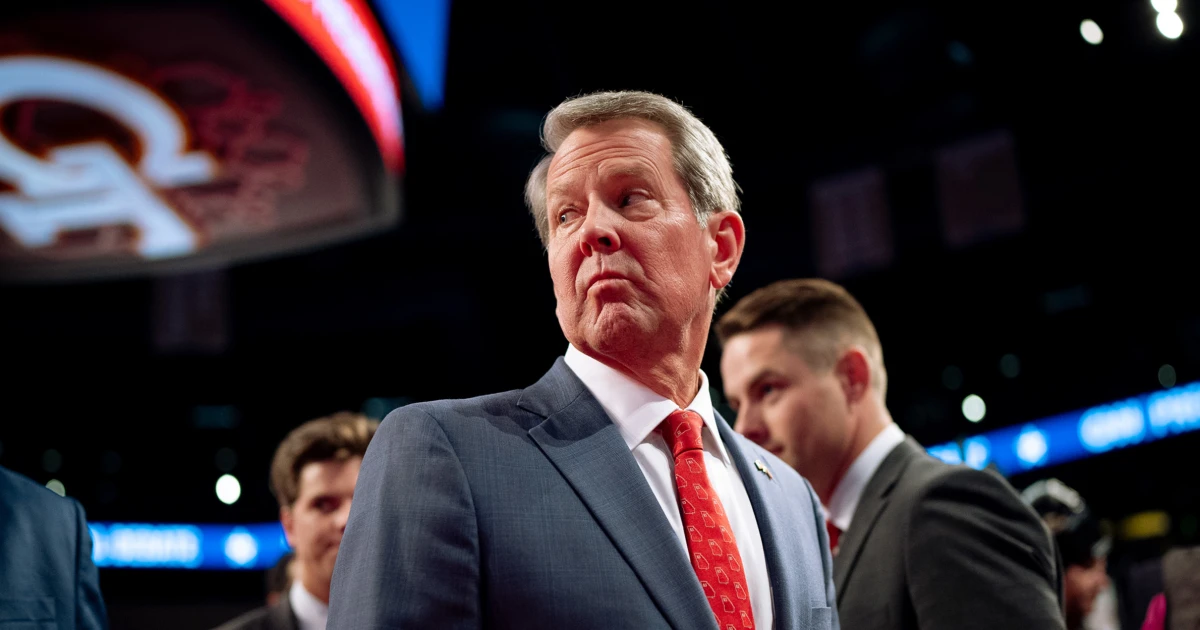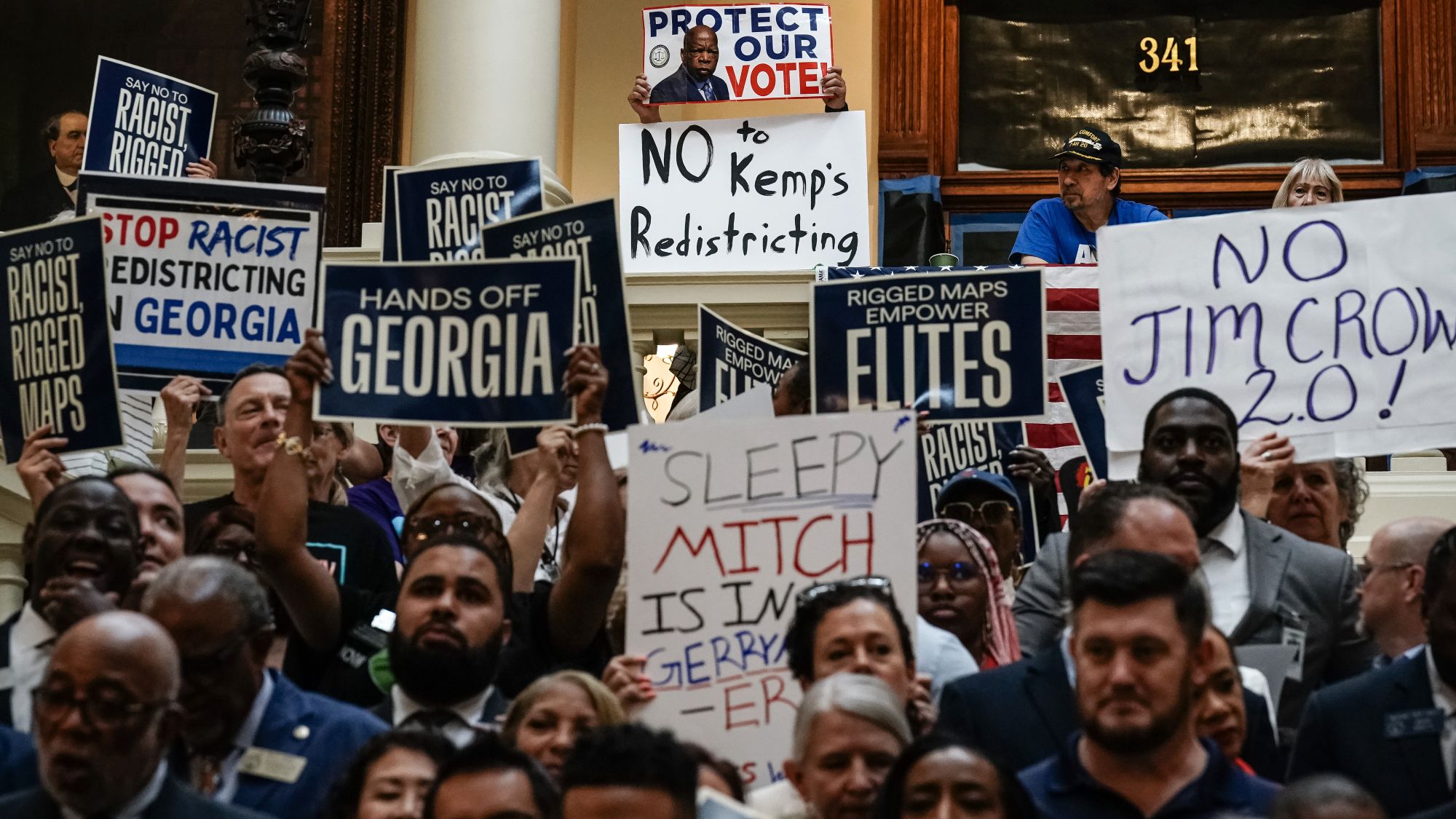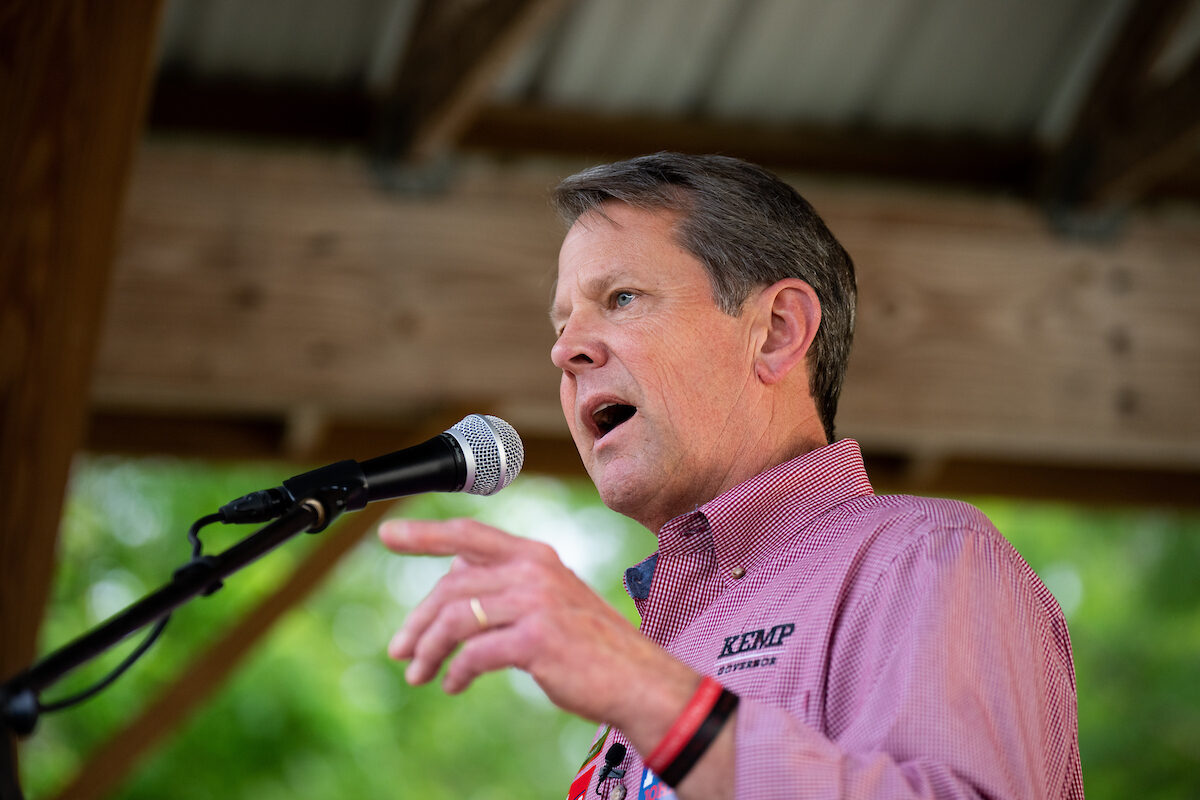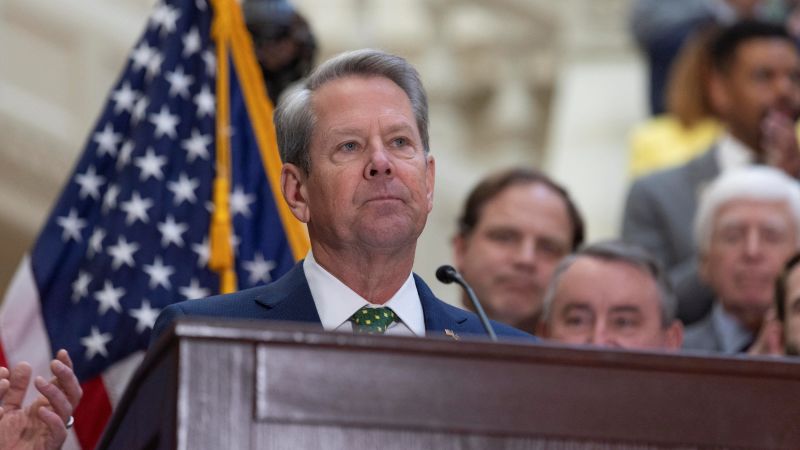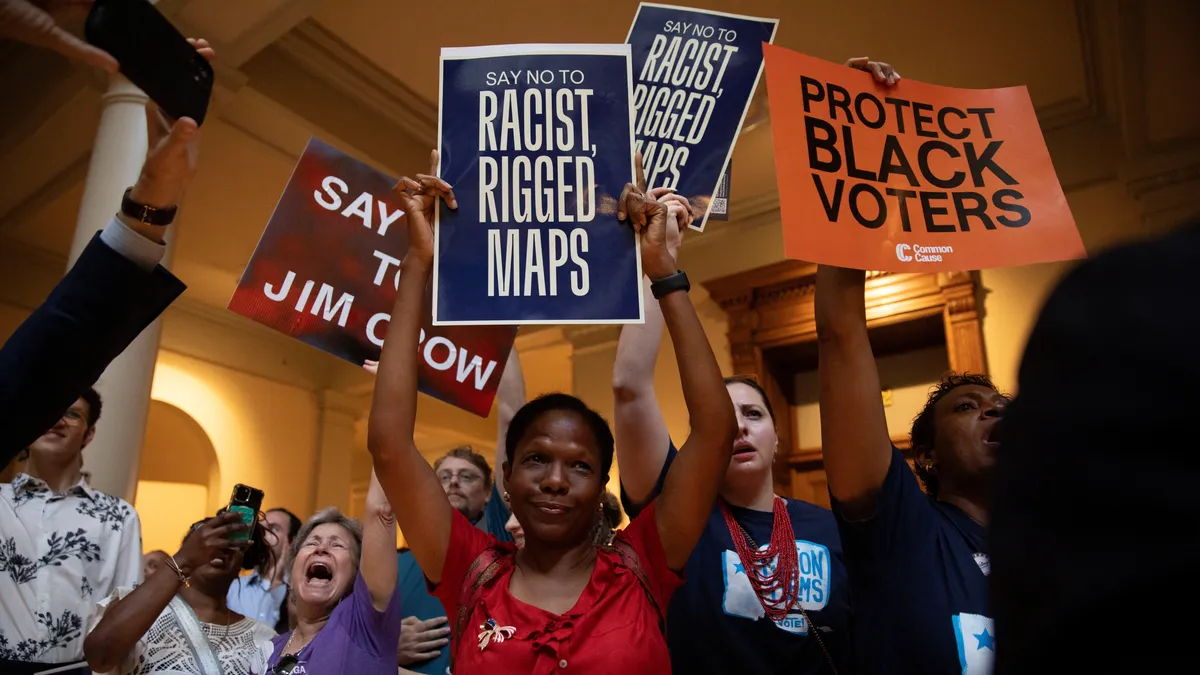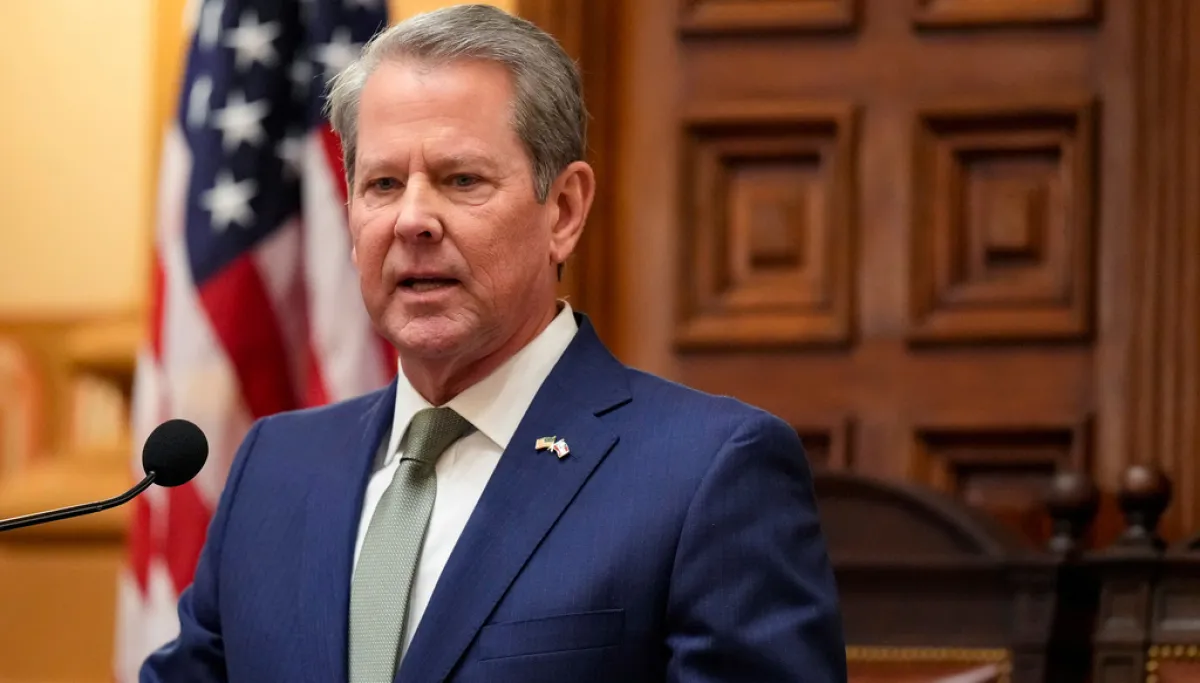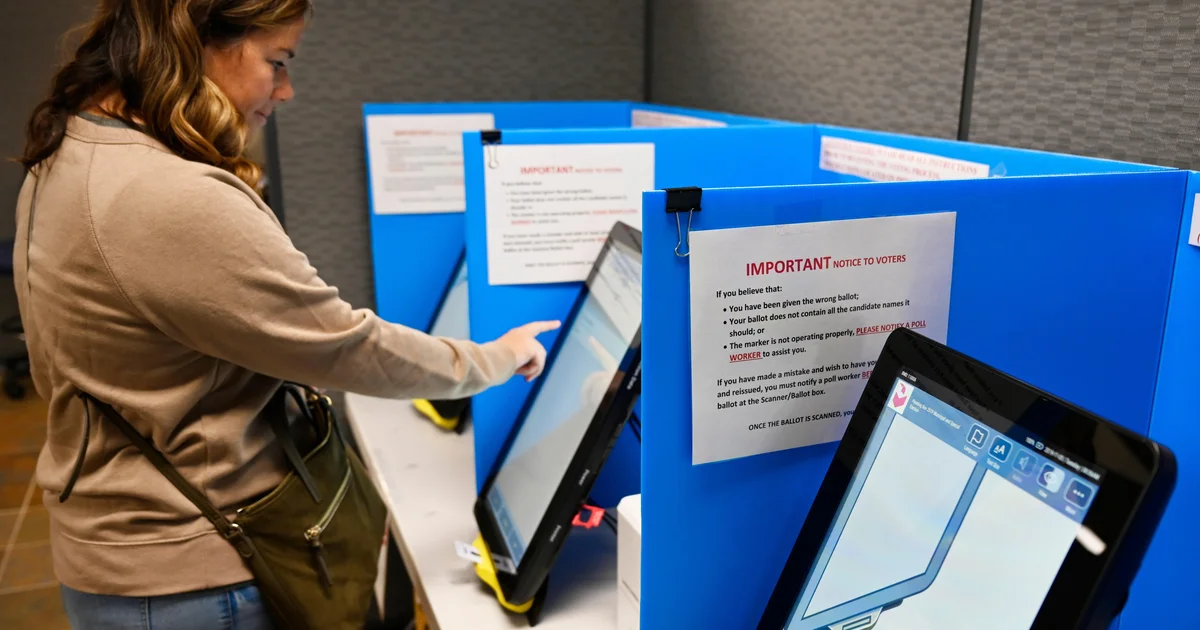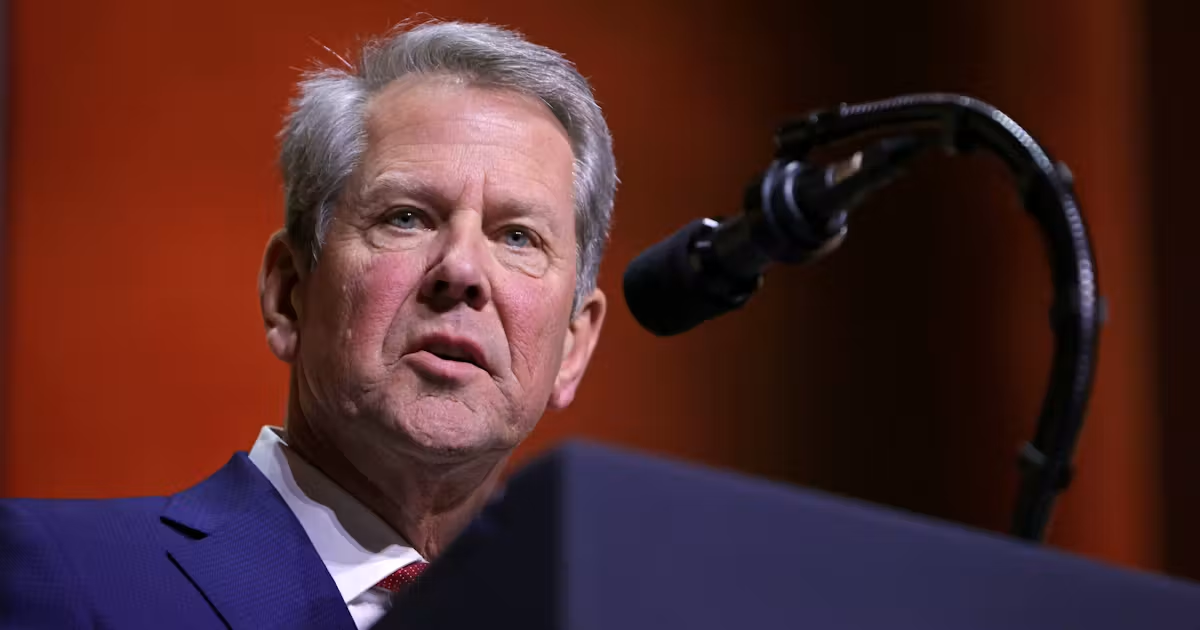
Georgia Republicans have decided not to redistrict their state after all.The decision came Wednesday after Governor Brian Kemp called the legislature into a special session to do so ahead of the 2028 election. But Peach State lawmakers flouted Kemp’s demands, arguing that the executive had not given them enough time to shift the state’s voting maps.“When the House learned that it was placed on the call for a special session, we knew it was not the right path forward for our state at this time. We believe that it is important to do things the Georgia way—responsibly, transparently, and with ample opportunity for public input,” said House Speaker Jon Burns during a press conference at the state Capitol.In a letter to Kemp, Georgia House Republicans wrote that they would entertain changes to the state’s voting maps “only when members of the General Assembly and citizens have been given ample opportunity to gather the facts, provide input, and engage in meaningful discussion.”The discussion does not seem to be dead in the water. Instead, state lawmakers are expected to revisit redistricting further down the road, according to Republican state Senate President Pro Tempore Larry Walker III.“Because any changes to our current congressional or legislative districts would not go into effect until 2028, we believe it is prudent to take the appropriate and necessary time to do this important duty the right way and not to rush through it,” said Walker.Kemp pressed the issue in the wake of the Supreme Court’s Louisiana v. Callais decision, which struck down Louisiana’s maps on the charge that they were racially gerrymandered.The Georgia legislature’s conclusion is a rejection of a national GOP movement, spearheaded by Donald Trump, to redistrict their locales in an attempt to carve out as many Republican seats in the House of Representatives as possible.Several red states have already caved to the White House’s demands: Alabama, Florida, Louisiana, and Tennessee redrew their maps in time to affect the results of the 2026 midterm elections.Yet not everyone has uniformly complied. Republican lawmakers in South Carolina and Indiana balked at the prospect, earning the president’s ire in the process.Read more about redistricting:The Trump administration’s peace deal following the war in Iran will require America to loom large over the Middle Eastern country for many years to come.The president admitted during a press conference at the G7 summit in France Wednesday that there is nothing enforceable in the drafted agreement, but rather that the constant threat of bombs should be enough to keep Iran committed to its terms.“There’s nothing enforceable in the deal itself, is that correct?” asked a reporter.“Doesn’t have to be,” Trump said wearily. “I let them know. I said, ‘Look, if you don’t adhere to the agreement—I don’t want to do that—but we’re going to bomb the hell out of you.’”“And I don’t think that they’re going to veer from the agreement. What else am I going to do? I’m not going to say, ‘I’m going to take you to court,’” he mused. “‘Let me take you to court, let me sue you.’ No, we’re going to bomb the hell out of them if they violate the agreement.”Q: On Iran, there's nothing enforceable in the deal itself, is that correct?TRUMP: There doesn't have to be. I let them know. I said, 'Look, if you don't adhere to the agreement, we're gonna bomb the hell out of you.' pic.twitter.com/KbXPsLfU42— Aaron Rupar (@atrupar) June 17, 2026 The text of the arrangement has not yet been made public, though both the White House and Tehran reportedly signed the deal on Sunday. U.S. officials read the American draft of the agreement to reporters after Trump’s press conference, but did not release the document. Iran has not released a draft.The latest draft reportedly proposes the immediate reopening of the Strait of Hormuz under Iran’s direction, a commitment from the U.S. not to interfere in Iranian affairs, and a reiteration of Iran’s commitment not to produce nuclear weapons, echoing language included in the 2015 Joint Comprehensive Plan of Action.One component of the plan has become the subject of much debate: a $300 billion reconstruction fund for Iran, which was originally understood to be provided at cost to U.S. taxpayers. Top Trump officials have wavered on the specs of the fund—first claiming that Iran would receive no money, then practically confirming the fund, then backtracking again to claim that the aid package would be bankrolled by Iran’s regional neighbors and managed by the U.S.The murky arrangement does not seem to include details on whether Iran will stop enriching its uranium—a highly anticipated component and one of the White House’s most pressing demands. Failing to obtain commitments regarding Iran’s nuclear program would make the deal far weaker than the Obama administration’s JCPOA. Read more about the deal:Hold up—did the United States actually sign a peace deal with Iran? New reporting from Axios Wednesday cast doubt on whether U.S. and Iranian leaders have actually signed Donald Trump’s deal to reopen the Strait of Hormuz. A senior administration official told reporters that the deal was signed electronically on Saturday by Trump, Vice President JD Vance, and Mohammad Bagher, the speaker of Iran’s Parliament. However, a diplomatic source from one of the countries who helped mediate talks told Axios that signing had never taken place. A second source familiar with the negotiations claimed the electronic signing had taken place. It wasn’t entirely clear, though, why a second signing was necessary.The diplomatic source’s claim directly contradicts the U.S. administration’s characterization of a done deal, and comes amid widespread confusion about what the memorandum of understanding actually says. The Trump administration has refused to release the final MOU until a formal signing ceremony takes place. The supposedly secondary signing was originally scheduled for Friday, but now the United States and Iran are discussing the possibility of moving that ceremony up. On Monday, Trump said that the deal with Iran was “already signed and the strait is already partially opened,” but speaking at the G7 Summit on Wednesday, he claimed the deal would be signed “shortly, tomorrow, maybe the next day.”“We’re going to most likely sign a deal,” Trump said, but seemed less than sure. Trump’s peace deal with Iran is increasingly reminiscent of one of his fictional trade deals, built on big loose agreements and threats that backfire on Americans. It’s gotten so bad that U.S. negotiators have even begun making efforts to downplay the actual text of the deal, claiming it was political performance more than staunch commitments.It’s not clear whether or not the deal is signed, but that could potentially explain all the secrecy and mixed messaging.Read more about the deal:The Trump administration is trying to get rid of the first reparations program in the U.S. for Black Americans. On Tuesday, the Department of Justice asked a judge to end the program in Evanston, Illinois, offering $25,000 to the descendants of the city’s Black residents who experienced housing discrimination between 1919 and 1969 due to city policies and ordinances. All residents who experienced housing discrimination in the city after 1969, regardless of race, also qualified for the program, which began in 2021.The DOJ said in its court filing that the program was “racially discriminatory, calling it unconstitutional because it doles out different benefits based on race.“There are sound ways for a city to remedy past discrimination or direct resources to its most vulnerable citizens and neighborhoods. Simply handing out money based on race, however, is not the answer,” said Harmeet Dhillon, assistant attorney general of the Justice Department’s Civil Rights Division, in a statement.In total, Evanston has allotted $20 million to the program, raised from a tax on legal marijuana, and $7 million has been distributed for use on down payments, home repairs, and paying interest or late penalties on property in the city.But to the Trump administration, any acknowledgment of racial discrimination toward people of color, historical or present, is to be rejected as “wokeness” or “DEI.” If the government’s lawsuit succeeds in ending the program, it could prevent similar reparations programs from starting all over the country—regardless of whether they’re effective or not.Editor’s Pick:The Trump administration is now arguing that an alleged thwarted drone attack on the White House UFC event on Sunday was an “assassination plot,” even as charging documents indicate otherwise, in an attempt to convince America that the president really does need that ballroom.Just four days before the UFC event, Tycen Proper, 19, of Ohio, reportedly told federal agents that he and four other people planned to bomb the event using drones and then shoot people fleeing. He was hospitalized with homicidal ideations and charged along with other members of his group. They had collected weapons and ammunition, but the status of the drones is unclear.The Department of Justice refers to Proper’s alleged plan as an “assassination plot” in its most recent legal defense for the White House ballroom the president has been insisting on building for weeks now. But Proper was charged with conspiracy to commit an offense against the U.S., attempted murder, firearm possession, and receipt or transfer of a firearm used to commit a felony—not assassination, as the DOJ claims.“This latest assassination plot against President Trump and dignitaries at the White House demonstrates the compelling need for the East Wing Project, with a Ballroom designed to defend against just such,” the filing Tuesday reads.This filing came on the same day that Vice President JD Vance described the planned UFC attack as “not that advanced,” placing even more doubt on the legitimacy of the administration’s filing claim.This shameless argument also came on the same day that The Washington Post reported that half the cost of President Trump’s $600 million ballroom will be paid by U.S. taxpayers—even after promising the project would be “taxpayer free,” with no U.S. citizen paying even “10 cents.”Editor’s Pick:
Georgia Republicans Pull Abrupt 180 on Redistricting in Blow to Trump
Governor Brian Kemp had called a special session to vote on new maps.
1,635 words~7 min read