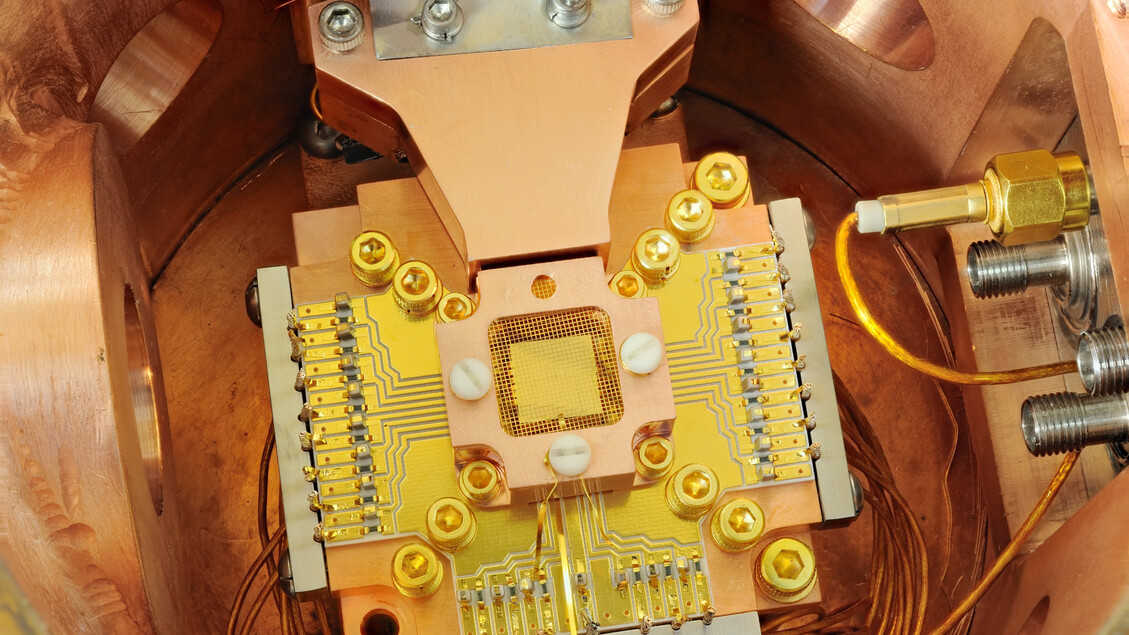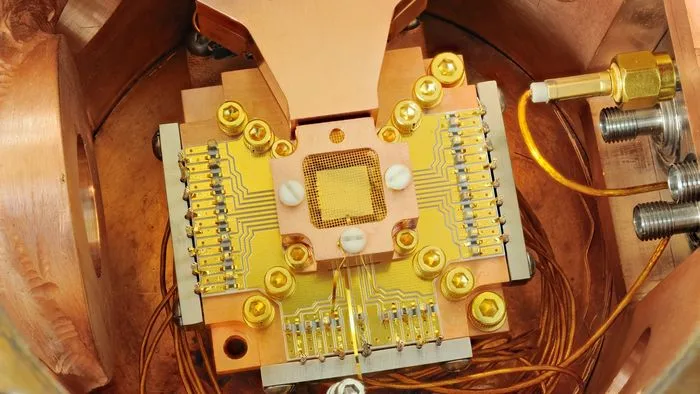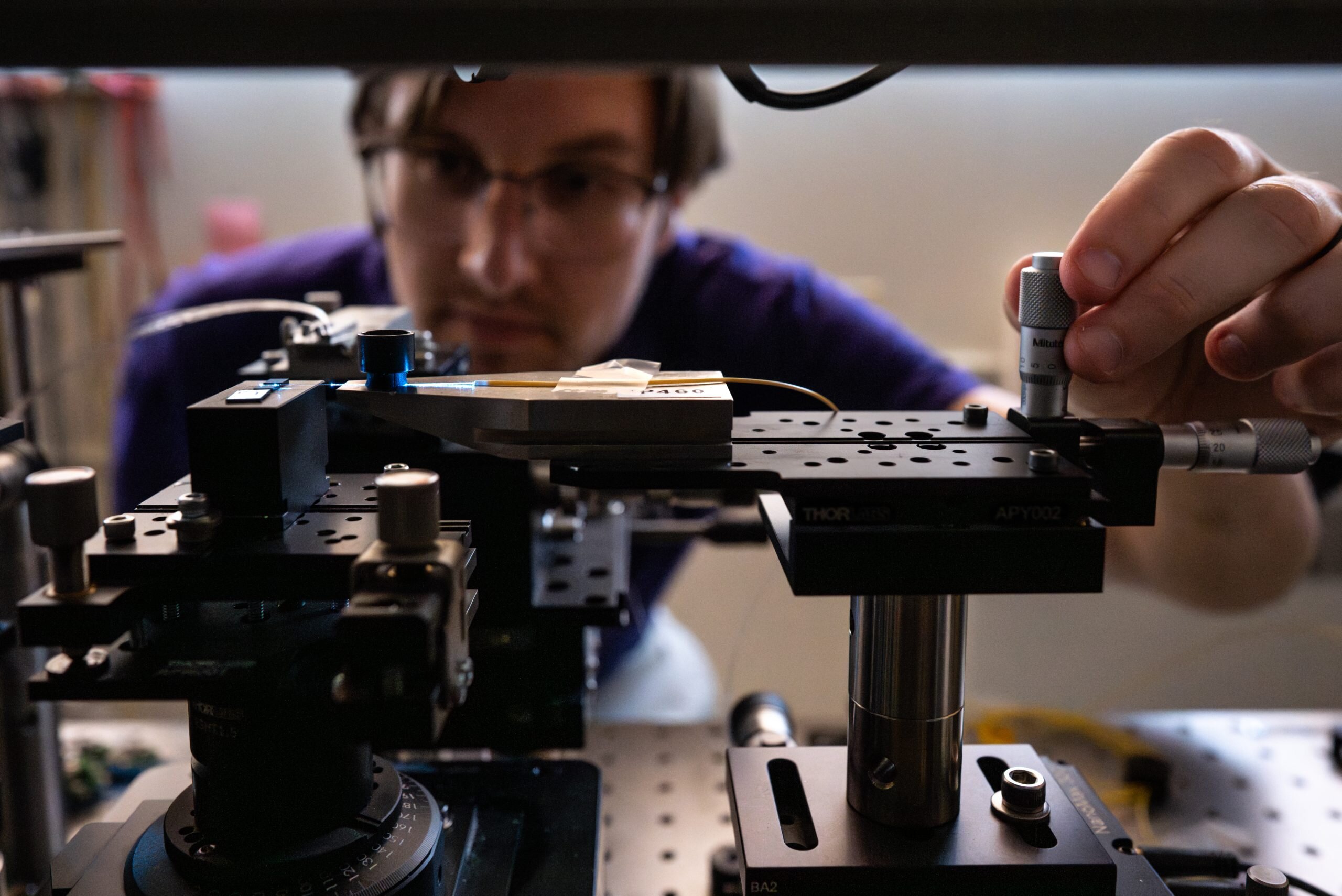
Sandia National Laboratories photonics researcher Forrest Hubert aligns an experimental chip with an optical waveguide carrying laser light. Sandia collaborates with quantum computing company Quantinuum to develop and test similar technologies. Credit: Craig Fritz
A public-private partnership in the Mountain West announced new results today that mark steady progress toward the Department of Energy's goal of fault-tolerant quantum computing, systems large and reliable enough to solve complex problems.
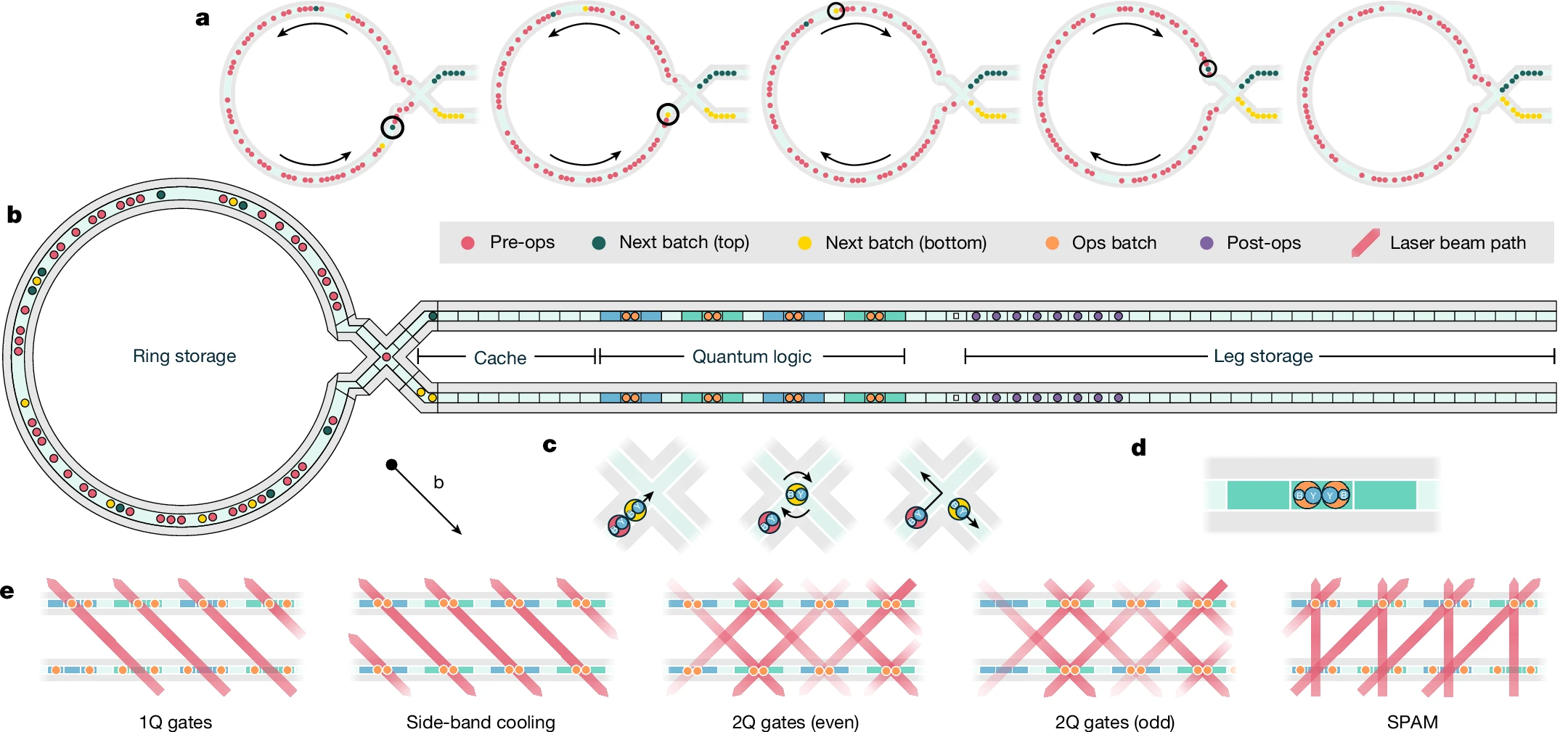
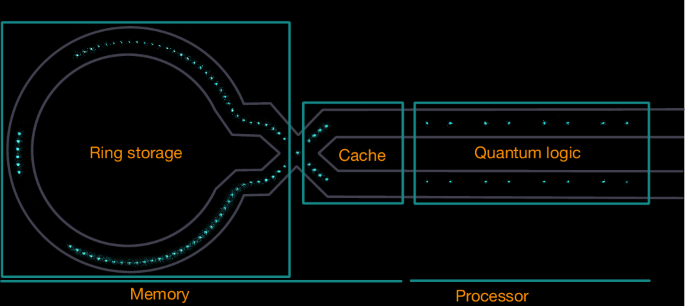
Sandia National Laboratories, home to the DOE's longest-running quantum computing program, and tech company Quantinuum published a paper today in Nature reporting the performance of the company's 98-qubit commercial system, Helios, which debuted last year.
In operations that involved only one or two qubits, or quantum bits, the system demonstrated very high fidelity—99.9975% and 99.921%, respectively. The results establish Helios as the company's largest and most reliable quantum computer to date.
Sandia senior manager Mike Descour lauded the findings as a success for the laboratory's collaboration efforts within the quantum computing sector. "As a national resource, we are committed to accelerating quantum computing technology in support of economic and national security," he said.