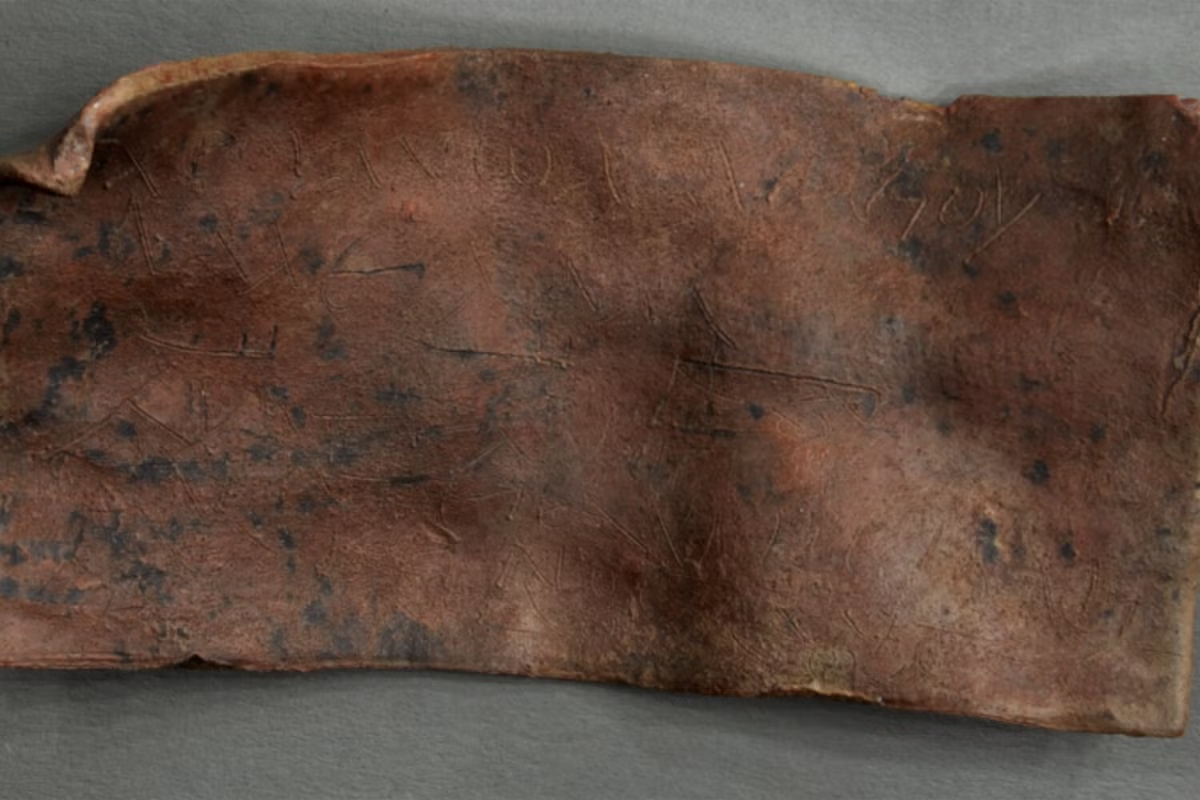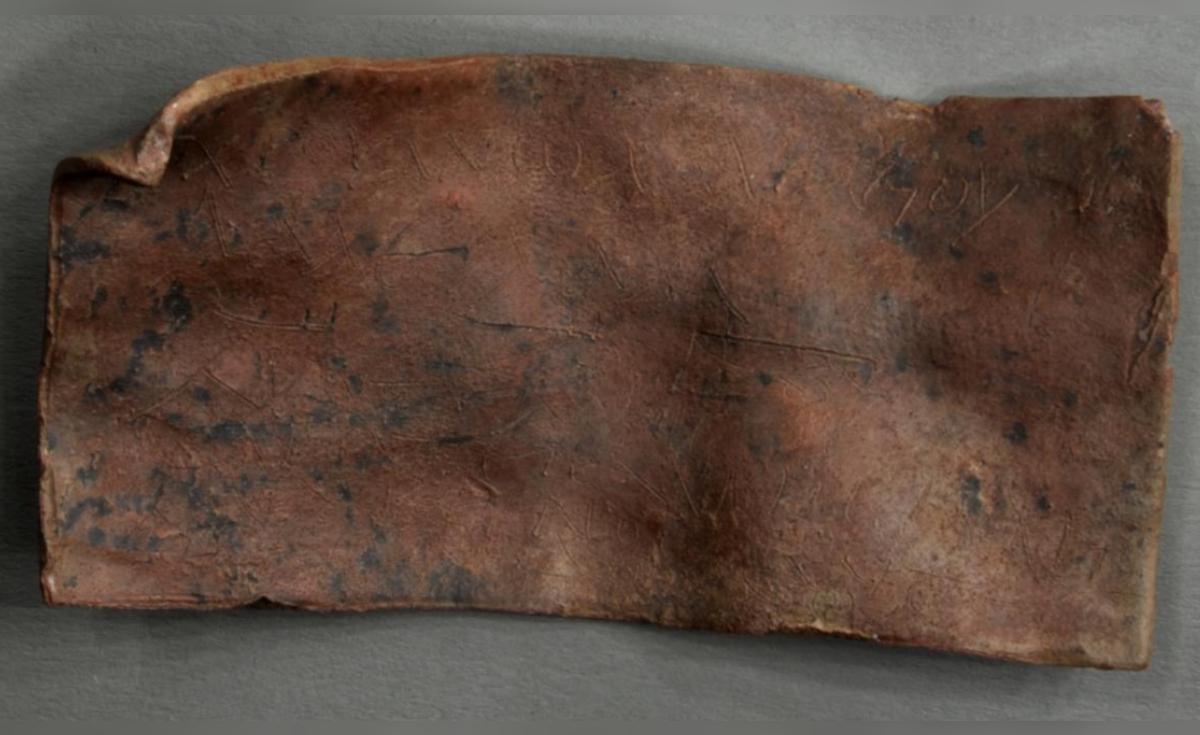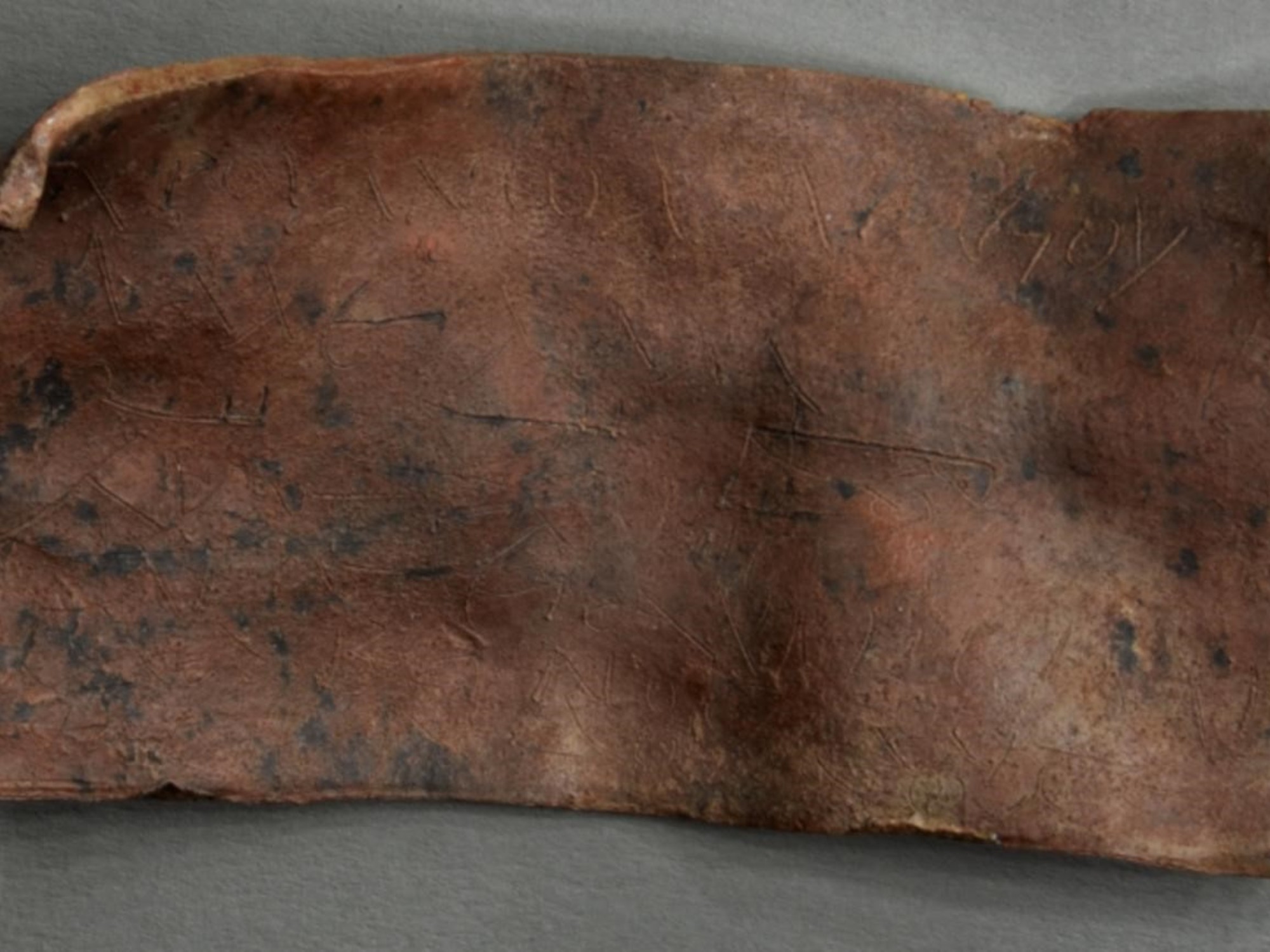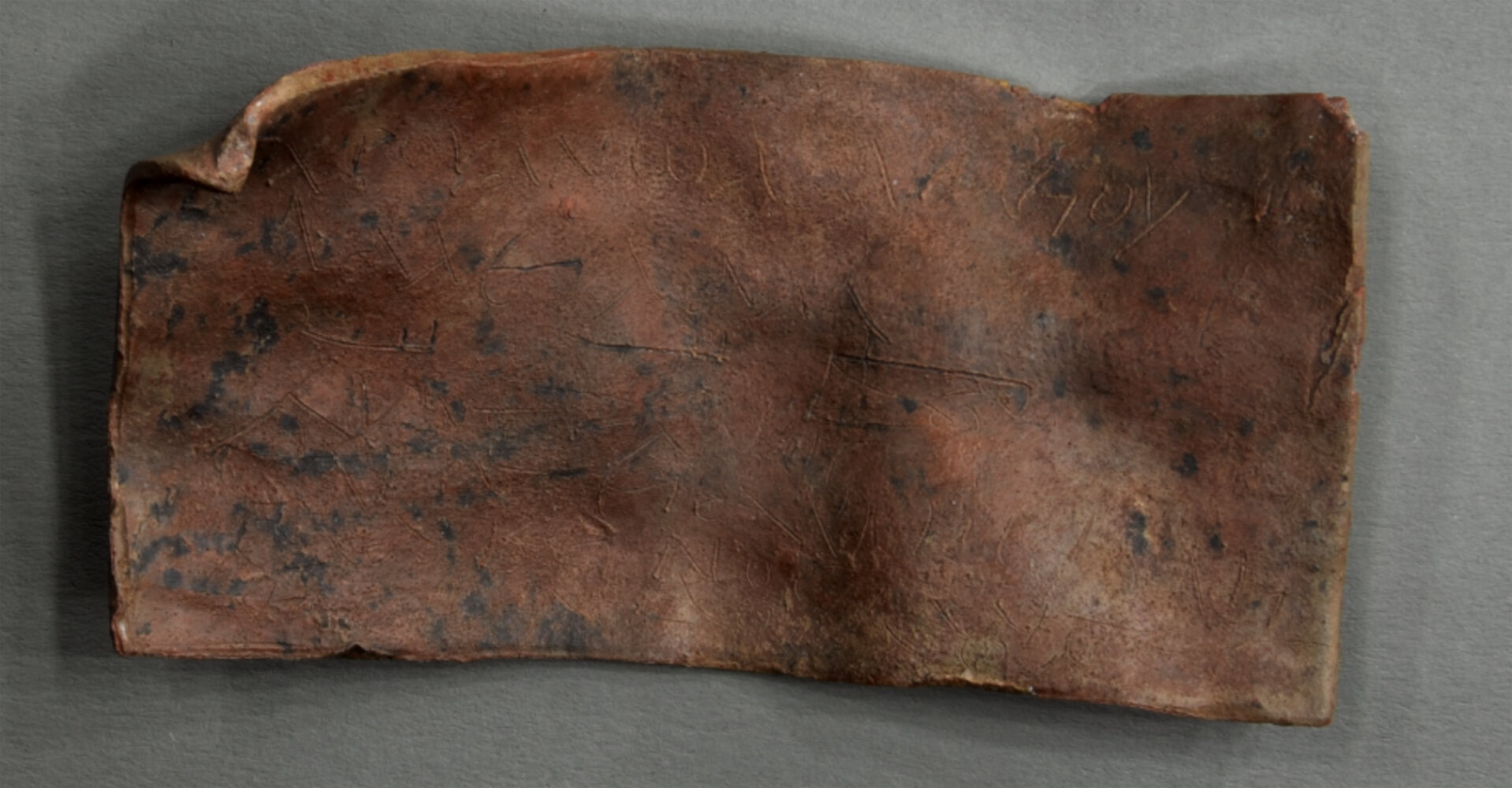
Heerlen curse tablet with an ancient Greek invocation of deities and demons in the Egyptian style. Credit: Elke Fuchs, Institute for Papyrology, Heidelberg University
Heidelberg University researchers have deciphered the inscription on an ancient curse tablet, which was once used to invoke deities and demons in order to harm an enemy. The "magical" artifact from the Roman province of Lower Germania was discovered during excavations carried out in the Dutch municipality of Heerlen. The lead tablet, which dates to the 2nd century A.D., is distinctive in that it contains not a Latin but an ancient Greek text in the Egyptian style, as Dr. Rodney Ast, academic director at the Institute for Papyrology, explains.
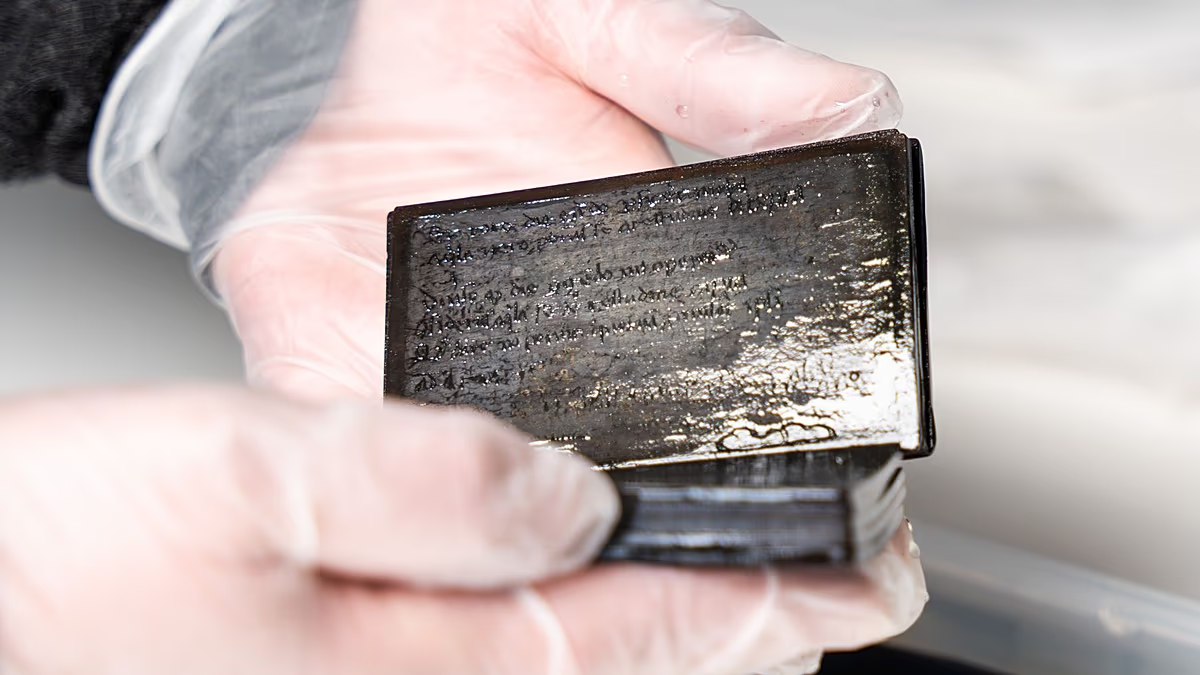
Ancient curse tablets, known as defixiones in Latin or katadesmoi in Greek, were usually made of lead, a heavy, cool-to-the-touch material that was easy to work with and was also believed to possess "binding" properties. According to Ast, these small tablets were inscribed with spells or binding charms and then buried in order to influence or "bind" opposing litigants, athletic opponents or romantic rivals.
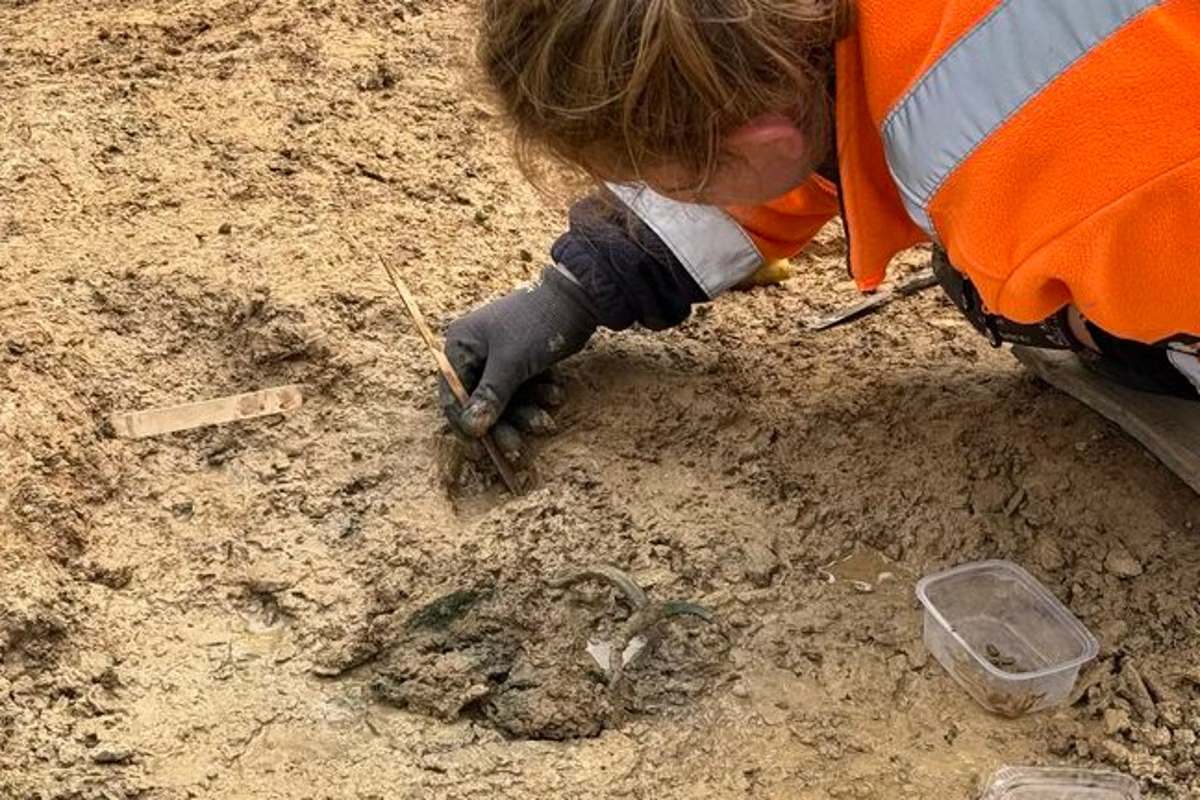
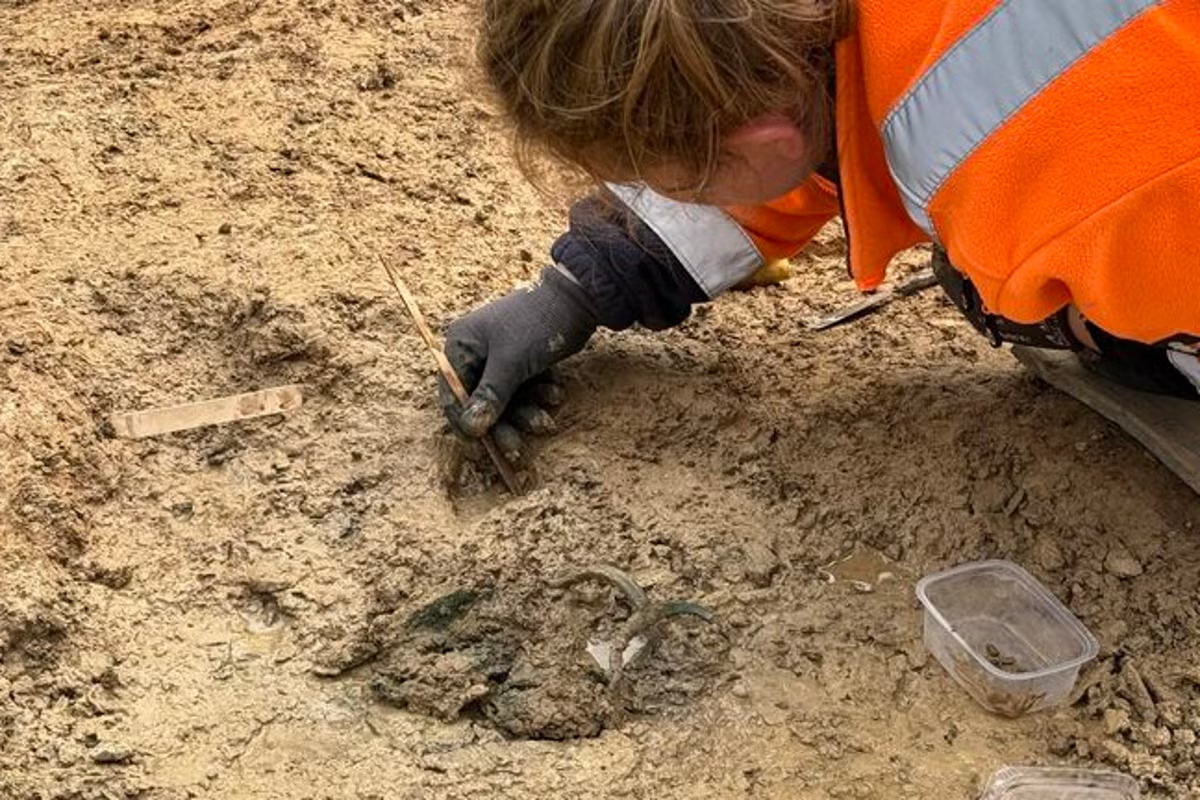
The lead tablet from Heerlen, the site of the former Roman military settlement of Coriovallum, was discovered by a team of Dutch archaeologists in a pit beneath the Town Hall square. The artifact, which measures 9.3 by 4.8 centimeters (3.7 by 1.9 inches), contains three distinct groups of characters, as revealed by an analysis conducted at the Institute for Papyrology using reflectance transformation imaging (RTI).