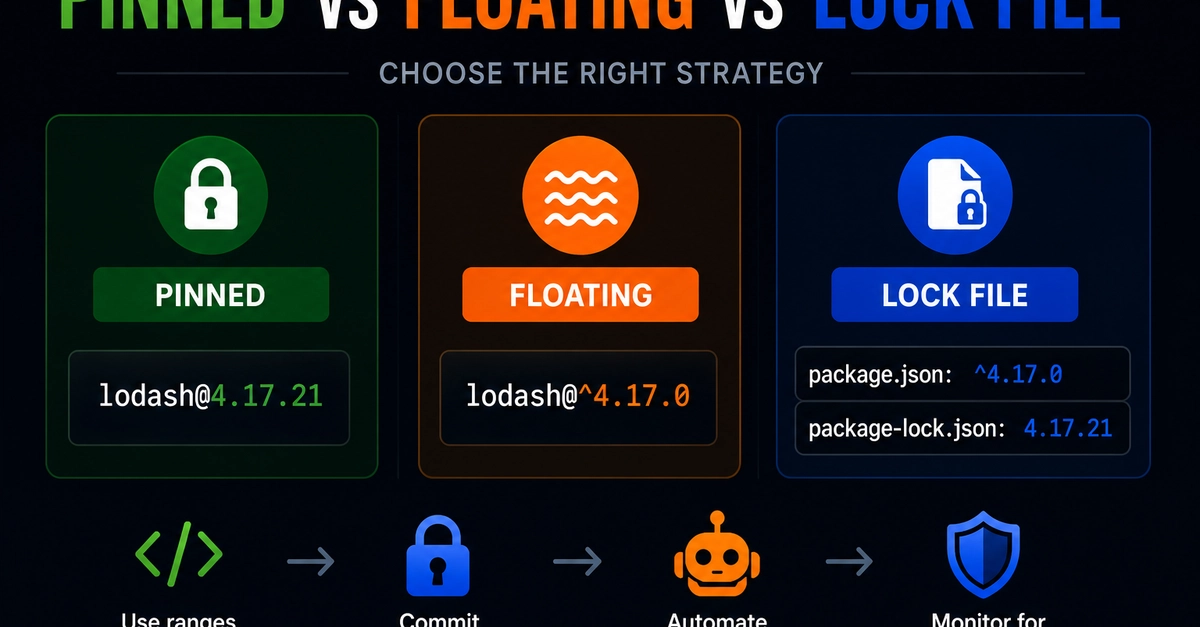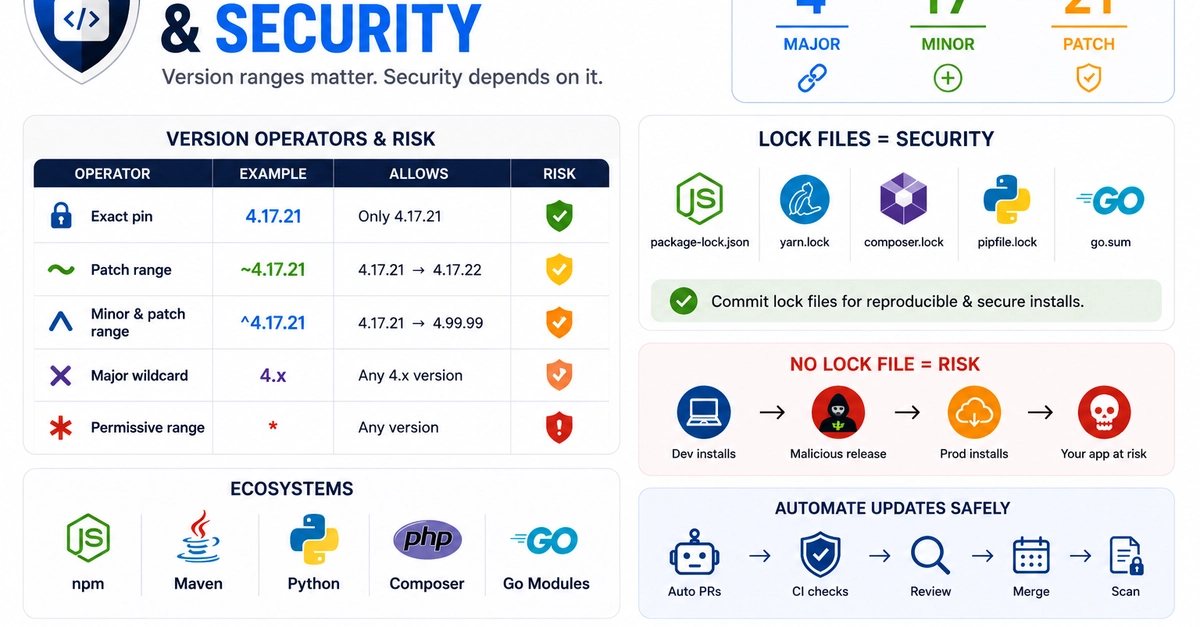
A single character in your dependency file can change what code runs in production. lodash: "4.17.21", lodash: "^4.17.21", and lodash: "*" do not mean the same thing. One locks the package to an exact release. One allows compatible updates. One allows almost anything.
That small difference is where semantic versioning security becomes practical. Version numbers are not just labels for developers. They control which package releases your application can install, whether a security patch reaches your build, and whether a compromised release can satisfy your dependency rules.
Semver Refresher — MAJOR.MINOR.PATCH
Semantic Versioning, usually called semver, uses a three-part version format: MAJOR.MINOR.PATCH. A common example is 4.17.21. The first number is the major version, the second is the minor version, and the third is the patch version.
The idea is simple. A major version changes when maintainers introduce breaking changes. A minor version changes when they add backward-compatible features. A patch version changes when they ship backward-compatible bug fixes, including many security fixes.