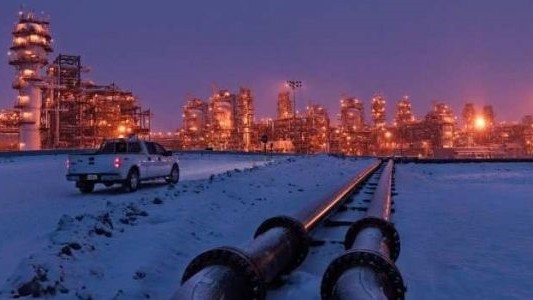
After the oil price crash of 2014-15, global energy majors like BP (NYSE:BP), Chevron (NYSE:CVX), and TotalEnergies (NYSE:TTE) sold their interests in the Canadian oil sands, at the time classifying their Canadian operations as among the most expensive and least profitable.Thus, the majors redirected capital to cheaper oil production, favoring US shale for its quicker drilling time and returns.They may end up regretting that decision.According to a recent report, via the Canadian Energy Centre, the oil sands have become one of North America’s most attractive oil plays as costs rise in competing basins like the Permian in Texas.“Operators have become more efficient and have tremendously low sustaining break-even costs, arguably the lowest in North America,” said Trevor Rix, a director of Enverus Research Intelligence which published the report.Canada's oil sands hold about 167 billion barrels of proven recoverable oil. This accounts for nearly 97% of Canada's total oil reserves, ranking the country third globally for proven oil reserves behind only Venezuela and Saudi Arabia. Costs were already dropping a year ago thanks to new technology and cost-cutting efforts such as autonomous haul truck fleets, standardizing maintenance practices across mines, improving water management, and even employing robots who perform routine maintenance.The situation stood in stark contrast to US shale producers, which saw higher overheads due to nagging inflation.As reported by CTV News,This long-term focus on cost-cutting means Canada’s five biggest oil sands companies can break even — and still maintain their dividends — at WTI prices between $43.10 and $40.85, according to a Bank of Montreal analysis for Reuters. That means oil sands producers have lowered their overall costs by approximately $10 a barrel in about seven years. Oil sands had an average break-even price of $51.80/bbl between 2017 and 2019, according to BMO.In contrast, a recent Dallas Federal Reserve survey of over 100 oil and gas companies in Texas, New Mexico and Louisiana found that shale oil producers need a WTI oil price of $65 per barrel on average to profitably drill. Back in 2017-2019, U.S. shale producers had a break-even price of between $50 and $52 per barrel.Fast forward 11 months, and some steam-assisted gravity drainage (SAGD) operations can break even at less than $40 a barrel, whereas comparative costs in the Permian Basin are approaching $65/bbl.Much of the difference comes down to the oil sands being mined rather than drilled. If the viscous, heavy oil is close to surface, companies operate huge open-pit mines that scoop up sand and clay, which is then separated from the oil, known as bitumen.If the oil is deeper, steam is injected underground to loosen the deposits, which are then pumped up to the surface.Oil sands mines have high startup costs but once operational, they can run for decades with low decline rates. By contrast, shale oil wells require low capex to begin drilling them, but their output declines within months, a phenomenon known as the “Red Queen Syndrome.”Shale companies therefore, must keep ploughing more money into production just to keep output flat.Shale wells typically bleed off 70 to 90% in their first three years and drop by 20 to 40% a year without new drilling.A 2025 IEA Report confirms this, stating that the world’s oil and gas fields are declining at a faster rate than previously thought, leaving the energy sector facing a costly battle to maintain output.The Canadian Energy Centre notes the heavy oil produced in the oil sands is seeing strong demand as global heavy crude markets tighten.While increased oil sands production has driven a nearly 800,000-barrel-per-day surge in Canada’s oil exports since 2021, competitors like Mexico and Venezuela aren’t keeping up.Enverus, the research firm, is calling for more pipeline infrastructure, projecting that oil sands production growth will fill current capacity in the next seven years.(The lack of an oil pipeline to tidewater has created a glut of Canadian crude that has kept prices depressed for years. That has some politicians calling for new pipelines to remove the glut and allow Canadian crude to receive the higher international price.)Possibilities include expansions and optimizations of the Enbridge (TSX:ENB) Mainline, the Trans Mountain system, South Bow’s (TSX:SOBO) proposed Prairie Connector, and the new West Coast Oil Pipeline proposed by Alberta’s government.By Andrew Topf for Oilprice.comMore Top Reads From Oilprice.comECB: Iran Peace Deal Won't Erase Europe's Energy Price ShockFalling Murban and Dubai Prices Open Arbitrage to U.S. and EuropePoland Moves To Tax Fuel Windfalls Earned During Iran War
How the Oil Sands Became the Lowest-Cost North American Producer | OilPrice.com
Once considered among the world's highest-cost oil resources, Canada's oil sands have become one of North America's most competitive oil plays.
735 words~3 min read