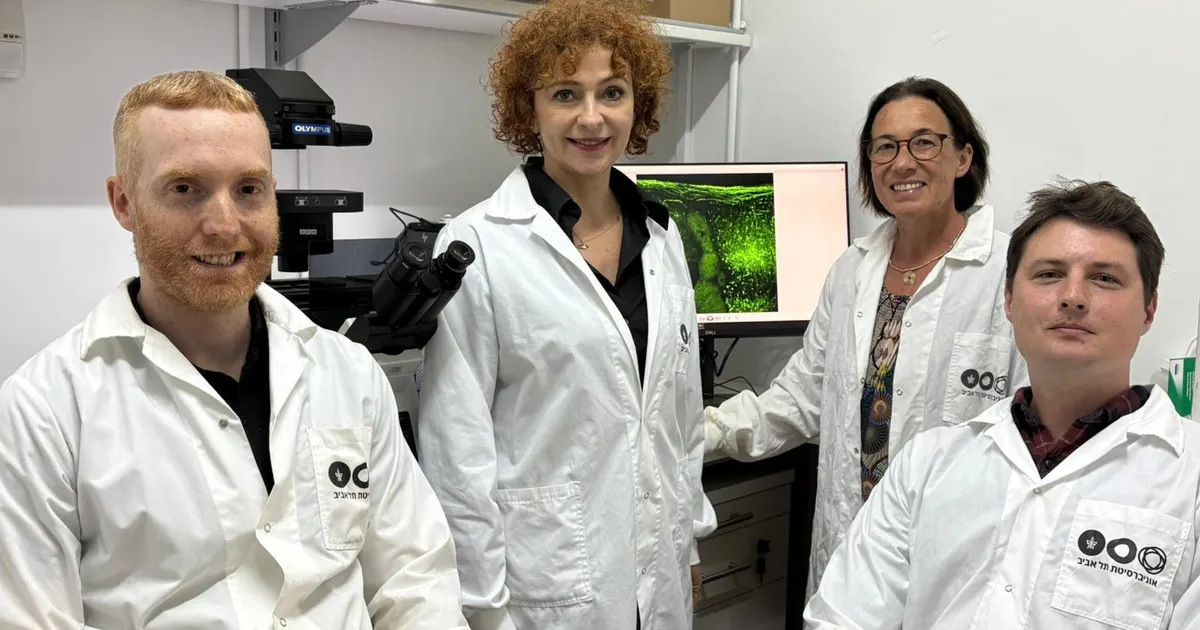
Public radio’s longest-running daily global news program.AboutContactDonateMeet the TeamPrivacyTerms of use©2026 The World from PRXPRX is a 501(c)(3) organization recognized by the IRS: #263347402.A scientific breakthrough for spinal injuries is emerging in BrazilOver 15 million people around the world live with a spinal cord injury, according to the World Health Organization. It’s a lifelong diagnosis that can permanently affect a patient’s mobility. In Brazil, an experimental treatment has yielded promising results, high hopes and legal challenges to get access to clinical trials. The World’s Julia França reports on the treatment, and the patients caught between hope for recovery and uncertainty over when, or whether, they will be able to access it. Science & TechnologyJune 17, 2026Updated: June 17, 20266:58Bruno Freitas works with rehabilitation equipment during his recovery from a spinal cord injury. Bruno Freitas was an active and lively 23-year-old when he went on a road trip with his parents in 2018. He was sleeping as his father drove, and they got into an accident. As he woke up in the hospital,Freitas “was with no movements, and that was very hard mentally [speaking]… I had a complete spinal cord injury.”Bruno Freitas before his accident, during a trip to the sand dunes.Courtesy of Bruno FreitasHis diagnosis was tetraplegia, meaning he had no movement from the neck down. However, before Freitas woke up, doctors gave him a trial treatment that his family agreed to. A protein called Polylaminin was injected into his spinal cord. Freitas told The World thatthree weeks after his surgery, he experienced his first movement. “That was my big toe on my right foot. And it was a victory when I had this movement.”Bruno Freitas during his hospitalization after his accident.Courtesy of Bruno FreitasAfter two years of intense physiotherapy and with support from his family, he regained more movement and eventually made a full recovery. This was seen as revolutionary. Unlike skin or muscle, damaged nerve fibers in the brain and spinal cord usually don’t regenerate on their own, making spinal cord injury a permanent condition. But this wasn’t the case for Freitas. “My diagnosis was tetraplegia, and I’m here walking. I can work, I can go to the gym, I can ride a bike, I can drive, and I can cook. So, I believe it’s the dream of a lot of people with this injury.”The process of developing this treatment began more than 20 years ago. Dr. Tatiana Sampaio was studying a protein called laminin, found in human placentas. She was changing the protein’s pH when it began organizing into larger structures.According to her, “this was exactly the moment when I realized that something special was happening, was going on. And then it took me two decades to understand what it was.” Sampaio began to wonder whether polylaminin, the synthetic version of the protein, could be used to reestablish the connection between the spinal cord and the brain. To test this, she would need as much help as possible. Tatiana Sampaio looks into a microscope while studying polylaminin, June 12, 2026.Courtesy of Tatiana SampaioInside Brazil’s public university system, Sampaio had fewer resources than US research centers. But she did have students and collaborators who believed the work mattered. “In here, people are more ideological, I think,” Sampaio said. “Not everywhere, but it’s easier to find people who really believe that what they say they are doing is really what they are doing.”João Mendes, a Brazilian scientist who collaborated with Sampaio on her early studies, said the treatment was developed thanks to a broad, multidisciplinary network, centered on the promise of Sampaio’s earliest findings.“The nice thing about Tatiana, the nice thing about this project, is that she managed to interest a lot of us,” Mendes said. “She enrolled 20 people, maybe more, 30 or 40 people helped her.”The team moved from testing polylamanin in cells to testing in animals, and finally in humans. That’s when Bruno Freitas got the treatment.As his story spread, the treatment attracted attention from patients and families desperate for options, even though polylamanin is still experimental. Patients who got the treatment after Freitas are showing significant progress. Sampaio has not reached absolute conclusions, but she’s optimistic.Tatiana Sampaio studies polylaminin at her computer on June 12, 2026. Courtesy of Tatiana Sampaio.“This is not considered proof or scientific proof, but this shows something, right?” she said. “Because of this information, because of this result, people became very excited and interested and hopeful. … People decided to believe and to have hope. And I think this is okay. And I think that scientists will have to wait to see what’s going to come out of this.”And they may have to wait a long time.Clinical trials to move the treatment to wider use have begun. Some patients are even going to court to try to participate in trials, even as questions remain about who should qualify.Susan Harkema is a spinal cord injury expert who was not involved in Sampaio’s work. She said the time between experimental success and routine treatment is significant, and “it’s not just simply, you do landmark science and show something very promising. There is still a very long way to get to something scalable.”If the treatment gets approved, Sampaio aims to distribute it through the Brazilian public health system. That would reduce the amount of money she makes, but increase the number of people who can access treatment. Even then, it would only be available to people who have just suffered an accident.Bruno Freitas with researcher Tatiana Sampaio at the Cariocas do Ano event. Photo courtesy of Bruno Freitas“The most important thing people have to keep in mind is that there is nothing we can do at the moment for people who already have a spinal cord injury,” Sampaio explained. “We are working for this, we hope that we will get there, but we are still on the way.According to Sampaio, that uncertainty is not a reason to abandon hope, but hope has to stay grounded in science. “I think that science is very useful, and it’s good, and it helps people, and we should use it, but I’m not a devotee of it. It’s not a religion for me. It’s just science. It’s an activity, not a religion.”Bruno Freitas’ recovery has changed what many people previously thought was impossible. For now, the treatment stands not as a miracle cure or as false hope, but as science still in progress.
A scientific breakthrough for spinal injuries is emerging in Brazil - The World from PRX
Over 15 million people around the world live with a spinal cord injury, according to the World Health Organization. It’s a lifelong diagnosis that can permanently affect a patient's mobility. In Brazil, an experimental treatment has yielded promising results, high hopes and legal challenges to get access to clinical trials. The World’s Julia França reports on the treatment, and the patients caught between hope for recovery and uncertainty over when, or whether, they will be able to access it.
1,065 words~5 min read