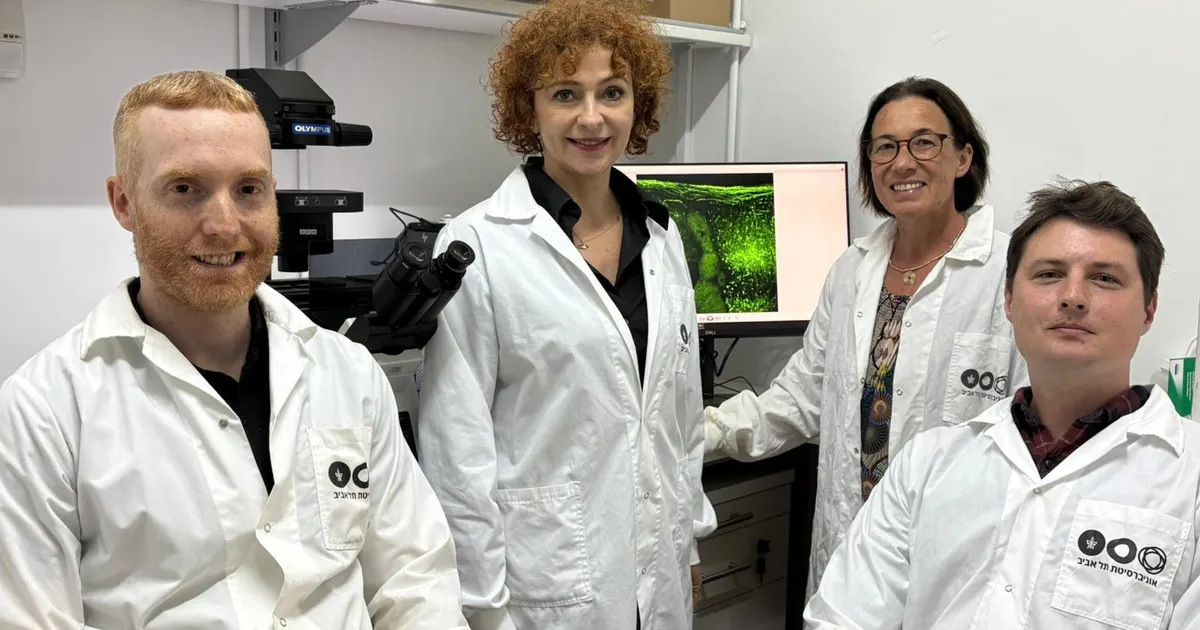
Current sectionScience & HealthTel Aviv researchers have developed a therapeutic treatment that can reduce damage caused to nerve cells after spinal injury, and even improve mobility for people who suffer from long-term, and sometimes, irreversible disabilitiesShare to FacebookShare to XArticle printing is available to subscribers onlyPrint in a simple, ad-free formatSubscribeComments: Zen reading is available to subscribers onlyAd-free and in a comfortable reading formatSubscribeTel Aviv University researchers from right to left: Alexander Yakovchuk, Dr. Yona Goldshmit, Dr. Angela Ruban and Josef Levin. Credit: Tel Aviv UniversityTel Aviv University researchers from right to left: Alexander Yakovchuk, Dr. Yona Goldshmit, Dr. Angela Ruban and Josef Levin. Credit: Tel Aviv University10:06 PM • June 10 2026 IDTIsraeli researchers have developed a new therapeutic approach for spinal cord injuries. The method may offer hope to millions of people worldwide who suffer from long-term, and sometimes irreversible, disabilities caused by such injuries. It works by significantly reducing the damage caused to nerve cells after injury, and even improves mobility.The research was led by Dr. Angela Ruban of the Faculty of Medical and Health Sciences at Tel Aviv University, in collaboration with Dr. Yona Goldshmit and fellow researchers Josef Levin, Rosemary Lavender, Alexander Yakovchuk, Evgeny Banyas and Ruth Baltovska. The findings were published in February in the scientific journal Inflammation and Regeneration. Credit: Magic mine / shutterstock.comAlly to enemyOne of the central issues following a spinal cord injury, the researchers explain, is a process that begins within minutes of the trauma: the accumulation of glutamate, a key driver of damage in such cases. Glutamate is the most abundant excitatory neurotransmitter in the central nervous system, including the spinal cord. Under normal conditions, it plays a vital role in transmitting signals between nerve cells, as well as in learning and memory. In the context of spinal cord injury, however, glutamate rapidly shifts from ally to an enemy, becoming a major contributor to secondary damage that may be irreversible. Immediately after the initial injury, extracellular glutamate levels rise dramatically. This surge is caused by mechanical damage to nerve cells, which triggers the release of stored glutamate while simultaneously impairing the uptake mechanisms responsible for clearing it from the extracellular space. Excess glutamate sets off a destructive chain reaction: it overstimulates receptors on neighboring cells, leads to uncontrolled calcium influx, and activates harmful enzymes. This process results in the death of both neurons and supporting glial cells that were not directly affected by the initial trauma. As a result, the area of injury expands and deepens, potentially increasing the severity of paralysis. Moreover, glutamate accumulation promotes inflammatory and oxidative processes, further damaging tissue and contributing to long-term scarring.Until now, no effective treatment has been found to halt this process and limit the extensive tissue damage it causes. The approach is based on removing excess glutamate from the system via the bloodstream in the first hours after injury. To achieve this, the researchers use liver enzymes that circulate in the blood. A hospital in Israel. Credit: Moti Milrod A hospital in Israel. Credit: Moti Milrod "These enzymes convert glutamate molecules into something else as they break them down into two different molecules, albeit temporarily. Lowering glutamate levels in the blood affects glutamate levels in the brain, which responds by rapidly releasing glutamate into the bloodstream due to this drop. This then leads to a reduction of glutamate in nerve cells," Ruban says. "In essence, we applied a basic physical principle known as the concentration gradient," she adds. "Under normal conditions, glutamate levels in the blood are higher than in the brain. These differences are maintained by the blood–brain barrier, a one-way barrier designed to protect the brain.""Once glutamate levels in the blood are reduced below those in the brain, the concentration gradient comes into play: glutamate molecules flow from the brain into the bloodstream. This creates an effect that helps reduce its harmful impact on the nervous system and the spinal cord."Narrow time windowIn animal experiments, the new treatment sharply reduced glutamate levels, limited inflammation and neuronal damage and preserved the structure of neural tissue. The most striking finding, however, is the functional outcome: mice that received the treatment showed a marked improvement in walking and mobility as early as two days after injury. Two months later, the mice reached about 80 percent of normal motor function, compared to roughly 20 percent in the untreated control group. Haaretz Podcast'Trump is paying a huge price domestically' for the Israel-Iran warHaaretz Podcast'Trump is paying a huge price domestically' for the Israel-Iran wartotal-- : --time0:00Another key finding concerns the time window in which the treatment is effective. The researchers found that its efficacy is maintained only when it is administered within eight hours of injury. Haifa doctors. Credit: Hagai FridHaifa doctors. Credit: Hagai FridIn other words, this intervention must be rapid and incorporated into emergency treatment protocols for traumatic spinal cord injuries. As it is given via a simple intravenous injection, the idea is that, in the future, emergency medical teams could be equipped with the therapeutic agent and use it within minutes of injury. "Our main finding shows that it is possible to intervene in the damage process that occurs immediately after injury, rather than merely trying to address its consequences after the fact," Ruban says. "By reducing excess glutamate, we were able to protect nerve cells and significantly improve function in preclinical models. The implication is that it may be possible to halt the chain reaction that leads to worsening outcomes in patients, thereby preserving neural function that would otherwise be lost."According to Goldshmit, an expert in the treatment and rehabilitation of spinal cord injuries, this represents "a new direction that could, in the future, change the way we treat not only spinal cord injuries but also other brain injuries, such as stroke or traumatic brain injury." "The new treatment would significantly reduce damage, thereby enabling much more successful rehabilitation," she says. Augmented reality spine surgery. Credit: AugmedicsAugmented reality spine surgery. Credit: AugmedicsThe researchers now hope to advance to human trials, with the aim of turning the development into an accessible therapy that could substantially improve patients' quality of life. Ramot, Tel Aviv University's technology transfer company, has already opened a startup based on the research. The technology seeks to redefine the treatment of neurological trauma: a simple intravenous therapy with a relatively broad therapeutic window, offering the potential for a significant shift in the treatment of spinal cord and head injuries, reducing disability, improving patients' quality of life and lowering healthcare costs. "If we're able to replicate these results in humans, this would represent real potential for a change in the therapeutic approach to spinal cord injuries and other neurological conditions," Ruban says. "Combined with advanced medical rehabilitation technologies that have recently entered clinical use, we may one day see a reality in which spinal cord injuries no longer mean a life confined to a wheelchair."In the NewsIsraeli Researchers Develop Treatment That May Reduce Spinal Injury ParalysisNothing More Serious Than Play: An Israeli Guide to Raising Kids During WartimeNetanyahu Never Learns From the Past, and It's Costing Him in WashingtonHundreds of Haredi Protesters Clash With Police Over Arrest of IDF Draft DodgersA Palestinian Refugee Allegedly Spied for Israel in Lebanon, Then DisappearedRemembering and rebuilding two years laterICYMI'We Were Ordered to Kill': The 1967 Nakba That Israelis Don't Know AboutSix-year-old Boy Punctures a Magritte Iconic Masterpiece at Israel MuseumOne Killed, Five Wounded in Terror Shooting Rampage in Central IsraelGermany Is Paying a Price for Its Sweeping Support for IsraelIf the Netanyahu Government Falls, This Will Be the Reason'Server in the Sky': How Israeli Drones Became a 'Target Generator' Over Gaza
Israeli researchers develop treatment that may reduce spinal injury paralysis
Tel Aviv Researchers Have Developed a Therapeutic Treatment That Can Reduce Damage Caused to Nerve Cells After Spinal Injury, and Even Improve Mobility for People Who Suffer From Long-term, and Sometimes, Irreversible Disabilities
1,269 words~6 min read