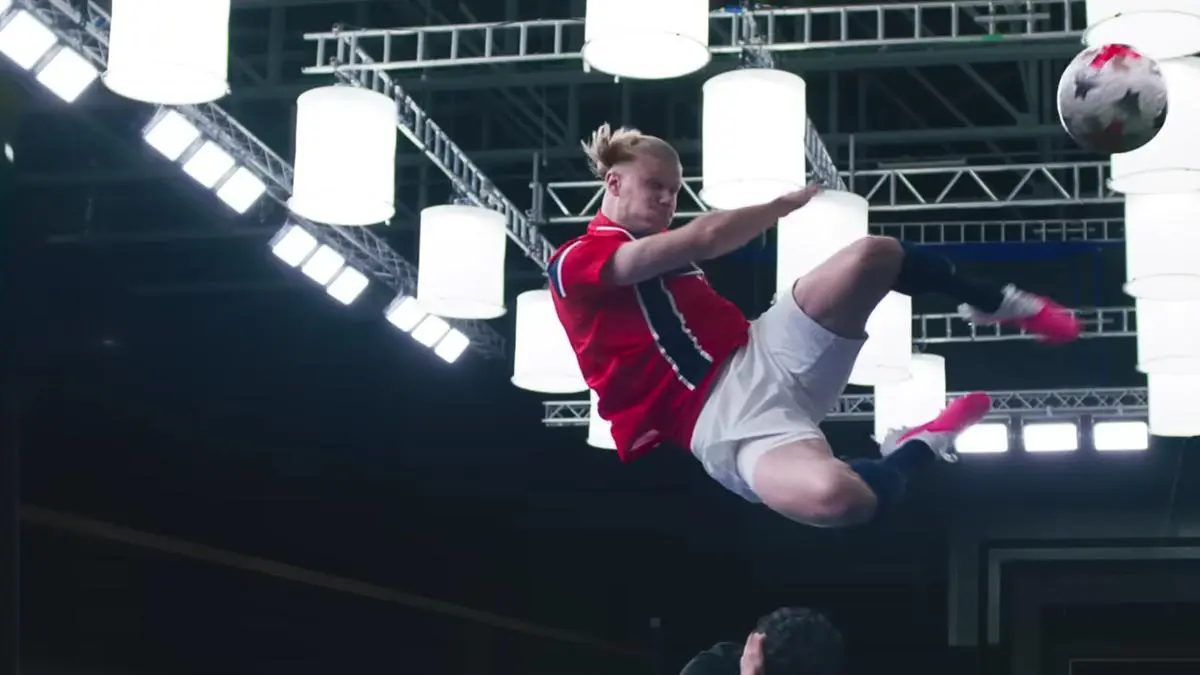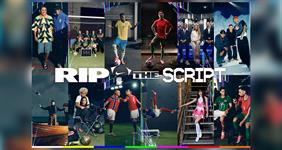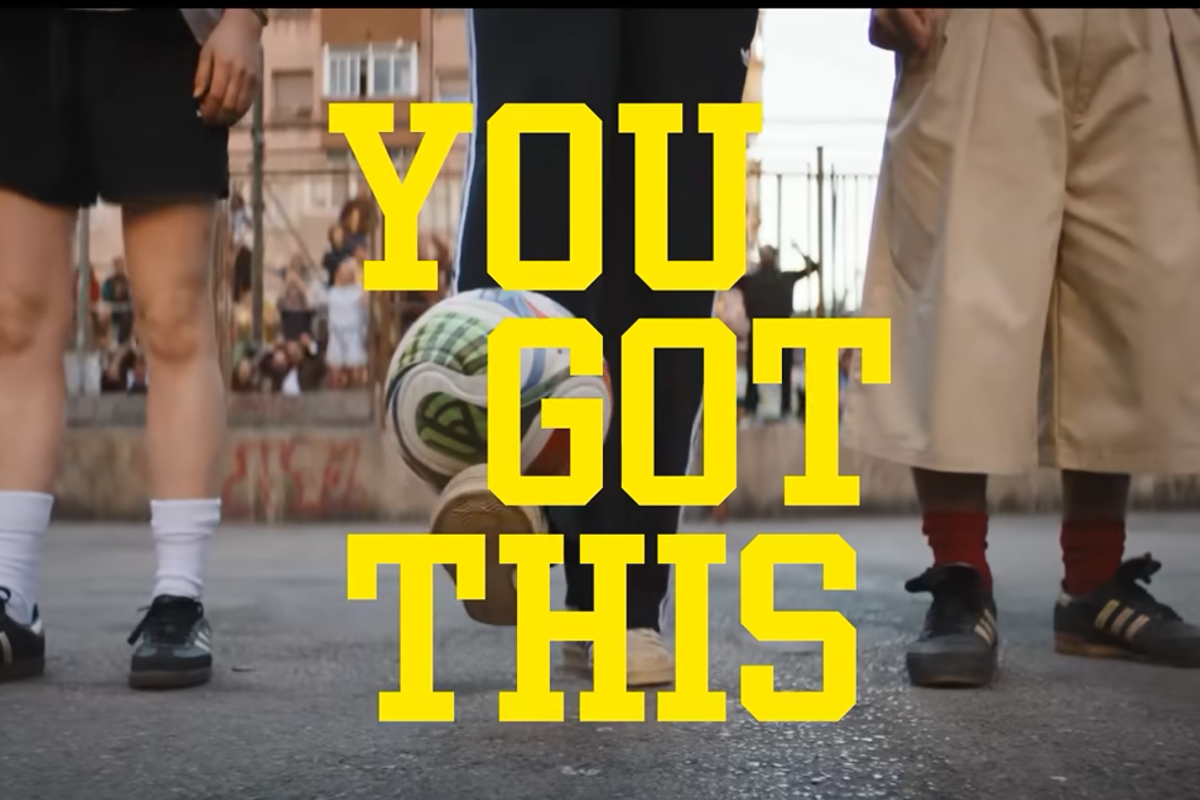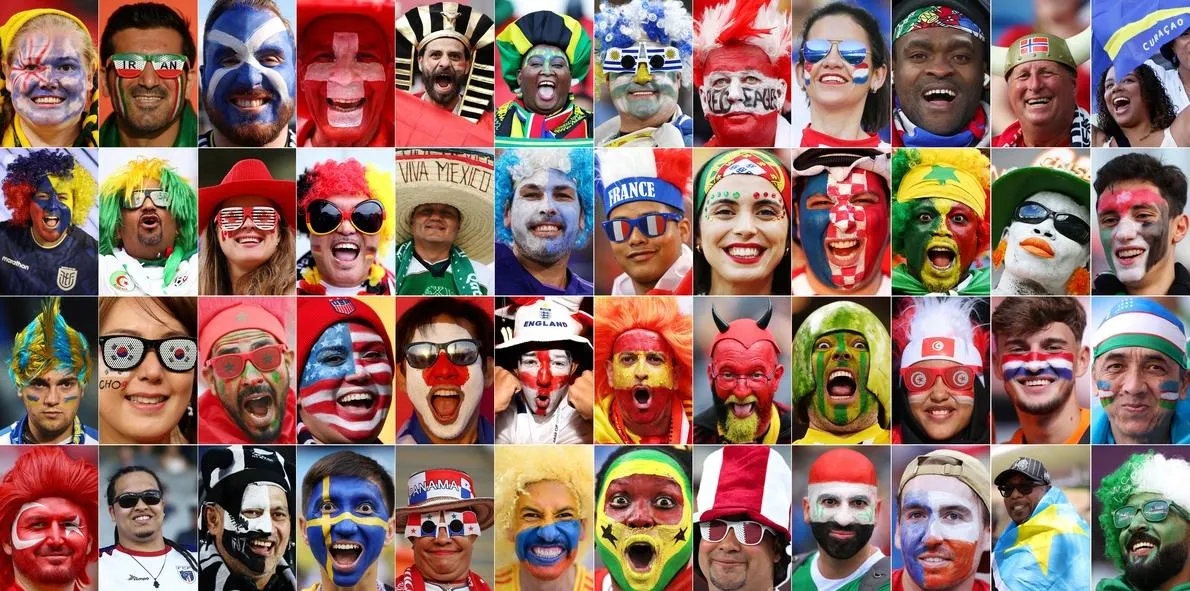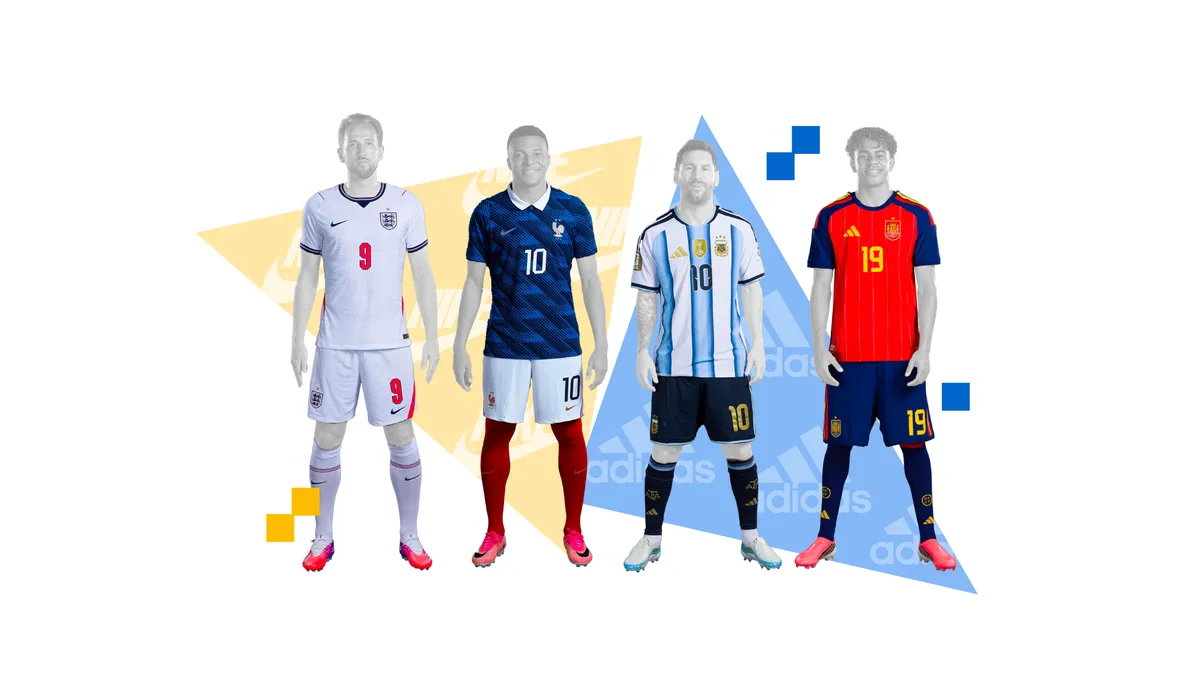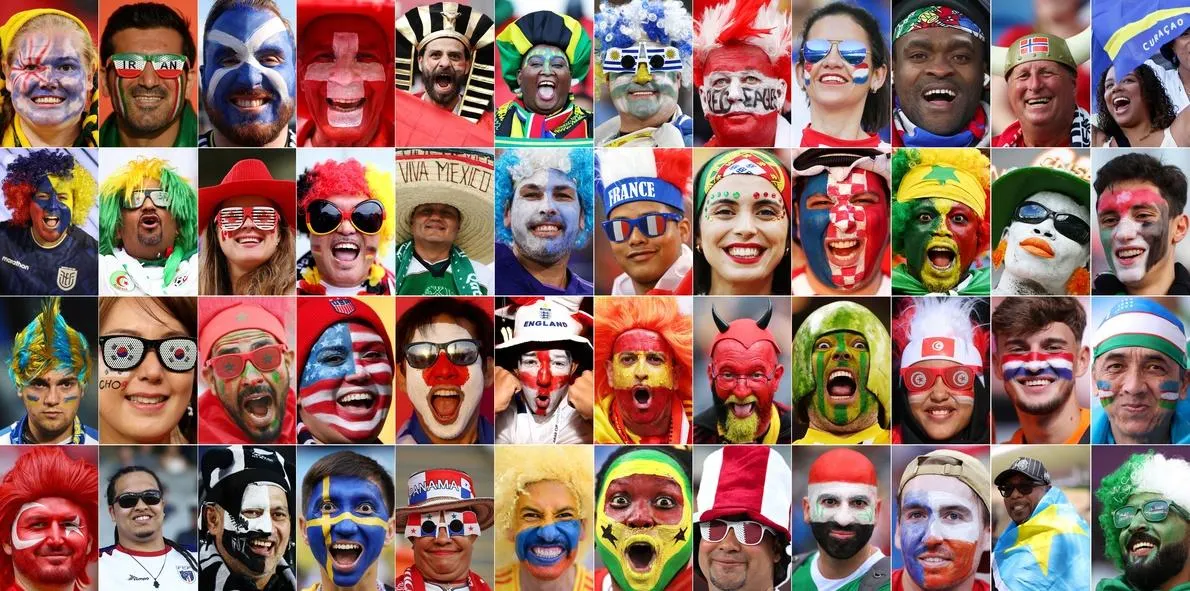
EDITORS NOTE: This composite image shows a fan of each of the 48 national teams taking part in the 2026 World Cup in the USA, Mexico and Canada. (Photo by Getty Images)Getty ImagesThe 2026 FIFA World Cup is set to be the most competitive since its founding nearly a century ago—more teams, more games and a global audience waiting to see which two teams reach the final on July 19. Yet even before the tournament began, two fierce competitors were already battling it out for dominance in the world’s most popular sport: Adidas and Nike. Going in, Adidas has an edge, sponsoring 14 teams compared to Nike’s 12. Plus, Adidas is a longtime official FIFA global partner—one of only seven brands at this level and the only sponsoring sportswear brand. And it has supplied the official World Cup match ball since 1970. This gives Adidas unrivaled visibility across the soccer ecosystem. And Adidas has taken the lead in brand trust and loyalty among consumers worldwide. The latest RepTrak Top 100 Global Brand report found Adidas’ reputation soared to number two in 2026, second only to Lego. Nike currently ranks at number 50—still a very strong showing but nowhere near Adidas’ global brand status.“The Nike versus Adidas rivalry for world dominance in football (soccer) is set to reach new heights and play out on the ultimate stage of the FIFA World Cup,” said Stephen Hahn, RepTrak chief reputation and strategy officer. “In the battle for mind share, cultural resonance and passionate engagement, Adidas went into the World Cup with accelerated momentum and a strong reputation, with Nike lagging by comparison.”Yet in the broader $400 billion global sportswear market, Adidas is playing catch-up. Nike generated $46 billion last year to Adidas’ $29 billion (€$24.8 billion), but it has the momentum. Adidas sales grew 13% on a currency-neutral basis and 16% during the first quarter 2026. Nike’s sales plummeted 9% in fiscal 2025 and remain down 1% through the third quarter. Nike reports fiscal year-end on June 30.MORE FOR YOUAs the tournament unfolds, the ultimate contest of the two sportswear giants won’t be played on the pitch, but in retail and across social media. It will be a close contest with the two brands running different ground games. Adidas is leaning into the sport’s passion, while Nike is kicking it across a wider cultural landscape. “Adidas, buoyed by strong momentum and deep confidence in its sporting credentials, positions itself inside football’s world,” said Lippincott partner Eric Tsytsylin to Marketing Dive. “Nike, facing significant pressure in much of its business, is pulling football into its world.”Adidas And Nike In RetailIn retail, Adidas and Nike are running in different directions. Adidas is leaning heavily into the sports connection. Dick’s Sporting Goods—with roughly 700 stores— is its prime World Cup retail partner. Together they launched a “Where it All Kicks Off” media campaign starring Lionel Messi, Lamine Yamal, Trinity Rodman, Patrick and Brittany Mahomes, Juanpa Zurita and Cobi Jones. Dick’s will also be hosting in-store activations and events, most especially in the key World Cup cities. In addition, Adidas is teaming up with Nordstrom, rolling out shop-in-shops and weekly activations in 35 stores. And independently, Adidas is building “Home of Soccer” hubs in New York City, Los Angeles, Toronto, Atlanta, Houston, Mexico City, Guadalajara and Monterrey where fans can get closer to the action. Free-to-the-public, the hubs are destinations to watch the games, participate in pick-up matches and have other brand experiences during the tournament. As John Miller, the president of Adidas North America, said, “With 14 federations, the Official Match Ball, extensive in-stadium presence and next-generation product technology, we are the defining soccer brand that’ll be visible on every pitch this summer.”Nike’s major retail partner is Champs—the 364 retail chain that Dick’s acquired with Foot Locker last September. Beyond Champs, Nike has major activations in its own stores and website, including dedicated immersive experiences at its Los Angeles The Grove and London’s Oxford Circus locations. It is also working with independent retailers for local events, such as Portland, OR’s Tursi Soccer, Niky’s Sports in Los Angeles, and Soccer.com in Dallas on the Roof at Vanta. In New York City, Pro:Direct opened a House of Merc pop-up in Soho dedicated to the Mercurial boot. Germany-based Adidas has a lot to play for in North America, where it generated 20% of sales last year, dropping to 18% in the first quarter. By contrast, Nike has a stronghold in the U.S. It credits 44% of corporate revenues to North America through the first three quarters of 2026, and sales here are up 5% to date. The Marketing MatchupTo extend their reach beyond retail, both Adidas and Nike are bringing their A-game in dueling long-form videos—Adidas’ entrant “Backyard Legends” and Nike’s “Rip the Script”— and positioning them as a launchpad for future growth and brand building. Speaking of the company’s rollup to the World Cup in the recent earnings call, Adidas CEO Bjørn Gulden said, “It’s not a one-time wonder. The soccer inspiration is going much, much wider than that,” adding that the company’s product touches not just “soccer culture” with performance product and team kits, but extends into lifestyle fashion. Nike CEO Elliott Hill described global football as the “next sport to fully transform into the Sport Offense,” and said it will use this year’s World Cup as a catalyst for growth in the football marketplace for “quarters to come.” The company sees its World Cup effort as a foundation for a broader platform—called the “Universe of Nike Football”—that extends beyond product, athletes, team partners, and retail into fashion, style, and the global community. The result is a marketing matchup that mirrors the brands’ broader strategies: Adidas doubling down on football’s core passion and Nike pulling the sport into its wider cultural universe. ‘Backyard Legends’ Is Relatable For Adidas, “Backyard Legends” combines sports, street-culture and shared memories into a five-minute narrative that reinforces its identify as football’s heritage brand. It stars actor Timothée Chalamet, reprising his fast-talking Marty Supreme character, as he recruits Lamine Yamal, Jude Bellingham and Trinity Rodman to take on a team of three street ballers who’ve become undefeated urban legends. The film traces the streetwise kids’ soccer journey from the 1990s—tapping the nostalgia trend popular among Gen Z— as they face a rotating cast of characters, including professional ringers David Beckham, Zinedine Zidane and Alessandro Del Piero in 2002. Pop star Bad Bunny and Argentinian footballer Lionel Messi appear in the stands to watch the latest match, which goes unseen. But if history repeats itself, the pros will go down in defeat.“The campaign strengthens fan connection with legacy, familiarity and cultural memory delivering on their broader brand message of ‘You Got This’ in a way that feels authentic and grounded,” said Allison Arling-Giorgi, head of brand at Method1 advertising. ‘Rip The Script’ Is Celebrity LoadedNike’s “Rip the Script” goes bigger, faster and louder, bringing a larger cast of characters, including its roster of footballers, plus Serena Williams, Channing Tatum, Travis Scott, LeBron James, Kaitlin Clark and Kim Kardashian, as a not-so-typical soccer mom with son Saint West. The six-minute film unfolds in a series of rapid-fire vignettes that invite repeat viewings—if you blink, you’ll miss the Easter eggs liberally sprinkled throughout. It opens on a studio soundstage where a frustrated director tries—and fails—to get the footballers to follow his script. Wearing their national team kits and pink Mercurial boots, they kick the ball off the set and into the corridors of the film studio, onto other film stages, even into corporate boardrooms, leaving chaos behind. Ostensibly, the film introduces the new high-tech Mercurial Superfly and Vapor soccer cleats. But it’s really a foundational pillar of what the company calls the “Universe of Nike Football.” Helena Thornton, vice president of Nike brand management, explained the strategy in a behind-the-scenes podcast: “It’s not just a linear journey around one particular story. It was about managing the idea that Nike has a clear identity—creative, attacking, instinctual, and joyful. The power of the universe allows us to talk about different things but never go far away from who we are at our core—the values, the discipline and the principles that have built Nike football.”Eyes On The PrizeThe two brands also diverged in how they pushed their marketing messages out across social media. Adidas went with Instagram for its initial “Backyards Legend” drop in May, with Chalamet posting a short teaser there as well. According to Grok, the film has pulled in more than 56 million views on the platform. Nike chose YouTube for its initial release and so far, “Rip the Script” has surpassed over 76 million views—more than ten times what “Backyard Legends” has scored there. Across channels, Nike appears to have won the social media battle.“If YouTube were a measure of success, initial hits to the Nike ‘Rip the Script’ indicate that it will significantly outperform the comparable Adidas content,” Reptrak’s Hahn shared. “But if success were defined by the number of official kits, sponsorships across the competing 48 nations and resultant global sales of soccer merchandise, then Adidas would likely be the commercial winner.”Hahn added that Adidas’ strong reputation—just one slot down from the number one—will only be reinforced by its World Cup performance. He also expects Nike to get a reputational bounce and greater emotional buy-in around the World Cup, but added, “not yet to the degree that will challenge Adidas’ global reputation dominance.” Speaking of the economic potential for all brands sponsoring this year’s World Cup—heavy-hitters like Coca-Cola, Michelob’s AB-InBev, McDonald’s, Unilever, Frito-Lay and others—EY global senior consumer analyst Jon Copestake said, “This World Cup is more expansive than the last, will make more revenue than the last and potentially will drive greater profit or loss than the last.” The stakes are high for every brand in this year’s World Cup, but arguably none higher than for Adidas and Nike. Nike is at the peak of its marketing powers—fast-paced and playfully aggressive. But Adidas’ storytelling is more emotionally resonant—and, to borrow an oft-repeated marketing phrase, it feels more authentic. Nike may still own the running and basketball multiverse, but in the world’s most popular sport—football—its universe is still expanding toward the one that Adidas already dominates. See Also:ForbesAdidas And Nike Face Off As 2026 Could See World Cup Of Retro JerseyBy Mark FaithfullForbesBehind The $10.5 Billion Brand Spending Spree At The 2026 FIFA World CupBy Pamela N. Danziger
World Cup’s Off-Pitch Rivalry Pits Adidas And Nike For Football Dominance
The 2026 FIFA World Cup features an intense rivalry between Adidas and Nike. Adidas holds an edge in soccer while Nike aims to connect across a wider cultural landscape.
1,735 words~8 min read