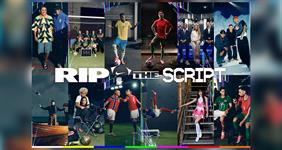
Since the 2026 FIFA World Cup kicked off last Thursday, Mexico beat South Africa, South Korea outscored Czechia and the U.S. claimed victory over Paraguay — and who could forget tiny Cape Verde drawing with tournament favorite Spain?A handful of brands are “winning” the game of World Cup advertising so far, according to reports from social listening analytics company MeltwaterFrom Adidas to Lego, advertising “plays” that leverage timing, social media platforms’ strengths and organic creator work have brought partner and non-sponsor brands World Cup-related success both before and since the World Cup began. Adidas, McDonald’s and Nike are ‘winning’ World Cup advertisingThe brand dominating World Cup chatter is McDonald’s, which spotlighted FIFA legends including David Beckham visiting the drive-thru chain to order its limited-edition World Cup Meal.McDonald’s, an official sponsor, has seen a 20-fold increase in weekly brand mentions since May and has garnered 29% of World Cup ad viewership since its premiere on June 2, Meltwater data shows. It’s a case study on prioritizing “timing over season-long investment,” said Meltwater global consumer and market insights lead Anna Amarotti. The brand has risen from “mid-table sponsor to the most talked about official partner in the tournament’s opening days,” Amarotti said. She said McDonald’s ticket giveaway was “timed precisely to kickoff, giving fans a reason to engage at the moment when tournament excitement peaked.”In terms of depth and consistency, Adidas is taking the lead with its Backyard Legends: The Greatest Football Story Ever Told spot, a five-minute soccer spin on Marty Supreme starring Timothée Chalamet, Bad Bunny and Leo Messi.The spot has a 38% share of voice engagement since June 1 and has averaged 37% engagement since the start of the year. This marks Adidas as “the only top brand to hold or strengthen its share as competition intensified,” Amarotti said.Nike’s Rip the Script spot is “winning the non-sponsor conversation” with its star-studded, “cross-cultural casting, which is pulling in audiences well beyond football,” Amarotti said. She said the ad is “generating massive organic amplification through fan reposts, with the highest single-post engagement” from June 1 through June 15.Official World Cup partners on the rise in first weekBuilding up to the World Cup, non-sponsor World Cup campaigns, including Nike’s spot, garnered nearly three times the social engagement of the tournament’s official partners including Adidas and Coca-Cola, Amarotti said.Through May, Adidas and Coca-Cola held over 80% of all sponsor engagement, Amarotti said. She said those brands’ “momentum continues into the opening matches.”However, starting June 11, official sponsors including McDonald’s, the World Cup’s official restaurant partner, are outperforming non-sponsored campaigns in terms of engagement per mention “for the first time this cycle,” with 60% higher efficiency, Amarotti said.“McDonald’s began closing that gap from early June, accelerating further once the tournament opened, but most official partners remain largely invisible in the social conversation regardless of phase,” Amarotti said.Nike and Lego’s star-studded strategy pays offFrom Adidas’ casting of Chalamet to Lay’s partnership with Will Ferrell and David Beckham, most major brands’ World Cup spots starred legendary footballers and A-list celebrities.Lego and Nike stood out among the star-studded competition. Both brands topped Meltwater’s mentions and engagement, which “reflects sustained visibility for FIFA World Cup 2026 sponsor campaigns, driven by coordinated social content,” according to the report.Nike’s casting of celebrities including Kim Kardashian, LeBron James and Central Cee created the “most dominant” campaign between June 1-15, largely due to reposts by the stars’ fans, Amarotti said.“Nike’s cross-cultural casting is a key driver of performance. Putting [soccer superstars Cristiano] Ronaldo, [Kylian] Mbappé and [Erling Braut] Haaland alongside Drake, Travis Scott and Lisa from BLACKPINK gave multiple distinct communities a reason to engage,” Amarotti said.An example is aThai news outlet’s YouTube breakdown of Lisa’s two-second appearance in Nike’s Rip the Script ad, which generated 24,000 views, representing a “K-pop audience encountering the World Cup through a cultural figure, not football fans,” Amarotti said.Nike’s strategy demonstrated a “one campaign, but several distinct audiences” approach, Amarotti said. She said Lego’s World Cup ad “tells the same story, but earlier in the cycle.”Lego released its Everyone Wants a Piece spot starring star players Messi, Ronaldo, Vinícius Júnior and Mbappé on April 1. The spot drove 12 times more engagements per mention than the advertisements created by World Cup official sponsors, Amarotti said.@lego Everyone wants a piece #HonestlyItsNotAI #LEGO #LEGOFootball #FIFAWorldCup #EveryoneWantsAPiece ♬ original sound - LEGO“It generated three distinct viral moments across five weeks: the launch, organic athlete amplification in late April and a third wave in May when audience debate about whether the footage was AI-generated became its own campaign beat,” Amarotti said.Casting stars like Ronaldo also skyrockets engagement when they repost the spots to their own platforms. One of Ronaldo’s posts to his666 million Instagram followers accounted for 5.5% of the Lego campaign’s fifth-week engagement, Amarotti said.Unexpected, creator-led wins from Powerade and Air TransatPowerade’s and Air Transat’s partner work and organic interactions with content creators produced results that "significantly outperformed expectations,” Amarotti said.“Both cases make the same broader point: some of the most efficient brand moments in this tournament have come from brands that wouldn’t make most people’s World Cup shortlist,” Amarotti said. “The successes were driven by a shared mechanism: content where the brand earns its place rather than announces it.”Powerade’s strongest content came from partnering with Spanish-language creator Jenifer Rosas, who attempted soccer tricks with a Powerade bottle and spotlighted the bottles’ World Cup QR codes leading to “scan and win” sweepstakes for Powerade-branded soccer balls and reusable bottles.@jenifer.rosas No es el balón… es la técnica. Entrena, hidrátate y sube de nivel #FifaWorldCup26tm #DalePoweratudestino @Powerade ♬ sonido original - Jenifer RosasFans engaged with Rosas’ video at a rate 79 times higher than all other World Cup brand collaboration content, with her TikTok garnering 55,000 likes and 830 comments as of June 15. Powerade’s partnership with Brazilian creator Jozão Futbol drew similar engagement, Amarotti said.“Both videos were creator-native, neither had the brand as the focus and both dramatically outperformed anything Powerade produced through its own channels," Amarotti said.Another social media-led, unexpected World Cup win came from Canadian airline Air Transat’s organic earned media moment with lifestyle account Curiocity Canada.After Air Transat humorously compared its plane ticket prices with thehistorically high prices of World Cup tickets on its social media accounts, Curiocity Canada deemed the airline’s post “the smartest ad ever.” The account’s unpaid creator endorsement with no paid relationship garnered 12,000 likes, 115 comments and 242 reposts on Instagram as of June 15.“The endorsement’s credibility came precisely from its editorial framing: a third party voluntarily calling an ad smart carries weight no brand-owned channel can manufacture,” Amarotti said.TikTok, YouTube lead advertisers’ engagement and post volumeThe ideal posting platform for World Cup spots has shifted during the tournament’s buildup and tournament phases, with each platform offering brands different benefits, from scale to brand-safe efficiency.“Throughout the buildup, TikTok punched well above its weight,” Amarotti said. She said the platform hosted the top 50 most engaged, pre-tournament posts. Nike reported five times more engagement on TikTok than on Instagram for its identical Rip the Script content, according to Meltwater data.From June 1-15, TikTok hosted the highest World Cup post engagement by a large margin, with 1.7 million engagements on arepost of Nike’s Rip the Script by soccer account Versus.YouTube leads in World Cup advertising in terms of post volume, accounting for 424 of 697 World Cup advertising social posts, “making it the broadest conversation platform,” Amarotti said. However, post engagement on YouTube falls behind platforms like TikTok and Instagram.For World Cup official sponsors like McDonald’s and Adidas, Facebook and Instagram have driven the most mentions, hosting 20% and 17% of World Cup sponsor brand mentions, respectively. Meltwater data reports the two Meta platforms have the highest rates of brand-safe engagements per mentions of all platforms.Reddit has reported three times the negative sentiment rate for World Cup ads than the platform average, “making it more useful for monitoring than activation,” Amarotti said.Three marketer takeawaysThree consistent lessons can be pulled from Meltwater’s World Cup campaign data: early activation advantage, cultural crossovers and sponsorship in the live phase, Amarotti said.“Start early. The brands that launched in January and February were operating in a conversation growing fast, but not yet saturated…by the time the tournament opened, every sponsor was activating simultaneously,” Amarotti said.The cheapest window for brands to insert themselves into World Cup conversation was between January and June 11, Amarotti said. She said Lego captured 13% of the World Cup’s top 50 engagements before the first match on June 11.Secondly, Nike’s success came from cultural crossovers, including crossovers with K-pop communities, and realizing that “football isn’t the whole story,” Amarotti said.“Brands that align with the entertainment and cultural layer of the tournament reach audiences that football-only campaigns never touch,” Amarotti said.Lastly, marketers can learn that official World Cup sponsorships gain traction once the tournament is live. Sponsored campaigns’ engagement per mention has risen from an average of 624 during the World Cup’s buildup to an average of 869 since June 1.“The optimal playbook is both: creator and athlete-led content during the build-up and rights-backed activation once the opening match kicks off,” Amarotti said.This story first appeared on PRWeek U.S.
What brands are ‘winning’ the World Cup?
Meltwater dove deep into plays by McDonald’s, Adidas and Nike to see which are cutting through the World Cup noise.
1,523 words~7 min read