metamorworks/Shutterstock
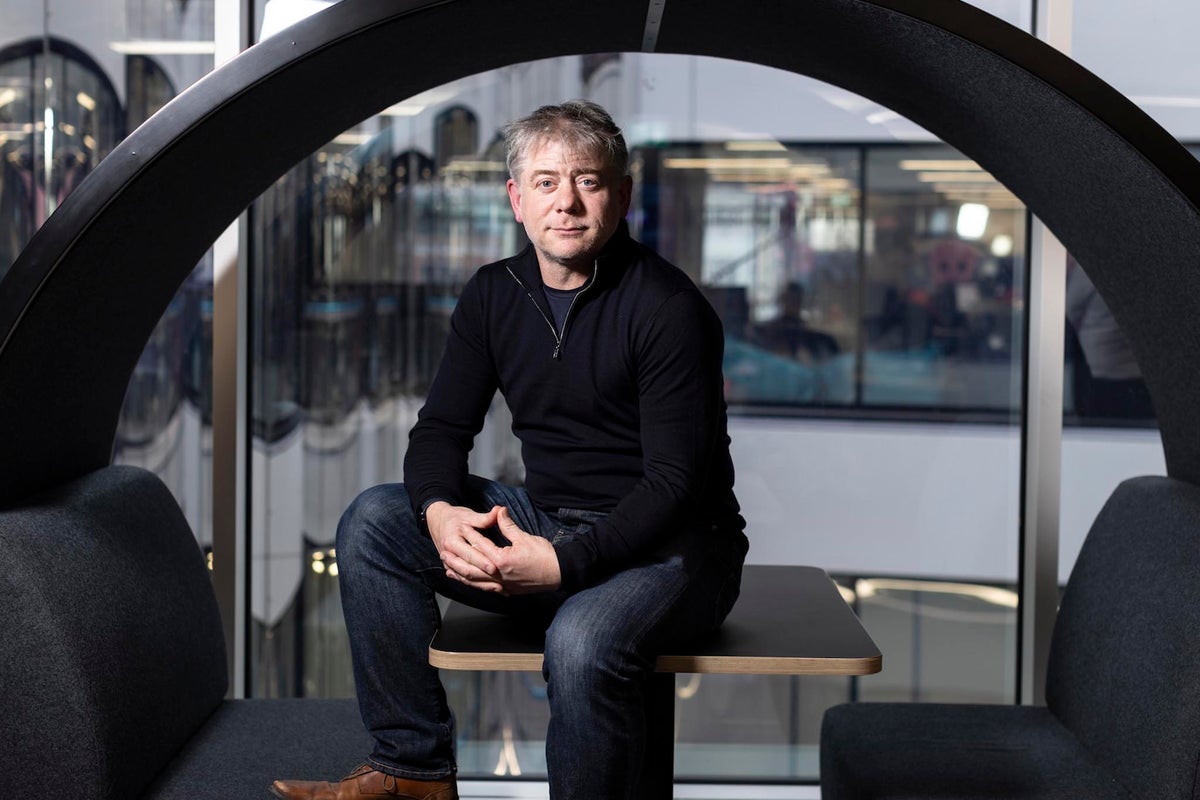
The UK has found itself facing repeated and concurrent energy stress tests, whether that be through an increasing population with increasing energy needs, multiple global energy crises or the proliferation of energy intensive data centers. It’s why energy infrastructure is now considered critical to national security, and the current status quo should finally bring strategies for improving resiliency to the forefront of government and industry decision-making.Security and SovereigntyTo achieve both energy security and energy sovereignty, the UK needs a real plan to ensure the energy system is adapted and added to in ways that ensure it can withstand global shocks and threats. With public capital and domestic investments in clean power projects earmarked since the establishment of Great British Energy, we are well-positioned to accelerate electrification and the energy transition as well as simultaneously maximize how we access and use our resources.Putting Policy Into PracticeDecarbonizing and reinforcing the grid requires clear policy and action as well as sufficient funding. But without scaling quality engineering innovations, we won’t move the dial on transmission capacity or generation security any time soon. The UK has been leading the way for some time, but there is still work to be done to get the grid to where it needs to be.Some of the answers for this next phase of development that are being offered up by industry are game changers, pushing beyond Scope 2 emissions (indirect emissions from operations), and into truly crisis-responsive grounds, like electrifying heat with industrial heat pumps. These are now able to offer three to five times the efficiency of gas boilers and, when powered just by clean electricity, boast the potential to entirely eliminate those critical Scope 1 emissions, or direct emissions from operations. The time and money necessary to get past viability, cost and integration pathway concerns is a worthwhile investment when the outcome is so positively low carbon.Solutions need to focus on how to join-up technical, economic and digital opportunities — especially when automating flows between energy and storage. Project by project we’re seeing operational resiliency and sustainable delivery improve where a holistic approach is taken. Even more hopeful is that where gaps are being identified, proper patch ups are being conducted.The UK’s Energy Independence Bill is a welcome shift from policy ambition to system-wide delivery. It attempts to bring together clean generation, grid reform and consumer protection into a single legislative framework. At its core, it reframes energy independence as national security, prioritizing domestic low-carbon generation to reduce exposure to volatile global fossil fuel markets. The bill’s success will hinge on execution: accelerating planning, grid build-out and regulatory reform quickly enough to unlock investment and scale infrastructure.Maximizing Improvements, Minimizing Negative ImpactsRenewable energy production is only reliable if the system in which it is integrated is robust and secure. Lowering risks of cost spikes, supply oscillations or complete outages is not easy, nor a quick fix. Improving the stability of UK and Global power grids requires dedicated technology. Ramboll’s "Universal Damping STATCOM" — or static synchronous compensator — developed this year, is an example of a technology that can be used to transform grid instability into opportunity by detecting harmful fluctuations and converting them into usable power.This Universal Damping STATCOM acts as a “shock absorber” for the grid, making it easier and less risky for operators to integrate renewable energy sources. In doing so, it reduces the risk of outages, supports more cost-efficient system development and strengthens overall resilience.Stability and recovery have long been critical challenges. What is changing is how we address them. Technologies like the Universal Damping STATCOM move beyond reliance on predefined system assumptions, providing a more adaptive, real-time response to emerging grid conditions and vulnerabilities.We are moving toward power systems that are inherently more stable, flexible and efficient. With continued innovation and a more diverse energy mix, the trajectory is clear: Energy systems will become stronger by design, not simply by corrective intervention.Embracing Energy HybridityEnergy storage benefits from hybridity as much as power generation does. Blending the two ultimately improves the flexibility and reliability of the grid.Nordic countries have paved the way for such diversification, seeing battery energy storage and pumped hydropower storage demonstrate ways of improving balancing capacity. It is through encouraging this kind of whole system diversity that long-duration, flexible and scalable power solutions can continue to be developed and made operable — not just in isolation but in harmony.Harmony and flexibility will prove fundamental to grid functioning, both of which district heating boasts by utilizing sector coupling, for example with large-scale heat pumps and thermal storage integrating electricity and heat networks. The set-up acts like a battery, converting this excess power into heat, thereby stabilizing the electrical grid. This is especially important where weather-reliant renewable sources oscillate, and even more so when this energy can be stored in "thermal pits” (known as PTES), water reservoirs used by utility companies to store excess thermal energy, over days or weeks as a back-up.To meet modern demands, it is essential that the grid is made more dynamic. Advancing digital tools, renewable-driven innovative solutions and low-carbon technologies in tandem will help usher in a new era of energy security, which is not just one that is desired, but one that is an absolute necessity.Stephen Horrax is director of business area energy at Ramboll UK & Ireland, a global architecture, engineering and consultancy company founded in Denmark in 1945. The views expressed in this article are those of the author.