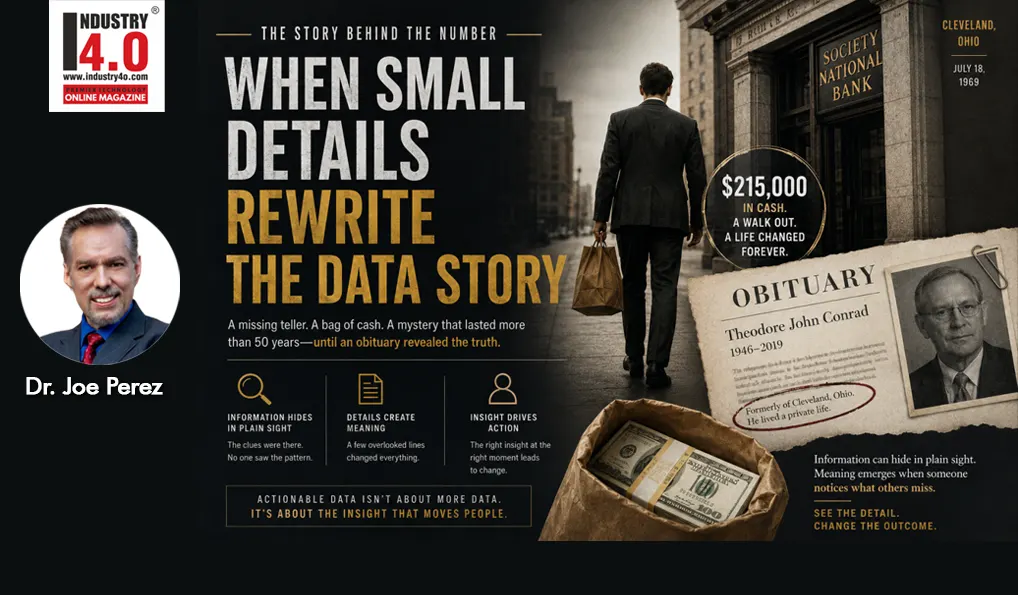
When Small Details Rewrite the Data Story
On a warm Friday afternoon in July of 1969, a young bank teller named Theodore John Conrad finished his shift at Society National Bank in Cleveland, picked up a plain paper bag, and walked out as if he were heading home like any other day. Inside that bag sat $215,000 in cash, the kind of money that would make most people hesitate before taking a single step. Conrad didn’t rush. He didn’t look over his shoulder. He simply blended into the ordinary movement of the city and kept going, leaving behind a puzzle that would stretch across more than fifty years.
What keeps his story alive is the quiet way he carried it out. Conrad had no criminal background and no dramatic explanation waiting in a notebook somewhere. People who knew him described a calm young man who never hinted at anything unusual. Investigators tried to follow the few clues they had, but the trail cooled almost immediately. Every lead seemed to dissolve into another dead end, and the case slowly turned into something closer to folklore than an active search.
When the truth finally surfaced, long after Conrad had built a new life under a different name, it arrived through something as ordinary as an obituary. A few small details, the kind that most readers would skim past without a second thought, were enough to unravel the secret he had carried for decades. It is strange how a life can hinge on something so small.