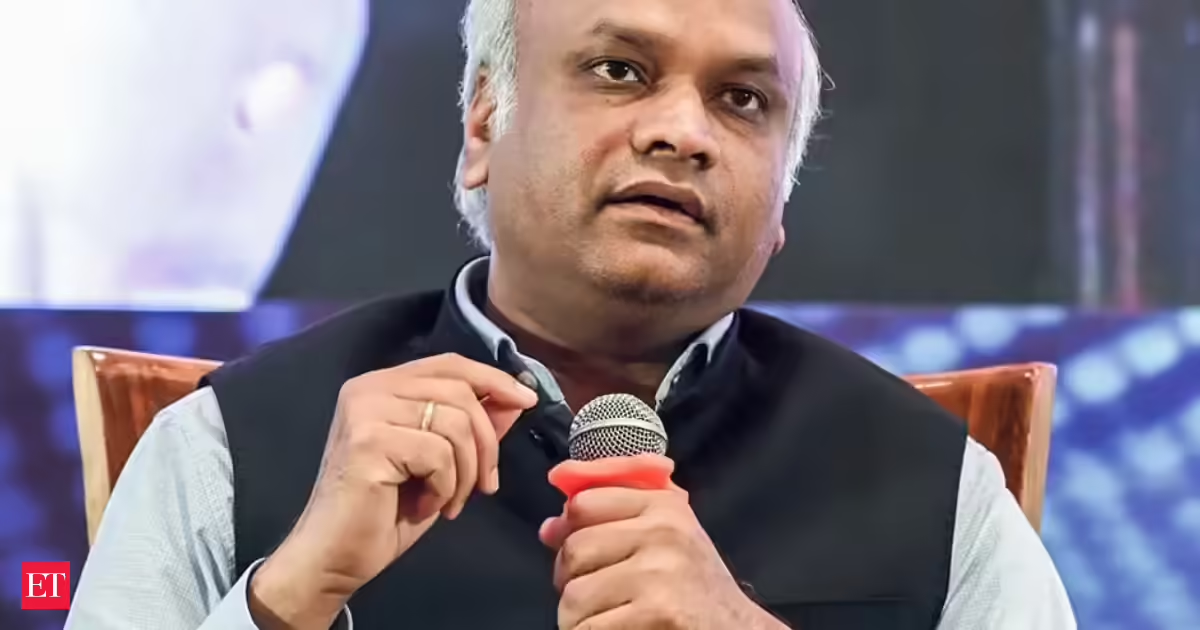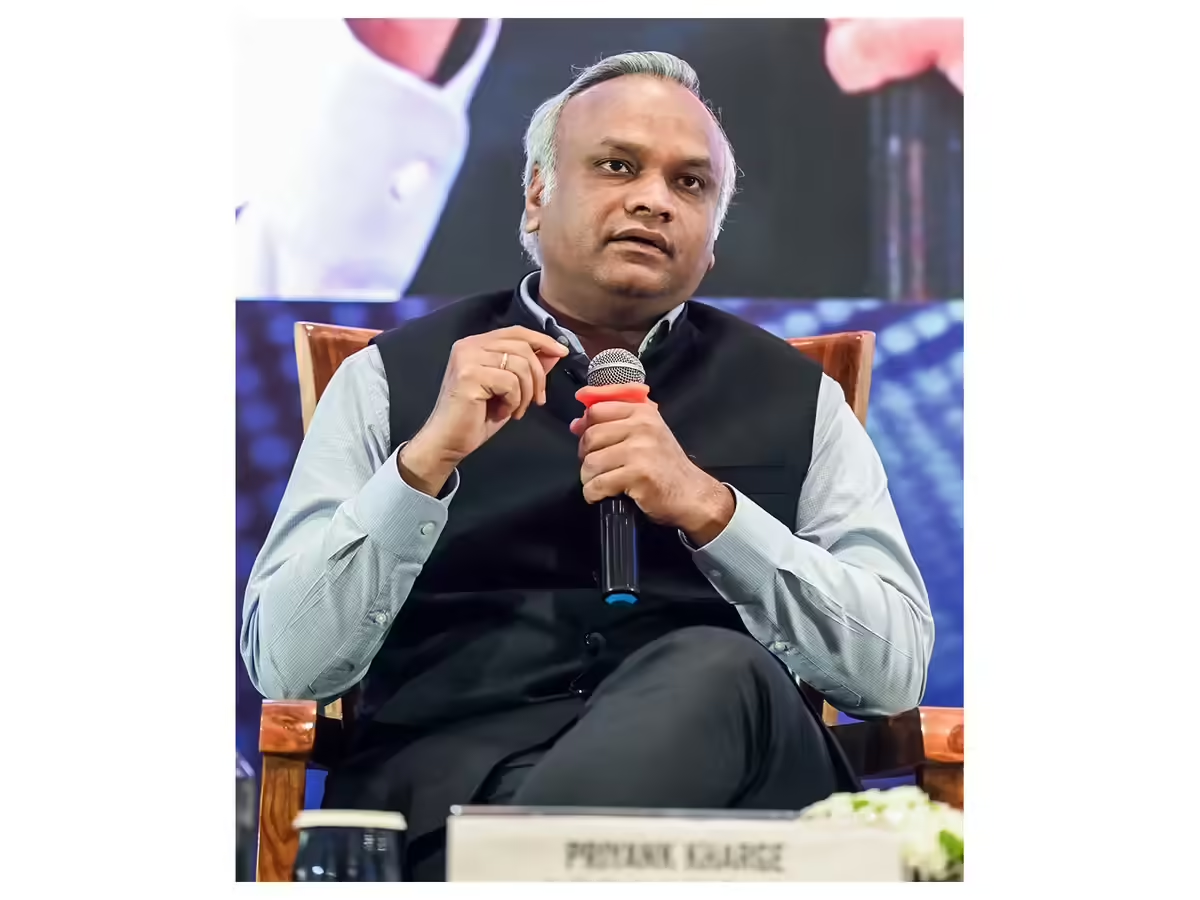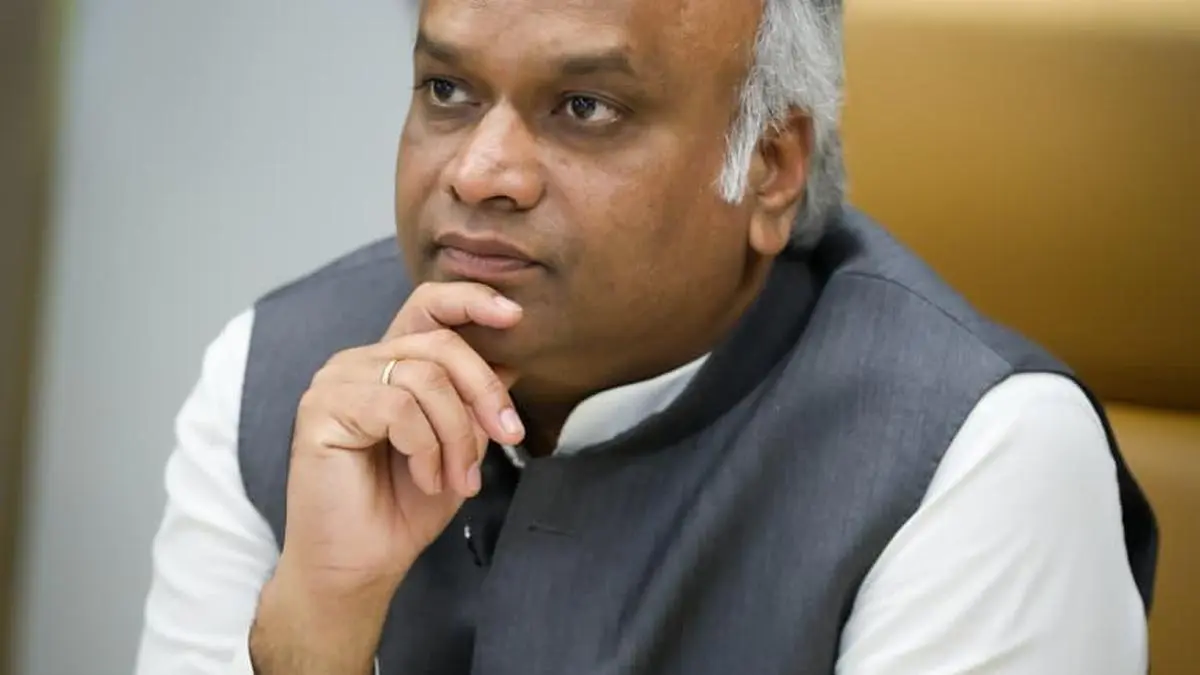
Priyank Kharge, Minister for IT & BT, Government of Karnataka
| Photo Credit:
TH
Bengaluru has generated $153 billion in ecosystem value and accounted for 58 per cent of India’s artificial intelligence venture funding, reinforcing its position as the country’s leading start-up hub, according to a report. The city ranked 15th globally and sixth in Asia in the Global Startup Ecosystem Report (GSER) 2026, underlining its growing influence in emerging technologies and venture capital activity.This valuation is underpinned by a capital formation and exit engine. Between 2021 and 2025, the ecosystem attracted $39 billion in venture capital funding, ranking it fourth in Asia and yielded $46 billion across 304 start-up exits.The report jointly unveiled at VivaTech Paris by Startup Genome and the Karnataka Digital Economy Mission (KDEM), the data from the report establishes the region as a global deep tech powerhouse that is currently growing at three times the average rate of Asia.Value-realisationAccording to the report, a standout feature of the ecosystem is its rapid value-realisation cycle; the average timeline to a start-up exit is 8.2 years, notably outpacing the global average benchmark of 11.1 years. Corporate strategies are also benefiting from a structurally efficient cost-to-output ratio, where globally competitive deep tech products are built at highly competitive talent costs, exemplified by a local software engineer’s median annual salary of $19.6K.A primary catalyst for this momentum is the state’s aggressive structural shift toward emerging frontier technologies. Bengaluru-Karnataka now ranks as Asia’s No. 2 AI-Native Cluster and has propelled its overall R&D Engine ranking into the global Top 10, climbing from the Top 30 in 2025. This rapid scaling is heavily de-risked by state policy interventions, including the $62.4 million Startup Policy 2.0 (2025–2030) targeted at creating 25,000 new startups, the $110 million Local Economy Accelerator Program (LEAP), and the ambitious $114 million Karnataka Quantum Mission.However, maintaining this upward trajectory presents distinct macroeconomic challenges on the global stage. As detailed in the report, global AI funding remains asymmetric, with North American start-ups absorbing 86 per cent of all late-stage global AI venture capital in 2025.Commenting on this competitive landscape, Priyank Kharge, Minister for IT & BT, Government of Karnataka, stated, “Bengaluru, Karnataka, is no longer just India’s start-up capital; it is increasingly a global DeepTech and AI innovation hub. This recognition by Startup Genome validates our long-term investments in talent, research, entrepreneurship, and emerging technologies.”This structural bottleneck arrives amidst shifting regional and domestic market dynamics. While Bengaluru successfully protected its global top-tier standing, Delhi slipped two positions to the 31st position due to intensifying international competition, and Mumbai shifted to the top of the global Emerging Ecosystems index.Concurrently, major competing Asian hubs in China, including Beijing, Shanghai, and Shenzhen, all witnessed marginal declines in their global ranks. For Karnataka’s policymakers, this regional contraction offers a strategic window to capture reallocated geopolitical capital, provided the ecosystem can successfully expand its funding runway.Published on June 17, 2026