On May 27, the upper house of the Japanese National Diet approved a law to establish a National Intelligence Council (NIC) and a National Intelligence Bureau (NIB) following the law’s approval in the lower house on April 23. This push, led by Prime Minister Takaichi Sanae, comes as Japan is faced with what it perceives to be an increasingly complex international environment with modern threats that Japan’s current intelligence and defense apparatus is improperly equipped to handle.
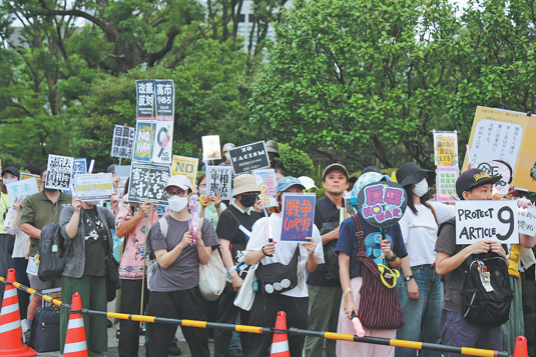
That said, the new law is nothing radical or unheard of in the Japanese intelligence community. This law is one of a long series of reforms and restructuring dating back to the end of World War II, where Japan has persistently struggled to develop capable intelligence services while balancing against bureaucratic siloing and public fears of militarism. The establishment of the NIC and an NIB is a step in the right direction, and a natural outcome of the improvements within Japan’s intelligence community thus far. However, for this law to bring meaningful and lasting change, Japan will have to do more than restructuring, and invest in intelligence capabilities where it has traditionally been weak.
The creation of the NIC and the NIB is the first in a three-stage set of reforms to Japan’s intelligence community. The NIC is envisioned to serve as an intelligence command center, chaired by the prime minister and composed of cabinet officials. The NIB would serve as its secretariat, staffed by public servants who handle day-to-day operations. The NIB would be vested with overarching coordination authority to unify the efforts of Japan’s disparate intelligence organizations and break down the bureaucratic silos and turf wars that characterize the intelligence community’s operations.