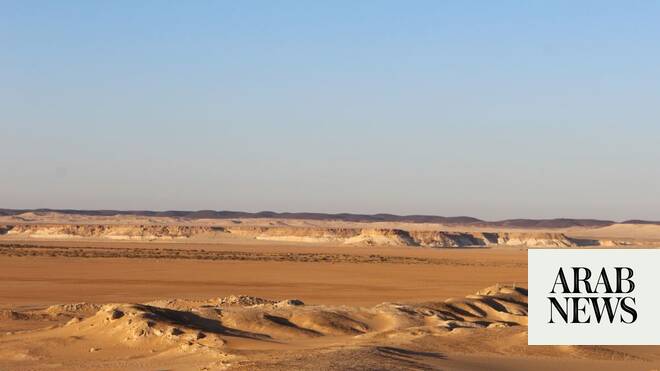
JEDDAH: An international research team led by scientists from King Abdulaziz University has identified and documented the first marine sediments from the Oligocene Epoch in northwestern Saudi Arabia, a discovery that is reshaping understanding of the region’s geological history.
The newly recognized rock unit, named the Al-Qurayyat Formation, was discovered in Al-Qurayyat governorate in the Kingdom’s Jouf region and has been formally introduced to international scientific literature for the first time.
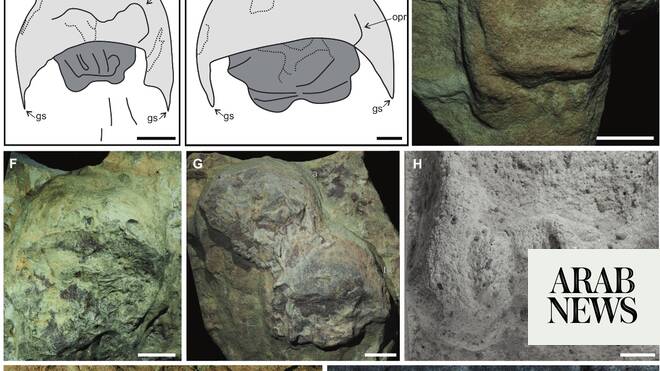
The formation consists of marine limestone deposits 15 to 26 meters thick. Researchers found fossil-rich gray limestone at its base, overlain by alternating layers of marl and limestone, and capped by coarse limestone containing fragments of sea urchins, sponge spicules and shellfish.
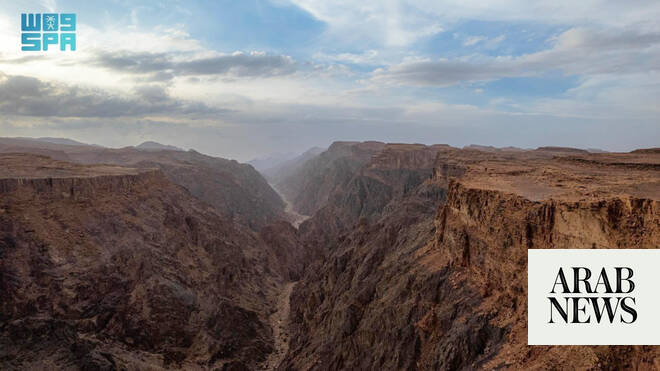
The sediments are exposed at Faydat Ar-Rishrashiyah, east of Al-Qurayyat, near the Saudi-Jordanian border.
One of the study’s key findings challenges previous geological interpretations of the area. Earlier studies suggested that the Eocene-age Ar-Rishrashiyah Formation directly overlies the younger Sirhan Formation. However, the new research identified locations where the newly defined Al-Qurayyat Formation occurs between the two units.