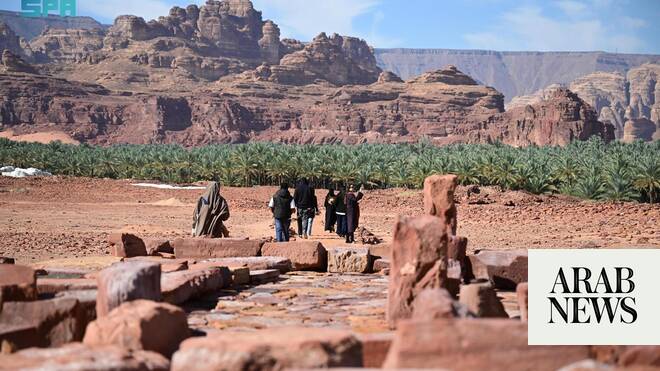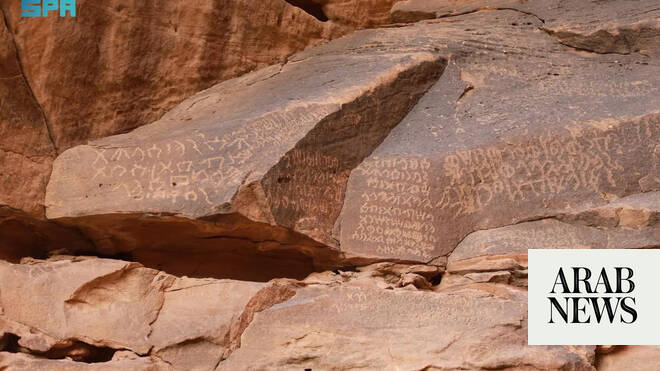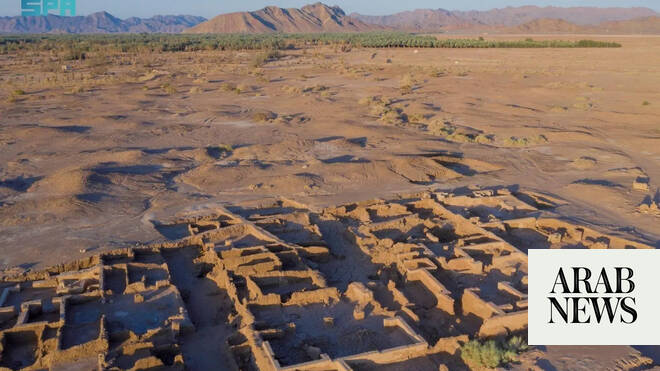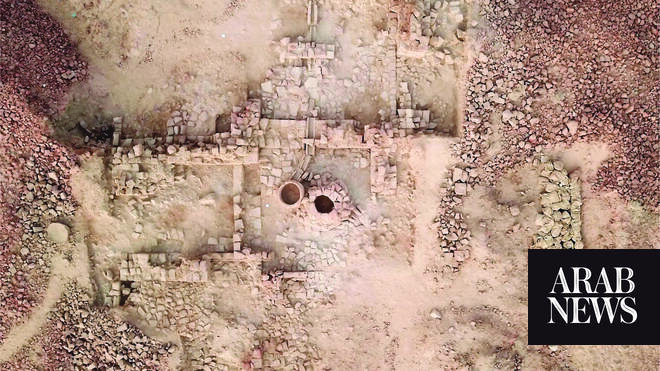
RIYADH: New archaeological discoveries in Dadan, AlUla, have revealed evidence that bridges a major historical gap between the Nabataean and early Islamic periods in Wadi Al-Qura, the Saudi Press Agency reported on Tuesday.
A Saudi Arabia-France team from the Royal Commission for AlUla and the French National Center for Scientific Research made the discovery, as a part of the Dadan Archaeological Project.
The new discoveries show AlUla’s role in a wider network of settlements before the rise of Islam. SPA
The study documents, for the first time, detailed archaeological evidence spanning the 3rd to the 7th centuries C.E. in northwestern Arabia — a period once thought to mark a decline in settled habitation after the Nabataean era.
According to the report, excavations conducted between 2021 and 2023 uncovered a large, well-built structure dating back to the late 3rd or early 4th century C.E., which remained in use until the first half of the 7th century.