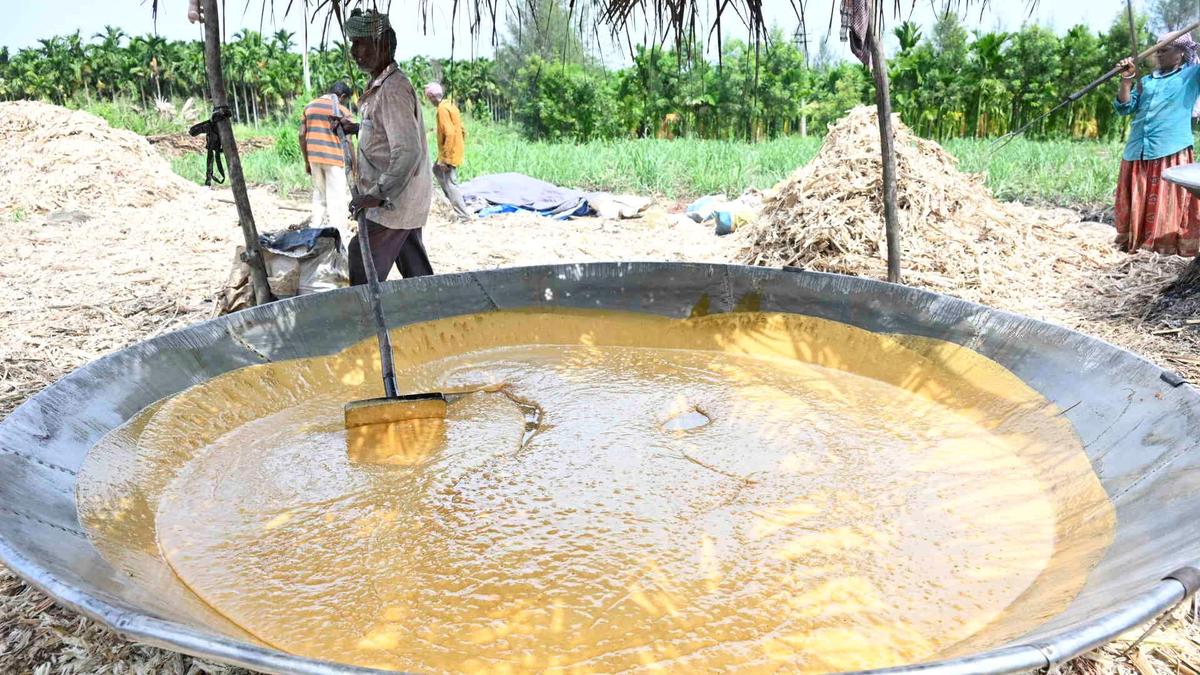
Sugarcane juice is being boiled for preparing country sugar at a unit in Kavundapadi in Erode district in Tamil Nadu on Wednesday.
| Photo Credit: GOVARTHAN M.
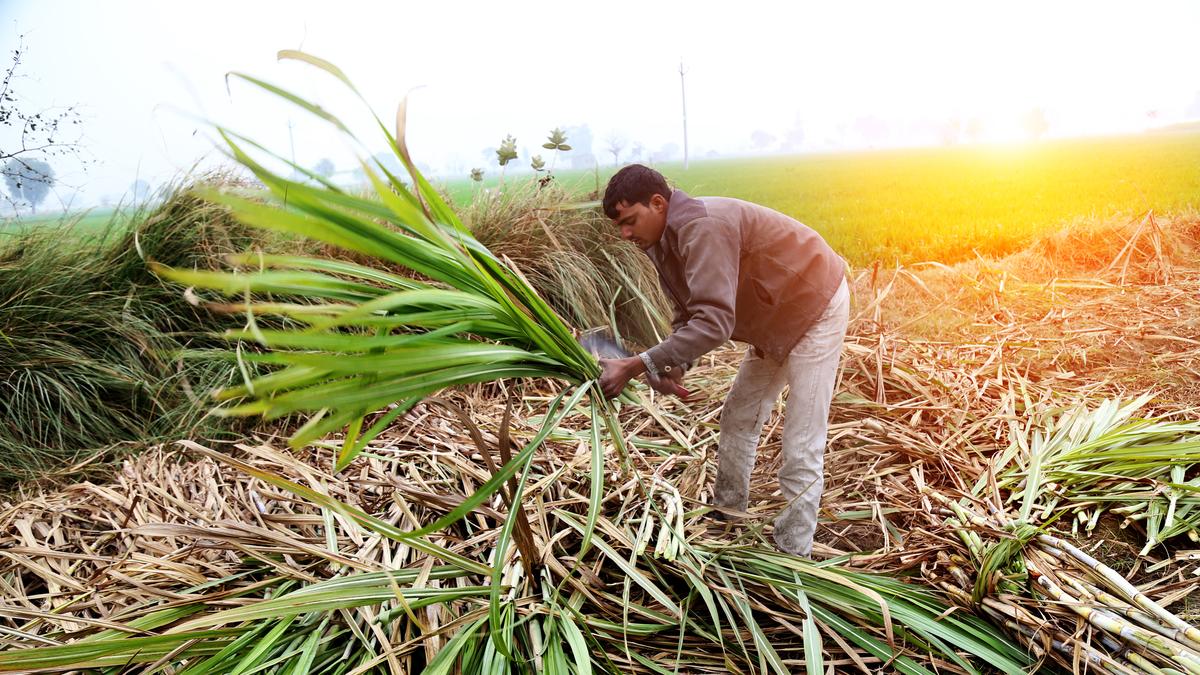
Farmers and traders have urged the State government to distribute Geographical Indication (GI)-tagged Kavundapadi country sugar through the Public Distribution System (PDS), saying it would boost production, ensure better returns and sustain the livelihoods of thousands dependent on the traditional industry.Kavundapadi country sugar or nattu sakkarai (jaggery powder) received the GI tag in December 2025 following efforts by the Kavindhapadi Nattu Sakkarai and Vellam Urpathiyalargal Sangam. Farmers, however, say the recognition must be followed by measures to expand consumption and strengthen market access. The GI tag recognises the product’s unique characteristics derived from the region’s agro-climatic conditions and traditional production practices.Produced in Kavundapadi and surrounding areas of Bhavani taluk, the sweetener is known for its traditional manufacturing process and distinctive flavour. The region, influenced by River Bhavani, the Lower Bhavani Project (LBP) canal network, the Thadapalli-Arakkankottai irrigation system, Odathurai pond and Anandasagaram lake, experiences high humidity levels that favour sugarcane cultivation and help maintain high sucrose content in the crop.Sugarcane grown over nearly 6,000 acres is processed in about 260 to 300 cottage units. Around 750 litres of sugarcane juice yield 100 kg of country sugar. Sampath Kumar, a farmer, said the juice is boiled for nearly two hours, with baking soda and calcium carbonate added at different stages, while a small quantity of coconut oil is added before the product is removed from the fire. Sugarcane trash generated during crushing is used as fuel, making the process largely waste-free.Farmers said around 10,000 bags of country sugar are produced every week and marketed through the regulated market at Kavundapadi. The product is supplied across Tamil Nadu and to neighbouring States. Country sugar used in the preparation of Panchamirtham at the Palani temple is also sourced from the regulated market at Kavundapadi, they added.Farmers pointed to rising labour and fertilizer costs, declining yields and adulteration as major challenges confronting the sector. One farmer said sugarcane productivity had fallen from 70-80 tonnes an acre to around 40 tonnes an acre in recent years. They also sought the introduction of new sugarcane varieties with higher sugar recovery rates.Farmers said the sector supported more than 10,000 farmers and 25,000 workers before the 1970s. Today, fewer than 5,000 farmers remain engaged in production.K. Praveen Kumar, a manufacturer from Perunthalaiyur, suggested that the government conduct a pilot programme by distributing the product through ration shops in a district. “The product can be procured directly from farmers through the Agricultural Produce Marketing Committee. This will increase production and provide stable income to farming families,” he said.P. Alagesan, Senior Scientist and Head, Krishi Vigyan Kendra (KVK), MYRADA, said efforts were under way to link Farmer Producer Organisations (FPOs) with temples for regular procurement of country sugar. He said the Agri Entrepreneur Service Centre, established at the KVK in 2019, markets value-added products, including jaggery powder and jaggery (vellam), to various states. The initiative helps farmers secure better returns by reducing the role of intermediaries. He called for coordinated efforts by various departments to create a distinct brand identity for Kavundapadi country sugar and improve its marketability.Farmers said wider institutional procurement and distribution through ration shops would help increase consumer acceptance of the naturally produced sweetener, which is free from artificial colours and harmful chemical additives, while providing a much-needed boost to the traditional industry. Published - June 17, 2026 07:11 pm IST