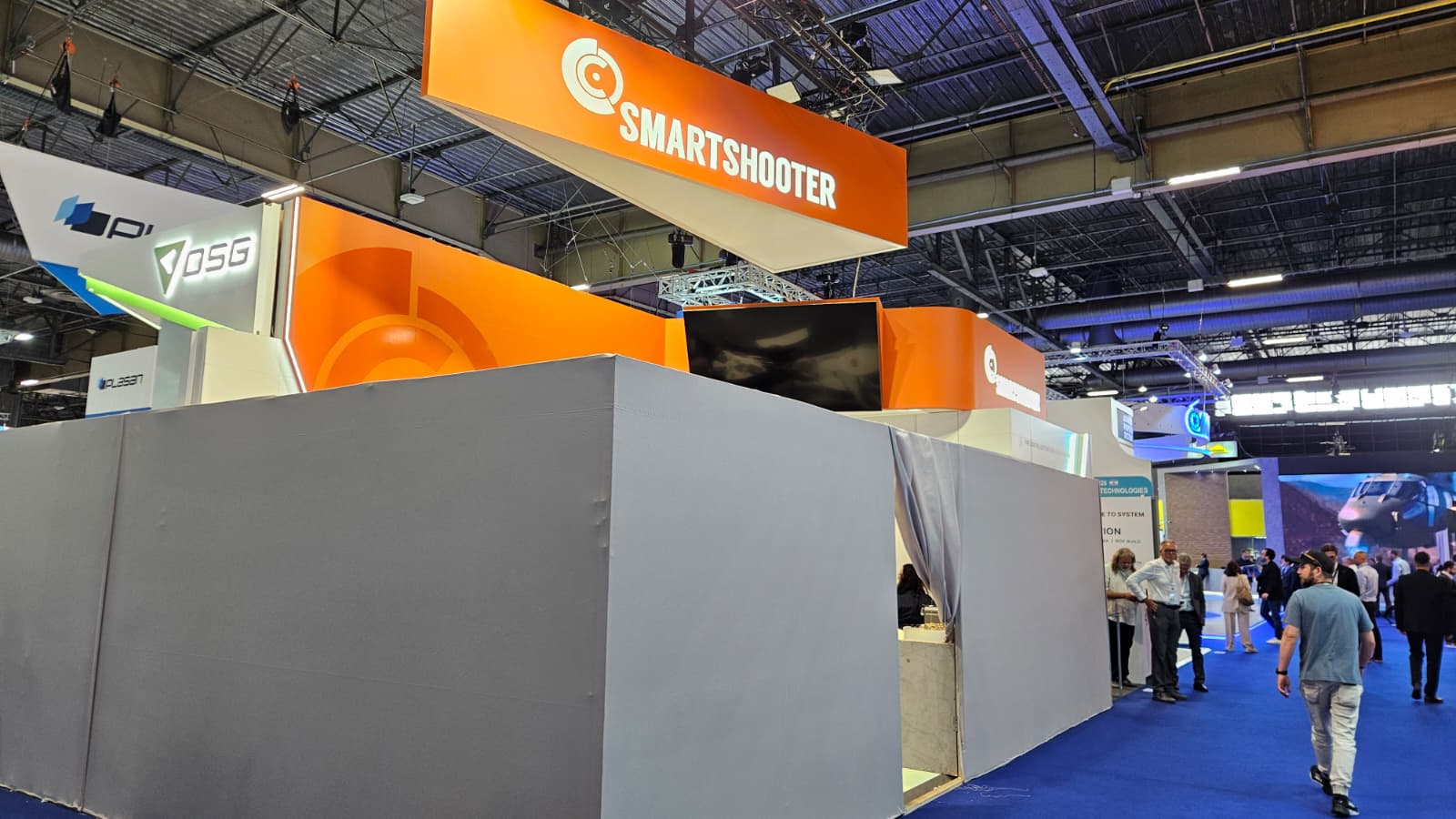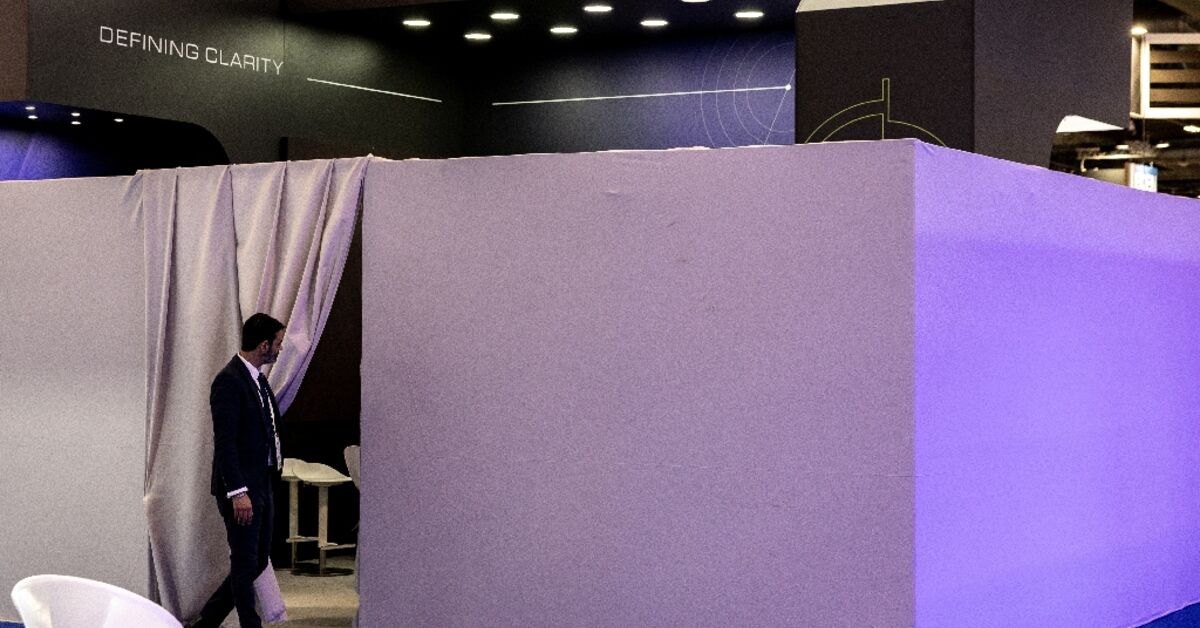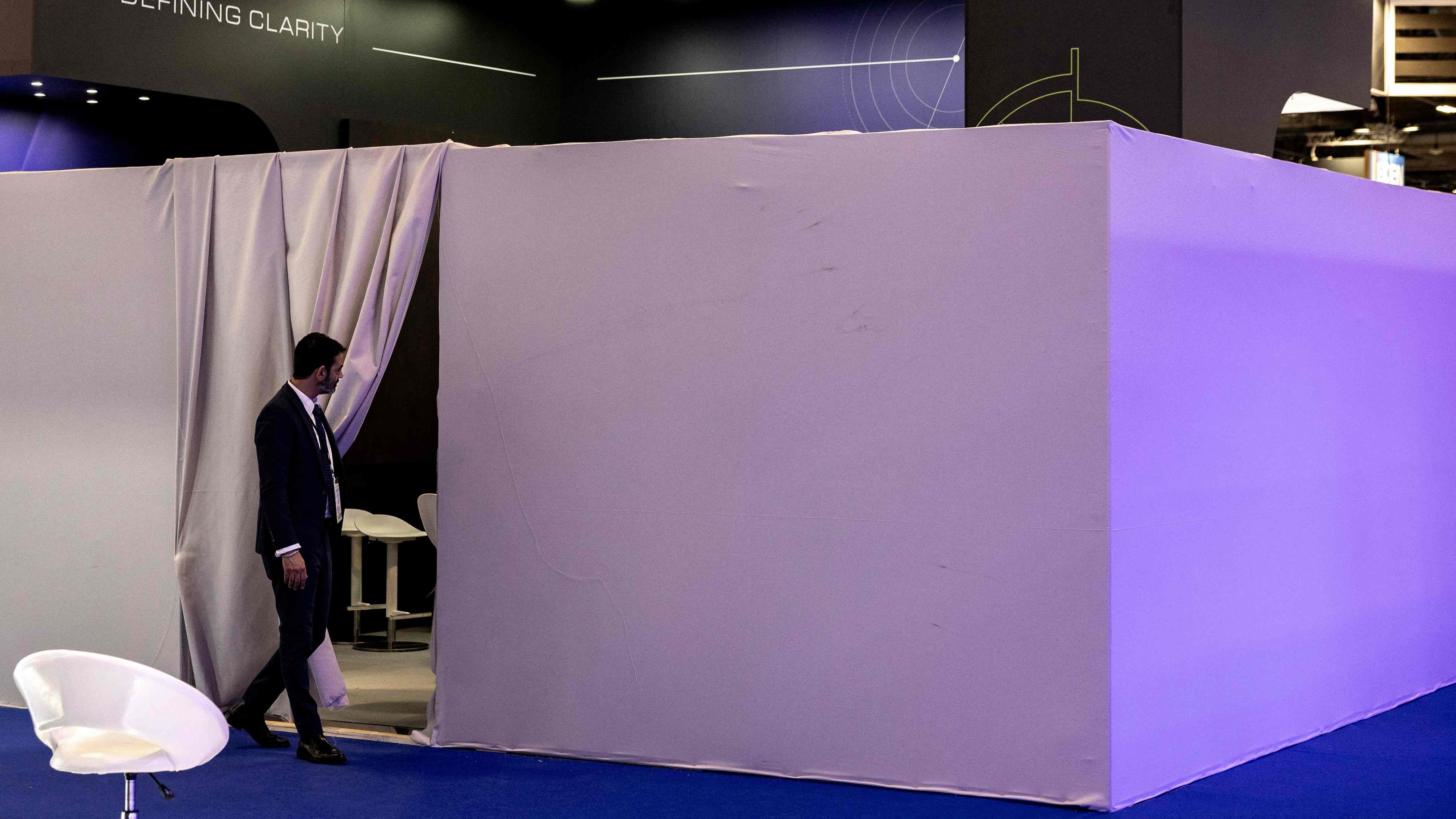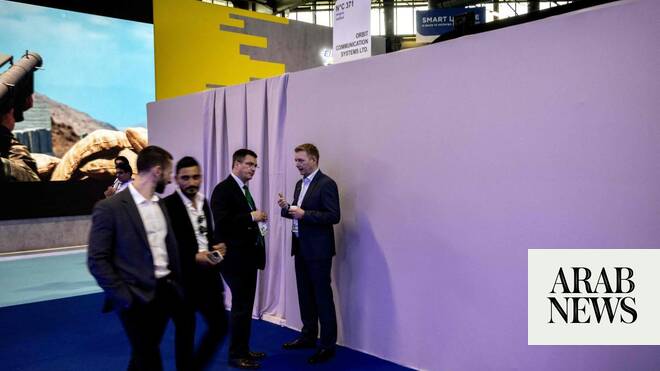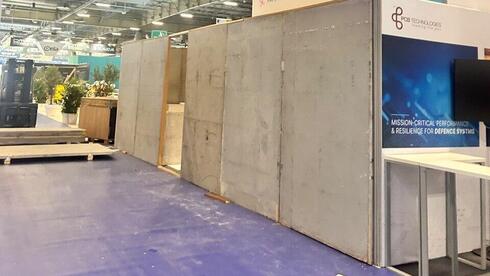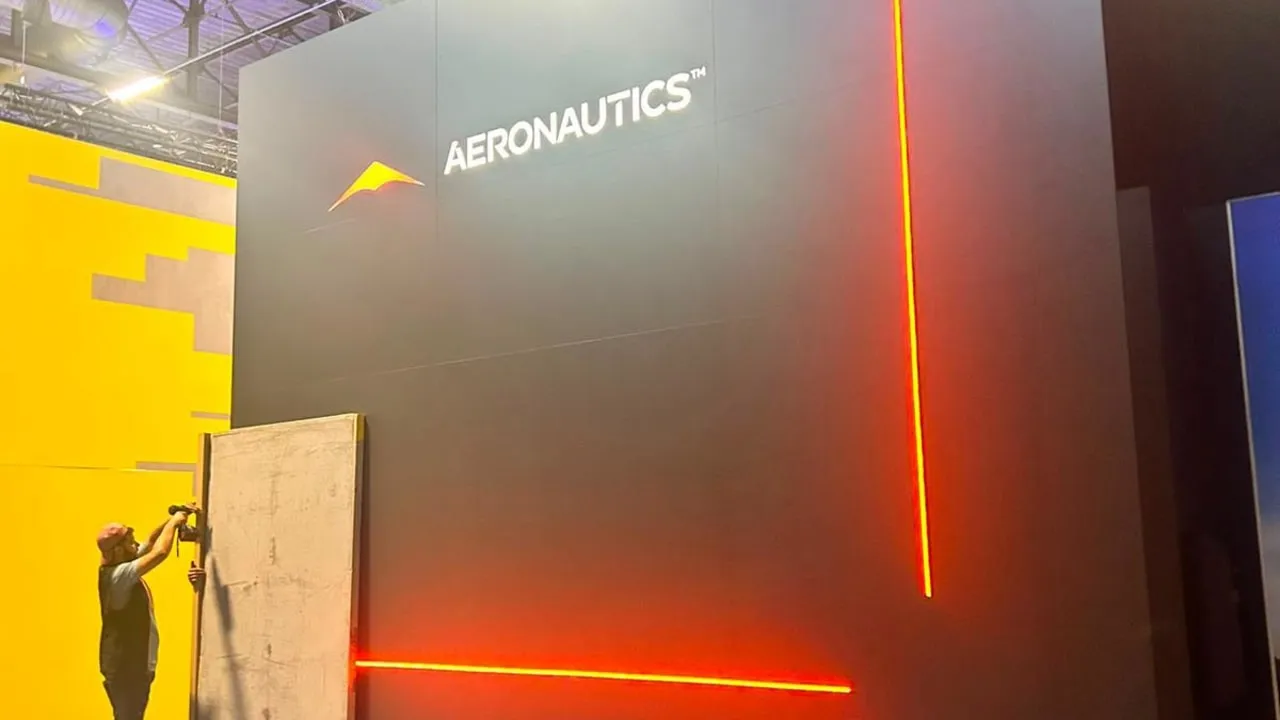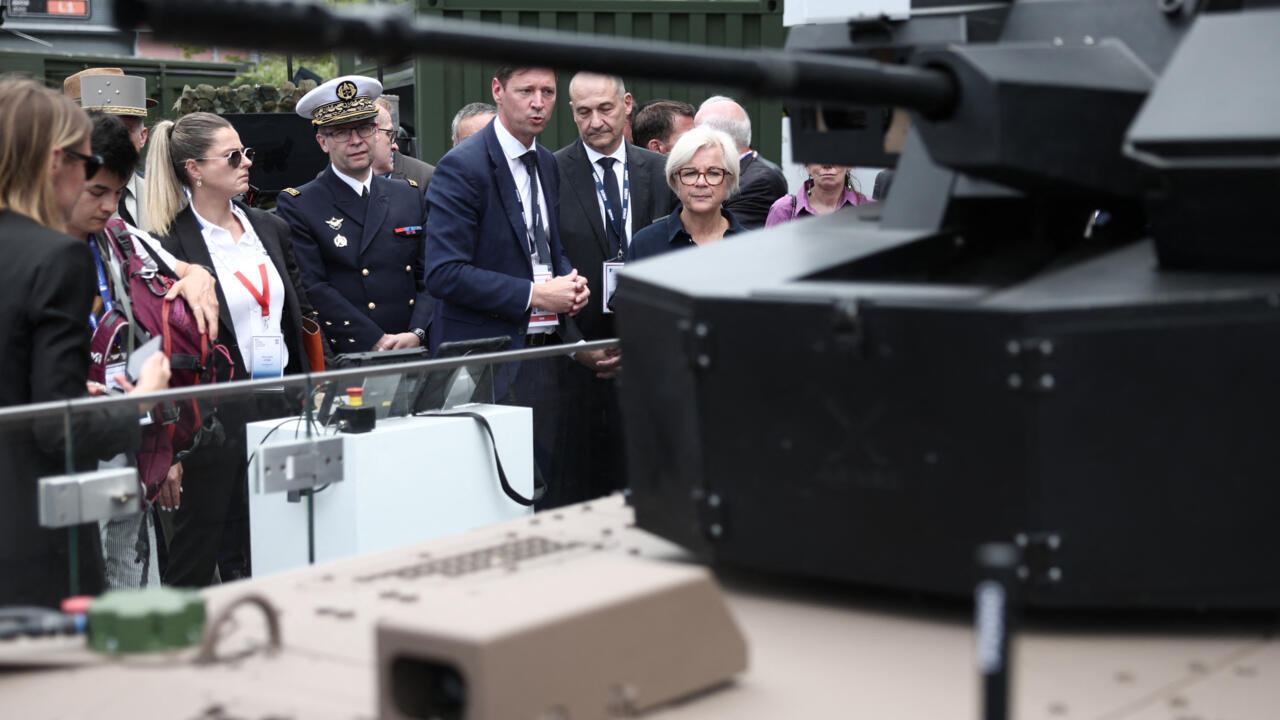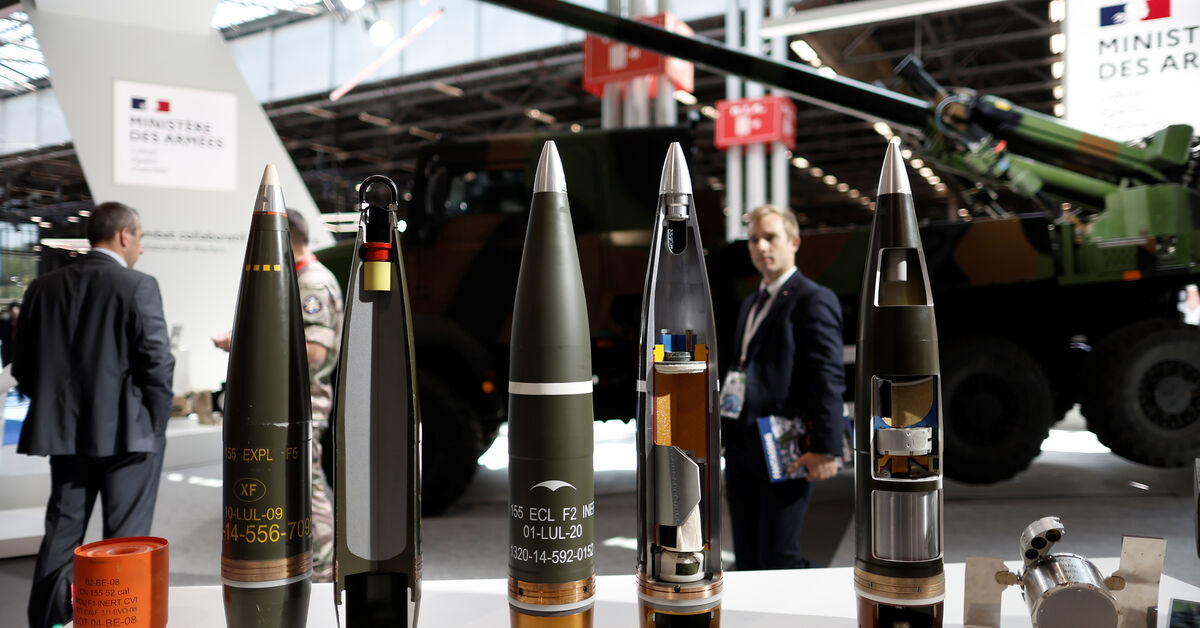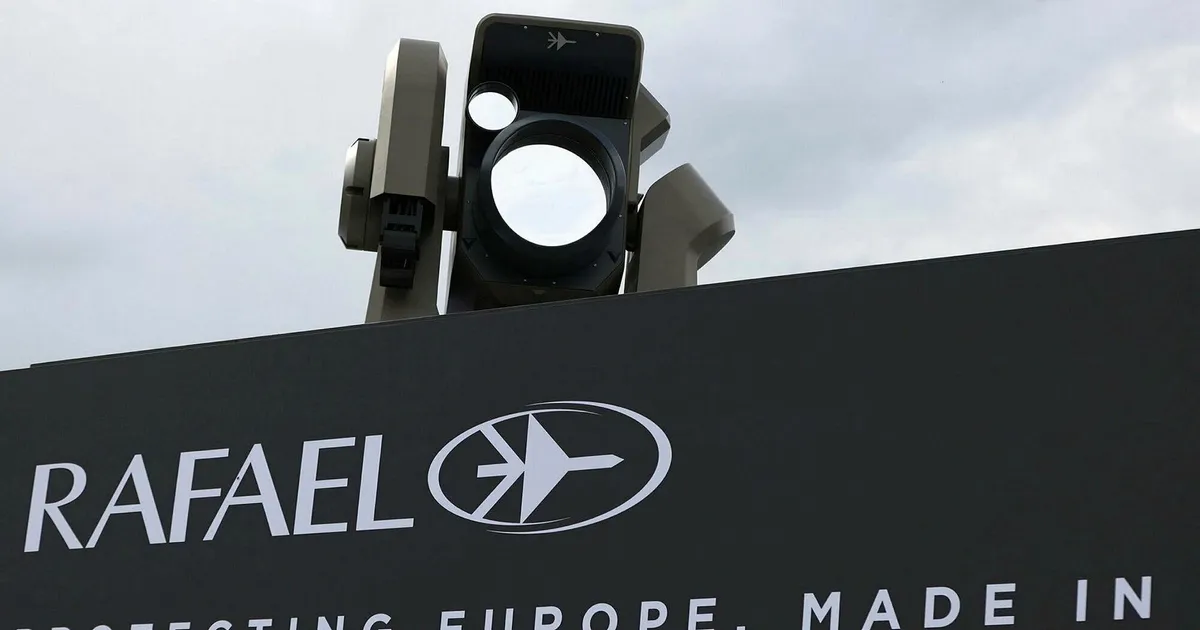
Israel's arms industry received starkly different treatment at two European defense exhibitions this month: celebrated with an official pavilion in Berlin, but restricted to defensive weapons in France, where Israeli stands were ultimately sealed offTwo of Europe's largest arms exhibitions are being held in close succession this year: The ILA Berlin Air Show, which has concluded, and Eurosatory – the world's largest land weapons exhibition, which is taking place in Paris this week. Israel's treatment at the exhibitions appears to be entirely different. The warm Berlin reception represents the business position to which the Israeli defense industry aspires, while the cold shoulder from Paris embodies its fears.Last week, senior Defense Ministry officials arrived at the Berlin exhibition, leading a delegation of 15 Israeli defense companies, and the opening ceremony of the Israeli national pavilion there was proudly celebrated. The expansion of the deal to sell Israel Aerospace Industries' Arrow 3 system to Germany significantly contributed to Israel breaking its defense export record in 2025, which surpassed $19 billion. In the same vein, Brig. Gen. (res.) Yair Kulas, who heads Sibat, the government body that approves Israeli arms exports, spoke about the potential for expanding business partnerships with the German industry and other European countries.German Chancellor Friedrich Merz at the ILA arms exhibition in Berlin. The opening ceremony of the Israeli national pavilion there was proudly celebrated. Credit: Fabrizio Bensch/ReutersGerman Chancellor Friedrich Merz at the ILA arms exhibition in Berlin. The opening ceremony of the Israeli national pavilion there was proudly celebrated. Credit: Fabrizio Bensch/ReutersIsrael Aerospace Industries used the ceremony to sign an agreement with Berlin's state government to establish a new innovation center in the aviation and defense sector. Israel Aerospace Industries highlighted at the ceremony that it had supplied Germany not only with the defensive Arrow 3 system but also with offensive weapons – Heron TP drones for the German Air Force and the BlueWhale autonomous submarine for its Navy. The head of Berlin's state government visited the Israel Aerospace Industries pavilion and was photographed there. The building where the joint innovation center will be established, in Berlin's Technology Park, is already standing.Rafael Advanced Defense Systems also announced a partnership with the German company Reflex Aerospace, under which a new generation of ultra-high-resolution satellites with high collection frequency will be launched. Elbit Systems announced a collaboration with Diehl Defence to market the SkyStriker autonomous loitering munition (suicide drone) system to the German defense establishment.Israeli defense officials with their German counterparts, with the Arrow 3 system in the background. Credit: The Media and Public Affairs Bureau of the Israel Ministry of DefenseIsraeli defense officials with their German counterparts, with the Arrow 3 system in the background. Credit: The Media and Public Affairs Bureau of the Israel Ministry of DefenseFrance imposed limited restrictionsIn contrast, the atmosphere in the Israeli defense industry ahead of the Eurosatory exhibition in Paris was completely different. The Defense Ministry announced two weeks ago that the French government had prohibited the official participation of the State of Israel in the exhibition, and that consequently it would not establish a pavilion. According to Israel, the French decision included a ban on government representatives participating in the exhibition, a ban on opening an Israeli national pavilion and a ban on Israeli defense industries displaying offensive weaponry, allowing only air defense products. This demand was not imposed on other industries worldwide.France did not deny the Defense Ministry's announcement, but refused to confirm the ministry's claim that it had prohibited its participation in the exhibition. Last year, at the Paris Air Show, one of the largest aerospace and defense exhibitions in the world, France did not prohibit the establishment of an Israeli pavilion but restricted the types of systems Israel could display to defensive ones only. The Defense Ministry refused to accept the restrictions, and as a result, the Israeli pavilions at the exhibition were covered in black.Eurosatory in 2024. Israelis fear the French may impose unexpected sanctions at the last minute. Credit: Julien De Rosa / AFPEurosatory in 2024. Israelis fear the French may impose unexpected sanctions at the last minute. Credit: Julien De Rosa / AFPContrary to the Defense Ministry's announcement, Israeli companies still prepared to open their display pavilions at Eurosatory. Company officials said they had already planned to primarily showcase defensive products, and that the demand not to highlight offensive products was something they were aware of before the official announcement. Nevertheless, the concern among Israelis that, as in the case of last year's Paris Air Show, the French might impose unexpected sanctions at the last minute, proved justified: on the eve of the exhibition's opening, several Israeli companies were made to seal off their stands. The French decision was made on the grounds that the products displayed were dual-use and could serve both defensive and offensive purposes.The disparity between the two exhibitions clearly reflects the difference between Israel's political relations with Germany and those with France – and particularly French anger over Israel's policy in the war that has been ongoing for the past two and a half years. While Israel sells billions in weapons to Germany, the Defense Ministry's director general issued an order in the past year requiring Israeli procurement from France to be reduced to zero, as a counter-response to France's treatment of Israel.Boaz Levy, CEO of Israel Aerospace Industries Credit: Israel Aerospace IndustriesBoaz Levy, CEO of Israel Aerospace IndustriesCredit: Israel Aerospace IndustriesFrench conduct embodies hypocrisy. If the French truly wished to oppose what is happening in the Gaza Strip, they should have boycotted a multitude of other non-Israeli international companies whose products are used by the Israel Defense Forces in combat – primarily American arms manufacturers. There is also hypocrisy in the demand to focus on displaying defensive products. Ultimately, the companies showcasing their wares at the exhibition market everything that is bought from them. Defensive prizesNevertheless, even in Israel, there is a preference to highlight the defensive technologies that the Israeli defense industry develops over offensive ones. This was evident at the Israel Defense Prize award ceremony held last week. The prize winners are determined by the defense minister, and his decision is based on the recommendation of an external judging committee. Five technological developments received the prize, and the details provided for some of them focused on their defensive capabilities. One of them was an award for the "Ofek 13" and "Ofek 19" intelligence satellite project, received by Israel Aerospace Industries together with the Defense Ministry's Directorate of Defense Research and Development, the Defense Ministry and Unit 9900 of the IDF's Military Intelligence Directorate. "These observation satellites, which we launched during the war, yielded quality results that changed the fighting. This is the resolution of the image they provided, the accuracy and the details they offer, giving our forces a real-time situational picture from the field," Boaz Levy, CEO of Israel Aerospace Industries, told TheMarker.The Ofek 13 launch in 2023. The intelligence satellite project received the Israel Defense Prize. Credit: The Media and Public Affairs Bureau of the Israel Ministry of DefenseThe Ofek 13 launch in 2023. The intelligence satellite project received the Israel Defense Prize. Credit: The Media and Public Affairs Bureau of the Israel Ministry of DefenseA second prize was awarded to Elbit Systems for electronic warfare defense systems that it developed for helicopters and aircraft, that are not limited to a specific manufacturer or type of aircraft.Israel Aerospace Industries was involved in two additional awards: one for a classified operational system that significantly expands the collection and operational capabilities of the Mossad, the Institute for Intelligence and Special Operations. The second was for a technological development by Unit 81 of the IDF's Military Intelligence Directorate.
German embrace, French cold shoulder for Israel's arms industry
Israel's Arms Industry Received Starkly Different Treatment at Two European Defense Exhibitions This Month: Celebrated With an Official Pavilion in Berlin, but Restricted to Defensive Weapons in France, Where Israeli Stands Were Ultimately Sealed Off
1,278 words~6 min read