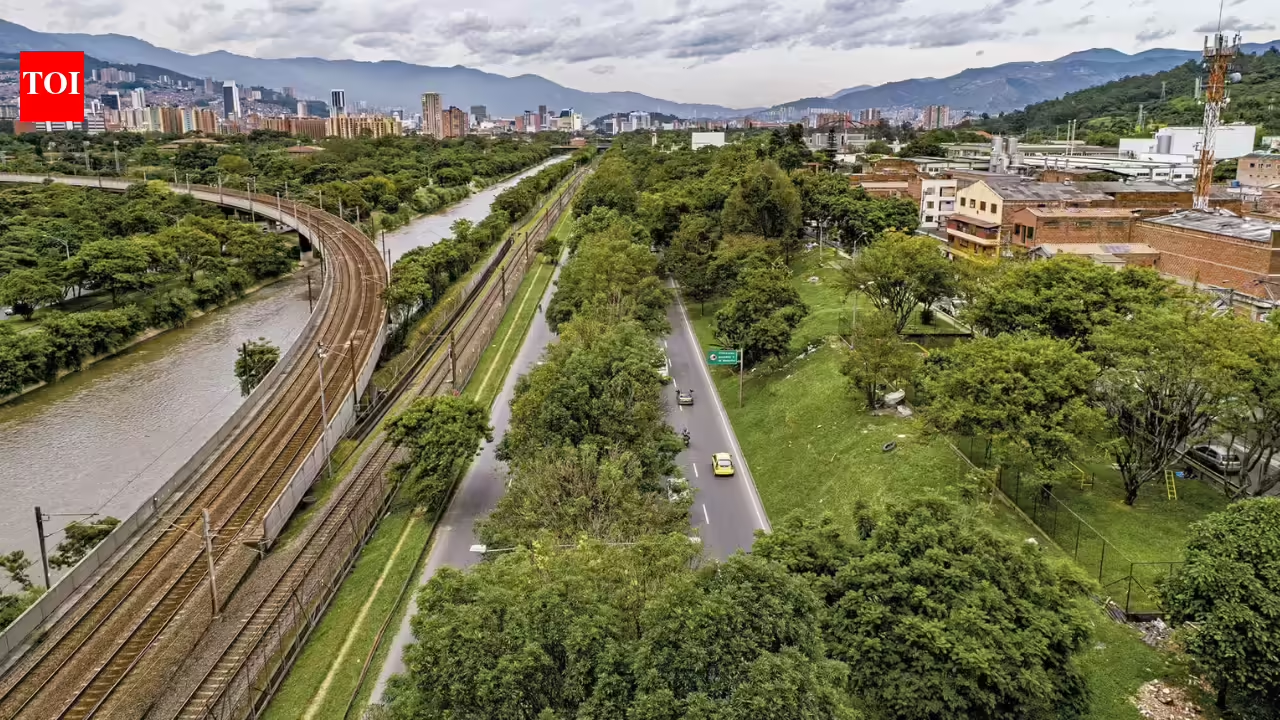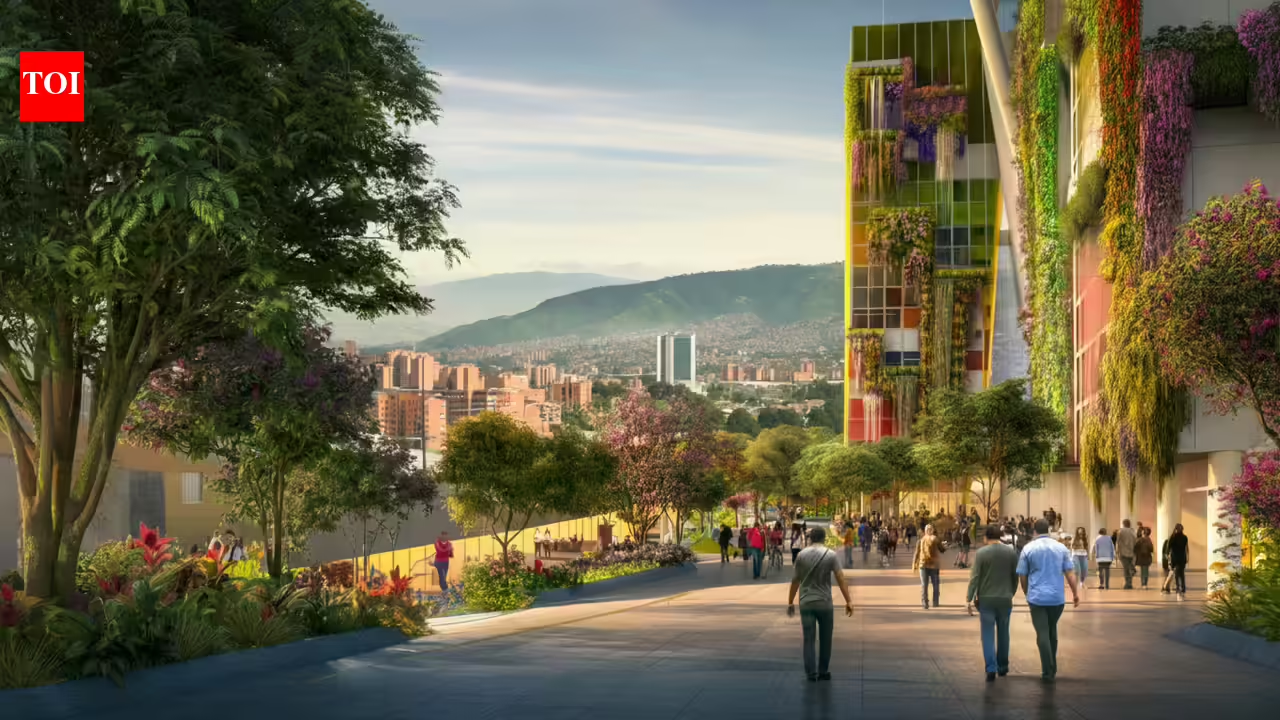
For decades, cities around the world have struggled with a growing problem known as the urban heat island effect. As concrete, asphalt and buildings replace natural vegetation, urban areas absorb and retain more heat than their surrounding countryside, making summers increasingly uncomfortable and, in some cases, dangerous. While many cities rely on expensive cooling infrastructure to tackle rising temperatures, one Colombian city chose a different path. Instead of adding more air conditioners, it added nature. By planting more than 2.5 million plants and approximately 880,000 trees, the city transformed roadsides, waterways and public spaces into living green corridors. The result was remarkable: average temperatures in some of the hottest areas fell by up to 2°C, demonstrating how urban forests can become a powerful tool against climate change and extreme heat.How Medellín reduced urban heat by planting 2.5 million plants and 880,000 treesThe Colombian city of Medellín launched an ambitious urban greening initiative known as the Green Corridors project. The programme focused on increasing vegetation along roads, riverbanks and public transport routes to combat rising temperatures caused by rapid urbanisation.According to the city government, the project created interconnected corridors of vegetation across urban spaces, improving shade coverage and reducing heat absorption from concrete surfaces.The science behind the approach is well established. Trees and plants cool surrounding areas through shade and evapotranspiration, a natural process in which water evaporates from leaves and lowers ambient temperatures.As per the data collected by Cooling for All Secretariat at Sustainable Energy for All (SEforALL), on warm days, with temperatures of 34°C and higher, the cool roofs reduced the indoor air temperature relative to outdoors by 2°C on a clay tile roof and 2.9°C on an asbestos roof. This effect alone can make a huge difference during a heatwave and provide thermal comfort benefits, which can be further enhanced with other passive solutions or fans. The United Nations Environment Programme states:“As global temperatures rise, keeping cool is becoming an increasingly urgent health issue, with cities particularly at risk” Dan Hamza-Goodacre, Kigali Cooling Efficiency Program Executive Director. "Trees can reduce urban temperatures through shading and evapotranspiration."Urban greening as an effective adaptation strategy for reducing heat exposure in cities.Why trees are one of the most effective weapons against the urban heat island effectUrban heat islands occur when built environments absorb and store solar energy more efficiently than natural landscapes. Dark surfaces such as roads and rooftops can become significantly hotter than surrounding green spaces.According to the United States Environmental Protection Agency (EPA):"Shaded surfaces may be 11–25°C cooler than the peak temperatures of unshaded materials."The EPA further notes that strategically placed trees and vegetation can help lower both surface and air temperatures in urban environments.Urban forests provide multiple benefits beyond cooling, including improved air quality, biodiversity conservation and enhanced public health.In Medellín, these benefits extended beyond temperature reduction. The city's green corridors improved habitat connectivity for wildlife, beautified public spaces and encouraged more walkable neighbourhoods.What other cities can learn from Medellín's climate-smart success storyMedellín's achievement demonstrates that climate adaptation does not always require complex technology. Sometimes the most effective solutions are rooted in ecological principles that have existed for centuries.The World Bank has recognised nature-based solutions as a critical component of urban resilience strategies, noting that green infrastructure can help cities address rising temperatures while delivering environmental and social benefits.Nature-based solutions can help cities become more resilient, liveable and sustainable. As global temperatures continue to rise, urban planners are increasingly turning towards tree planting, green corridors, parks and restored ecosystems to reduce heat stress. Medellín's experience offers a compelling example of how large-scale urban greening can produce measurable results while improving quality of life for residents.The city's transformation serves as a reminder that combating climate change is not solely about reducing emissions. It is also about redesigning urban spaces in ways that work with nature rather than against it.By planting approximately 2.5 million plants and 880,000 trees, Medellín showed that nature can function as a powerful form of climate infrastructure. The city's green corridors reduced temperatures by up to 2°C in some of its hottest districts, helping to mitigate the urban heat island effect while delivering cleaner air, increased biodiversity and more pleasant public spaces. As cities worldwide search for practical responses to rising heat, Medellín's success highlights the extraordinary cooling power of urban forests and green infrastructure.
How a Colombian city cut temperatures by 2°C with 2.5 million plants and 880,000 trees
For decades, cities around the world have struggled with a growing problem known as the urban heat island effect. As concrete, asphalt and buildings replace natural vegetation, urban areas absorb and retain more heat than their surrounding countryside, making summers increasingly uncomfortable and, in some cases, dangerous.
718 words~3 min read