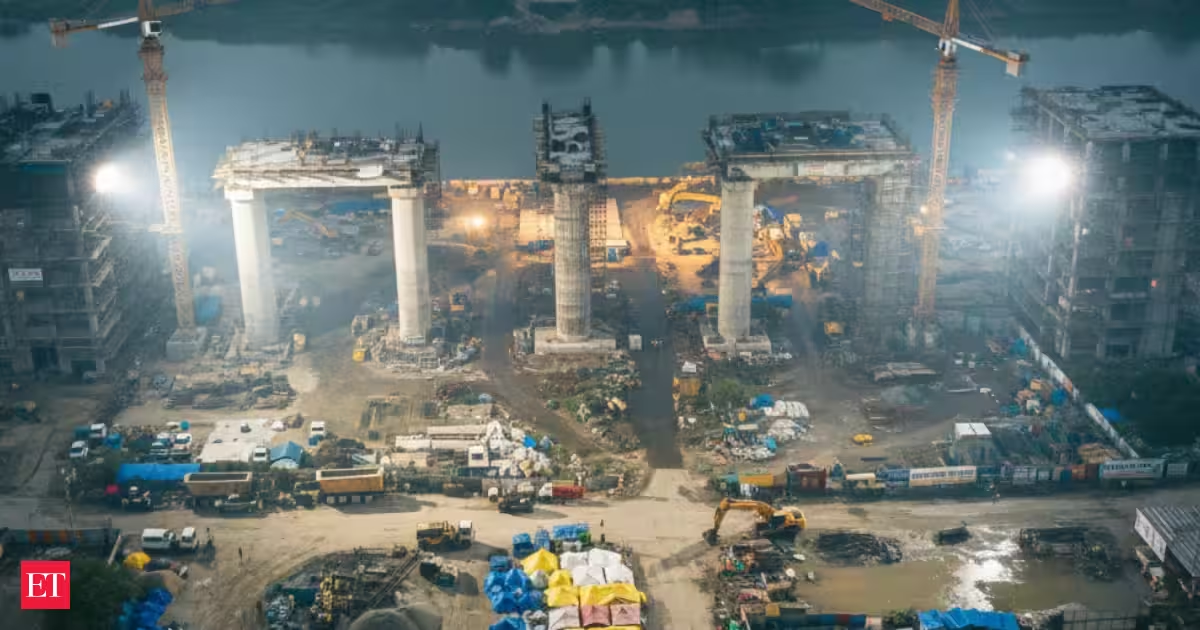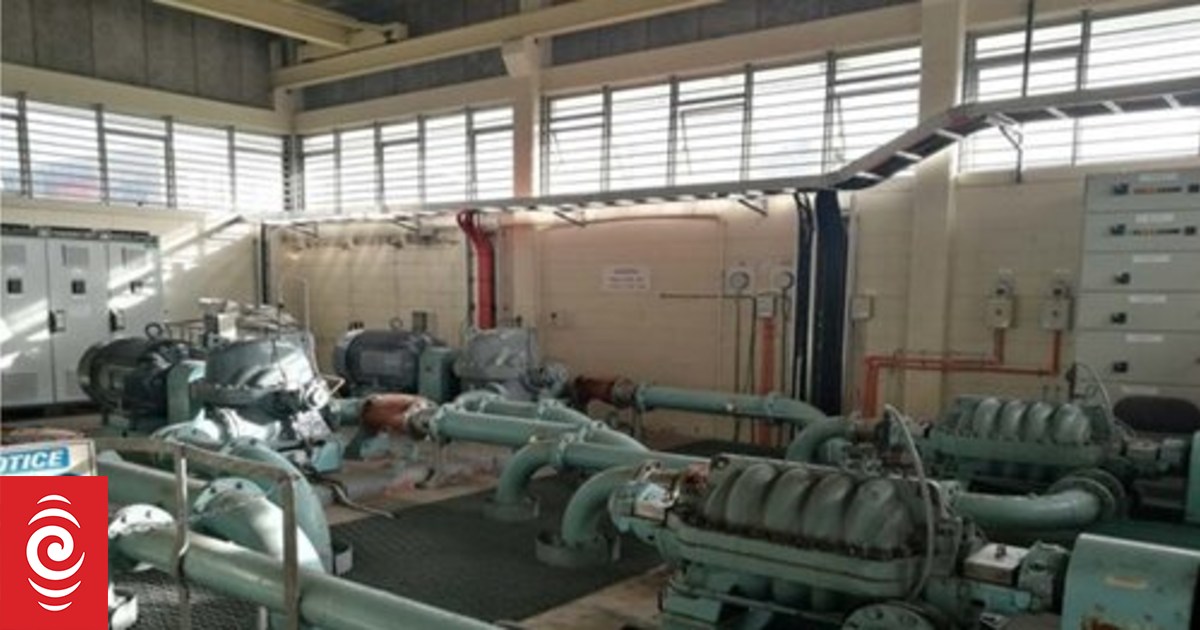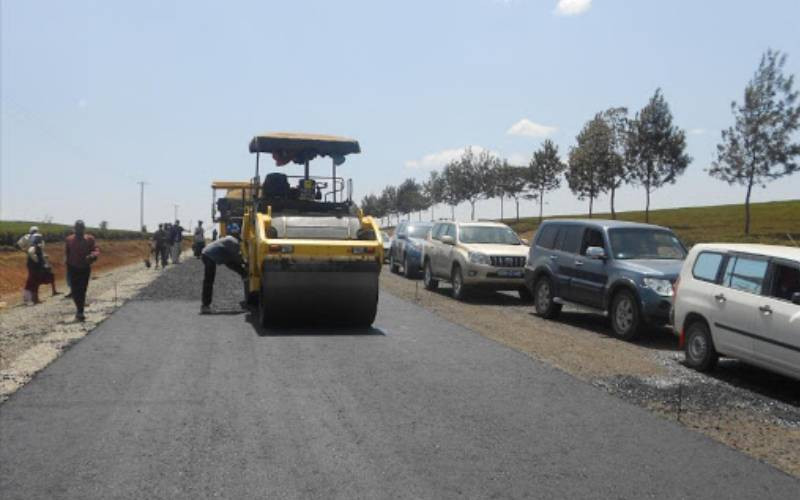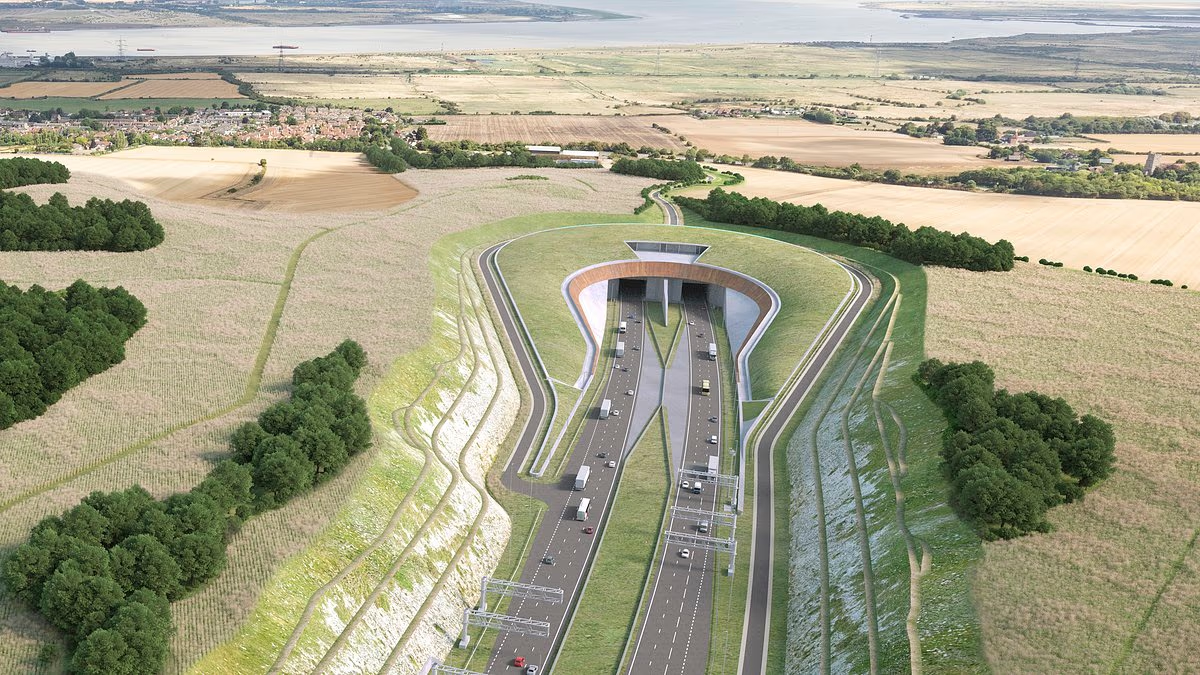
Large infrastructure projects have a stubborn reputation. Globally, major capital works such as transport corridors, water treatment facilities, smart city backbone systems routinely exceed budget and fall behind schedule. In fact, the McKinsey Global Institute estimates that large infrastructure projects run on average, 80% over budget and 20 months behind schedule.
It is an eye-watering number and begs the question, can we afford to delay digital transformation any further?
Enter digital twin technology, which has matured significantly over the past three years. What began as a design visualisation tool has evolved into something considerably more consequential: a full-lifecycle asset intelligence platform.
At Schneider Electric, we are seeing this shift play out across infrastructure projects in Sub-Saharan Africa, the Middle East, and Europe. Unlike earlier generations of digital twins that were largely confined to design visualisation, today’s platforms create physics-based, behavioural models that remain connected to live operational data throughout the asset lifecycle
As an example, the traditional commissioning model is linear and sequential. Design is completed, equipment is installed and then the testing begins. And this is when the problems start to surface.