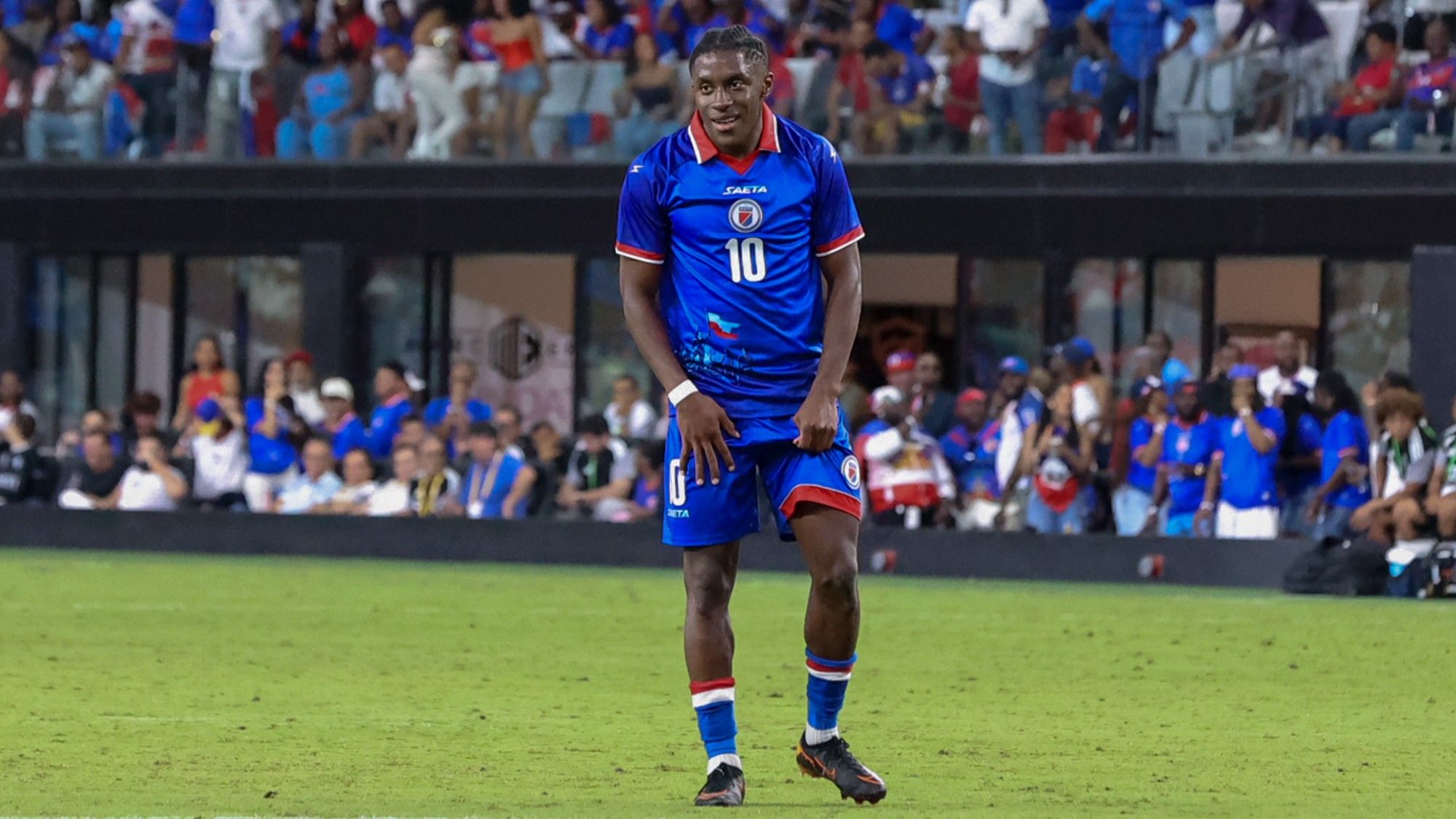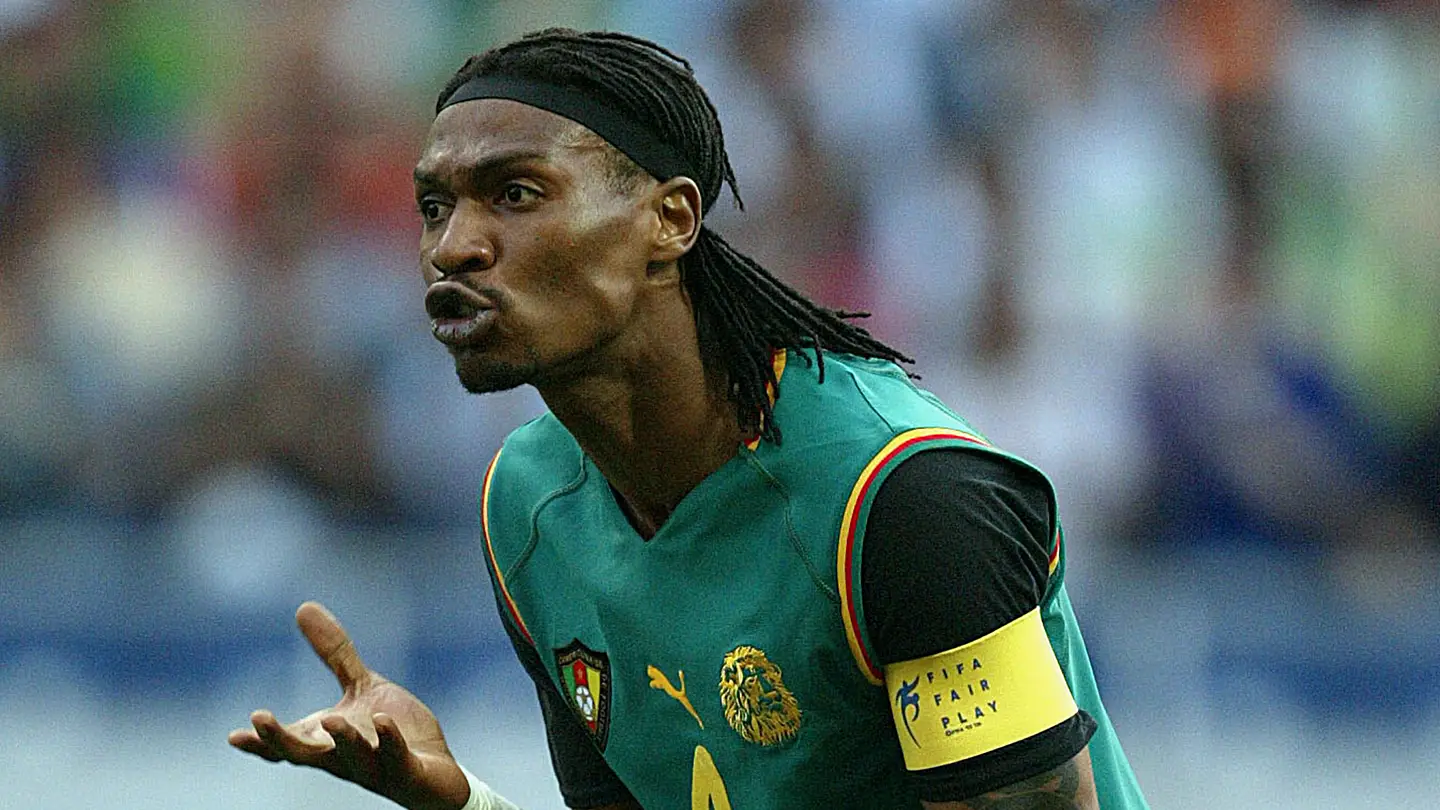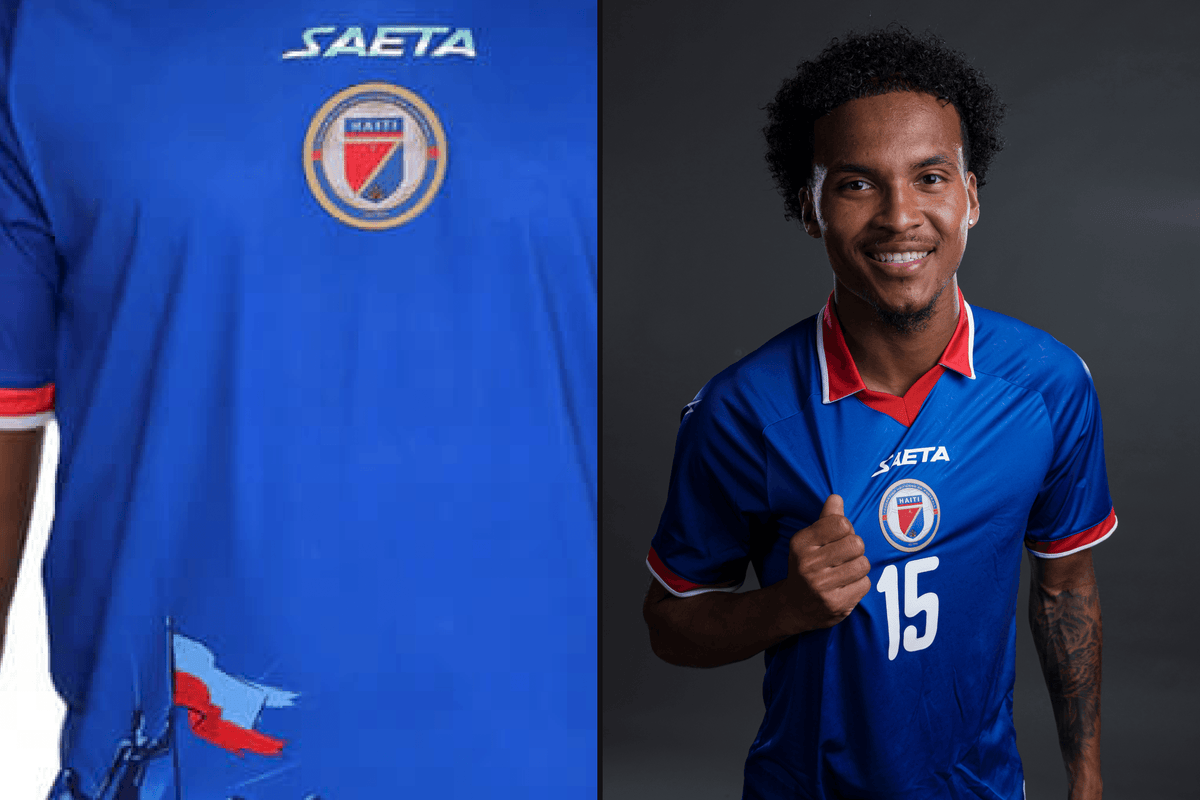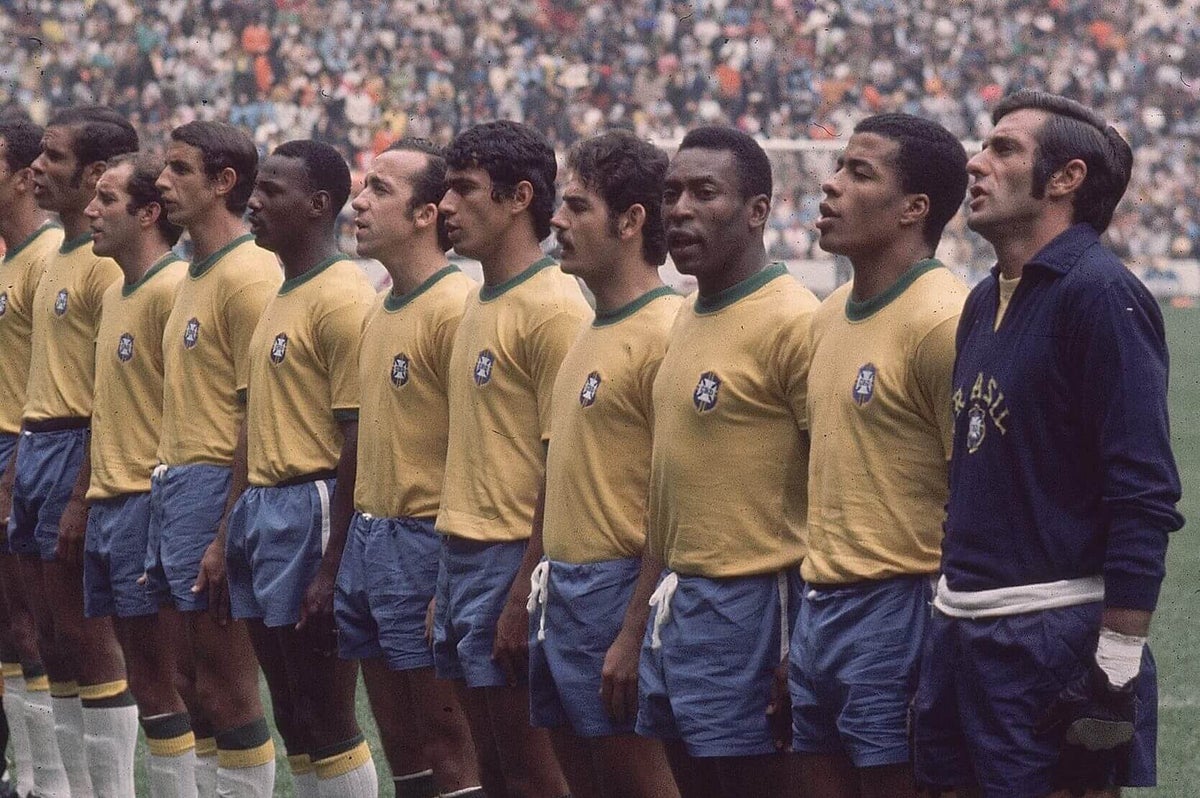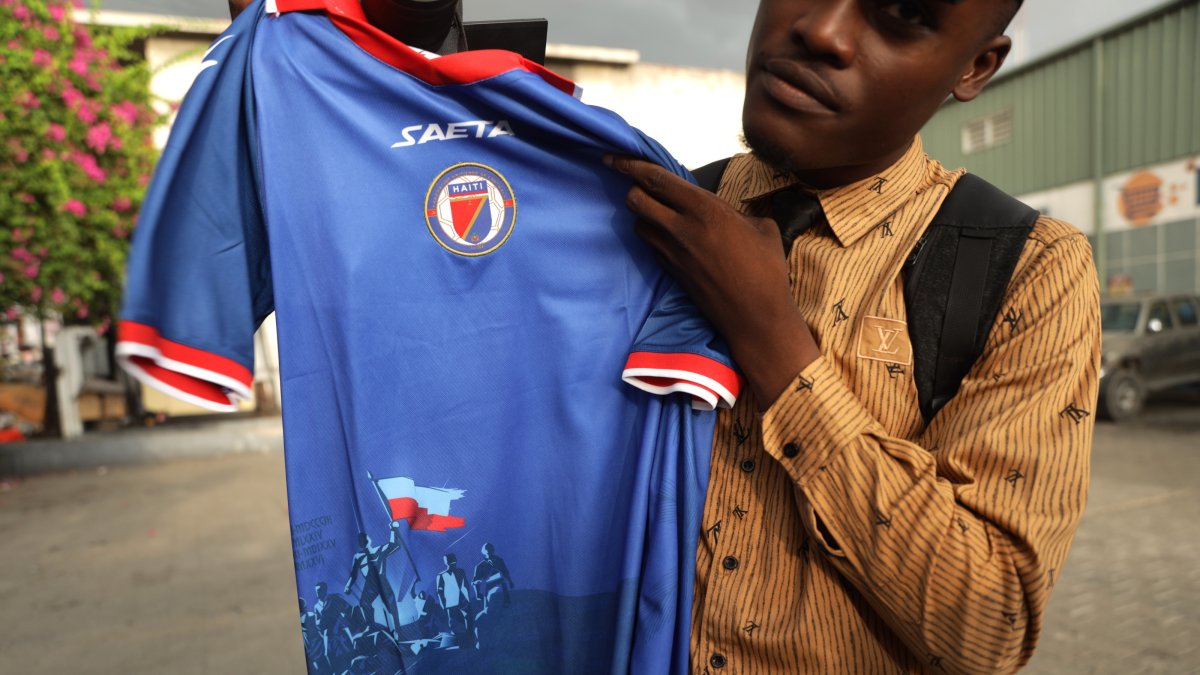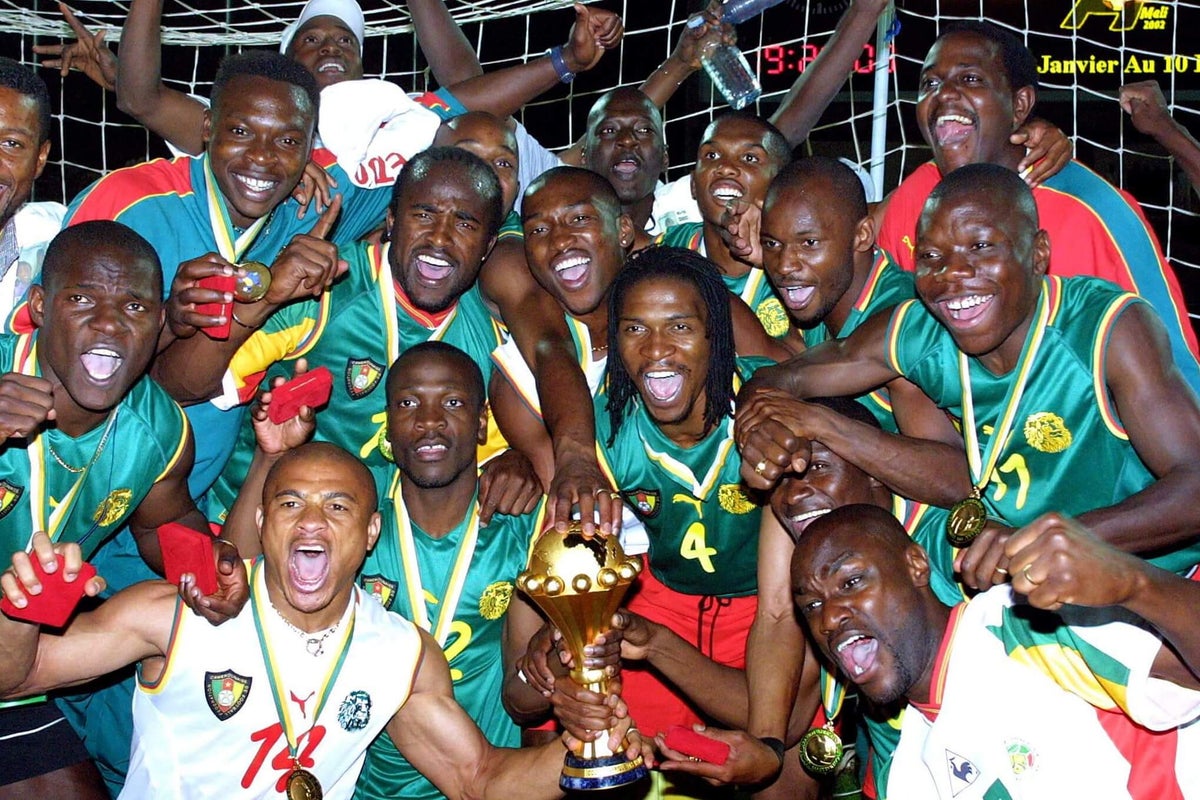
This article is part of our Style of Play series, an exploration of World Cup kit culture.It was on the eve of the World Cup that Saeta, Haiti’s kit supplier, announced that their jersey had been deemed unsuitable.Some imagery on the shirt, depicting Haitian revolutionaries from the early 1800s, was declared political and therefore not allowed, having fallen foul of FIFA’s often quite stringent rules around kits at World Cups. Some frantic changes were made, and they eventually took the field in an altogether plainer shirt.But this was by no means the first time this had happened. In fact, it was the latest in a fine tradition of the authorities objecting to shirts, based on their lengthy and often fairly spurious regulations.For example, at the 2022 World Cup, Belgium were forced to alter their away shirts because the word “love” was stitched on the inside of the collar. At that time, this was interpreted as a message of solidarity to the LGBTQ+ community because Belgium had worn ‘One Love’ armbands in their pre-tournament friendlies but it was actually part of a tie-in with the Tomorrowland music festival: as FIFA regulations stated, there can be no commercial messages on any shirt, even inside the collar. It was not allowed.Ukraine’s kit at Euro 2020 also caused a stir because part of its design featured an outline of the country that included Crimea, which was annexed by Russia in 2014 but still widely recognised as part of Ukraine.But perhaps the most famous example of a shirt being banned by the football authorities came when Puma decided to try something a little different with Cameroon’s kit ahead of two tournaments in 2002: the Africa Cup of Nations in Mali and the World Cup in South Korea and Japan.This particular shirt, designed by Puma, had one pretty simple but radical difference to most jerseys you’ll see: it was sleeveless.Cameroon’s players line up before the 2002 Africa Cup of Nations final (Issouf Sanogo/AFP via Getty Images)“Every time we needed to change the shirt, Puma gave us input on the design,” says Patrick Suffo, a member of that Cameroon side. “We visited Puma HQ in Germany a year prior to the shirt release.”There were various reasons for the players and designers going with a sleeveless shirt: some practical, some a little more cynical, from a commercial perspective.“It was all related to the weather in Mali,” says Suffo. “It’s very hot, a dry heat there. Also, we wanted to do something out of the ordinary, something that nobody else had done before. It was the way for Puma to have that impact out there.”There was another practical reason.“A lot of what we were working on was based around reducing shirt-pulling,” says Rob Warner, who was a designer at Puma at the time and has since founded Spark, a design agency. “Until Kappa did that tight jersey in 2000 for Italy, shirts were generally massive on players. And so, shirt-pulling was becoming a big thing.“Kappa solved it by having a very, very stretchy fabric that was almost sprayed onto the athletes, but the disadvantage to that is it had to be super stretchy for the players to be able to move around in it, and with it being so stretchy, it meant you could actually grab it and hold on to it. So a big part of Puma’s thinking was this fabric wasn’t as stretchy, which then made it harder to pull.”The shirts obviously caused quite a stir when they were released but they were incredibly popular among the players. They wore them at AFCON, which Cameroon won, beating Senegal on penalties in the final. “I felt free (wearing the sleeveless shirts),” says Suffo, “and it did help with the heat in Mali.”He also thinks the shirts genuinely gave them an advantage, from a mental point of view. He laughs at the suggestion that Cameroon’s players showing off their biceps probably didn’t hurt and adds: “Cameroonians are always big guys, so for the other team coming out, seeing us looking all big like that… it had a psychological impact too.”The design was popular in the wider world.“Serena Williams saw it and wanted a version of the Cameroon sleeveless shirt as a dress,” says Warner. Williams, who was sponsored by Puma at the time, wore an interpretation of the shirt at the French Open that year, complete with long, football-style yellow socks.Serena Williams, then sponsored by Puma, wears a homage to the sleeveless Cameroon shirt at the 2002 French Open (Andre Durand/AFP via Getty Images)But FIFA weren’t so keen. Before every World Cup, teams have to submit their kit designs for approval. There’s a long list of criteria they have to fulfil and this one fell foul of some sleeve patches that were introduced for that World Cup and have been present on shirts at every tournament since. Since applying those patches to the Cameroon players’s arms wasn’t really an option, a rethink was required.Rather than manufacturing a whole new set of shirts, Puma literally stitched sleeves onto the existing ones.“It was quite difficult because when you make a sleeveless shirt, you tend to make the armhole itself smaller,” says Warner. “We had to think about how we would solve that because if we just put a regular sleeve on it, the players aren’t going to be able to lift their arms up.“So we ended up using a black mesh, what’s called a “power mesh”, which was super stretchy but super tight. The other thing was that the armpits weren’t closed in those shirts because if we’d attached it all the way around, even with the stretchy fabric, it still wouldn’t have worked. Thankfully, it was before the era of 4k television, so nobody was exposed to their armpits when there was a throw in.”Cameroon’s modified design for the 2002 World Cup (Rabih Moaghrabi/AFP via Getty Images)The sleeveless shirts were still available to the public as replicas; it was just in FIFA-mandated games that they were forbidden. Cameroon ended up going out in the group stage at that World Cup with their stitched-on sleeves. A coincidence? Well, yes, probably.A few years later, they tried another experiment: an ‘all-in-one’ kit where the shirt and shorts were one garment, like a track athlete’s tunic, which again was partly designed to help eliminate shirt-pulling — but they weren’t as popular with the players.They were restrictive and presented issues if a player was hurt. “If you get injured, you had to remove the whole thing,” says Suffo.Cameroon defied convention again at the 2004 Africa Cup of Nations with an all-in-one design (Issouf Sanogo/AFP via Getty Images)It’s fairly rare that shirts are actually banned by the authorities, like this Cameroon one, but there are plenty of other curios from down the years related to kits at World Cups.Take Argentina in 1986, for example: for their quarter-final against England, they had to wear an alternative jersey to their normal light blue and white stripes. The trouble was that their official away shirts provided by Le Coq Sportif were made of a very heavy fabric, wildly impractical given the game kicked off at noon under the blazing Mexico City sun.So a delegation was despatched into a fairly spicy area of Mexico City called Tepito, famous for its markets. Guided by reserve goalkeeper Hector Zelada, who played his domestic football for Club America in Mexico City, they discovered a set of dark blue, much lighter and better ventilated shirts and, after some intense negotiations, bought a set for the whole squad.The task was then to make the shirts look official, so a few members of the team’s staff stayed up all night before the game stitching on numbers, the Argentina crest and the Le Coq Sportif logo. It worked a treat, and it’s undeniably funny that Diego Maradona’s iconic No 10 shirt, in which he scored the ‘Hand of God’ goal plus his sensational second, and was later sold for $9.3million, was a knock-off purchased at a Mexican market.Diego Maradona’s 1986 World Cup match-worn shirt shown on display at auction house Sotheby’s in 2022 (Tristan Fewings/Getty Images for Sotheby’s)Speaking of alternatives, there’s also the famous story of Johan Cruyff’s stripes. The Netherlands kits in the 1970s were provided by Adidas and as such, had the famous three stripes down each arm. But Cruyff was sponsored by Puma, thus couldn’t be seen endorsing their big rivals, so because Cruyff was Cruyff and could do what he wanted — including ignore the silly alphabetical shirt numbers system, which led to goalkeeper Jan Jongbloed wearing No 8; Cruyff wore his traditional 14 in his only World Cup in 1974 — he was permitted to wear his own special version, with two stripes down each arm.Some designs have a slightly darker story behind them, such as the shirts worn by Zaire (now DR Congo) at the 1974 World Cup, which featured a massive lion roaring from the front and were supposedly designed by the country’s dictator, Mobutu Sese Soku.On a similar theme, when Italy were faced with a kit clash in their 1938 quarter-final against France, they should in theory have worn their white away kit, but by decree from Benito Mussolini, they took to the field clad in black shirts, a clear symbol of the fascist regime. This has been overblown slightly over the years: they still wore their traditional Azzurri blue in the final against Hungary, but the symbolism of the black shirts, especially when accompanied by the fascist salute they made before the game, was obvious.Another that sort of fits into the category of ‘kit curiosities’ is Brazil, who actually wore white with a blue trim until the 1950s, rather than the yellow that has become iconic since. But the trauma of their defeat in the final match of the 1950 World Cup to Uruguay was such that a change was necessary, like a sort of sartorial exorcism. A competition was launched in a newspaper to design a new shirt based on the Brazilian flag, which was won by an illustrator named Aldyr Garcia Schlee, choosing the classic yellow, blue and white that we know today.Not that Schlee was especially happy with his legacy. “No,” he said, when asked by the BBC whether he felt proud of his contribution to the aesthetics of football. “The truth, I think, is that it was never that important to me. Perhaps I feel a little guilty, actually, for creating something that is not as pure as it was once, something that now is about money.”The aesthetics of every World Cup are genuinely important to our collective memory of them. And as things like broadcast quality and stadium design become more and more homogenised, making every tournament look more and more similar, kit design is more and more important to their visual identity.It’s just that there are often plenty of great stories behind the aesthetics, too.The Style of Play series is sponsored by the Active Cash Visa® Credit Card from Wells Fargo.The Athletic maintains full editorial independence. Partners have no control over or input into the reporting or editing process and do not review stories before publication.
Cameroon’s sleeveless shirt and the other kit curiosities that shocked the world
Cameroon's bicep-friendly 2002 kits were banned from a World Cup - and there are been plenty of other curios that have caused a mighty stir
1,854 words~8 min read