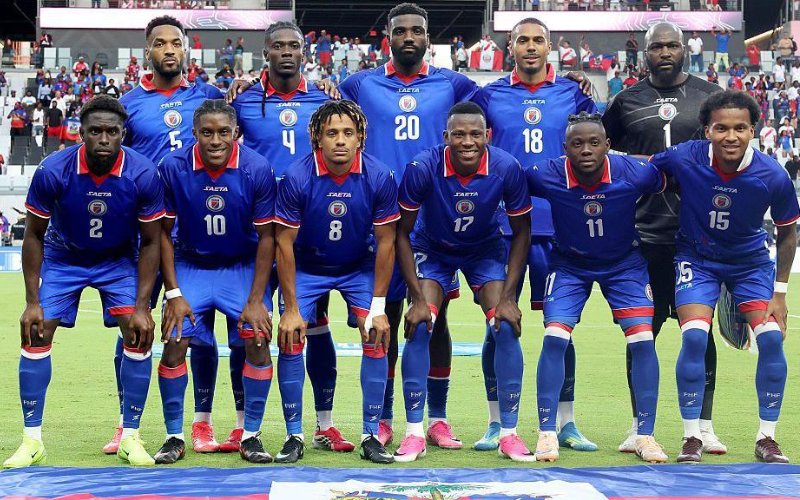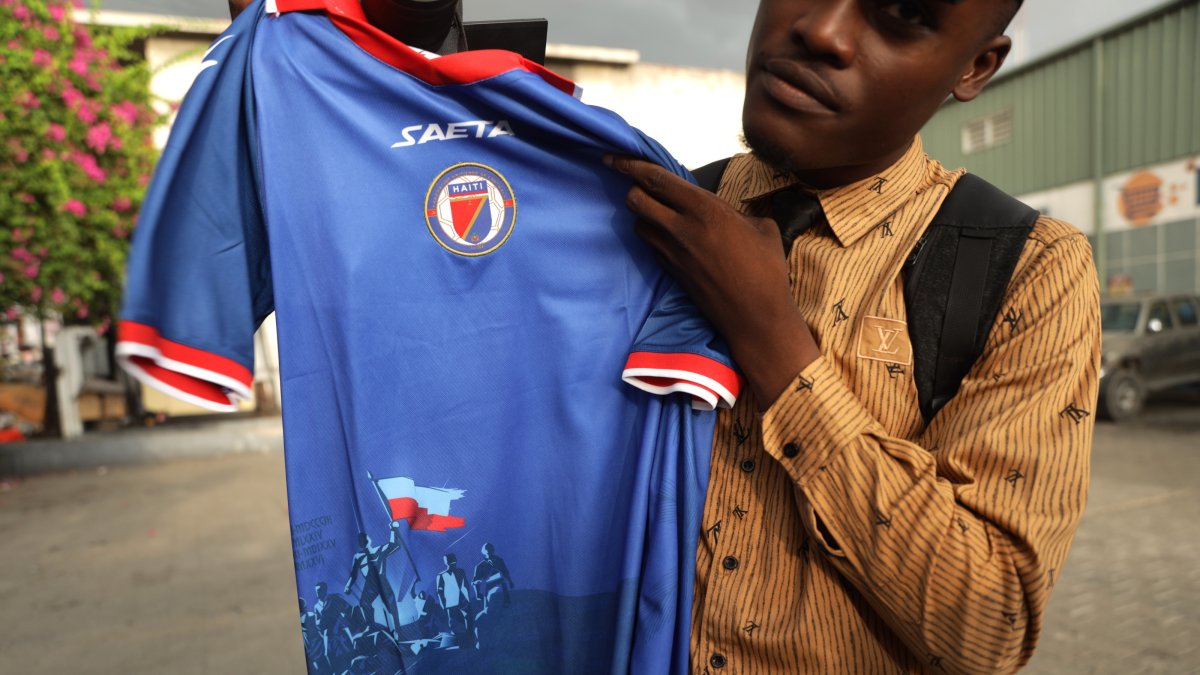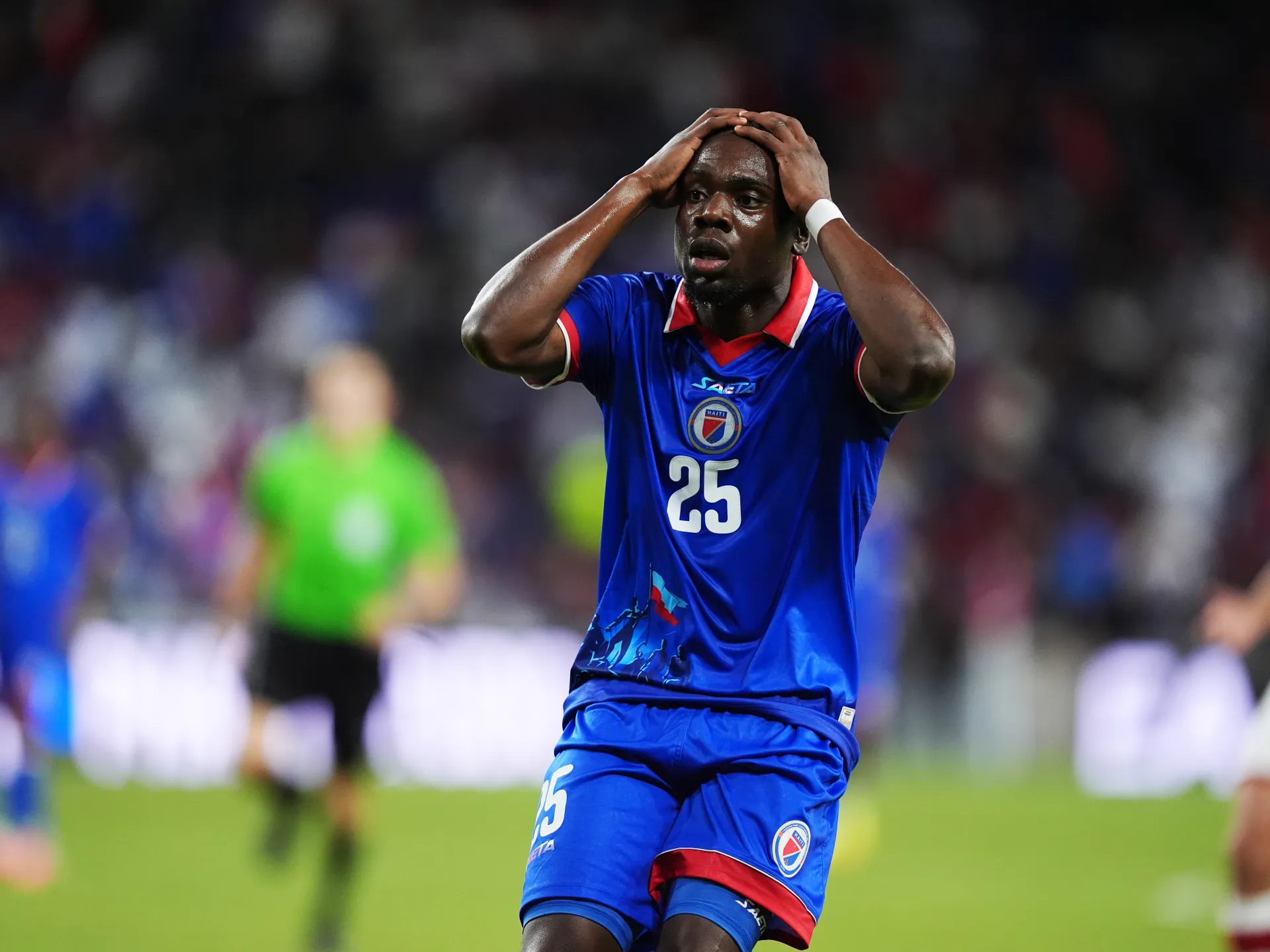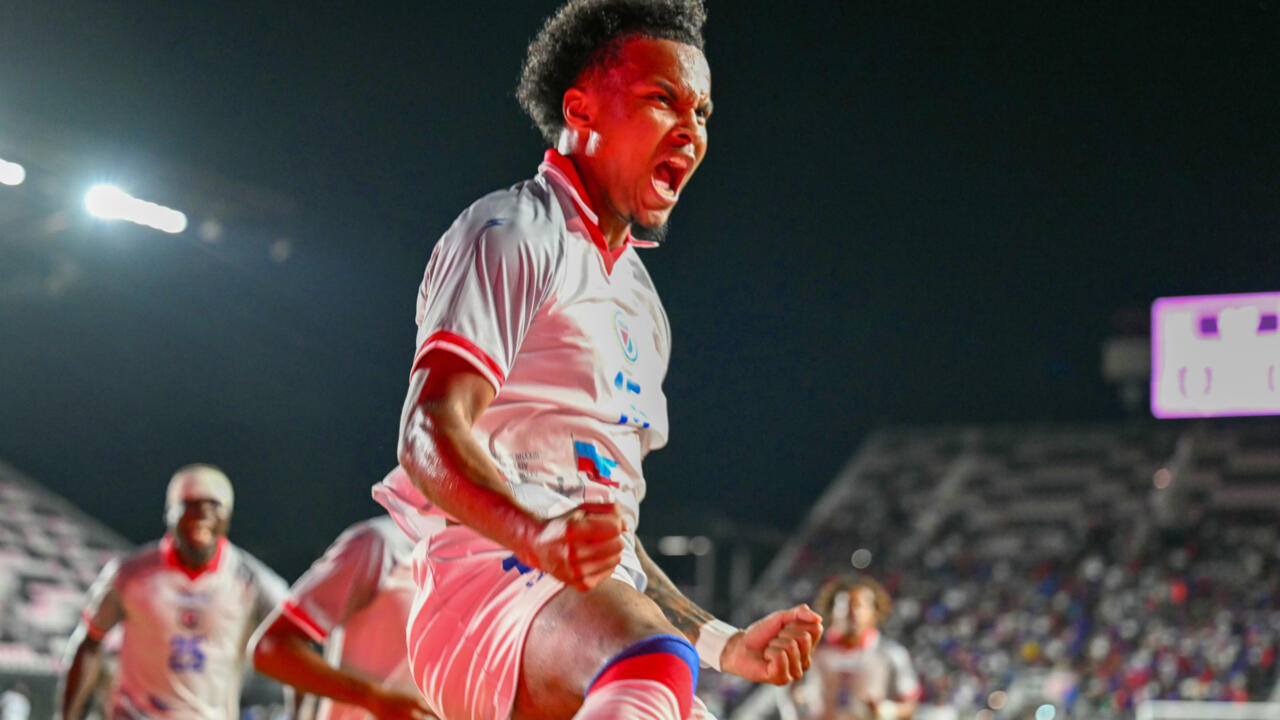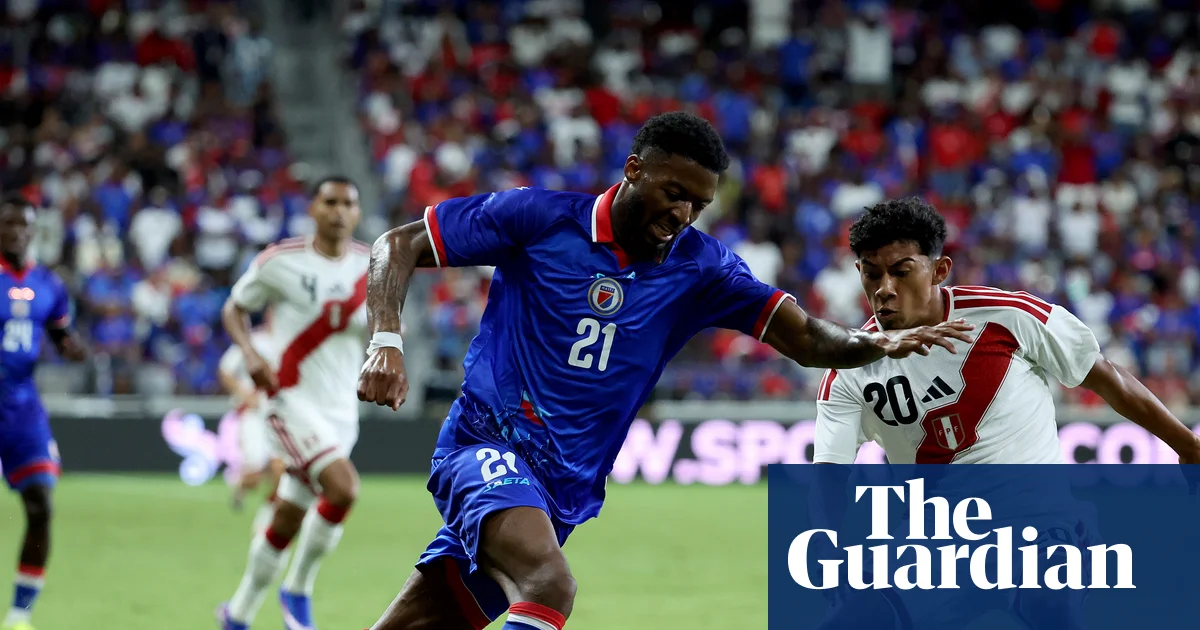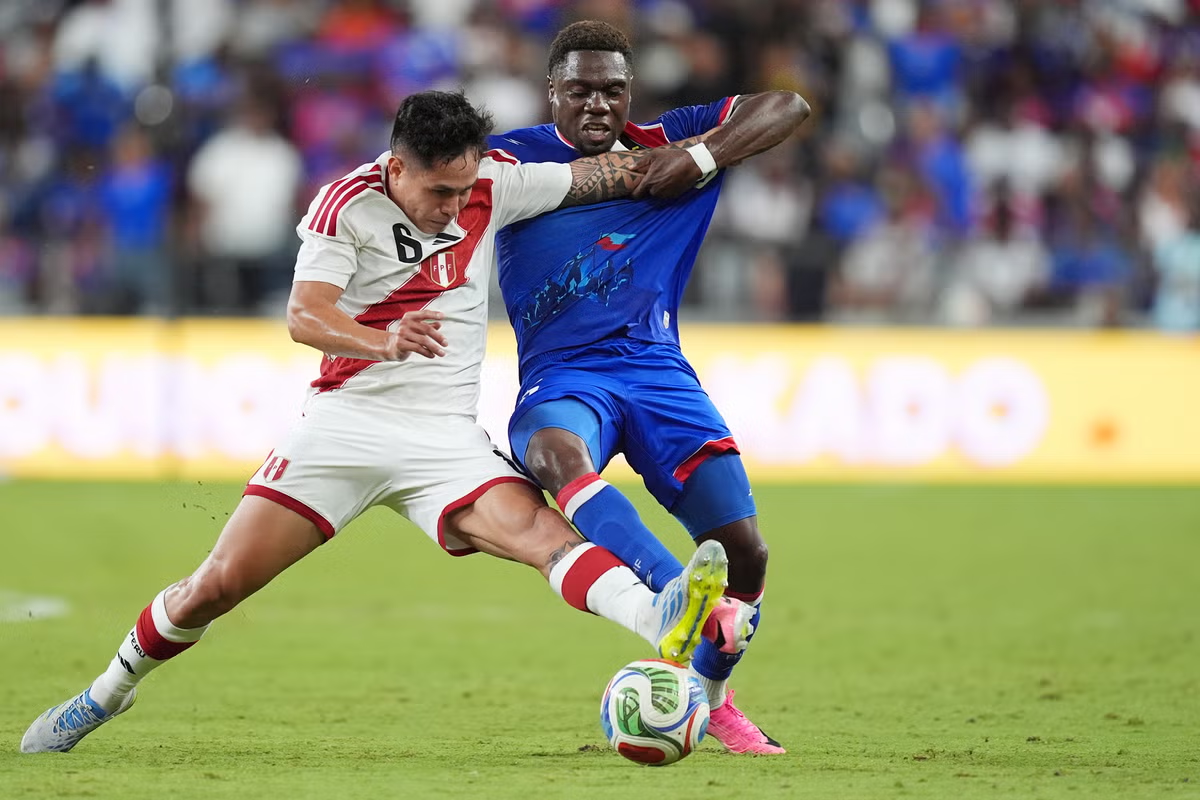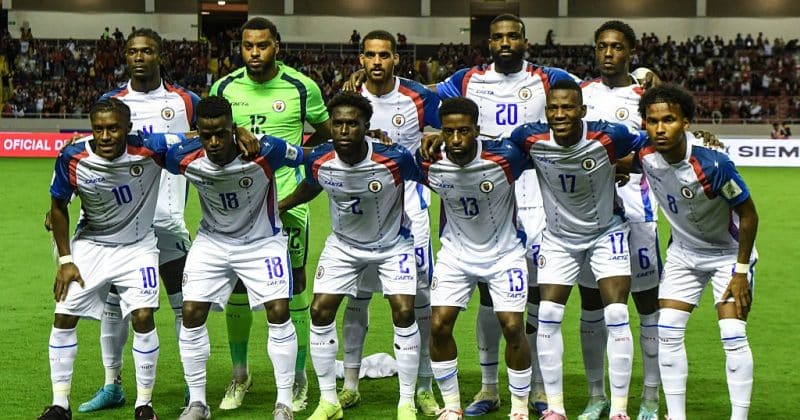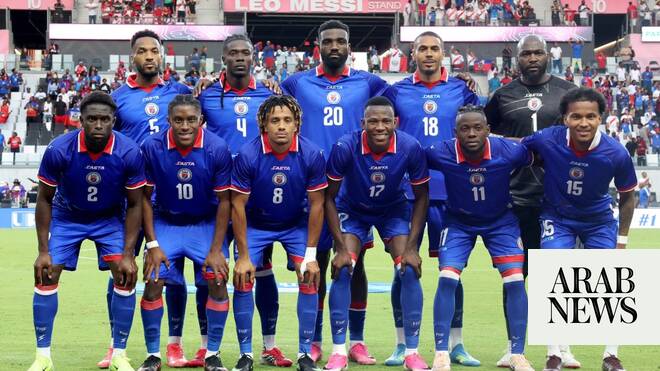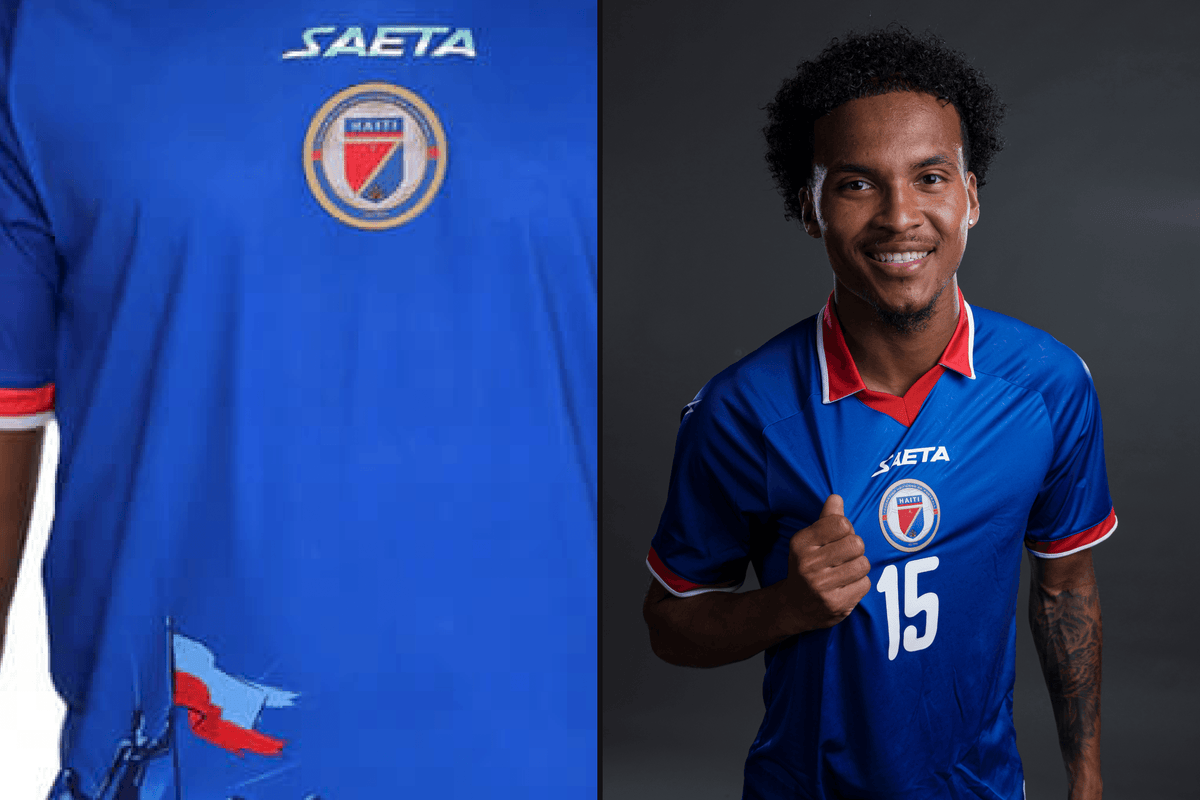
Get free access to the most comprehensive World Cup coverage in The Athletic app.Something strange happened when the official player portraits for the 2026 World Cup dropped this week.These are pictures of everyone competing at the tournament, wearing their nation’s kit, usually posing pretty seriously, but occasionally mugging for the camera. In his portrait for this World Cup, Sweden manager Graham Potter wore a cowboy hat, for example.But that wasn’t the strangest thing about this year’s collection of photographs when they were published late on Tuesday: in the pictures, the Haiti players seemed to be wearing a different shirt to the one they had unveiled a few months earlier, and had worn in their pre-tournament friendlies.The shirt sported by the players in the official portraits was a fairly plain design. Blue home shirts, with not much detail or elaboration, beyond a red collar and some other brief splashes of colour. And yet, the shirt we thought they were going to wear featured a very striking and unusual image.Designed by Colombian manufacturer Saeta, it depicted a scene from the Haitian revolution, when freedom fighters led by former slave Toussaint Louverture overthrew their French colonisers. A group of men were shown raising a tattered blue and red flag, at the Battle of Vertieres on November 18, 1803, a couple of months before independence was declared.It wasn’t a literal depiction of historical events, because as Marlene Daut, a professor at Yale, Haitian history expert and author of the book The First and Last King of Haiti explains, there isn’t actually any reliable evidence that a flag like this was raised at that battle. “This is kind of the symbolic end of the Haitian Revolution,” Daut says, “and then the Haitian people declared their independence formally on January 1, 1804. There’s a monument to Vertieres in Cap-Haïtien, which is the major port city where around 900,000 forcibly transported, enslaved Africans went through.”It is thought to be the only slave revolution in history where the former captives overthrew their rulers and went on to govern the country themselves. “They set up the first slavery-free state in all of the Americas and the first nation anywhere in the world to permanently abolish slavery legally,” says Daut.The design was the same on their home, away and third shirts, in blue, white and red respectively. A suitably dramatic social media post launched the design, declaring: ‘This is more than just a jersey; it’s a tribute to the Haiti people. Our history is not just told — it is worn, defended, and played with pride.’It was popular when it was unveiled: in fact, its initial production run sold out within hours, which admittedly was perhaps more to do with Haiti competing at their first World Cup in 52 years than the design, but the sentiment was well received.The team wore the blue home shirt then the white away one in pre-tournament friendlies against Peru and New Zealand. But by Tuesday this week, the kit had vanished, replaced by something more plain, more simple. Later that evening, an explanation arrived from Saeta.A statement posted on Instagram said: “The final design presented by Saeta was intended as tribute to the men and women who contribute every day to Haiti’s future and was not intended as a political statement.“During the review process, FIFA determined that certain visual elements could be interpreted differently under its equipment regulations and ultimately requested modifications to the design.“While this interpretation differed from our intention, Saeta respected the process and implemented the final requirements communicated by FIFA.”Haiti’s amended World Cup kit does not include the reference to the Battle of Vertieres (Sarah Stier – FIFA via Getty Images)FIFA has been keen to dispel the notion that this was a last-minute thing: it says it was in contact with both Saeta and Haiti’s football federation some weeks ago about the issue, and maintains that both understood the concerns and were happy to remove the contentious image. Saeta’s statement backs that up, but the Haiti federation’s response, made to The Athletic on Wednesday, isn’t quite as receptive to the idea that everyone agreed a change should be made.“Following a misinterpretation, FIFA officials asked the federation to remove an image depicting Vertieres and some independence heroes raising the Haitian flag,” said a spokesperson for the Haiti team.“Vertieres is the site of the last battle leading to our independence, fought on November 18, 1803. Ironically, the team qualified for the 2025 World Cup on November 18, 2025. The federation has not issued any (further) statement on the matter; they simply asked Saeta to change it.”So why did this change have to be made? From FIFA’s perspective, it is fairly straightforward: article 28.1 of the 2026 World Cup regulations, dealing with kit and team colours, states:“The display of political, religious, or personal messages or slogans of any nature in any language or form by players and team officials on their playing, team kits or other clothing considered as outerwear and formal attire, before and after playing, and equipment (including kit bags, beverage containers, medical bags, etc.) or body is prohibited.”In basic terms, stripped of any context, of course a depiction of a revolution is a political statement. If you really want to stretch the point, you could further say that in this case it depicts a revolution against France, a country that Haiti could face in the tournament as early as the first knockout round, so in theory this could create a political incident, or cause some offence.But realistically, who will actually object to a 220-odd-year-old image, which celebrates the end of slavery and a country throwing off its colonial rulers?“I wonder how much the people at FIFA who made this decision actually know about the battle at Vertieres,” says Daut. “The French don’t even object to it. There were multiple exhibits last year about Henri Christophe, who fought in the Haitian Revolution, at the Palais de Tokyo in Paris. The College de France had a big conference about the indemnity that France forced Haiti to pay. And so if the French aren’t even trying to object… who’s going to be offended?“I think it speaks to a fundamental difference in the way certain people view history, the way politicians — and I do think people at FIFA are essentially politicians and businessmen — view history as things that divide people, that upset people. Haitians view history as something that everyone unites around and celebrates, even if they disagree about the basic facts.”The counter to all of this would be that it’s not necessarily about who might be offended, more that FIFA has to enforce a blanket and uncomplicated rule that bans anything political, regardless of how political, or what sort of political, for consistency’s sake.But equally, you could argue that this serves to underline the absurdity of such an absolute rule, because there are loads of symbols at this World Cup that either objectively are political, or could be interpreted as such. Take the Iranian flag, which was changed after the revolution in 1979 to include an Islamic symbol, an expression of the country’s current full name, the Islamic Republic of Iran. Sure, it would be tricky for FIFA to ban the flag of a country, and this isn’t to say it should be banned, but by including a religious and arguably political symbol, technically speaking, it contravenes its rules.This isn’t the first time something like this has happened. This year, the Haitian Winter Olympics team’s ski suits had to be redesigned at the last minute to erase a depiction of Louverture on a horse, which meant those skiers competed wearing an outfit that, rather absurdly, just featured a horse. At Euro 2020, objections were raised about Ukraine’s kit, which featured an outline of the country that included Crimea, an area annexed by Russia in 2014 but still widely recognised as part of Ukraine.In the broader scheme of things, a team having to wear a slightly different kit is not the end of the world. The change has been made, nobody seemed to object to it particularly. But it is still a pretty ridiculous situation, and FIFA should do its best to avoid any disruption to a competing team.Still, perhaps something good can come from this, as Daut believes FIFA may have created a version of the Streisand effect for Haitian history.“Maybe, with FIFA doing this, in a roundabout way they have just contributed to more people knowing the history that they’re kind of trying to suppress, because now there are all these articles and posts on social media and people are really digging into it, saying ‘I want to know more about this history, like… what’s the problem here?’.”At the time of writing, the old versions of the blue home shirt and the red third shirt, complete with the Battle of Vertieres imagery, are still available to buy from the Saeta website. If you want a collectors’ item — the World Cup shirt that was banned from appearing at the World Cup — get involved quickly.
Haiti and the curious case of a banned World Cup kit that could become a collectors’ item
Did FIFA make the right decision to ask Haiti to change their kit from one depicting a scene from the Haitian Revolution?
1,504 words~7 min read