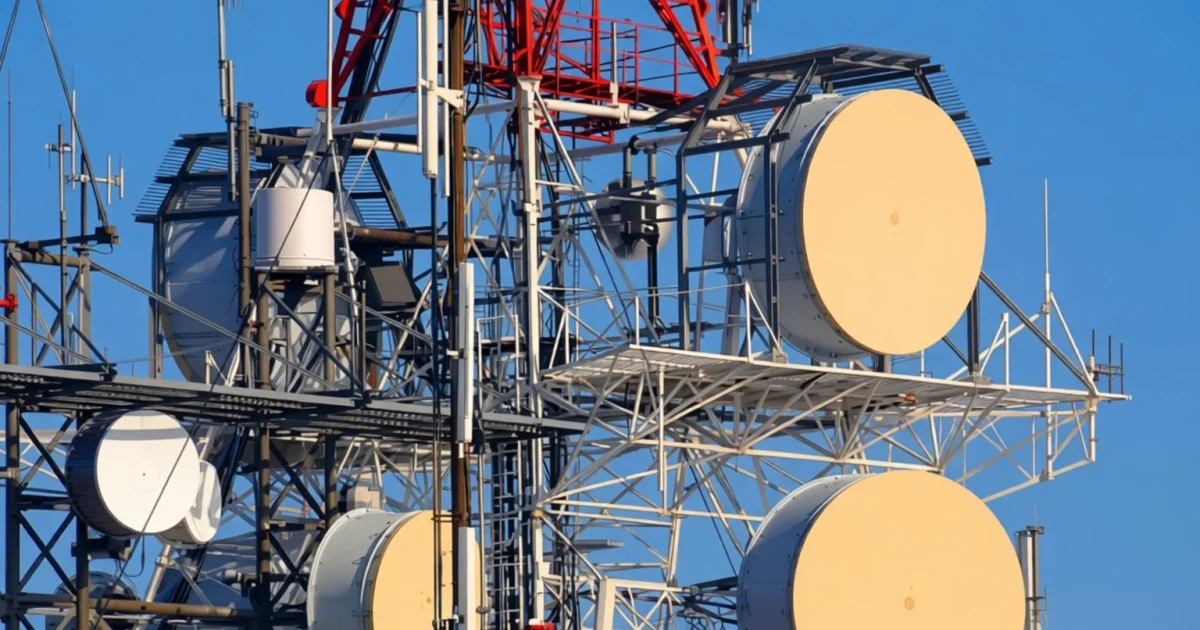
Mobile technologies and services contributed $240 billion to Africa’s economy in 2025. (Image source: 123RF) Africa’s mobile industry not only contributed to the continent’s economy but also supported 13 million jobs in 2025.This is based on insights from the GSM Association’s (GSMA’s) Mobile Economy Africa 2026 report.According to the report, mobile technologies and services contributed $240 billion to Africa’s economy in 2025, equivalent to 7.8% of regional gross domestic product (GDP).On the jobs front, mobile operators and the wider mobile ecosystem provided direct employment to 10 million people in Africa during this time, with economic activity in the ecosystem generating three million jobs in other sectors, it reveals. It further forecasts the mobile industry’s contribution to the regional economy will reach $290 billion by 2030,driven by the continued expansion of 4G, 5G and artificial intelligence (AI). See also The GSMA report attributes these gains to the new phase of digital transformation, where AI, digital services and mobile connectivity are driving economic growth across Africa. For example, operators are moving beyond their traditional role as connectivity providers and repositioning themselves as full-stack digital partners for enterprises and governments, deploying AI across networks and customer operations, and opening network capabilities to developers through standardised application programming interfaces. The shift – from building networks to activating their full potential – is reshaping the economics of the industry and expanding the mobile sector’s contribution to Africa’s broader digital economy, it notes. “The mobile industry’s $240 billion contribution to Africa’s economy in 2025, plus its projected growth to $290 billion by 2030, will be shaped as much by policy choices as by technology deployment. The key levers are fiscal reform to make digital participation affordable and investment conditions that sustain the capital deployment that the mobile industry depends on.”Vivek Badrinath, director-general of the GSMA, adds: “Having connected millions of people and businesses over the last decade, the focus is increasingly shifting towards unlocking greater value through AI, digital services and new forms of innovation. “Realising this opportunity will require continued investment, policies that encourage innovation and a shared commitment to ensuring everyone can benefit from the opportunities digital technologies create.”Mobile industry’s contribution to Africa’s economy in 2025.(Source: GSMA) The report highlights that mobile’s contribution is expected to grow at a compound annual growth rate of 3.5% by 2030, below the overall regional GDP growth forecast of 4.3%. “While mobile’s contribution continues to grow in absolute terms, this will moderate in relative terms as other parts of the economy expand more rapidly. As such, mobile technologies remain a critical enabler of economic transformation. “By supporting digital inclusion, expanding access to financial services through mobile money and enabling new digital business models, mobile connectivity helps improve productivity, enhance market access and foster greater participation in the formal economy. However, sustaining and amplifying this impact will require continued investment in mobile infrastructure and the wider digital ecosystem.“Expanding network coverage, improving affordability and accelerating the rollout of advanced technologies such as 5G, IOT and AI will be essential to fully unlock productivity gains and ensure digital transformation supports inclusive and long-term economic growth across the region.”Mobile’s economic contribution will reach $290 billion by 2030.(Source: GSMA) The GSMA report warns that despite progress, Africa’s greatest digital challenge is no longer network coverage but closing the usage gap.This is the gap between coverage and actual internet adoption, which continues to be Africa’s defining digital challenge, it states. Approximately 63% of Africans are covered by mobile broadband but are not using mobile internet. By comparison, only 9% remain outside mobile broadband coverage.It further states that affordability remains the single largest barrier to mobile internet adoption across much of the continent, alongside digital skills gaps and other social barriers.“Closing this gap requires action on device affordability, digital skills and social barriers that infrastructure investment alone cannot resolve.”The report also projects that 5G adoption in Africa will reach 21% of total mobile connections by 2030.This equates to a total of 383 million 5G connections on the continent by 2030, driven by accelerating rollouts in leading markets and supported by the expansion of 4G, it notes.“As 5G networks expand and complementary technologies such as AI continue to mature, the scale of impact will be shaped not only by infrastructure availability, but also by investment in digital skills, innovation capacity and the integration of advanced technologies into production processes. “Between 2025 and 2030 in Africa, services are projected to account for around one-quarter of the incremental economic impact attributable to mobile-enabled technologies, followed by manufacturing and agriculture at around one-fifth each. This reflects the central role of services in the region’s economic structure, alongside the importance of manufacturing and agriculture as key drivers of employment and economic activity.”
Mobile lifts Africa’s economic, jobs numbers
GSMA data shows mobile technologies and services contributed $240 billion to Africa’s economy in 2025, supporting 13 million jobs.
782 words~4 min read