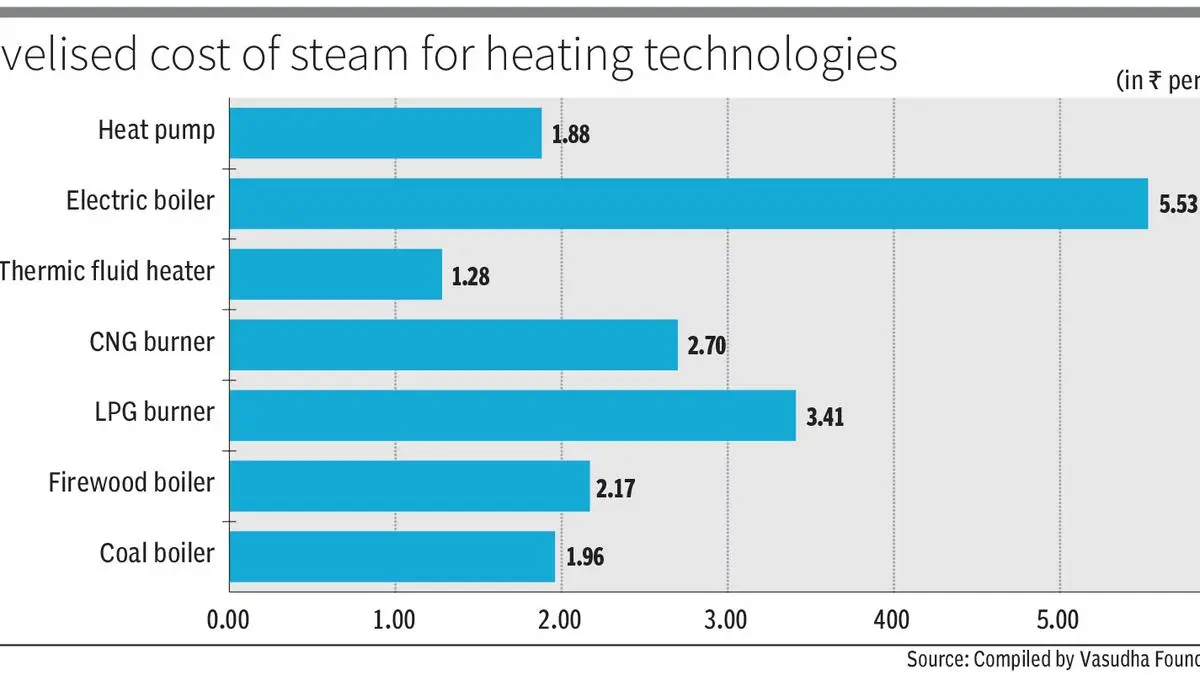
The two-week truce between the US and Iran, along with the promise to reopen the Strait of Hormuz, seemingly offered a measure of relief. Yet, oil and gas supplies appear unlikely to return to pre-war levels anytime soon. In India, while the plight of households struggling to afford cooking gas has drawn attention, the distress in industry — especially micro, small and medium enterprises (MSMEs) — has gone largely under-reported. Many units have been forced to cut production by half or more.While India has a long-term commitment to clean energy, the West Asia conflict has underscored the urgency of interim solutions. Experts, think tanks, and industry stakeholders have begun exploring alternatives such as electric heat pumps and other emerging technologies, particularly in MSME clusters.Heat pumps are based on well-established technology but have historically seen limited adoption in industry due to higher costs compared to oil or gas. That equation is now shifting.Concerns over fuel availability and price volatility are making heat pumps increasingly competitive, especially when deployed at the scale of industrial clusters.Industrial heat requirements vary widely depending on the product, process, and scale, ruling out a one-size-fits-all solution. However, experts from industry bodies, venture capital groups, and philanthropies suggest that heat pumps are well-suited for clusters producing similar goods — such as glass units in Firozabad or leather units in Chennai — where low to medium temperature heat is sufficient.While heat pumps can run on grid electricity, their environmental advantage depends on the source of power. If the grid remains fossil fuel-heavy, the benefits are limited. To address this, experts point to the feasibility of large-scale rooftop solar installations in industrial clusters, potentially supplemented by concentrated solar power. These can generate ample electricity for heat pumps during the day, with the grid acting as backup.For higher temperature needs, thermal storage and hybrid systems may be required, though these will take time and sector-specific innovation. For now, the immediate focus is on scaling up heat pump adoption.Cost-competitivenessIndustry representatives involved in the discussions note that rising and volatile energy costs are already pushing factory owners to consider alternatives. Heat pumps provide low-cost energy (see table).Investment decisions, however, will hinge on three factors: lifecycle cost-competitiveness rather than just upfront investment; reliability and compatibility with continuous industrial processes; and proven performance.Pilot projects play a crucial role. MSME operators also stress the importance of minimal disruption to ongoing operations.Three enabling conditions have been identified for scaling up heat pumps. First is financing. While capital availability is not seen as a major constraint — thanks in part to philanthropic guarantees that can de-risk investments — there is a need for viable models. One proposed approach is “heat-as-a-service”, where heat is supplied under purchase agreements, reducing the burden of upfront investment.Second is policy support from both central and State governments. While industry acknowledges the push towards electrification, it seeks greater clarity and stability. Tariff structures, open access to power, and alignment of incentives between fossil fuels and clean energy will be critical. A white paper outlining these issues is expected to be submitted to policymakers.Third is grid readiness. Although capacity may appear adequate at a macro level, plant-level constraints and connection readiness could pose challenges. This calls for closer coordination with power system planning.The immediate opportunity lies in identifying priority sectors and clusters, supporting early deployments, and building credible pathways to scale. These efforts must also align with a broader national roadmap for clean industrial heat, consistent with long-term energy transition goals.(The writer is India Programme Lead, Earth Journalism Network)More Like ThisPublished on April 13, 2026
Oil-starved industry looks to reignite heat pumps
Oil-dependent industries are turning to electric heat pumps and solar energy for sustainable solutions amidst rising energy costs and supply challenges.
590 words~3 min read