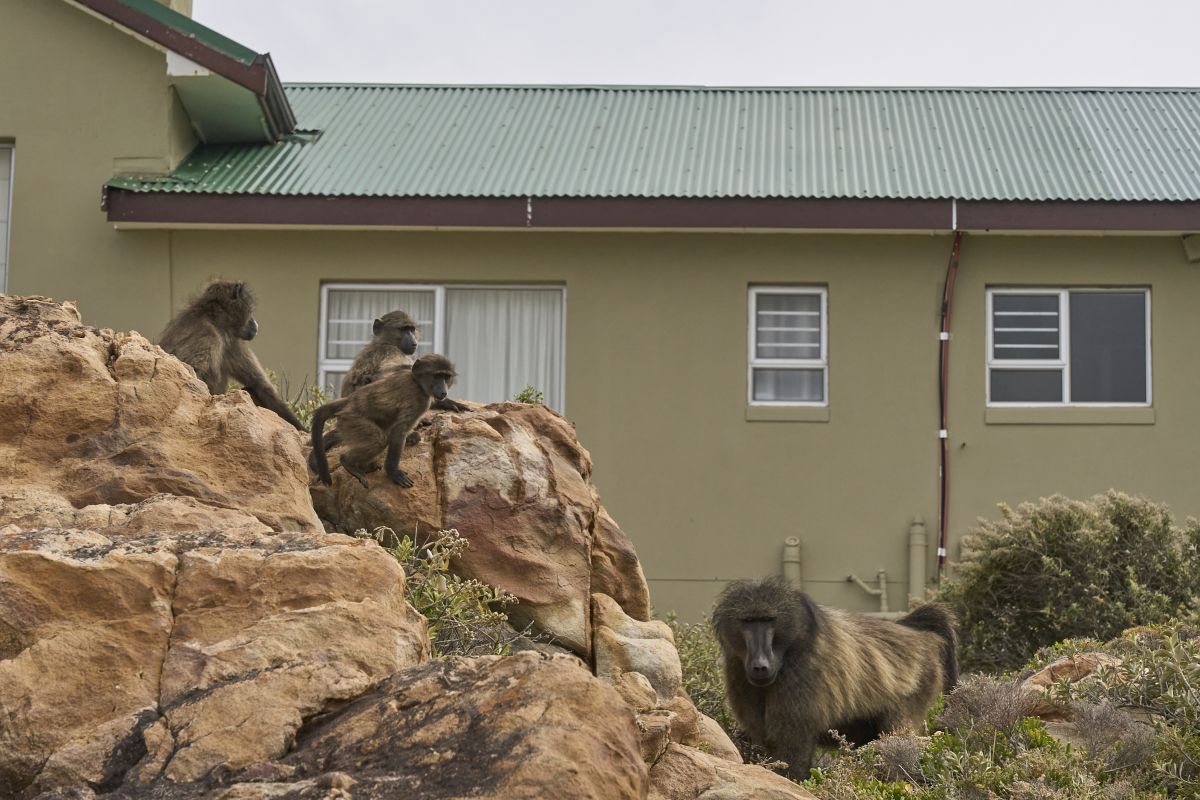
A baboon troop regularly forages in the scrubland in and around the village of Rooiels, on the outskirts of the Cape Town metropolitan area.In neighboring villages, municipal workers fire paintball guns and blow trumpets to drive baboons out, but most Rooiels residents are opposed to having their troop monitored or harassed.Rooiels residents have developed — and accepted — guidelines to reduce conflict, including securing their waste, baboon-proofing their doors and windows, and educating each other on how to respond during encounters.Cape Town’s scientific lead for baboon management says education and collaboration has allowed baboons to coexist with their human neighbors here, but that this model may be specific to this location.
ROOIELS, South Africa — Baboons aren’t exactly punctual, but Gavin Lundie still expected them to appear in the village around 9 a.m. “They’re coming!” his wife Lesley called. Members of the Rooiels baboon troop had begun to make their way down. Lesley made her way to the sliding doors on their patio and secured it with two shoelaces attached to a hook. She remained on the balcony and watched as the troop entered into the village a few properties away.
The Lundies live in Rooiels, a small, affluent village on False Bay, approximately 80 kilometers (50 miles) from Cape Town’s city center. The village, scattered from the coastal flats up the slopes of the Klein Hangklip mountain, is part of the Kogelberg Biosphere Reserve. The mountain’s cliff faces offer sleeping baboons (Papio ursinus) protection from leopards, their natural predator, but the sparse vegetation doesn’t offer enough for them to eat or drink. In contrast, the lower slopes, where the village has grown up, is still covered with dense fynbos scrub on undeveloped plots, in gardens and along unpaved verges.