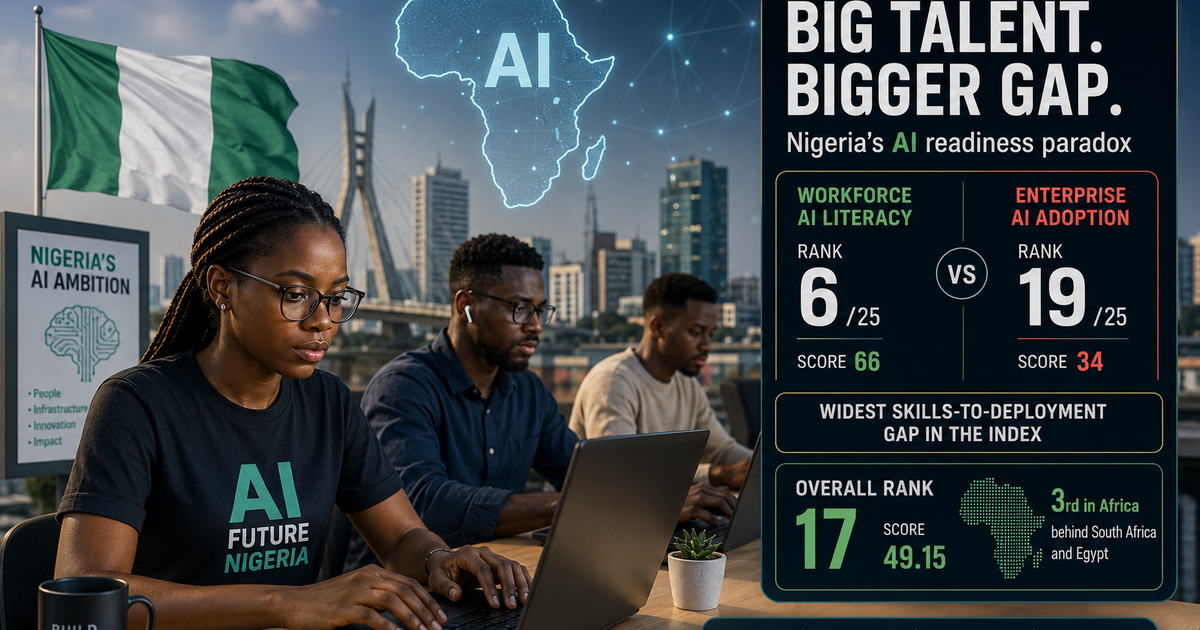
Eight major government agencies hold some of Nigeria’s most valuable datasets on citizens. But these databases remain siloed, with little interoperability or data sharing. Industry experts say that unless this changes, Nigeria’s push to become a leading artificial intelligence power in Africa could struggle before it truly begins.
AI systems need large amounts of high-quality data to work well. When data is stored in separate databases using different formats and standards, it becomes harder to build AI tools that can improve services such as healthcare, education, tax collection, and identity verification.
The fragmentation spans some of the country’s most important databases. The National Identity Management Commission (NIMC) manages the National Identification Number (NIN) database, while the Central Bank of Nigeria (CBN) oversees the Bank Verification Number (BVN) system.
Other agencies, including the Nigerian Communications Commission (NCC), Nigeria Immigration Service (NIS), Federal Inland Revenue Service (FIRS), Federal Road Safety Corps (FRSC), Corporate Affairs Commission (CAC), and the Independent National Electoral Commission (INEC), maintain separate databases for telecom subscribers, passports, taxes, driver’s licences, business registrations, and voter records.