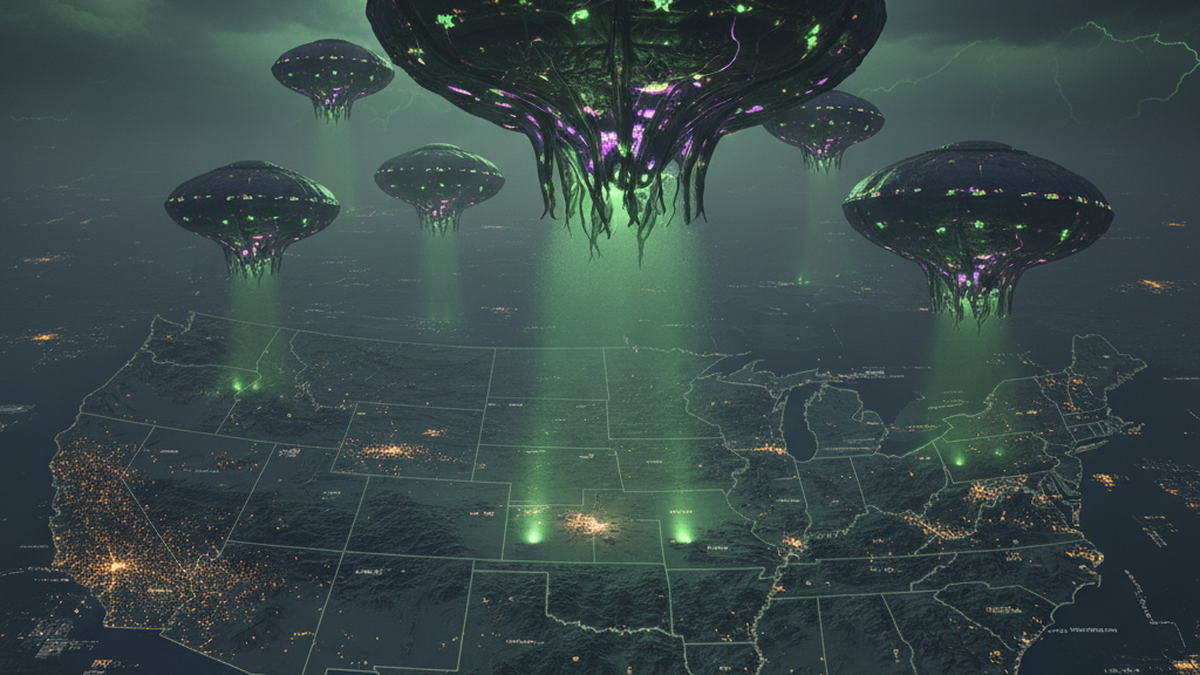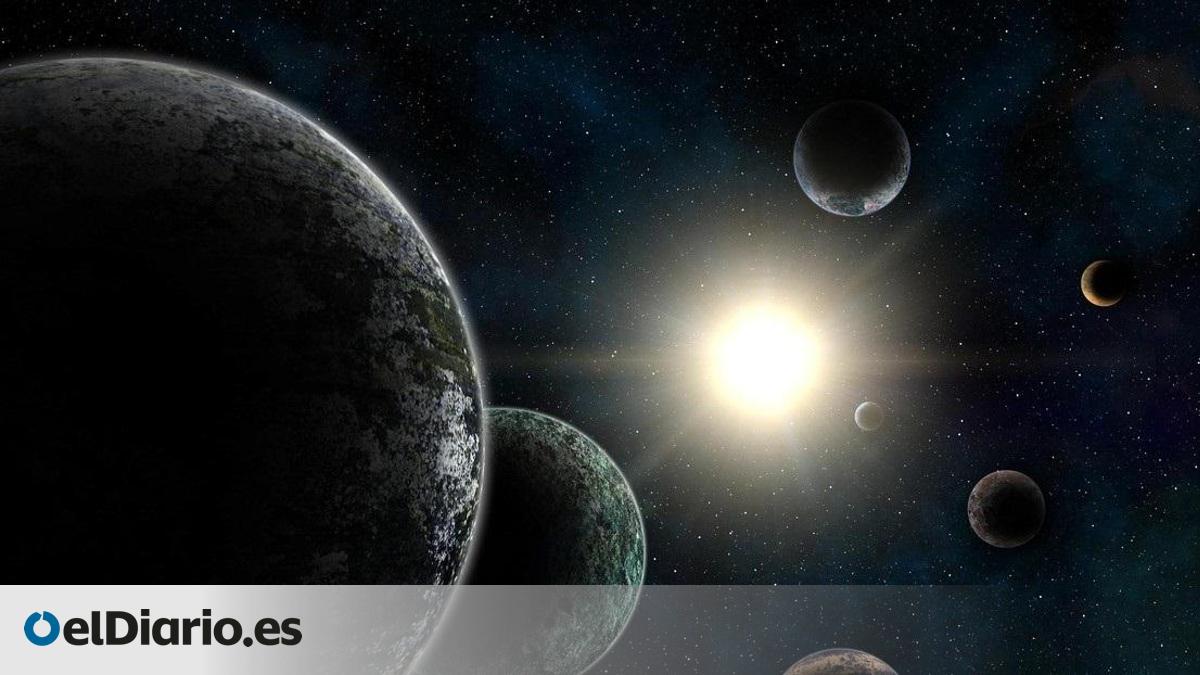
The United States government's recent release of hundreds of previously classified Unidentified Anomalous Phenomena (UAPs) cases spanning the 1940s to the present, along with the new Steven Spielberg movie, Disclosure Day, about extraterrestrial life, has fuelled the idea that aliens are visiting Earth.In fact, polls in Australia, the US and elsewhere indicate around a third of the public believes aliens are here.However, while what we know about the universe suggests aliens may exist, there are three compelling reasons why they probably aren't visiting us.An artist's illustration of an alien technological civilization on a distant planet. The colors are exaggerated to show growing atmospheric pollution. (NASA/Jay Freidlander)Space is big – very bigTo begin with, space is vast – beyond our imagination.Proxima Centauri, the nearest star to our Sun, is about 40 trillion kilometers away, 268,000 times farther than the Sun is from Earth. That's 4.3 light-years as astronomers measure it. A light-year is the distance light travels in one year at 300,000km per second.We can only travel across space at a fraction of the speed of light with current technology. Even our fastest spacecraft, the Parker Solar Probe, travels at a top speed of roughly 191 kilometers per second – 0.064% the speed of light.At that speed, it would take about 6,650 years to reach Proxima Centauri, and that's just in our local stellar neighborhood. So interstellar travel within human lifespans would require much higher velocities.Let's assume we did have the means to travel close to the speed of light. That introduces the first problem with traveling at that velocity. Albert Einstein demonstrated that time is relative; the rate of time flow is not the same everywhere in the universe. The faster a spaceship travels from Earth, the slower time will pass for its passengers. This is called time dilation.
3 Reasons Aliens Probably Aren't Visiting Us, According to Science
The United States government's recent release of hundreds of previously classified Unidentified Anomalous Phenomena (UAPs) cases spanning the 1940s to the present, along with the new Steven Spielberg movie, Disclosure Day, about extraterrestrial life, has fuelled the idea that aliens are visiting Earth.
949 words~4 min read