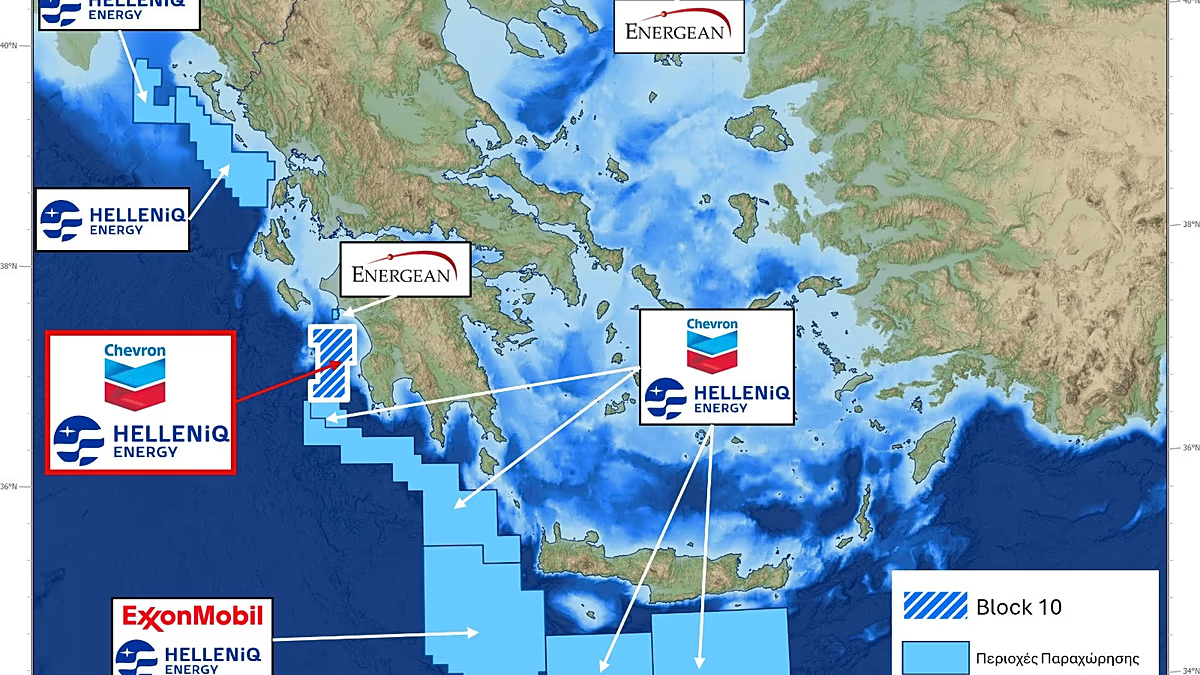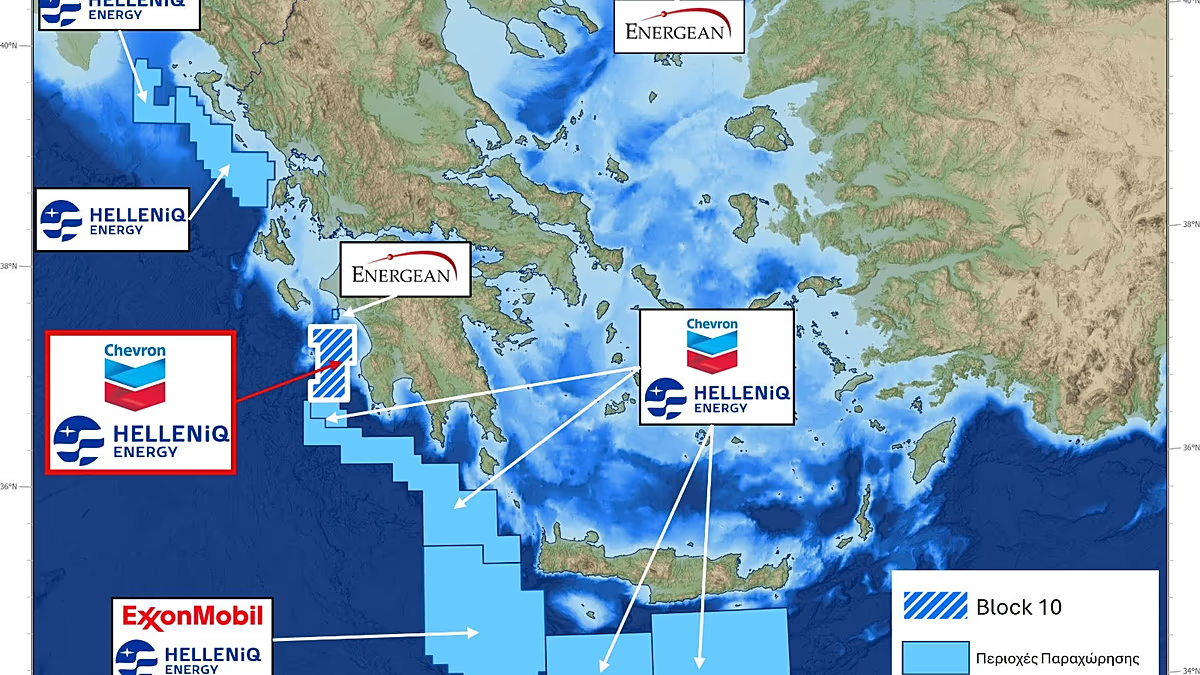
The official entry of Chevron into Block 10 in the southern Ionian Sea has brought back into focus the possibility of a second exploratory drilling campaign in Greece, in addition to the one already scheduled for February 2027 in the northwestern Ionian Sea.Following the approval by the Ministry of Environment and Energy and the relevant authorities, a large unified offshore exploration area is now taking shape, extending from the sea region between Crete and the Peloponnese to offshore Ilia in the Kyparissia Gulf.The Chevron–HELLENiQ ENERGY consortium is expected in the coming period to review all available exploration data gathered over recent years in order to assess whether to proceed with exploratory drilling and, if so, to define the potential target.Final step in the transfer processAfter approvals from the ministry and the Hellenic Hydrocarbons and Energy Resources Management Company, as well as clearance for foreign direct investment by the Ministry of Foreign Affairs, the only remaining step is the formal completion of the transfer of a 70% stake in the offshore block from HELLENiQ ENERGY to the US energy major, which is expected in the coming days.Chevron will also assume the role of operator, while HELLENiQ ENERGY will retain a 30% stake.Data evaluation phaseWith the process nearing completion, the consortium—already active in the South Crete 1 and 2, South Peloponnese and Block A2 concessions—will proceed to a detailed evaluation of all available geological, geophysical and environmental data.According to the ministry, the dataset includes 1,210 km of 2D seismic data acquired in 2022, which increased available information by 40%, as well as 2,416 sq km of 3D seismic data covering 88% of Block 10.The joint interpretation of these datasets by Chevron and HELLENiQ ENERGY will be decisive in determining whether the project advances to the third exploration phase. The operator had previously submitted a request for a 15-month extension of the second exploration phase to the ministry.Drilling timelineAccording to guidance presented in February, exploratory drilling in Block 10 could take place in the second quarter of 2028.However, the final decision will depend on the outcome of the data evaluation across the broader exploration portfolio.Block 10 is considered a highly promising offshore area, given the presence of a proven petroleum system in the adjacent West Katakolo area, as well as multiple surface oil and gas seeps.Geopolitical dimensionAgainst this backdrop, Chevron’s entry aligns with broader trends in the global hydrocarbons market, where geopolitical instability—particularly tensions in the Middle East and disruptions linked to the Strait of Hormuz—has prompted major energy groups to reassess portfolios and focus on regions with potentially faster exploration returns.Andrew Dugan, Chevron’s Director of Exploration for the Middle East and North Africa, described the newly approved area as an “interesting, underexplored region,” adding that Chevron continues to expand its presence in the Mediterranean as part of efforts to strengthen and diversify its global exploration portfolio.The development also reflects HELLENiQ ENERGY’s stated strategy of seeking strong partnerships for exploration and potential development of its offshore assets.
Chevron: Expanded exploratory footing in Greece under consideration
Following the approval by the Ministry of Environment and Energy and the relevant authorities, a large unified offshore exploration area is now taking shape,
526 words~2 min read