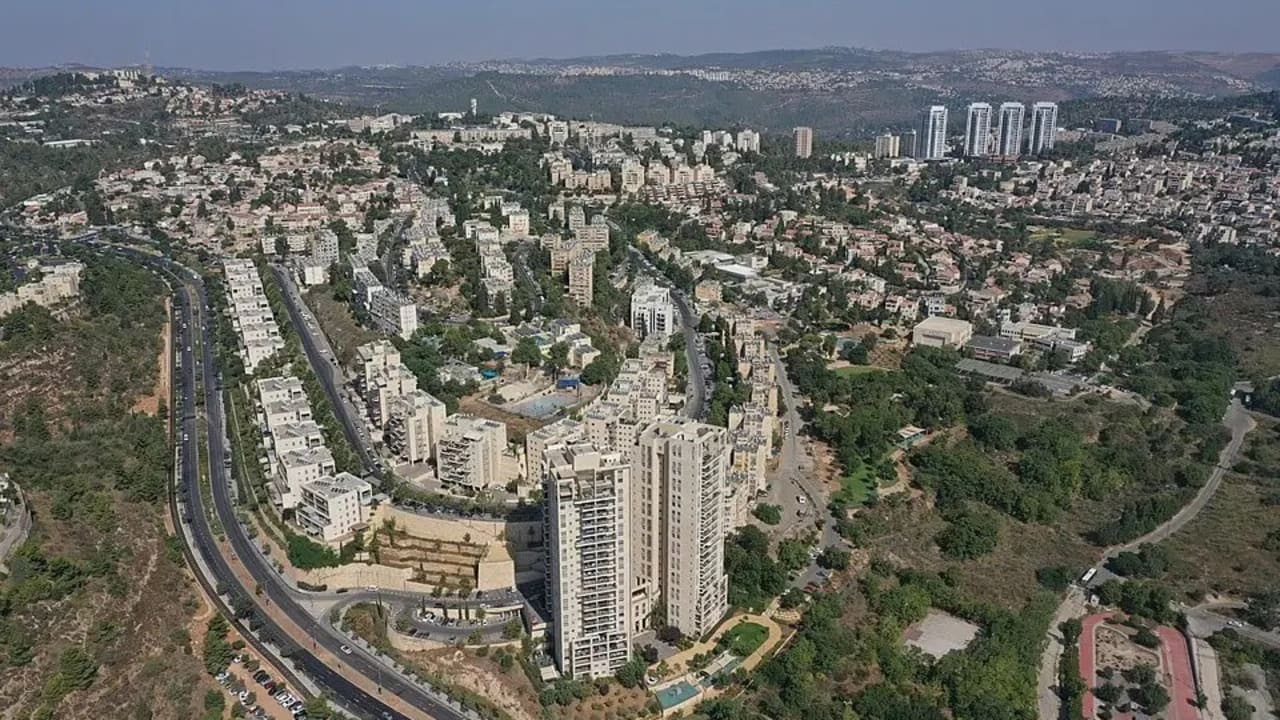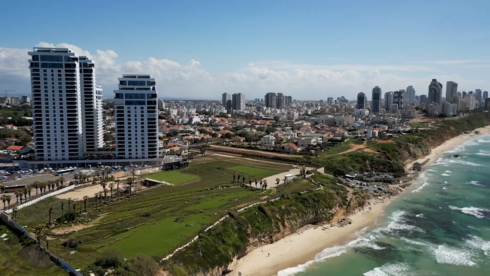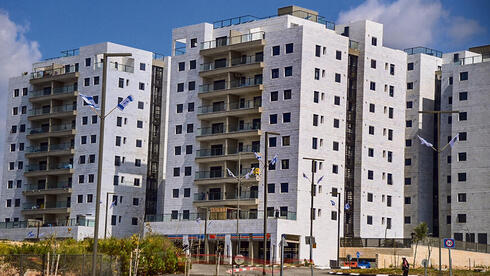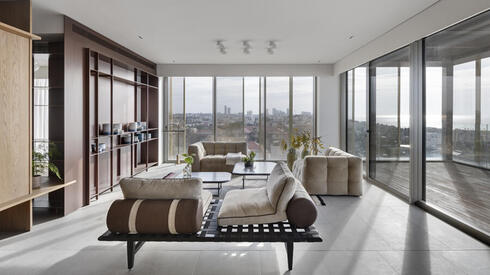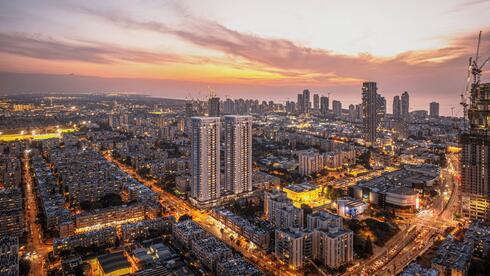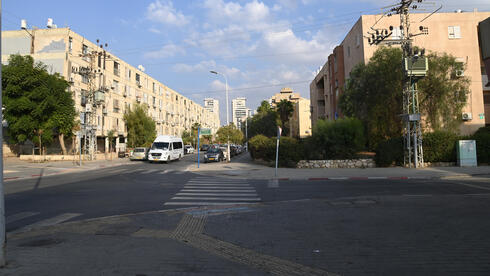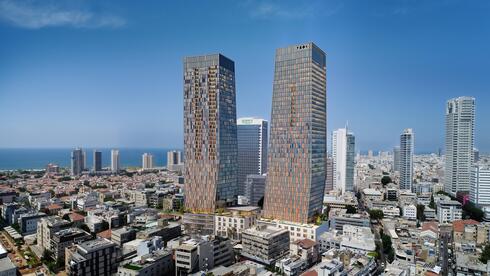
Israel’s luxury housing market has returned to the headlines in recent months with reports of huge penthouse deals in Tel Aviv, including one apartment sold for about 55 million shekels in the Gat Rimon tower project, another duplex penthouse sold for about 32 million shekels in the Sprinzak project and a penthouse in the Muza project sold for about 23 million shekels.But those deals have not yet been reported to the Tax Authority. A review conducted for Mamon and ynet by the Israel Real Estate Appraisers Association, based on luxury transactions above 15 million shekels reported to the Tax Authority in the first quarter of 2026, shows a more restrained picture: none of the 10 most expensive reported homes sold in Israel during the quarter exceeded about 28 million shekels.4 View gallery Gat Rimon project (Rendering: Moshe Tzur Architects)Tel Aviv and Jerusalem continued to dominate the country’s luxury market almost completely. The top 10 deals were concentrated in new projects in Sde Dov, District 4 and District 5 in Tel Aviv, alongside luxury projects in Jerusalem on Shmuel Hanagid, Chopin and Shomrei Emunim streets. Most involved especially large apartments, penthouses or garden apartments in new buildings that have not yet been occupied.The most expensive reported apartment sold in the first quarter was in Tel Aviv’s Sde Dov district, for 27.785 million shekels. The apartment, on the 43rd floor of a 44-story tower, spans 255 square meters in the First project by Hagag Group, which includes 350 housing units and is expected to be completed in 2034.The second-most expensive deal was a penthouse in a six-unit urban renewal project at 18 Shmuel Hanagid Street in Jerusalem, sold for 25.418 million shekels. The building is expected to be completed in 2029. In third place was another Sde Dov apartment in Tel Aviv, sold for 25.402 million shekels in a 45-story project by Luzon Ronson.Other top deals included garden apartments in Tel Aviv’s District 4, a Jerusalem apartment in the Mishkenot HaTheater project on Chopin Street, a garden apartment on HaAvoda Street in Tel Aviv’s District 5 and a penthouse on Hankin Street in Tel Aviv that sold for 17.6 million shekels.4 View gallery Muza project in Tel Aviv, where a penthouse sold for 23 million shekels (Rendering: TheCraftTLV)Behind the big numbers, however, the market shows a surprising trend. In the first quarter of 2026, only 20 luxury deals above 15 million shekels were recorded, the lowest number in the past four years. The average transaction price also fell to about 18.3 million shekels, down from 21.4 million shekels in the first quarter of 2025 and 21.5 million shekels in 2024.At the same time, the average price per square meter jumped to a record 87,300 shekels, a 22.4% increase in one year. The association said the reason lies in the type of properties being sold: fewer large villas and cottages in places such as Herzliya and Caesarea, and more relatively smaller luxury apartments in prime locations in Tel Aviv and Jerusalem. The total price per deal was lower, but the price for each square meter was significantly higher.“The demand is moving from villas and large cottages to unique apartments in new projects in Tel Aviv and Jerusalem,” said Nechama Bogin, chairwoman of the Israel Real Estate Appraisers Association. “This explains why the average transaction price fell while the price per square meter rose to a record of about 87,300 shekels.”Bogin said another important factor is that most of the expensive deals this year were made in projects still under construction, and in some cases before work had even begun.“The meaning is that luxury buyers today are willing to pay very high sums years in advance, before occupancy and sometimes before the start of construction, mainly for location, planning and a product they see as unique,” she said. “This indicates the resilience of demand in prime areas, even during more complex periods in the real estate market.”4 View gallery Mishkenot HaTheater project in Jerusalem, where an apartment sold for 18.718 million shekels Sharon Yushpa, co-CEO and owner of the Yushpa Group, which operates mainly in Tel Aviv and recently sold an apartment on the fifth floor of its Kosovsky 36-38 project overlooking Yarkon Park for about 16 million shekels, said the more important story is not the number of deals but the rise in price per square meter.“Despite the complex period, and it is no secret that the pace of sales is slower than we would like to see, we are seeing strong demand for luxury apartments and especially ultra-luxury apartments, including apartments priced above 10 million shekels,” he said.According to Yushpa, luxury buyers behave differently from the broader housing market. “They are driven first and foremost by the desire to buy the apartment they truly want, in the specific location where they want to live,” he said. “They understand that short-term price fluctuations of a few percent are not what will determine their decision.”Ili Bar, co-CEO and owner of Eco City, which specializes in urban renewal projects in the Tel Aviv metropolitan area, said buyers see the current market as a strategic window of opportunity.4 View gallery Penthouse on Bnei Dan Street, 28 million shekels (Rendering: Mod Studio)“There is a clear understanding that prices are just before another jump, and they are choosing to move ahead of the trend and make large deals now,” he said. Bar said Eco City recently completed several major sales, including a penthouse in its Zeitlin 5 project for about 24 million shekels and two adjacent penthouses on Bnei Dan 54-56 for about 28 million shekels.Roy Kanner, CEO of Montefiore Real Estate Group, which specializes in luxury residential marketing and representing foreign residents and new immigrants, said the first quarter showed that rare properties in exceptional locations continue to generate significant deals even in a complex period.Kanner said almost all of the top Tel Aviv transactions were concentrated in two areas: District 4, around Kikar Hamedina, and Sde Dov, one of the city’s last major coastal development areas. “The combination of excellent and rare locations on the one hand, and growing competition between projects on the other, creates especially good buying opportunities for buyers who understand the market and act correctly,” he said.He added that foreign buyers have not yet exhausted their purchasing potential because of the decline in tourism and visits to Israel, despite strong demand. “We are seeing a rise of hundreds of percent in inquiries from foreign residents and people planning aliyah who want to buy luxury apartments,” he said. “The fact that we already know of quite a few deals in the second quarter at significantly higher amounts than in the first quarter strengthens the conclusion that Israel’s luxury market continues to grow.”
Luxury home sales fall in Israel, but price per meter hits record high
New data show only 20 deals above 15M shekels were reported in the first quarter of 2026, the lowest in four years, but demand has shifted from large villas to premium apartments in Tel Aviv and Jerusalem, sending prices per square meter up 22%
1,119 words~5 min read