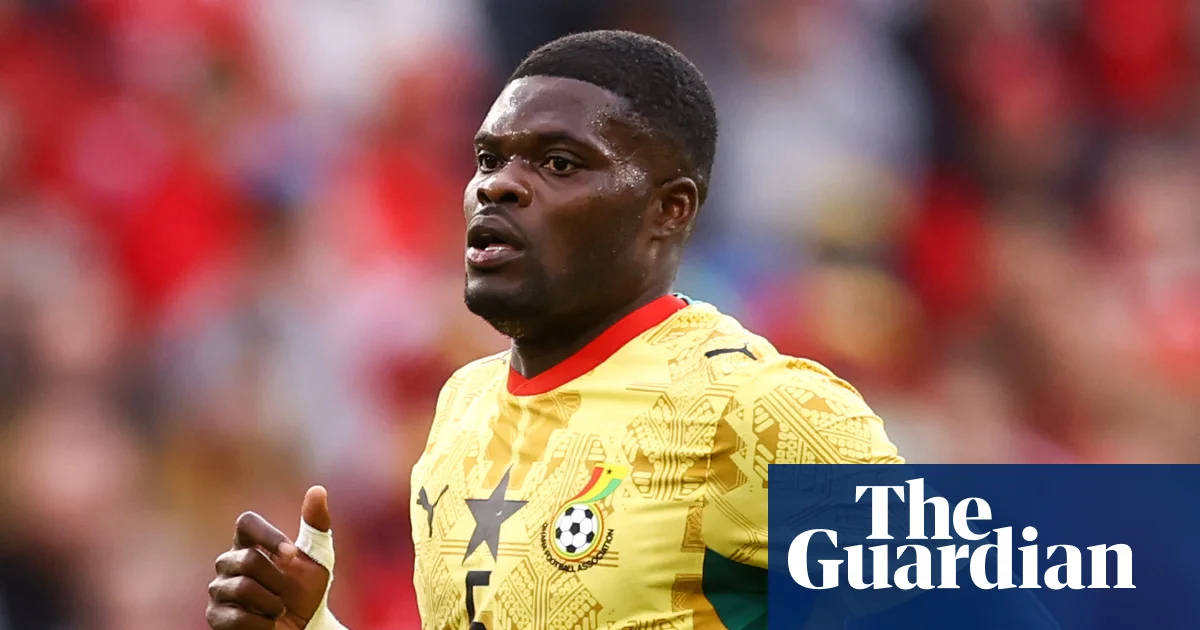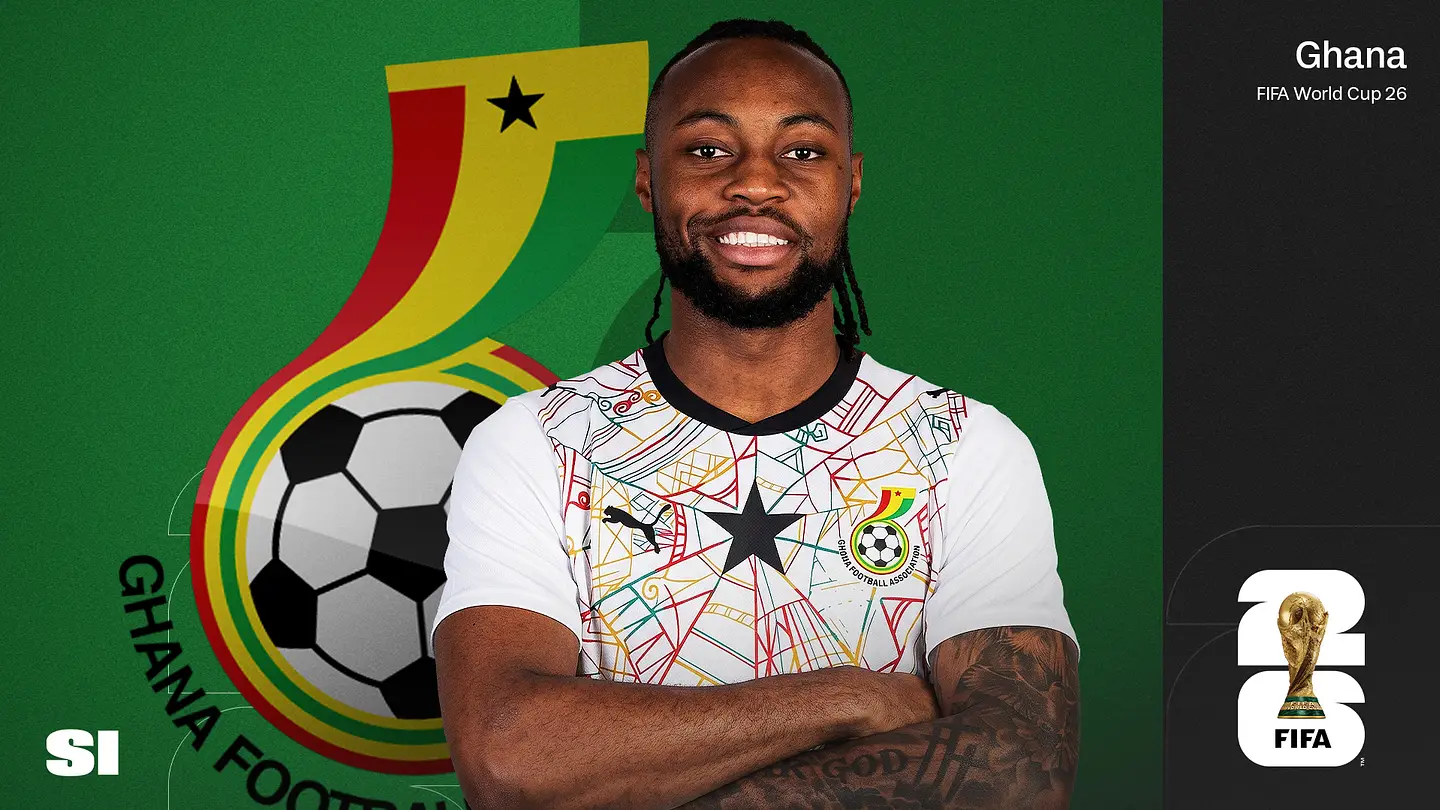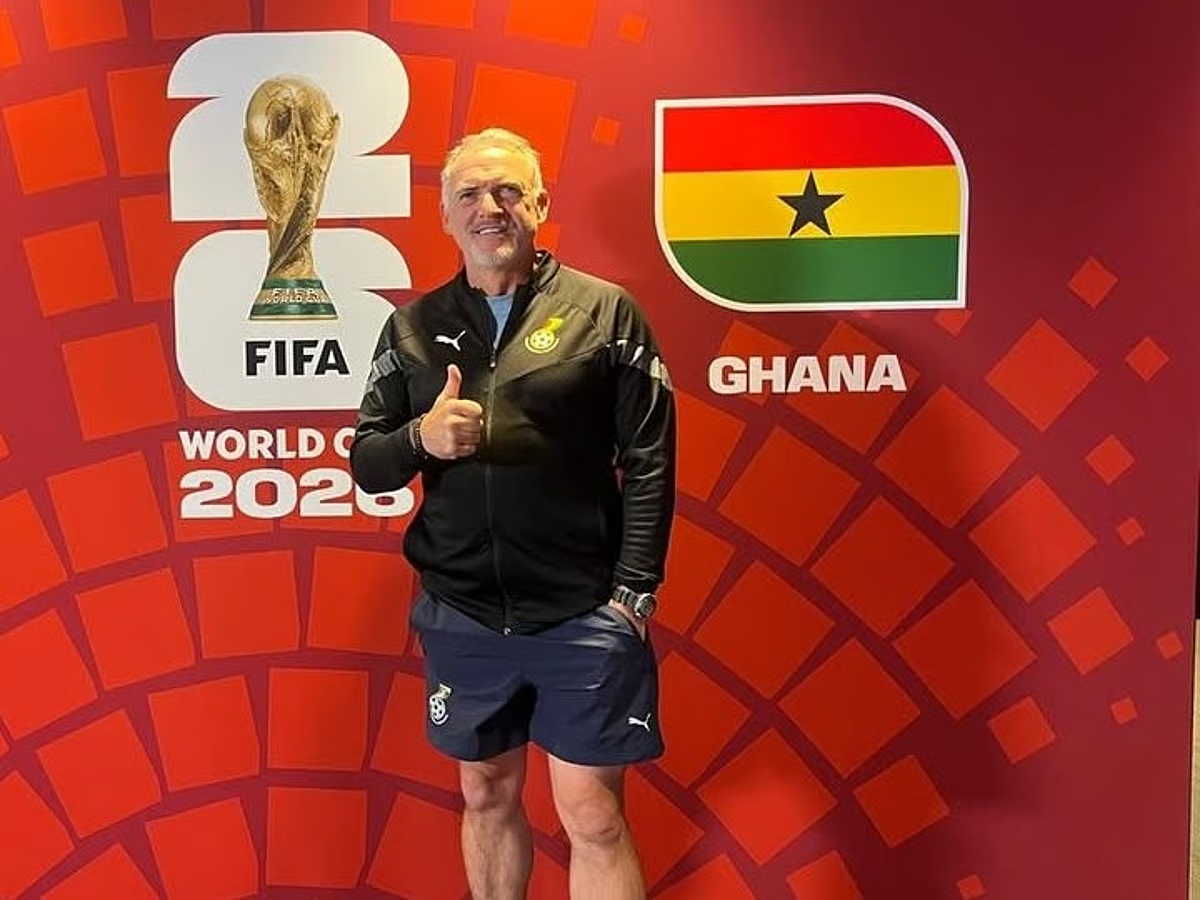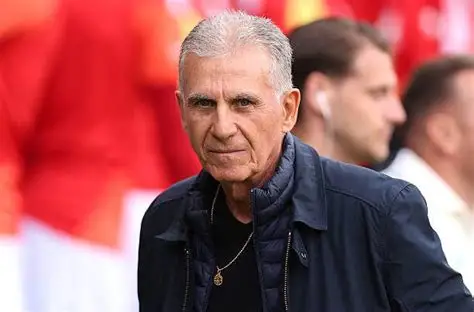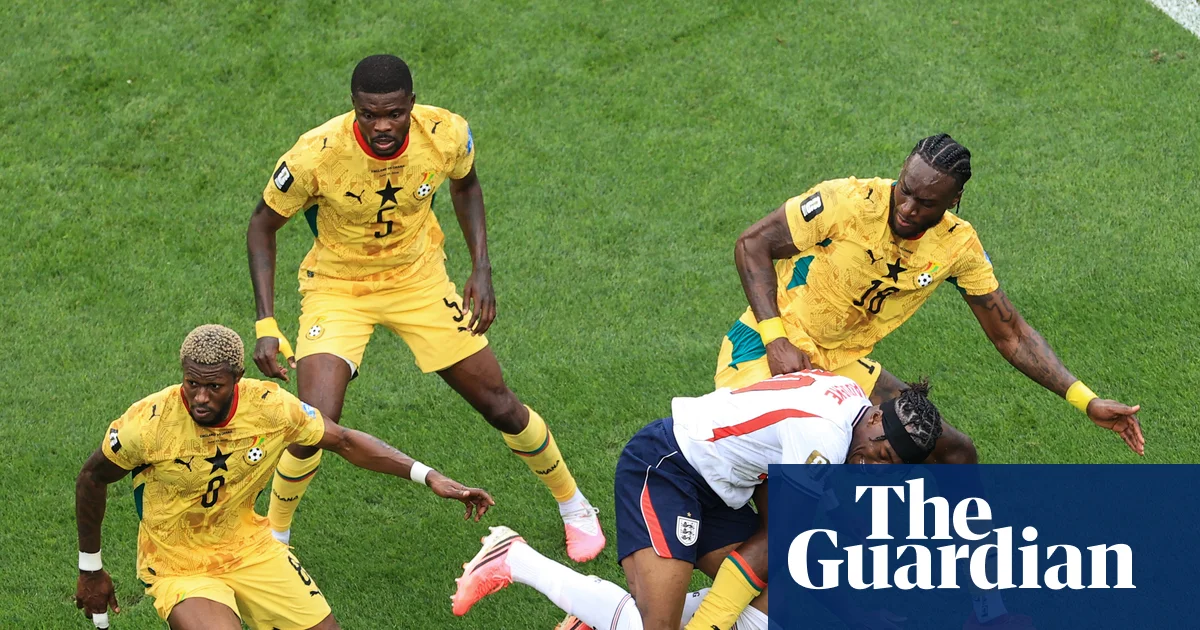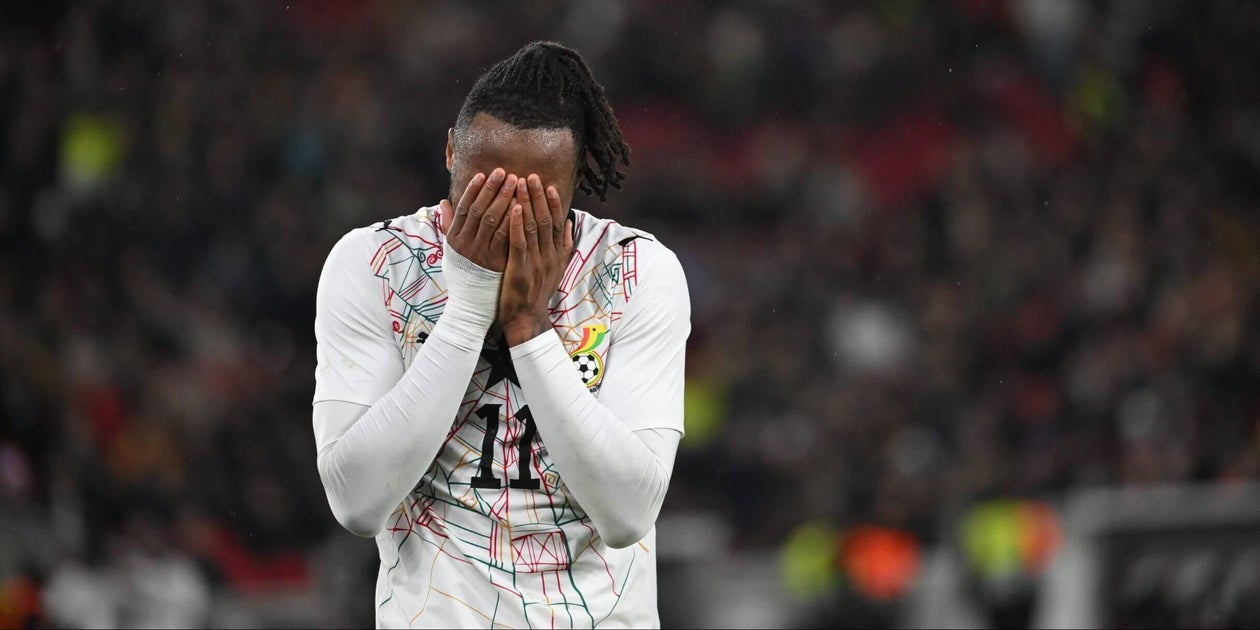
Chris Hughton shakes his head.“Football is the most popular sport in Ghana by a mile, and expectations are enormous,” he says. “But the country hasn’t won a trophy since my own football career started, which is a very long time ago…”Hughton knows all too well about the maddening mystery of the sport in Ghana, and how one of Africa’s most historically significant and successful footballing nations seems inexorably drawn to chaos.He is one of six men to have been the Ghanaian national team’s head coach since 2020 — one, Otto Atto, has had two spells in charge during that time, the second of which only ended this April. Carlos Queiroz, the 73-year-old Portuguese, is the latest to try to crack the code and is about to oversee a World Cup campaign that begins with group matches against Panama, England and Croatia. But he is also finding out that controversy is never far away with the team known as the Black Stars, as the preparations for the 2026 World Cup — Ghana’s fifth from the past six tournaments since qualifying for their first 20 years ago — have shown.Thomas Partey, the former Arsenal midfielder now of Spanish club Villarreal, has been barred from entering Canada, where Ghana face Panama tonight (Wednesday), as he awaits trial on seven counts of rape and one of sexual assault in the United Kingdom. Partey, who pleaded not guilty to all those charges, appealed against the decision not to allow him into Canada and saw his arguments dismissed. It also emerged that Partey’s application for a temporary Canadian visa falsely claimed that he had not been charged with any criminal charges in any country. The Partey affair has hung heavy over a squad already trying to come to terms with a new coach in Queiroz, and who failed to qualify for the most recent Africa Cup of Nations (AFCON) — a competition Ghana have won four times, but not since 1982. It was the first time in 12 editions of AFCON that Ghana missed out, having finished bottom of a qualifying group that included Angola, Niger and Sudan. Thomas Partey cannot play in Ghana’s opening game of the World Cup (Issouf Sanogo/AFP via Getty Images)It feels like football in Ghana currently sits somewhere between a crisis and a malaise but the problems are difficult to fix. As the Ghanaian football journalist Yaw Ofusu tells The Athletic, “ability is not the concern in Ghana, there is plenty of it”.And that is the issue here: everyone knows this, and like with every other natural resource in Africa, outside forces attempt to extract it. With so many interests working against one another, perhaps it should be no surprise that national teams such as Ghana find it harder to pull everything together.Last month marked the 25th anniversary of the Accra Stadium disaster, which proved to be a seminal moment in the health of Ghana’s domestic football scene.One hundred and twenty-six supporters lost their lives after police fired tear gas into the terraces following two late goals from Hearts of Oak in a game against Asante Kotoko. When thousands tried to escape, many were crushed because the gates were locked.“For years, people stayed away from stadiums because they were scared,” says Ofusu.Despite a judicial recommendation that police officers be prosecuted for the deaths, nobody was ever convicted. Meanwhile, the proposed crisis-management training did not happen.Ofusu says it is reflective of the direction of Ghanaian football that Hearts of Oak won the African Champions League a year before the disaster but no club from there has triumphed in the competition since.Fear led to a fall in attendances, a collapse in match-day revenues and the disappearance of sponsors. “Some of the traditionally bigger clubs, like Accra Olympic and Real Tamale, went out of business and were replaced by teams with no history, so the league lost a lot of vibrancy,” Ofusu adds. Though Ghana hosted AFCON in 2008 and some of its renovated stadiums seemed safer, a series of match-fixing scandals (including one game when a second-division team won 31-0 to secure promotion) damaged the credibility of the domestic league. With little money and competitive standards falling, players started leaving Ghana earlier than before, and not always to go to Europe. “Instead, we’re talking about countries with less of a footprint on the international scene, like Ethiopia and Libya,” says Ofusu.In 2018, Anas Aremeyaw Anas, an investigative journalist famous for wearing a beaded mask to hide his identity, exposed just how deep Ghana’s football problems ran by releasing a documentary that was screened at cinemas and theatres across the country. It featured footage of 77 referees and 14 Ghana Football Association officials exchanging cash bribes and engaging in other acts of corruption.GFA president Kwesi Nyantakyi was banned for life by the sport’s global governing body FIFA (reduced to 15 years on appeal) and the organisation was dissolved. Meanwhile, with Anas forced into hiding, a colleague who worked with him on the documentary, Amad Hussein Swali, was murdered in a shooting, a crime for which nobody has been caught.You can glean much about the shift in Ghanaian football by comparing the backgrounds of their 2006 World Cup squad to the players picked for this summer’s tournament.At that edition in Germany, 19 from the squad of 22 had experience of professional football in Ghana’s top two divisions before leaving for European leagues, usually as teenagers.Only Otto Addo, who was born in Germany, could be considered a diaspora player and two others, Matthew Amoah and Eric Addo, had left for clubs in the Netherlands without making their mark in Ghana first. The result was a cultural and tactical understanding between Ghana’s footballers, born from familiarity fostered over many years.Two decades later, the dynamic is very different.Just nine of the 26 players have experienced Ghana’s club system at some point, while eight come from the diaspora, born in countries including the Netherlands, England and France. Three came through youth systems set up by foreign clubs inside Ghana or academies based in other West African countries.Ghana captain Jordan Ayew was born in France (Buda Mendes/FIFA via Getty Images)The remaining six are currently the group’s highest-valued players by Transfermarkt, having emerged from one or the other of Ghana’s two most famous domestic academies: Right to Dream (RTD) and the West African Football Academy (WAFA).RTD was pioneered by the former Manchester United scout Tom Vernon, who set it up in 1999 by inviting a group of players to live and train with him.Its graduates include Tottenham Hotspur’s Mohammed Kudus, who will miss this World Cup through injury, but the latest player off the production line, midfielder Caleb Yirenkyi, is expected to star in North America. RTD has given players, largely from poor backgrounds, a platform they might not otherwise have, but a debate continues in Ghana about whether this has helped the national team.RTD has provided pitches, equipment, coaching and education for hundreds of players who were given the chance to bypass Ghana’s chaotic domestic football scene through opportunities at European clubs. By 2015, RTD — a non-profit organisation — had become so successful that Vernon was able to buy his own club in Denmark, Nordsjælland, which became the primary destination for RTD players. It was taken over by an Egyptian group in 2023 for £120million.Six years ago, Football Leaks revealed RTD had officially started a relationship with Manchester City in 2012 that was worth £850,000 a year to the academy. In return, the Premier League club could pick up players for free at the age of 18. By 2016, when the agreement came to an end, 11 West African players from the academy had moved to City and while none made a first-team appearance for the club, three were capped by Ghana, albeit without making much of an impression.In the Black Stars Podcast, an outstanding six-part documentary series about the state of Ghanaian football, journalist Howard Akumiah wondered whether RTD had “added to the talent pool… or siphoned off some of the best talent for the benefit of clubs abroad”.Ofusu suggests there are shades of grey on both sides of the argument, but one thing is undeniable: powerful academies like RTD have taken up much of the space once occupied by the thriving “colts” junior system, which provided Ghana with its midfield of Michael Essien, Sulley Muntari and Stephen Appiah for that 2006 World Cup. Michael Essien was a star of Ghana’s 2006 World Cup squad (Shaun Botterill/Getty Images)Fewer players are working their way up the leagues in Ghana now than they used to, but there are exceptions.Jonas Adjetey is likely to marshal the team’s defence in North America this summer, having taken more of a traditional route from the third tier of domestic football into Europe, where he now plays for Germany’s Wolfsburg after signing from Basel of Switzerland for £10million in January.He was originally spotted by the Swiss side when featuring for his country in the Toulon under-20 tournament four years ago. After travelling to Ghana to watch him play again, he was invited for a three-week trial. His agent, a Ghanaian called Alex Quaye, was a banker by profession, having been educated in the United States at the University of Charleston. After several years working for a private equity company in London, he realised he wanted to take on a career which potentially had a deeper impact on his homeland.Adjetey was humble and quiet when he first met him but Quaye, who advised Basel to be patient with his client, thinks that his story proves that although it is more difficult, Ghanaian footballers can still make a success of themselves if they bide their time in the local leagues and choose their European clubs based on the exposure they’ll get.Journalists such as Ofusu believe global attitudes towards African football held Ghana back at a time when the national team were arguably at their best. Despite winning back-to-back AFCON titles in the 1960s, Ghana boycotted the 1966 World Cup because of a FIFA limit on participating countries from Africa, whose teams in those days competed with Asian nations for a single qualifying slot.The stance in 1966 let in North Korea, who famously beat Italy en route to the quarter-finals. For Ghana especially, there remains a sense of what might have been, but their strong position worked because, four years later, FIFA granted Africa at least one guaranteed qualifying slot, which went to Morocco. Sixty years after the boycott, Africa has nine nations competing at this 48-team World Cup.In Ghana, there also remains frustration at the old FIFA rules which dictated that once a player had represented a country at youth level, he was bound to it forever. This often meant that European nations recruited talented footballers from their former colonies to stop them from playing elsewhere.These punitive rules have since eased but the GFA is often accused of not recruiting well enough from the Ghanaian diaspora. At this World Cup, Spain’s Nico Williams, Jeremy Doku of Belgium and Netherlands trio Memphis Depay, Cody Gakpo and Brian Brobbey all qualify to play for Ghana. But while other African nations, such as Morocco, are now winning the battle for talent with countries such as France or Spain, Ghana is missing out.Spain’s Nico Williams was eligible to play for Ghana (Roberto Schmidt/AFP via Getty Images)Hughton was another who was eligible to represent Ghana as a player but didn’t. “The opportunity to play for Ghana was never presented to me and if it was, it would have been a bigger decision for me to play there,” he says. Instead, English-born Hughton “did not think twice” when choosing the Republic of Ireland (his mother’s country), simply because he knew more of their players and he thought he’d have a decent chance of featuring regularly for a nation who were emerging on the European football scene.That was in 1979. He says his relationship with Ghana grew over the decades because of trips to his father’s homeland, the first of which was as a 16-year-old when he fell in love with the atmosphere on the streets because music seemed to be playing everywhere.Hughton earned 59 caps for Ireland and was in their squads that qualified for major international tournaments for the first time (the 1988 European Championship and World Cup two years later). He would also win the FA Cup twice with Tottenham, as well as the UEFA Cup, before leading Newcastle United and Brighton & Hove Albion to promotion from the Championship as a manager. One of his “proudest” moments, however, was being asked to get involved with Ghana, becoming technical director in 2022 and head coach a year later. There was an element of serendipity to these appointments — Hughton says he only became involved because he happened to be in Ghana on holiday at the time, so was in a convenient position to have conversations — which again points towards a lack of planning from the GFA. “One of the difficulties the GFA has relates to funding,” Hughton says. “If you look at prominent European countries, the associations can fund their own football. In Africa, the associations are reliant on the government and treasury. So it becomes about how much the government wants to invest in football.”Hughton supported Addo at the previous World Cup in 2022 before taking charge of the team for the AFCON in Ivory Coast in early 2024. Both tournaments brought disappointment and his reign as coach ended after being confronted at the team’s hotel in Abidjan by angry supporters.Hughton, whose father is from Accra, understands the frustration of a fanbase starved of success for so long.Ghana’s most recent major trophy came in 1982, when they won their fourth AFCON, while a year later, Asante Kotoko won the African Champions League for a second time. Since then, only Hearts of Oak have delivered at an international level (in 2000) and a collapse in standards in the domestic game has invited an increased focus on the national team.While there have been highs — notably in the 2010 World Cup, when Ghana were unfortunate not to become the first African side to reach the semi-finals — the best they have done in any of the 11 AFCONs since is two runners-up finishes. The nadir came last year, when they did not even qualify for the tournament in Morocco.“I always get the sense AFCON matters more to Ghanaians than the World Cup because of their deep history with the competition and they know they have a chance of winning it,” says Hughton. “In the World Cup, all African nations are considered, at best, outsiders because no African nation has won it, but Ghana changed the conversation about what might be possible in 2010 (reaching the quarter-finals, when Uruguay progressed after Luis Suarez’s infamous goal-line handball). It all adds up to a lot of pressure.”Chris Hughton is one of nine men to have coached Ghana in the past 10 years (Issouf Sanogo/AFP via Getty Images)The GFA has earned millions by qualifying for so many World Cups but the infrastructure in Ghana is “behind” competitors, according to Hughton, who witnessed in neighbouring Ivory Coast what can be done with money. “The pitches in Abidjan were the same you’d see in Europe.” Every African nation is now trying to keep up with the standards set by Morocco and Senegal. The rise of each of those countries can be attributed towards investments of different kinds: while Morocco has received a huge commitment from the state, Senegal’s system is closely connected to private interests. By comparison, while Morocco has had four national-team coaches over the past decade and Senegal two, Ghana have averaged roughly a coach per year. “When you do that, it is extremely difficult to build any momentum,” adds Hughton.He did not find building a spirit difficult during his spell as head coach — he fondly remembers domestic players ending training sessions with drumming and dancing routines, all part of looking “for every opportunity to give a sense of what representing Ghana meant”.The greatest challenges around matches relate to simple logistics: a squad made up almost entirely of Europe-based players were taking long-haul flights just to reach Accra so, for some games, he would only get one afternoon of training to prepare his team. Hughton says conversations with potential new players from the diaspora tended not to involve persuasion. “If you were in conversation with them, it was because they were already pretty certain they were going to come,” he says.Hughton had access to a database, provided by analysts, that documented all the Ghanaian-qualified footballers playing abroad. “The total number was astonishing; it would have been impossible to see every one of them.” Lots of things need to improve if Ghana are going to get to where they want to be.There were times when their team missed out on the best facilities abroad because funding was slow; wages and bonuses sometimes did not arrive on time, and most importantly — as far as Hughton was concerned — training pitches in the country tended to be “difficult”. The surest sign of improving standards in Ghana and other African countries, Hughton thinks, will be when diaspora players born elsewhere in the world opt to follow their roots. He uses Paris Saint-Germain winger Ibrahim Mbaye as an example: the teenager was born in the French capital but has chosen to represent Senegal, as well as Ayyoub Bouaddi, Morocco’s fabulous young midfielder, who could have chosen France. “If and when that starts happening on a regular basis,” Hughton says, “it increases the chances of an African nation winning the World Cup.”
Ghana are the African superpower inexorably drawn to chaos
Systemic failings and coaching turmoil have turned the Black Stars into underachievers on the international stage
2,933 words~13 min read