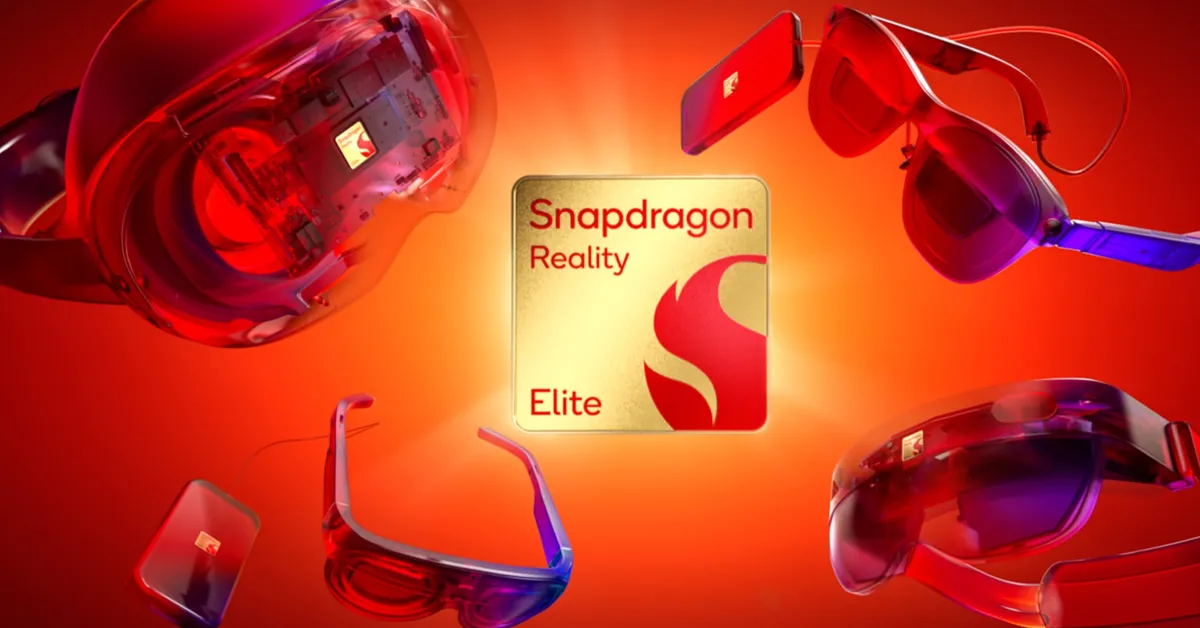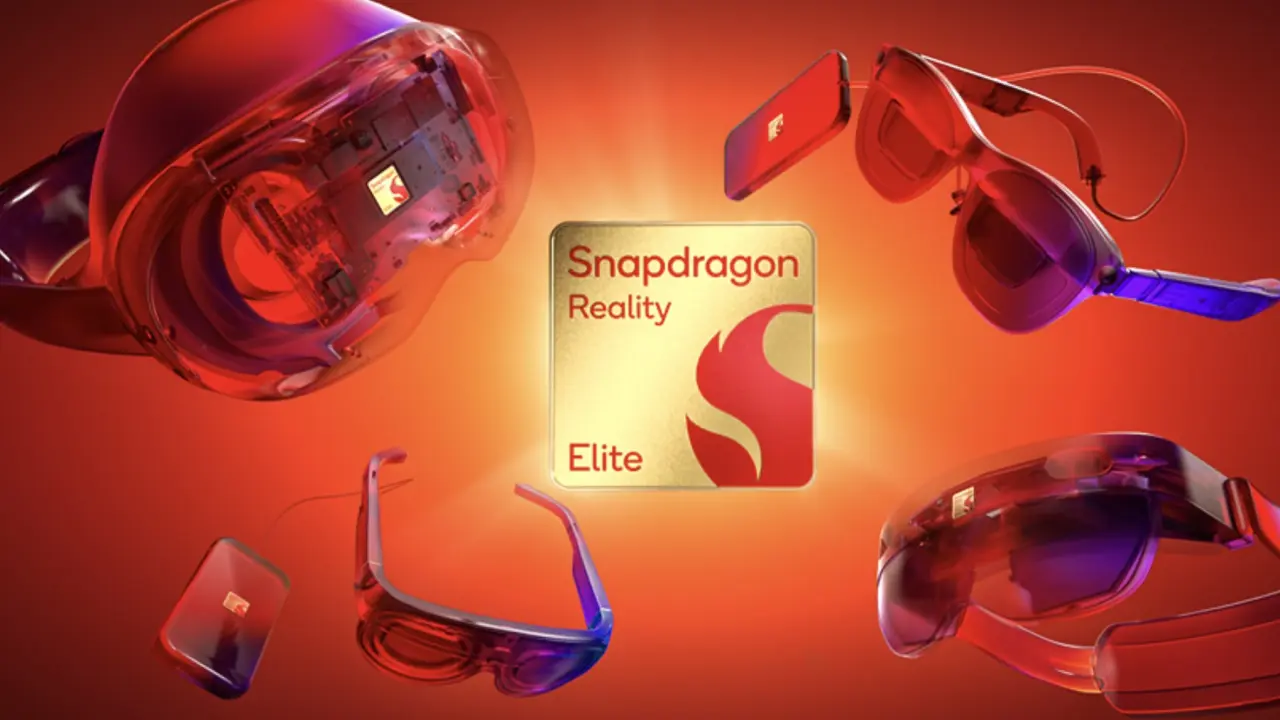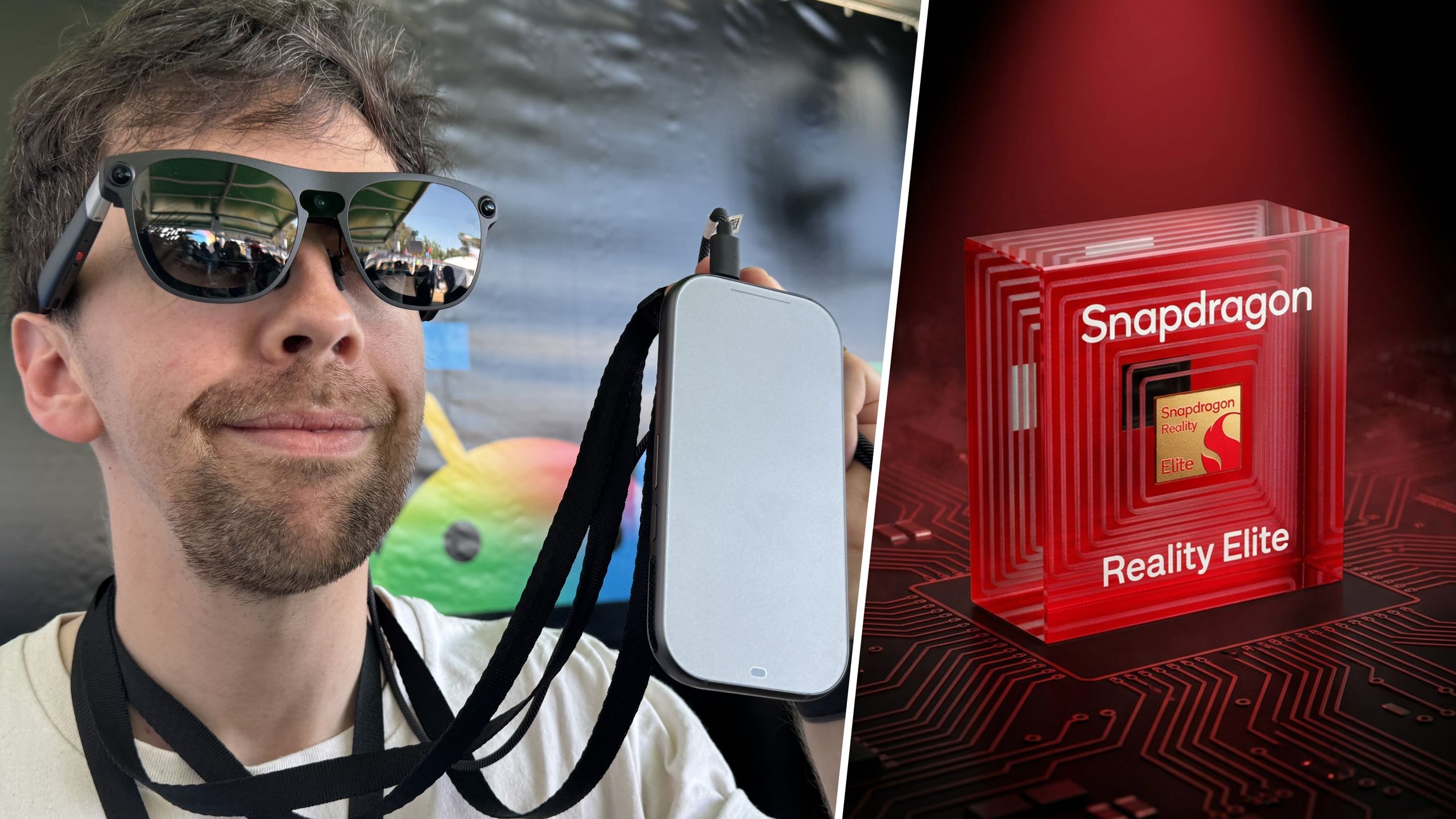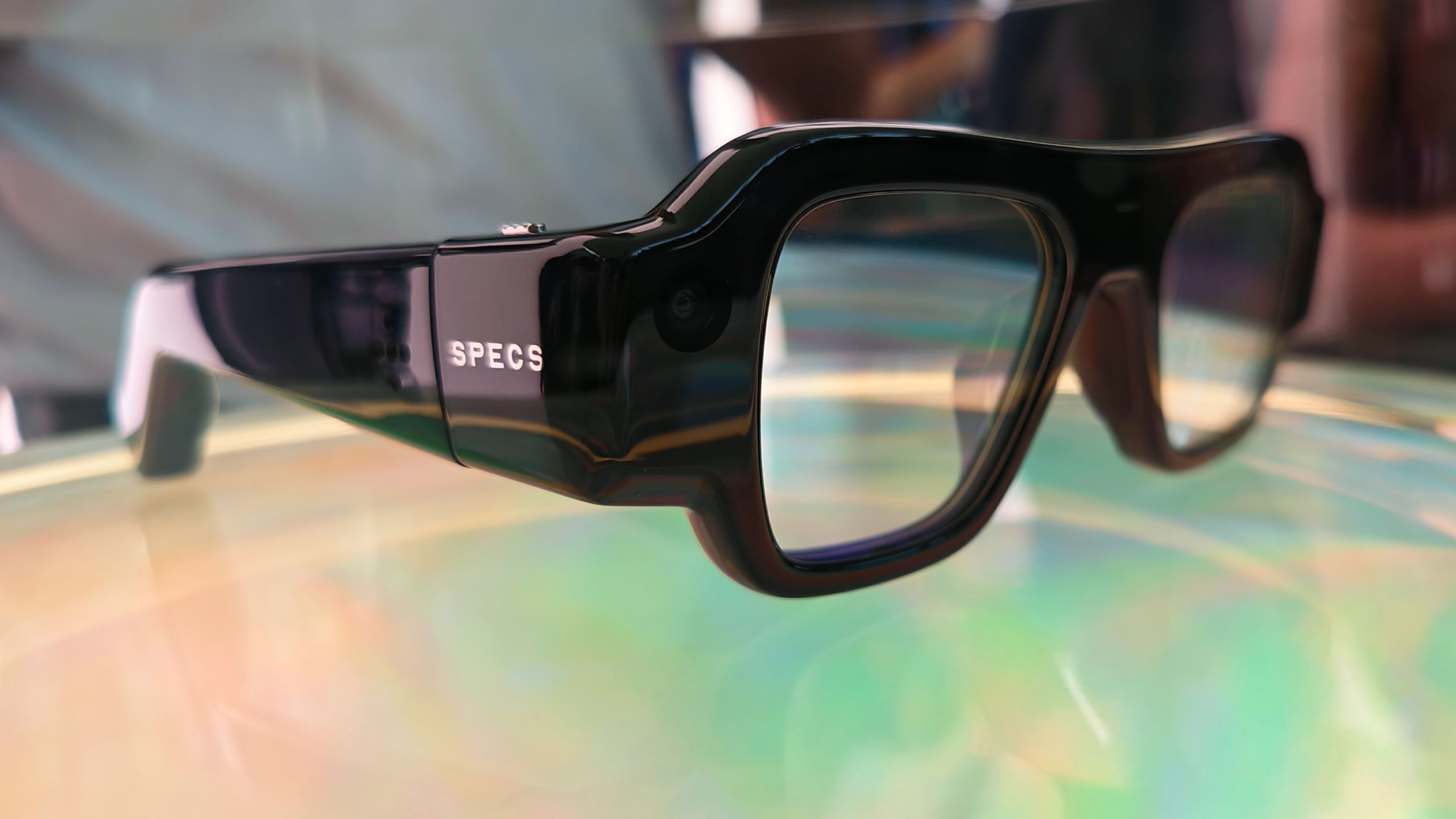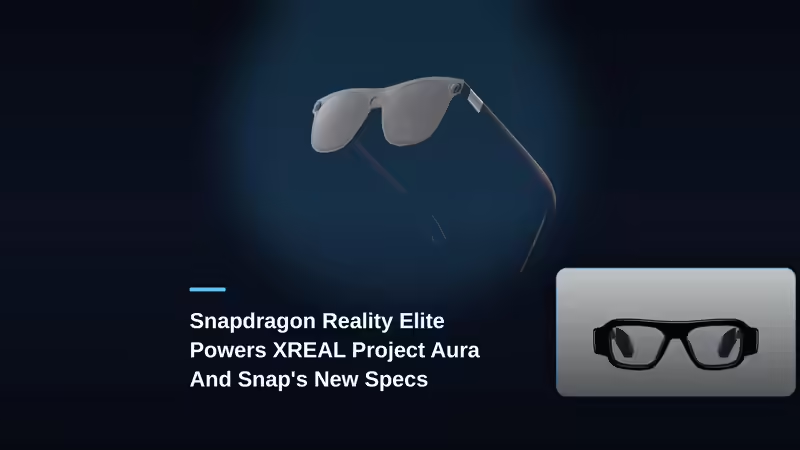
Snapdragon Reality Elite, Qualcomm's new flagship XR platform built around a 48 TOPS Hexagon NPU, arrived at Augmented World Expo on 16 June as the engine block for a class of device that still mostly lives on the drawing board. Ziad Asghar, Qualcomm's senior vice president and general manager of XR, wearables and personal AI, took the Long Beach stage minutes after Snap's Evan Spiegel left it. The running order carried the real message. The silicon supplier follows the product pitch, because Qualcomm means to sit underneath whichever pair of glasses the market eventually picks.That is the whole game here, and it pays to say it plainly before the spec sheet swallows the story. Reality Elite is the successor to the XR2+ Gen 2, and it also retires the old XR1 / XR2 / XR2 Gen 2 alphabet in favour of a "Reality" tier, with Elite at the top. The rename matters less than the bet riding on it.Key TakeawaysReality Elite delivers up to 60 per cent higher GPU, 30 per cent higher CPU and 160 per cent higher NPU performance than the XR2+ Gen 2, with the Hexagon NPU rated at 48 TOPS.The platform runs a 3-billion-parameter language model on-device at 45 tokens per second, enough for live AI agents, Gaussian-Splatting avatars and real-time object generation inside the headset.Qualcomm pairs it with Snapdragon START, a white-label toolkit that hands eyewear brands a near-finished smart-glasses design built on the AR1+ chip.First devices: XREAL's Project Aura (a Google, Qualcomm and XREAL collaboration) later in 2026, with Play for Dream to follow.Snap's sixth-generation Specs, priced at $2,195 and shipping in autumn 2026, run dual Snapdragon silicon — proof the market has crossed from developer kit to consumer product.The Numbers That Separate Reality Elite From XR2+ Gen 2Every headline figure measures against the XR2+ Gen 2, the chip inside Samsung's Galaxy XR. The deltas are real, and Qualcomm states them cleanly.MetricReality Elite vs XR2+ Gen 2GPU (Adreno)Up to 60 per cent higherCPU (Kryo, 4+2 cores)Up to 30 per cent higherNPU (Hexagon)Up to 160 per cent higher, rated 48 TOPSDDR bandwidthUp to 30 per cent higherDisplayUp to 4. 4K per eye at 90fpsBattery lifeUp to 20 per cent longer at the same workloadOperating temperatureUp to 12°C cooler under loadHold the display figure to the light. The XR2+ Gen 2 already pushed 4. 3K per eye at 90Hz, so the jump to 4. 4K reads as a polish rather than a leap. The thermal claim does more work. Qualcomm puts the platform at up to 12°C cooler under load, and heat is the tax every head-worn device pays: it shortens battery and chip life, drags efficiency down, and turns a forty-minute session into a sweaty chore. Shave the heat and the glasses get lighter, thinner and wearable for longer. That is the chain Qualcomm is selling, and it runs straight from the die to the bridge of your nose.The graphics pipeline gained the modern toolkit too — hardware-accelerated ray tracing, mesh shading and a slice architecture. A reworked Engine for Visual Analytics block lifts the heavy computer-vision load off the main processors, and video see-through latency improved by roughly 10 per cent, with image gains from denoising and foveated processing.Where Does The Compute Actually Sit?The interesting engineering decision hides behind the percentages, and it is architectural in the literal sense. Every set of XR glasses answers one question: where do you put the weight? A headset is a building, and the compute and battery are its load-bearing mass. Stack that mass on the user's face and the structure grows heavy, hot and fatiguing. Cantilever it somewhere else and the front end gets light.Reality Elite is built for the cantilever. Qualcomm designed it to anchor a newer category of tethered devices, where the compute and battery live in a separate puck and the glasses carry only the displays, optics and sensors. XREAL's Project Aura takes exactly this shape — Qualcomm described it as a three-way build with Google and XREAL, including optimisation of the compute pack and the overall architecture. Move the foundation off the head, and the part people wear can finally pass for eyewear.The on-device AI is the other load this architecture has to bear. With 48 TOPS on tap, Reality Elite runs large language models and large vision models locally: a 3-billion-parameter model clips along at 45 tokens per second, fast enough for an agent that watches what you watch and answers in the moment. Qualcomm points to photorealistic avatars rendered with Gaussian Splatting, LLM-driven agents and real-time, vision-model object generation as the payoff. Asghar framed the demand bluntly, citing more than 60 million XR devices already in the market and rising appetite for higher performance, more intelligence and better efficiency in every new generation.Qualcomm Built A Car Factory And Handed Away The KeysThe second announcement is the one that reveals the strategy, and it deserves more attention than the chip. Snapdragon START — Scalable Turnkey AI-Ready Toolkit — is Qualcomm acting as a contract chassis-maker for the entire eyewear trade.Think of how badge engineering works in cars: one company builds the platform, the suspension, the powertrain, then ships that rolling skeleton to brands that bolt on their own bodywork and sell it under their own marque. START is that, for smart glasses. The kit bundles a turnkey hardware module built on the AR1+ chip, companion apps for iOS and Android, an AI cloud service, and a range of white-label glasses designs spanning camera-and-speaker models, monocular displays and binocular displays. A brand with a logo and a go-to-market plan can ship a personal-AI device while skipping the years of silicon and supply-chain work underneath. Qualcomm even rolled out a second-generation smart-ring reference platform with partner KeyWear, built on the Snapdragon S7+.Here sits the distinction most coverage blurred. START's glasses run on AR1+, the lighter chip Qualcomm keeps for all-day AI eyewear of the Meta Ray-Ban class. Reality Elite takes the heavier mixed-reality and video-see-through tier. So inside a single keynote Qualcomm supplied both ends of the form-factor split at once — the muscle platform for tethered headsets, the efficient platform for featherweight glasses — and a turnkey programme to multiply the brands buying either one.The CEO said the quiet part for the record. Cristiano Amon told CNBC that Qualcomm is working on more than 40 AI wearable designs — jewellery, camera-equipped earbuds, pins, watches — and described the unifying idea as something you wear, that stays with you, that sees the world around you. Reality Elite and START are the two visible spokes of a wheel built on the wager that the next mass computing platform wears a different shape than a phone.Snap's $2,195 Answer To The Same QuestionSpiegel made the bet concrete an hour before Asghar spoke. Snap's sixth-generation Specs are its first standalone AR glasses aimed at ordinary buyers rather than developers, priced at $2,195 with pre-orders open across the US, UK and France and shipping slated for autumn 2026.Snap Specs (sixth-gen)DetailDisplayLCoS, 51° field of view, 16 million coloursDisplay area30 per cent larger than fifth-genSiliconDual Qualcomm Snapdragon (one for vision, one for Lenses)ArchitectureStandalone — compute carried in the templesLensesElectrochromic, clear to tinted in 10 secondsLatency7ms motion-to-photonBatteryUp to 4 hours mixed use, around 20 hours with the caseBuildSwiss TR90 polymer, two sizes at 132g and 136gWeightRoughly 40 per cent lighter than fifth-genPrice$2,195, autumn 2026, US / UK / FranceNotice the structural choice Snap made, and how it differs from Aura's. Specs run standalone, packing both Snapdragon chips into the frame itself rather than offloading to a puck — the opposite engineering answer to the same weight question Reality Elite solves with a tether. Snap kept the building on the face and spent its budget on thinning the walls: TR90 polymer, two sizes, prescription inserts, electrochromic lenses that tint for the pavement and clear for the room. The Lens Studio toolchain gained agentic development through Claude Code, Codex and Cursor, plus a Native Development Kit, which tells you Snap wants a flood of third-party experiences ready at launch.Snap held plenty back. Resolution, brightness, refresh rate, RAM, storage, camera detail, wireless standards, water resistance and exact battery capacity all remain pending until closer to ship. The $2,195 tag also keeps this firmly in early-adopter territory rather than the everyday-eyewear price Spiegel keeps promising. Treat it as a statement of intent with a deposit attached.The Engine Ships Before The Road ExistsStand back and the awkward shape of Qualcomm's win comes into view. It supplies the silicon for the tethered headsets and the standalone glasses, the muscle tier and the efficient tier, the named flagships and the white-label clones — a foundation poured under a whole street of buildings, several of which have yet to find tenants. Samsung's Galaxy XR sells in modest numbers. Aura ships later this year. Snap's Specs cost more than a high-end laptop. The platform is ready well ahead of the market it serves.And START sharpens the tension rather than easing it. By handing brands a finished chassis, Qualcomm competes with its own customers' reasons to design anything distinctive, while betting that owning the layer beneath everyone beats owning any single device. The open question is whether the engine matters when the industry has yet to sell the car at volume — and how long Qualcomm can bankroll the road until enough drivers show up.FAQWhat is Snapdragon Reality Elite?Snapdragon Reality Elite is Qualcomm's new flagship XR platform, announced at Augmented World Expo on 16 June 2026. It carries a 48 TOPS Hexagon NPU for on-device AI and targets both tethered mixed-reality headsets and lightweight optical-see-through glasses.How does it differ from the XR2+ Gen 2?Compared with the XR2+ Gen 2, Reality Elite offers up to 60 per cent higher GPU, 30 per cent higher CPU and 160 per cent higher NPU performance, plus up to 20 per cent longer battery life and up to 12°C cooler operation. The display steps up modestly, from 4. 3K to 4. 4K per eye at 90fps. The branding also shifts from the XR numbering to the "Reality" tier.What is Snapdragon START?START, short for Scalable Turnkey AI-Ready Toolkit, is a white-label programme that gives eyewear brands a near-complete smart-glasses design built on the AR1+ chip, along with companion apps, an AI cloud service and reference hardware. It lets a brand ship a personal-AI device while skipping the underlying silicon and supply-chain work.Which devices will use Reality Elite first?XREAL's Project Aura, a collaboration between Google, Qualcomm and XREAL, leads later in 2026, with a device from Play for Dream to follow and more OEM products expected after that.Does Reality Elite power the new Snap Specs?No single Reality Elite chip sits inside Snap's sixth-generation Specs. Snap uses two Qualcomm Snapdragon processors — one for computer vision, one for running Lenses — in a standalone design, a separate path from Reality Elite's tethered architecture. Snap has yet to name the exact models.When do these reach India?India sits outside the launch plans for both Reality Elite devices and Snap's Specs. Qualcomm's platform reaches Indian buyers only when an OEM ships a Reality Elite product here, and Snap's pre-orders currently cover the US, UK and France alone.end of article
Qualcomm Snapdragon Reality Elite Brings 48 TOPS On-Device AI To XR Glasses Powering Specs
Qualcomm's new flagship XR platform lands at AWE 2026 with a 160 per cent NPU jump — and a hedge that spans every shape of face computer.
1,856 words~8 min read