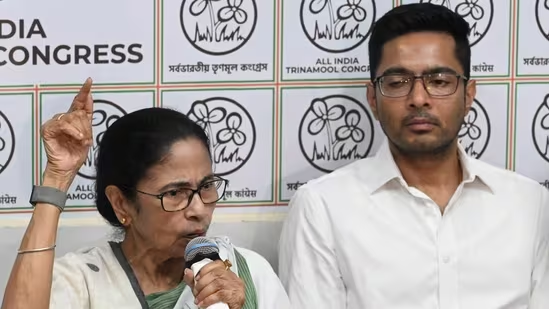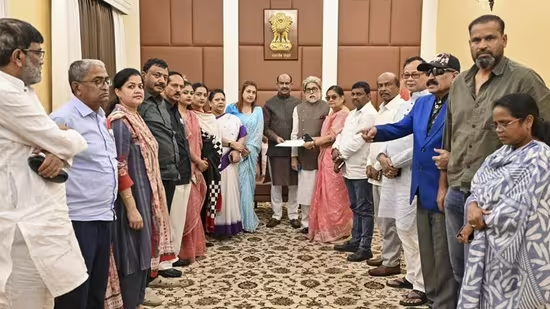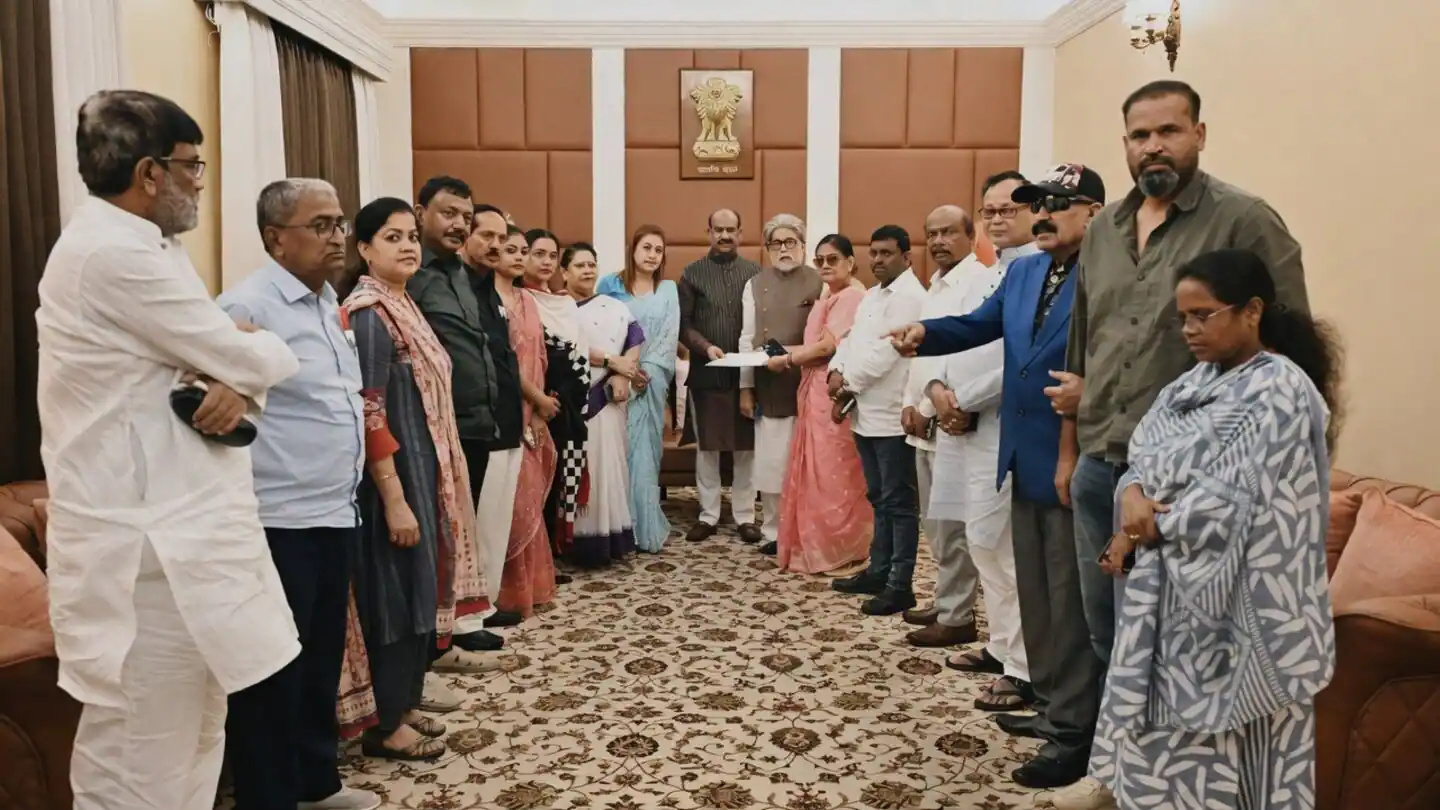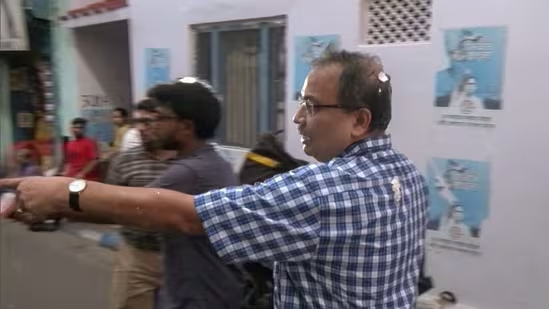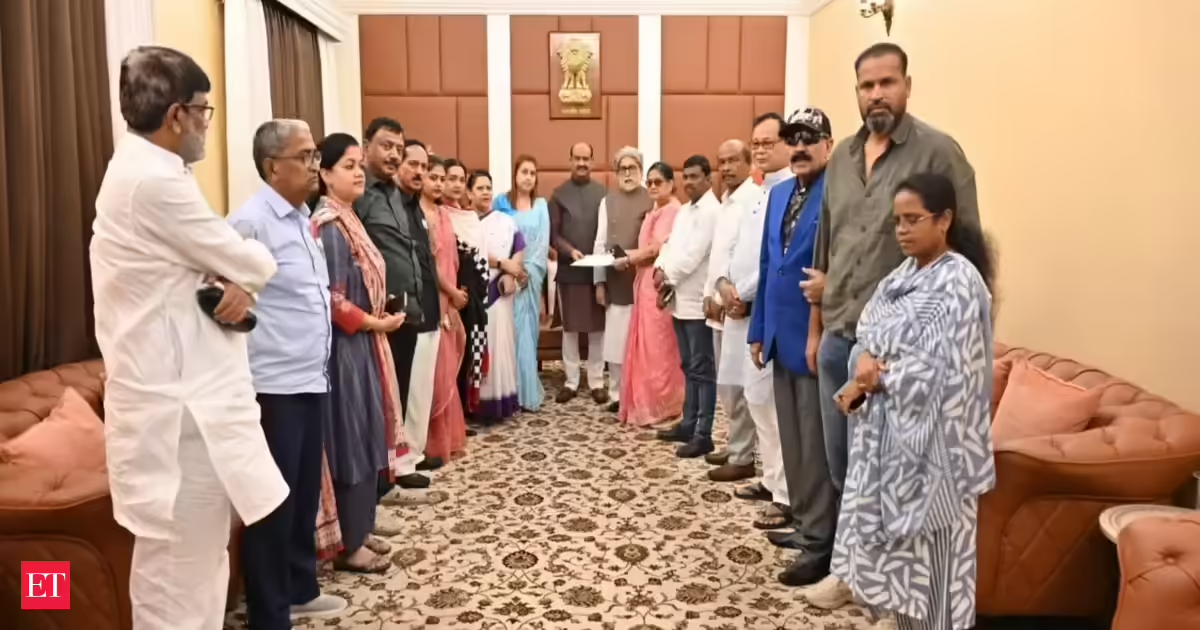
The story so far:As many as 20 rebel Trinamool Congress MPs met the Lok Sabha Speaker and announced their decision to merge with Nationalist Citizens Party of India (NCPI). This has raised issues about the interpretation of Tenth Schedule with respect to merger of political parties.What is the origin of Tenth Schedule?The defections of legislators during 1960s and 70s from their parent parties created political instability in many States bringing down elected governments. This prompted the 52nd constitutional amendment to introduce the ‘anti-defection’ law through the Tenth Schedule in 1985. This Schedule provides that a member of a House of Parliament or State legislature who voluntarily gives up the membership of their ‘political party’ or votes against the instructions of their party in a House are liable for disqualification from such House. The ‘political party’ is the entire organisation of a party, while the ‘legislature party’ is all the members of a political party in a House of Parliament or State legislature.The Tenth Schedule originally had two exceptions that would not render the members liable for disqualification viz., one-third of members of the ‘legislature party’ splitting to form a separate group (paragraph 3), or a merger of their ‘political party’ with another party that is approved by two-thirds of the members of its ‘legislature party’ (paragraph 4). However, considering the need to strengthen the ‘anti-defection’ law, paragraph 3 was omitted in 2003. With the deletion of paragraph 3, there have been instances of two-third members of a legislature party ‘practically’ defecting but claiming to be the original political party in order to escape disqualification. This happened in the case of Shiv Sena and Nationalist Congress Party in June 2022 and July 2023 respectively.There have also been instances where more than two-third members of a ‘legislature party’ in a house have merged themselves with another political party to escape disqualification. This happened in September 2019 (in Rajasthan) when all 6 Bahujan Samajwadi Party MLAs merged themselves with the Congress and in September 2022 (in Goa) when 8 out of the 11 Congress MLAs merged themselves with the BJP. The Bombay High Court upheld the merger of Goa’s Congress Legislature Party with the BJP, though an appeal is pending in the apex court. A similar move occurred in April 2026 when 7 of 10 AAP Rajya Sabha MPs merged with the BJP.What is the present case in Bengal?After the recent West Bengal polls, around 60 of the 80 MLAs elected from Trinamool Congress formed a separate faction led by Ritabrata Banerjee, who was recognised as the Leader of Opposition in the State Assembly even after the party expelled him. Meanwhile, 20 of the 28 Lok Sabha MPs have submitted their decision to the Lok Sabha Speaker to merge themselves with the NCPI. Their claim is that they constitute two-thirds of the legislature party and are hence authorised to take this step under the provisions of the Tenth Schedule without attracting disqualification.What may be way forward?A plain reading of the Tenth Schedule allows only for merger of a political party with another party that is approved by two-thirds of its legislature party. It does not authorise two-thirds of the legislature party in a house to merge itself with another political party to claim immunity from defection. However, in the recent instance with respect to proposed merger of Trinamool Lok Sabha MPs with NCPI as well as the merger of Rajya Sabha MPs of AAP with the BJP, this is what has happened. It is also subject to interpretation whether a merger of an ‘original political party’ can happen only with another political party that already has members in the legislative house. Moreover, the authority to decide on the disqualification of members is vested in the Speaker or Chairman. While they are expected to perform this constitutional role impartially, the presiding officers have often favoured the ruling dispensation. The Supreme Court in K. M. Singh case in 2020, recommended that the Parliament amend the Constitution to vest these powers in an independent tribunal headed by judges.An authoritative Supreme Court judgement in the matters of merger and setting up of an independent tribunal to decide on disqualification may reduce the ambiguities surrounding the Tenth Schedule. However, it may not prevent the ingenious methods adopted by political parties to circumvent the Tenth Schedule. Any such manoeuvres may be viewed as a betrayal of the electorate by the elected representatives. A stricter measure, as recommended by the Law commission in 1999, could be to amend the Tenth Schedule and delete paragraph 4 that provides exemption from disqualification for merger of political parties. Any action by elected members of a legislature party against their political party should lead to disqualification that results in seeking fresh mandate from the people.Rangarajan R. is a former IAS officer and author of ‘Courseware on Polity Simplified’. He currently trains at ‘Officers IAS Academy’. Views expressed are personal. Published - June 17, 2026 08:30 am IST
What does Tenth Schedule provide on party mergers?
Explore the implications of the Tenth Schedule on political party mergers and the rise of misuse post-paragraph 3 deletion.
823 words~4 min read