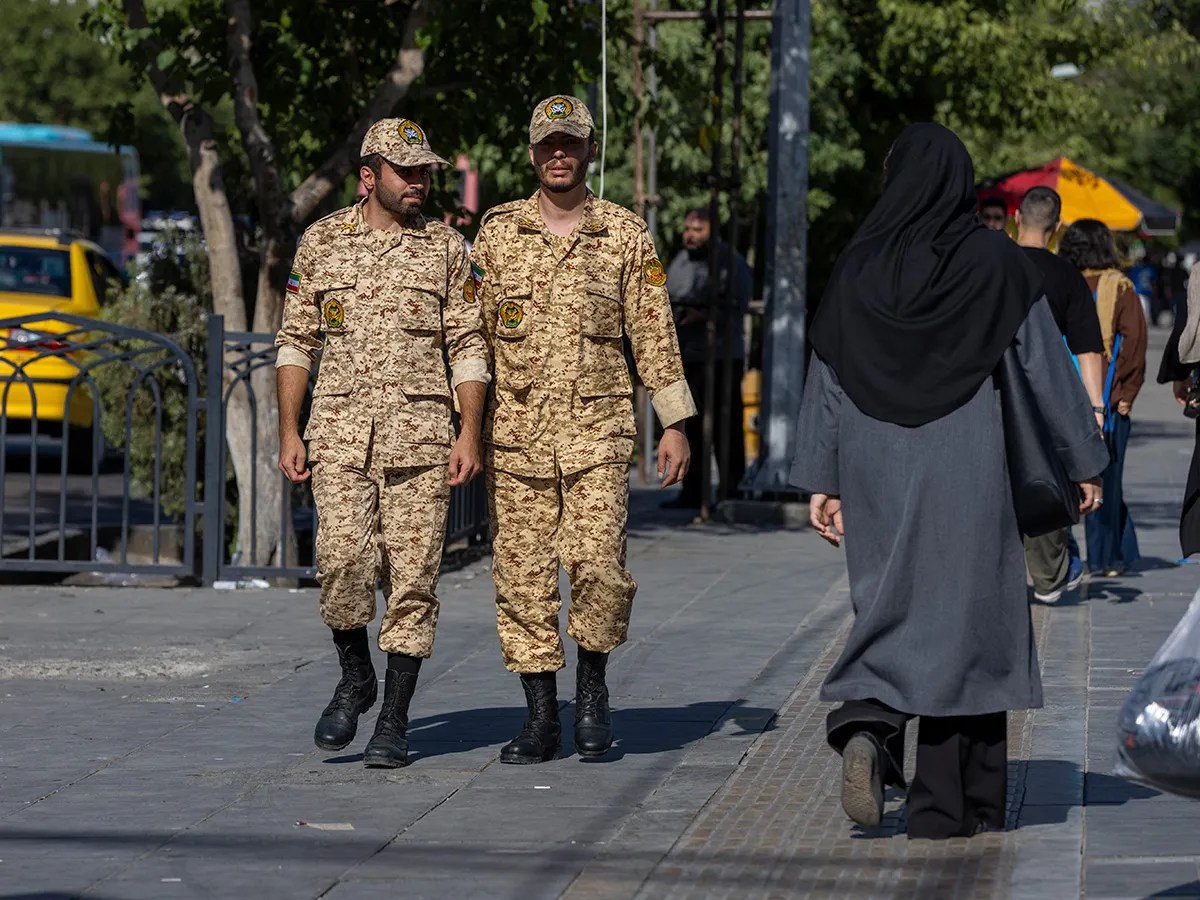
Skip to Content Subscribe Our Offers My Account Manage My Subscriptions FAQ Newsletters Canada Canadian True Crime Canadian Politics Health World Israel & Middle East Financial Post NP Comment Longreads Puzzmo Diversions Comics NP News Quiz New York Times Crossword Horoscopes Life Eating & Drinking Style Sponsored Play for Ontario Travel Travel Canada Travel USA Travel International Cruises Travel Essentials Culture Books Celebrity Movies Music Theatre Television Business Essentials Advice Lives Told Tails Told Shopping Buy Canadian Home Living Outdoor Living Kitchen & Dining Tech Style & Beauty Personal Care Entertainment & Hobbies Gift Guide Travel Guide Amazon Prime Day Deals Savings National Post Store More Sports Hockey Baseball Basketball Football Soccer Golf Tennis Driving Vehicle Research Reviews News Gear Guide Obituaries Place an Obituary Place an In Memoriam Classifieds Place an Ad Celebrations Working Business Ads Archives Healthing Epaper Manage Print Subscription Profile Settings My Subscriptions Saved Articles My Offers Newsletters Customer Service FAQ Newsletters Canada World Financial Post NP Comment Longreads Puzzmo Diversions Life Shopping Epaper Manage Print Subscription HomeNewsWorldIsrael & Middle East‘Just lots of questions’ about the terms of U.S. deal with Iran, experts sayAny deal focused narrowly on Iran’s nuclear program, and not on the regime’s missile stockpiles or funding of terrorist proxies, could leave major threats unaddressed, one analyst said You can save this article by registering for free here. Or sign-in if you have an account.Soldiers walk along a street in Tehran, Iran, on June 15, 2026. Photo by Majid Saeedi/Getty ImagesAs details of U.S. President Donald Trump’s new Iran framework agreement begin to emerge, Jewish organizations and policy experts said that questions remain whether its terms go far enough and if Tehran can be trusted to adhere to them.Enjoy the latest local, national and international news.Exclusive articles by Conrad Black, Barbara Kay and others. Plus, special edition NP Platformed and First Reading newsletters and virtual events.Unlimited online access to National Post.National Post ePaper, an electronic replica of the print edition to view on any device, share and comment on.Daily puzzles including the New York Times Crossword.Support local journalism.Enjoy the latest local, national and international news.Exclusive articles by Conrad Black, Barbara Kay and others. Plus, special edition NP Platformed and First Reading newsletters and virtual events.Unlimited online access to National Post.National Post ePaper, an electronic replica of the print edition to view on any device, share and comment on.Daily puzzles including the New York Times Crossword.Support local journalism.Create an account or sign in to continue with your reading experience.Access articles from across Canada with one account.Share your thoughts and join the conversation in the comments.Enjoy additional articles per month.Get email updates from your favourite authors.Create an account or sign in to continue with your reading experience.Access articles from across Canada with one accountShare your thoughts and join the conversation in the commentsEnjoy additional articles per monthGet email updates from your favourite authorsSign In or Create an Accountor“Whether or not this agreement succeeds lies in strict verification and intrusive enforcement,” Daniel S. Mariaschin, CEO of B’nai B’rith International, told JNS.“Given Iran’s 47-year history of deceit and deception, its secretive nuclear program and its role as paymaster and armorer of terrorist proxies will mean that monitoring this agreement cannot be passive,” Mariaschin said.Columnist Jesse Kline keeps you up to date with what’s happening in Israel and the effects of antisemitism on life here in Canada. Friday mornings.By signing up you consent to receive the above newsletter from Postmedia Network Inc.A welcome email is on its way. If you don't see it, please check your junk folder.The next issue of Channel Israel will soon be in your inbox.We encountered an issue signing you up. Please try again“Given that, nothing here should deny Israel the right to defend itself against any threats that may emanate from Hezbollah or any quarter,” he told JNS.The memorandum of understanding that Trump, U.S. Vice President JD Vance and Iranian Parliament speaker Mohammad Bagher Ghalibaf signed electronically on Monday calls for the Strait of Hormuz to reopen gradually, the U.S. naval blockade on Iran to be lifted and a 60-day ceasefire period between Washington and Tehran, during which negotiations will occur.AIPAC stated on Monday that it “looks forward to learning the full details of the framework for these negotiations.”The U.S. Congress “will play a critical role” in reviewing any final agreement which “permanently and verifiably ends the regime’s nuclear program—including the removal of all enriched uranium from Iran and the dismantlement of all enrichment sites,” it said.Some Iran analysts see the framework as a sign that Washington may be softening some of its earlier demands on Tehran’s nuclear program.“There are just lots of questions, and as the talks have gone on, it seems like the United States is walking back a lot of its initial demands,” Andrea Stricker, deputy director and research fellow in the nonproliferation and biodefense program at the Foundation for Defense of Democracies, told JNS.One area of concern, Stricker said, is the fate of Iran’s enriched uranium stockpile.Trump had previously insisted that the material be removed from Iran or destroyed, but more recent discussion of downblending—the process of mixing highly enriched uranium with natural or depleted uranium—raises questions about whether Tehran could be allowed to retain some enriched uranium inside the country.“If you’re downblending, you’re essentially reducing the purity level, and there’s no reason to do that in Iran unless the United States has caved on its demand that it be exported,” she told JNS.Stricker also questioned what it would mean for Iran to agree not to operate underground nuclear sites.“If you’re just not operating it, are you allowed to outfit it with centrifuge equipment for the end of a 15-year moratorium on enrichment?” she said. “Do you have to disable the facility entirely or block access?”Stricker told JNS that she is concerned the deal may leave Iran pathways to rebuild portions of its nuclear program, even after recent U.S. and Israeli military strikes likely set back the regime’s goal from six months to two-and-a-half years, or longer.“What you’re worried about is them having or regaining access to any buried enriched uranium stockpiles,” she said. “You’d be concerned that they may have stocks of their fast, advanced centrifuges squirreled away that they could put at a secret site and try to evade intelligence eyes on that and try to build a covert enrichment plant.”The 60-day negotiating period is also unlikely to produce major Iranian concessions, she said.“The Iranians are very good at extending the clock on negotiations, so I’m not sure that they have much incentive to make significant compromises if they weren’t already willing to do that in the memorandum of understanding,” she told JNS.“The gist of the deal is to facilitate the opening of the Strait of Hormuz and to wind down the conflict, essentially extending the ceasefire for another 60 days,” she said.Any deal focused narrowly on Iran’s nuclear program, and not on the regime’s missile stockpiles or funding of terrorist proxies, could leave major threats unaddressed and is unlikely to inspire a change in behaviour, she said.“The structural problem with all these deals is that you’re dealing with a radical jihadist regime that does not approach rewards in the same way,” Stricker told JNS.Even if Iran emerges from the negotiations with significant military and nuclear setbacks, Stricker believes that the regime is likely to portray the agreement as a victory.“The regime will spin it as a victory, even if they’ve been completely decimated and lost most of their military capabilities,” she told JNS.“The victory for them is surviving in an attack that could have threatened their survival,” she said.We’ve repeatedly seen that ‘ceasefires’ with the Iranian regime and its proxies mean ‘we cease and they fire.’The ultimate test of any agreement will be whether it forces Iran to fully account for its nuclear activities and submit to rigorous international inspections.“You’ve never had Iran fully declare their nuclear program in all aspects, all past military nuclear work, all facilities, and the like,” Stricker told JNS.Any lasting agreement would require the International Atomic Energy Agency to have “full unfettered access, including to Iranian military sites, to really rule out Iranian cheating and ensure that all past weaponization-related work is ended,” she said.Morton Klein, president of the Zionist Organization of America, stated that “the pending deal with Iran is concerning.”Few details have been released, but what has emerged is “deeply problematic,” according to Klein.“It makes no sense for the United States to immediately give up its pressure on the Iranian regime, the blockade that was strangulating Iran economically, without obtaining immediate removal of Iran’s nuclear stockpile, decommissioning of Iran’s nuclear facilities and destruction of Iran’s deadly missile stockpile,” Klein stated.Iran and Hezbollah, which reportedly has been included in aspects of the ceasefire arrangement, have a long history of violating ceasefire agreements, according to Klein.“The deal’s apparent long ceasefire also only plays into the Iranian regime’s delaying tactics,” he stated. “We’ve repeatedly seen that ‘ceasefires’ with the Iranian regime and its proxies mean ‘we cease and they fire.’”The deal “plays right into the Iranian regime’s hands, undermines necessary deterrence and endangers Israel’s safety,” he said.“Disturbingly, the interim Iran deal does not appear to be even close to the U.S.-Israel war goals of eliminating the existential dangers of Iran’s nuclear program and ballistic missiles, ending the Iranian regime’s support for its terror proxies and helping the Iranian people overturn the brutal, genocidal Iranian regime,” he added. Join the Conversation This website uses cookies to personalize your content (including ads), and allows us to analyze our traffic. Read more about cookies here. By continuing to use our site, you agree to our Terms of Use and Privacy Policy.
‘Just lots of questions’ about the terms of U.S. deal with Iran, experts say
The deal “plays right into the Iranian regime’s hands, undermines necessary deterrence and endangers Israel’s safety,” one observer said.
1,606 words~7 min read