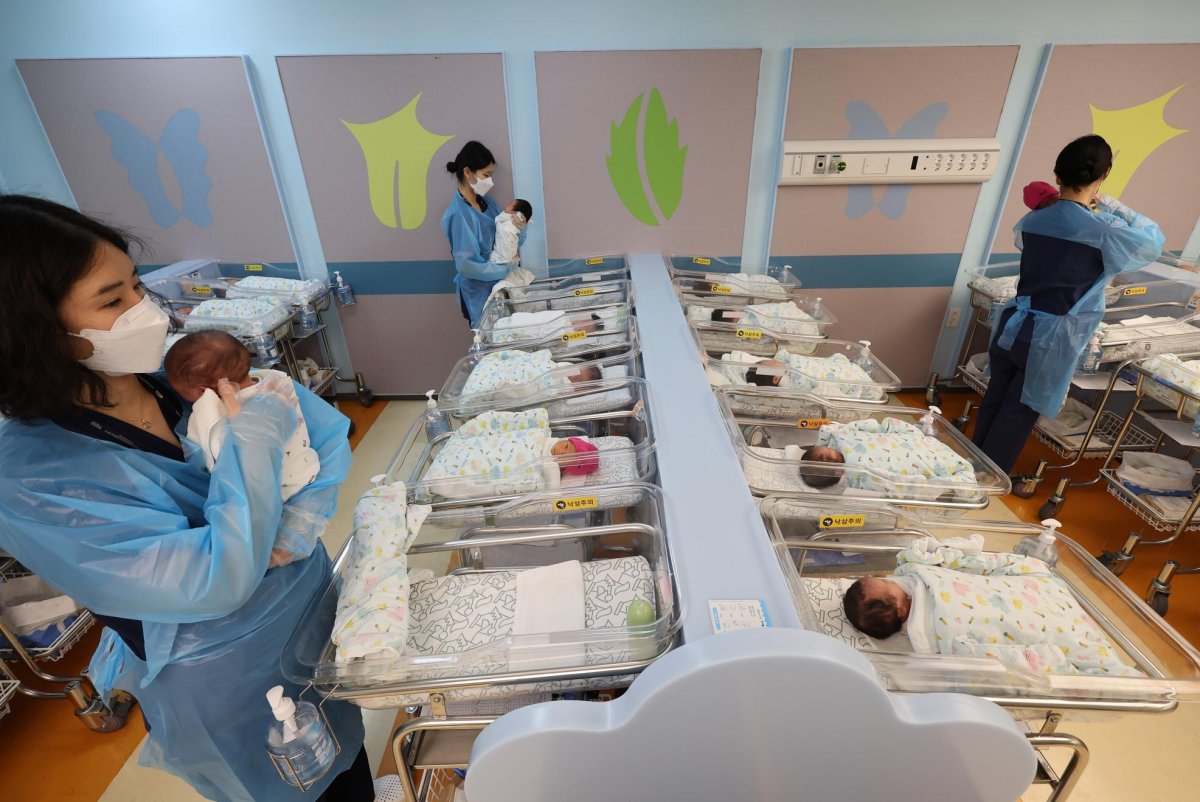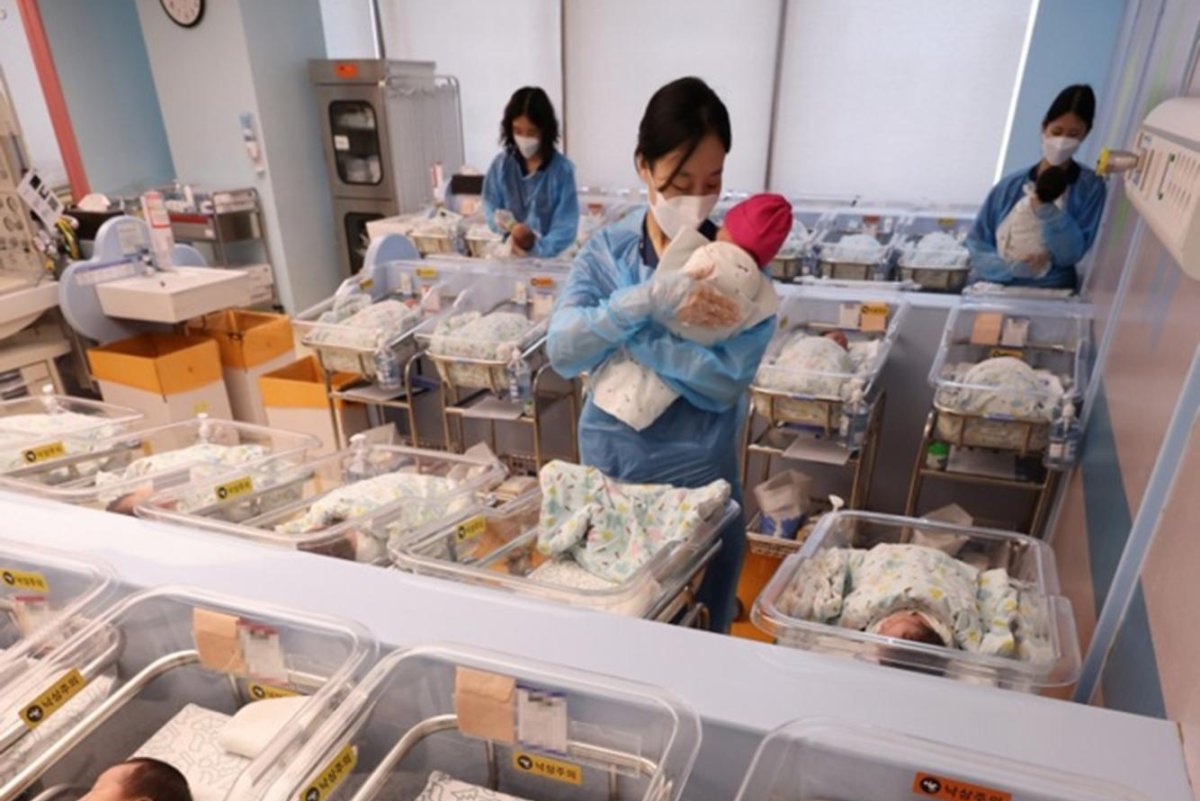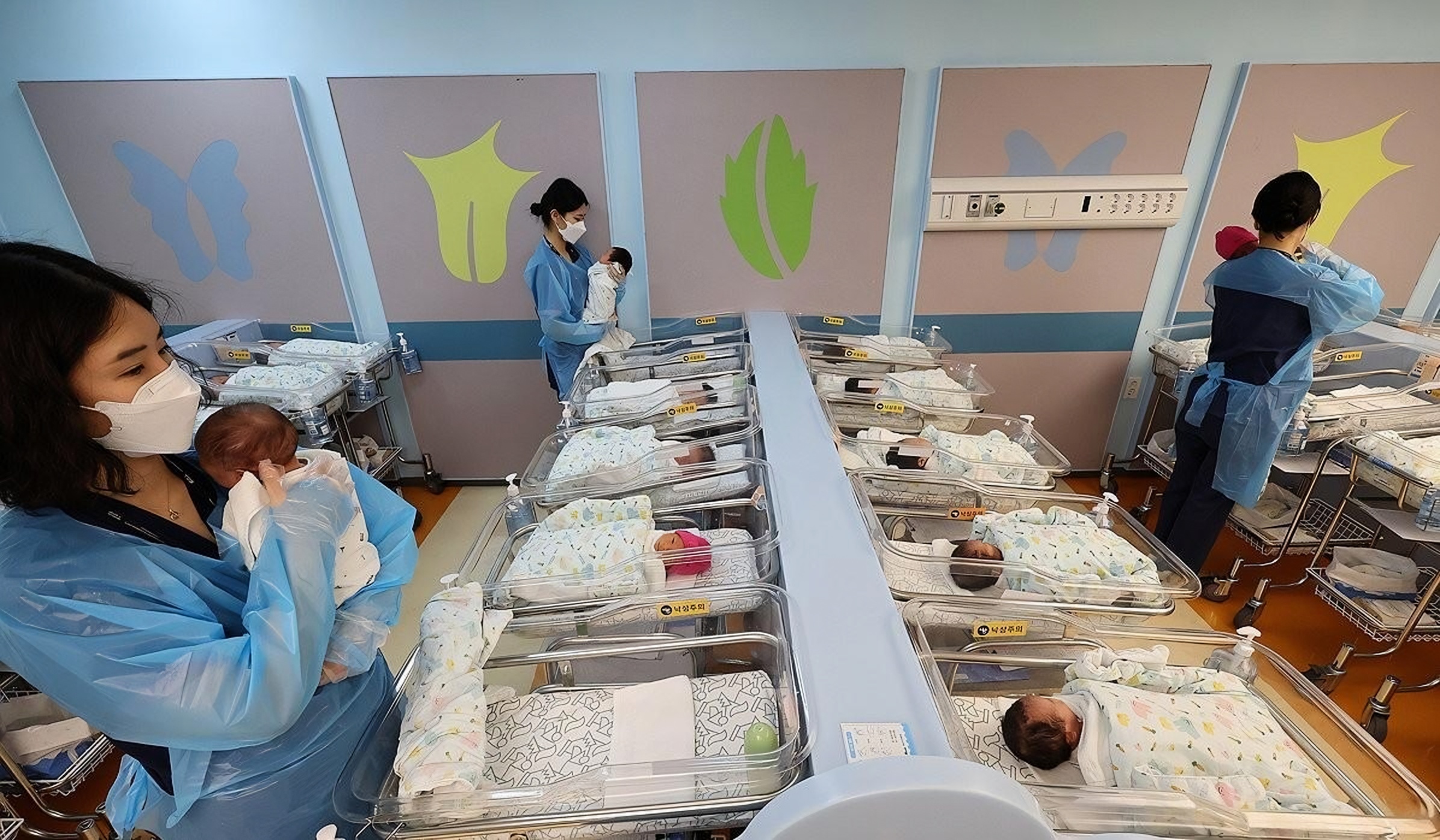
Older maternal age, weakened delivery infrastructure, affordable C-sections drive dramatic shift in birth practices in S. Korea A newborn is delivered by C-section. (123rf) Childbirth by surgery is more than twice as common as childbirth through labor in South Korea today.Of the 236,919 babies born in the country in 2024, 67 percent were delivered by cesarean section — up from 51 percent in 2019, when surgical births first surpassed vaginal deliveries, according to data from the National Health Insurance Service.For Hong Hanna, who gave birth to daughters in 2022 and 2024 through surgery, the decision was shaped more by personal preference than medical necessity. Having chosen a C-section for her first delivery, she said she saw little reason to attempt a vaginal birth for her second.“I felt more comfortable knowing exactly when I would give birth and that the doctor who had been seeing me throughout my pregnancy would be there, without having to worry about unexpected situations, such as suddenly going into labor or my water breaking as my due date approached,” Hong told The Korea Herald.Experts say choices like Hong’s reflect broader shifts in South Korea’s maternity landscape.Much like pregnancy itself, childbirth has increasingly become a planned and risk-managed process rather than an unpredictable event. And that shift, according to the experts, has been shaped by decades of falling birth rates, which have strained infrastructure for round-the-clock and emergency deliveries, while older maternal age has increased the share of pregnancies considered higher risk. At the same time, the country’s accessible healthcare system has made the cost of C-sections less of a financial barrier than in other countries.Surgery over laborObstetrician Lee Jae-il sees little chance of South Korea’s C-section rate declining in the near future. He says that attitudes toward a procedure once largely reserved for medically necessity have changed dramatically.“A decade ago, the cesarean section rate in Korea was around 40 percent. Now, I expect it could soon exceed 70 percent. In the clinic, I see more women choosing C-sections based on personal preferences and circumstances rather than medical necessity,” he said in a phone interview.While no official statistics track how many C-sections are performed by maternal choice rather than medical need, South Korea’s overall C-section rate stands out internationally. Organization for Economic Cooperation and Development data for 2022 ranked the country highest among the member states, with 610.6 C-sections per 1,000 live births — more than double the OECD average of 292.5. Obstetrician Lee Jae-il (Lee) Lee, a pediatrician who runs YouTube channel o2brothers TV, with 130,000 subscribers, with his brother, pointed to rising maternal age among the key drivers of the increase in C-sections."As maternal age rises, women become more susceptible to pregnancy-related complications such as preeclampsia and gestational diabetes. They are also more likely to require fertility treatments, which increase the likelihood of multiple pregnancies. These factors can make C-sections medically necessary," the doctor said.At 32.8 years old, South Korean women had the highest average age at first childbirth among 34 OECD countries surveyed in 2022, 3.3 years higher than the group's average, according to a report by Statistics Korea.Choosing a C-section means knowing exactly when the baby arrives, making it easier to arrange support and plan around the delivery -- for both the family and hospital staff.“My husband and I were able to take time off work around the delivery date, and we could coordinate schedules with my mother and mother-in-law in advance to help care for the baby. For dual-income couples (with another child at home), that’s a really big deal,” said Hong, the mother of two.Concerns about unexpected events during labor were significant, but fear of childbirth itself also played a role, other mothers who opted for C-section said. Kim walks at a postpartum care center while wearing a belly binder after giving birth by C-section. (Kim) "In the childbirth scenes I saw on TV and in the media growing up, there was always a woman screaming in pain, passing out from exhaustion, while her husband stood by helplessly. Even though I knew those scenes were exaggerated, they stuck with me and made labor seem terrifying," said Kim Hyo-eun, a 33-year-old mother from Daejeon with a 2-year-old son."Both methods come with pain during recovery. But I felt that with a vaginal birth, I would be so overwhelmed by the pain during labor that I might not even notice the feeling of the baby being delivered. If I were to have another child, I would choose a C-section again," Kim said.In both vaginal births and cesarean deliveries, modern obstetric care aims to make the process more manageable for mothers through pain control and anesthesia options.In vaginal births, epidurals are commonly used to reduce labor pain, although their effectiveness can vary depending on individual response and the progression of labor. In cesarean sections, regional anesthesia — typically spinal or epidural — is used in most cases, numbing the lower body while allowing mothers to remain awake and meet their babies immediately after birth.Yoon Na-rae, who is scheduled to give birth by C-section in October, said her decision was driven by the fear that labor could go wrong and end in an emergency operation."I'm afraid of labor pain, but what scares me even more is the possibility of enduring hours of painful contractions only to end up needing an emergency C-section because the baby doesn't come out," she said."You end up suffering through both labor pain and the recovery pain of a C-section. It's a double ordeal, and there's no guarantee it won't happen to me."Safer for doctors, tooFixed-date deliveries through surgery are not driven only by risk-averse mothers. Doctors, too, prefer the procedure as a way to minimize unpredictable risks.This comes as the number of delivery-capable medical institutions in South Korea has fallen sharply amid the country’s declining birth rate. In 2013, there were 706 such facilities, but that figure dropped to 575 in 2019 and 463 in 2023. As of 2024, the number is estimated at around 425-445, marking a decline of nearly 40 percent over 10 years. Such a weakened system has made late-night and emergency deliveries even more difficult to handle.Another factor is the legal risk doctors face when complications arise during delivery.Physicians say they face increasing legal vulnerability whenever a newborn develops health complications, regardless of whether medical negligence is clearly established. In one notable case, the Suwon District Court in May 2023 ordered an obstetrician who oversaw the delivery of a newborn later diagnosed with cerebral palsy to pay about 1.25 billion won ($830,000) in damages to the child’s parents."Court rulings and public expectations have created an environment in which doctors can be held liable even for complications beyond their control," Lee said."As a result, many obstetricians feel pressure to practice defensively, making them more likely to recommend C-sections."Low cost of C-sections, higher cost to societyLow surgical costs and South Korea’s robust postpartum care system have also created a favorable climate for C-sections.In South Korea, mothers have traditionally paid only 5 percent of the cost of a cesarean delivery, with the rest covered by public insurance. The average out-of-pocket cost in 2024 ranged from 347,000 won to 760,000 won across 10 national university hospitals, according to government data.Since last year, the government has further reduced patients’ share of C-section costs to near zero, bringing it in line with vaginal births. Now, mothers are exempt from surgery and hospitalization fees, though they still pay for extras such as upgraded rooms.“With both financial and psychological barriers relatively low, mothers are more likely to choose the procedure,” Lee said, noting that before the change, C-sections in Korea cost about one-fifth of those in Japan and only a fraction of those in the United States.Doctor Lee also pointed to Korea's well-developed postpartum care system as another factor behind the preference for C-sections."If postpartum care centers did not exist, mothers would have to return home and care for their newborns almost immediately after surgery. In that situation, many women would likely think twice before choosing a C-section, as it generally requires a longer and more difficult recovery than a vaginal birth," he said.Known as joriwon, postpartum care centers support mothers’ recovery after childbirth, with staff providing round-the-clock newborn care and guidance. About 9 in 10 Korean mothers used a postpartum care center after giving birth in 2024, according to a Ministry of Health and Welfare survey of 3,221 women who gave birth that year.Explaining that vaginal birth is the natural, most appropriate path to motherhood when medically feasible, the doctor warned of the societal costs of a national shift."Vaginal delivery generally allows for a faster recovery than a C-section, and labor tends to be shorter in subsequent pregnancies. A C-section typically involves about twice as much blood loss as a vaginal birth and carries risks of complications, including injury to nearby organs such as the bladder or bowel, as well as infections affecting the skin, uterus or abdominal cavity," he said.At a time when health insurance spending is climbing sharply due to population aging, the rise in C-sections could further strain public finances, according to a report by the Korean Society of Obstetrics and Gynecology.National Health Insurance spending exceeded 100 trillion won for the first time last year, hitting a record 101.7 trillion won."The government has steadily raised reimbursement rates for essential medical services, including obstetrics. With the financial barrier to C-sections now removed, their use is likely to increase further, potentially pushing the rate to 80 percent," said the association's head, Kim Jae-yeon, in an interview with a local news outlet."While reducing the financial burden of childbirth is expected to help ease the country's low birth rate, managing the rising C-section rate and its impact on health insurance spending remains a key policy challenge."
Behind Korea's soaring C-section rates: Risk-averse mothers, doctors in a strained system
Childbirth by surgery is more than twice as common as childbirth through labor in South Korea today. Of the 236,919 babies born in the country in 2024, 67 perce
1,622 words~7 min read