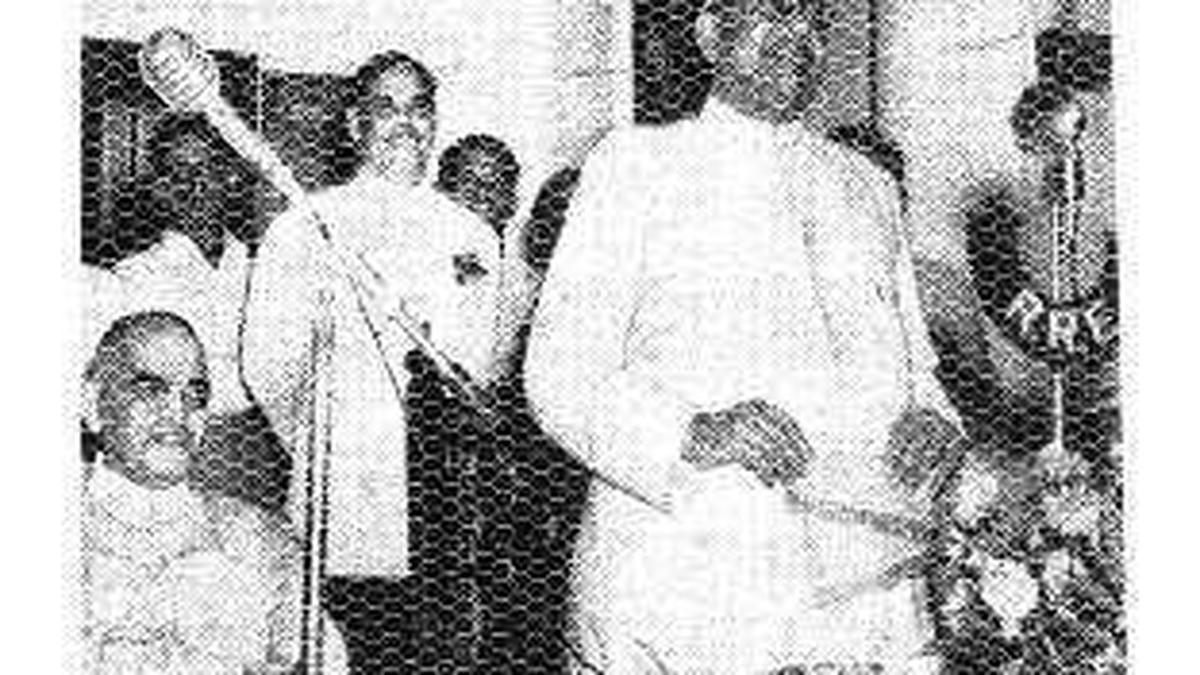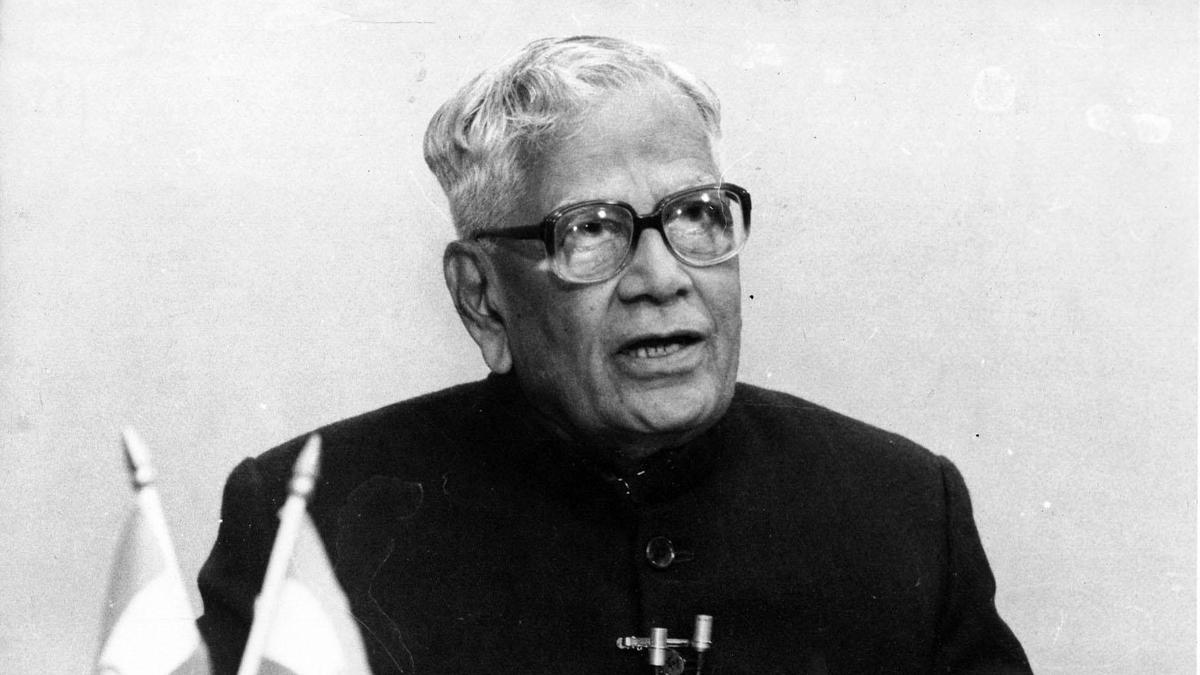
R. Venkataraman in January 1992.
| Photo Credit: The Hindu Archives
Well before the Supreme Court in August 2016 held, in the context of Uttar Pradesh, that former Chief Ministers did not have the right to occupy government accommodation for lifetime, Tamil Nadu had been having a healthy tradition of Chief Ministers using their private residences, while being in power or out of power.In the last 10 years, only O. Panneerselvam and Edappadi K. Palaniswami, as Chief Ministers, had used the government-provided accommodation as they did not have houses of their own in Chennai. Mr. Palaniswami, after being an occupant of the government accommodation for 15 years (as Minister, CM and Leader of Opposition), recently shifted his residence to a private property in Royapettah, Chennai. Never has there been any controversy surrounding former Chief Ministers for accommodation.This is in stark contrast to Bihar where a row has arisen in the wake of a second notice issued by the Bihar Building Construction Department (BCD) to former Chief Minister Rabri Devi for vacating her present government accommodation – 10, Circular Road bungalow — in Patna. In Uttar Pradesh, only about eight years ago, due to the persistence of the Supreme Court, former Chief Ministers had left their bungalows provided by the State government for their use when they were in power.The Tamil Nadu episodeHowever, Tamil Nadu experienced a controversy 34 years ago over the State government’s decision to allot a bungalow on Greenways Road to former President R. Venkataraman, who had decided to return to Chennai after laying down office on July 25, 1992.No row had arisen when one of Venkataraman’s predecessors, S. Radhakrishnan, had also moved back to Chennai after relinquishing the office in May 1967. He spent the next eight years, till his death in April 1975, at his private residence on Edward Elliot Road (now named after him) in Mylapore.Seventeen years later, life in Tamil Nadu was entirely different. The State was then experiencing effects of the ongoing civil war in Sri Lanka including the assassination of former Prime Minister Rajiv Gandhi at Sriperumpudur in May 1991. Also, Venkataraman, as the President, had given his stamp of approval to dismiss the DMK regime and clamp President’s rule in the State four months earlier on the ground that there was “collusion” between the government and the Liberation Tigers of Tamil Eelam (LTTE), not proscribed then. The then Chief Minister Jayalalithaa of the AIADMK was under the Z-plus category security and National Security Guard (NSG) cover. It was against this backdrop that a team of security experts from the Centre had zeroed in on the bungalow, ‘Podhigai’, identified for the former President.The day before Venkataraman came back to Chennai, about 200 members of the Dravidar Kazhagam (DK), including the party’s headquarters secretary and former AIADMK Minister Anoor Jagadeesan, were taken into custody when they tried to defy prohibitory orders and take out a procession to protest against the move to allot a house to him in the city, according to a report published in The Hindu on July 25, 1992. They were released subsequently.Subramanian Swamy, who was then the president of the Janata Party, had also criticised the move to allot a house to Venkataraman as he contended that several former Presidents lived in their own houses after demitting their office.A few days later, the Madras High Court dismissed at the admission stage a writ petition challenging the allotment of a rent-free house. Justice S. Govindasamy said a duty and responsibility was cast upon the State government for the safety and security of the former President, especially when there was a breach of tranquillity in the southern region in the recent past. It was for the government to decide the type of accommodation to be provided to Venkataraman. Such aspects could not be considered by the court, stated another report of this newspaper published on July 30.The petitioner-DK leader, K. Veeramani, contended that Venkataraman had two houses in the city. The State government had spent ₹75 lakh to provide facilities in his Kotturpuram house for him to stay. But Venkataraman expressed a desire not to reside in that house and had let it out on long lease to a private company. Thereafter, the government spent nearly ₹1 crore to provide the facilities at the Greenways Road residence, Mr. Veeramani argued.In May 1996, the DMK regime was back in office. A couple of months later, sections of the Press had carried reports that Venkataraman had planned to move out of Chennai and settle in New Delhi. However, in the Assembly, the then Public Works Minister Duraimurugan said the government had no information in this regard. But, a breakaway group of the DK had moved the High Court to stall the Union government from allotting a house to the former President in New Delhi. However, this had no impact as Venkataraman had migrated to the country’s capital and it was there that he passed away in January 2009. Published - June 17, 2026 07:00 am IST