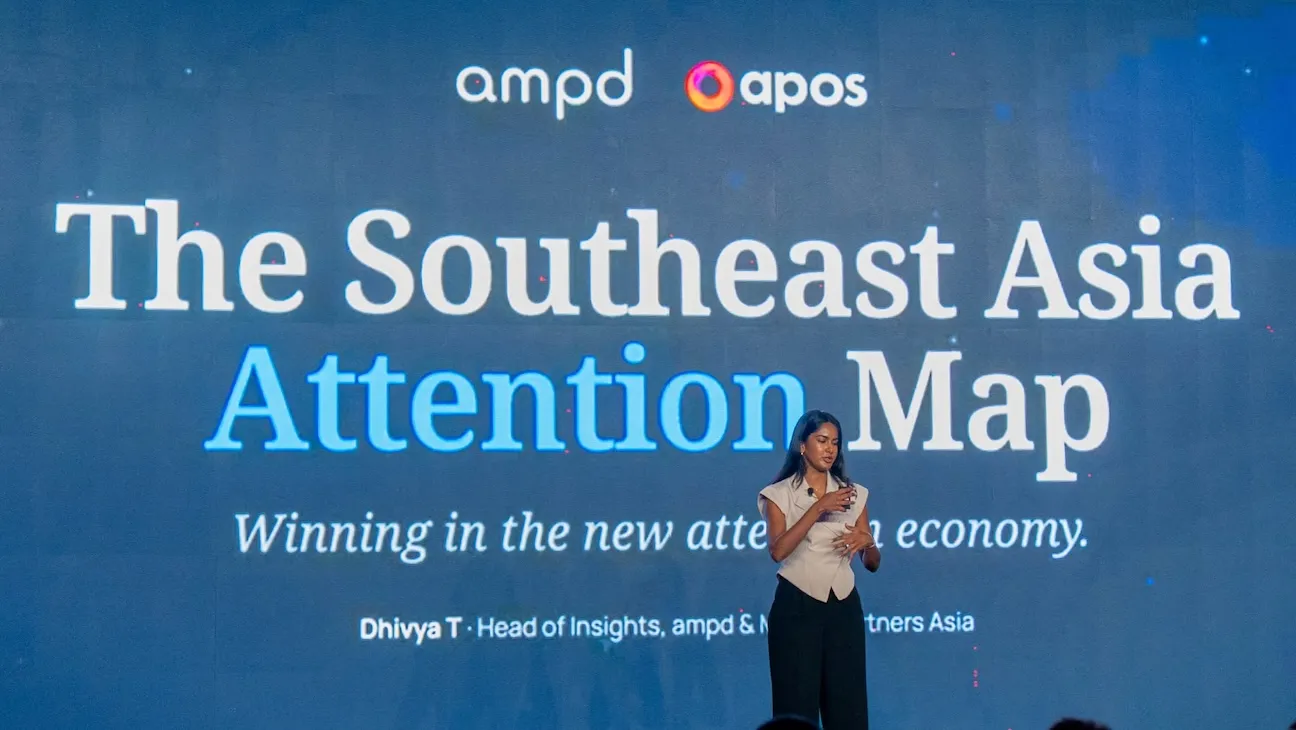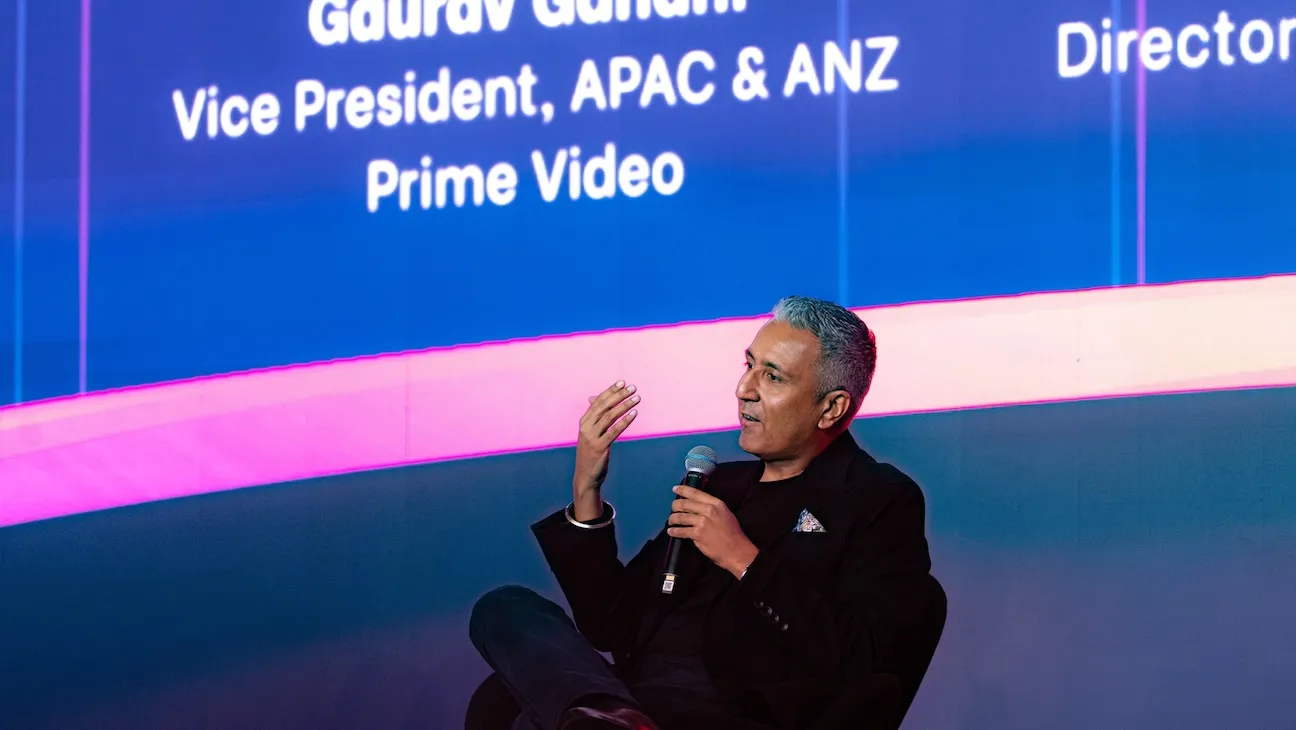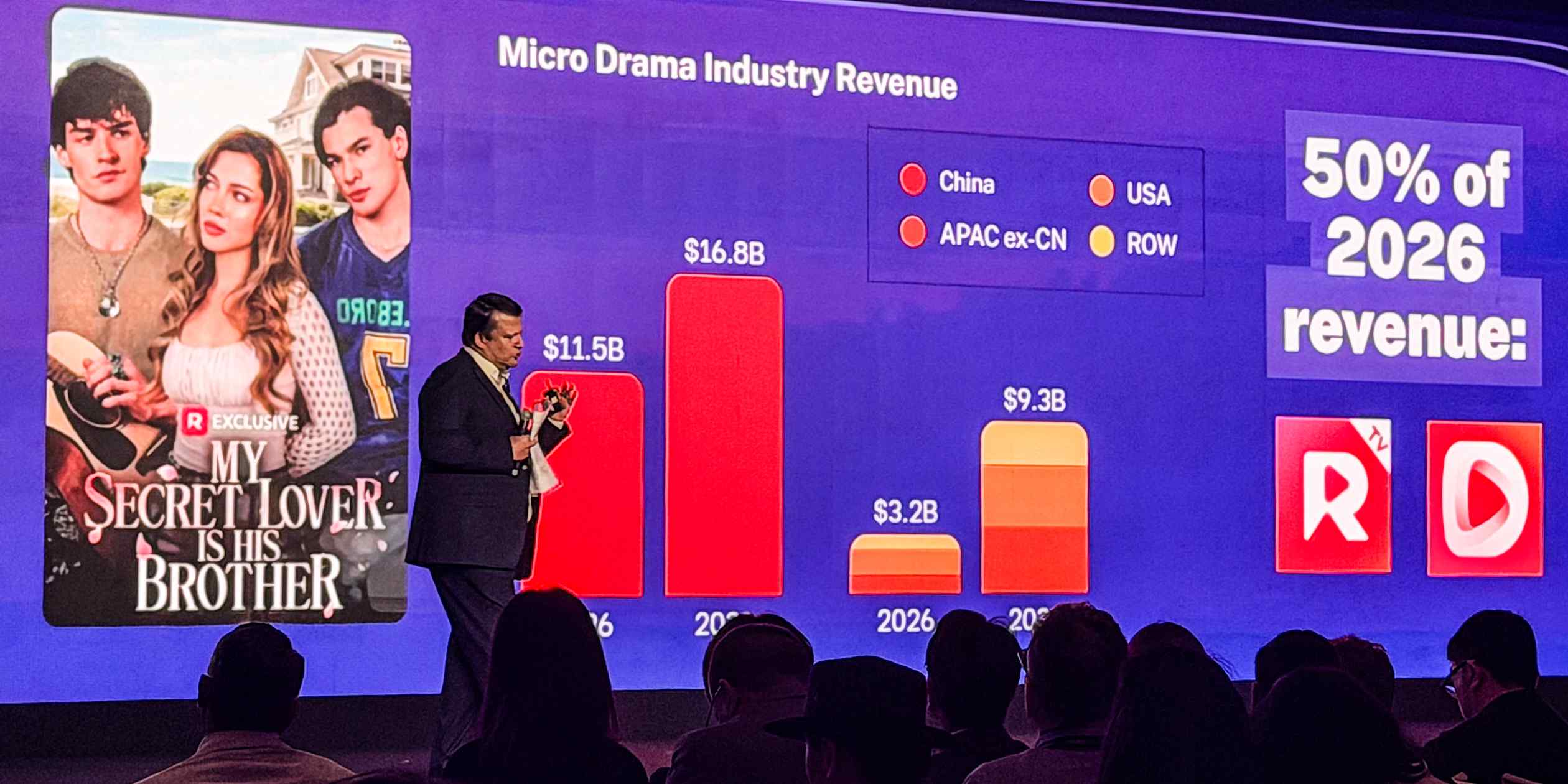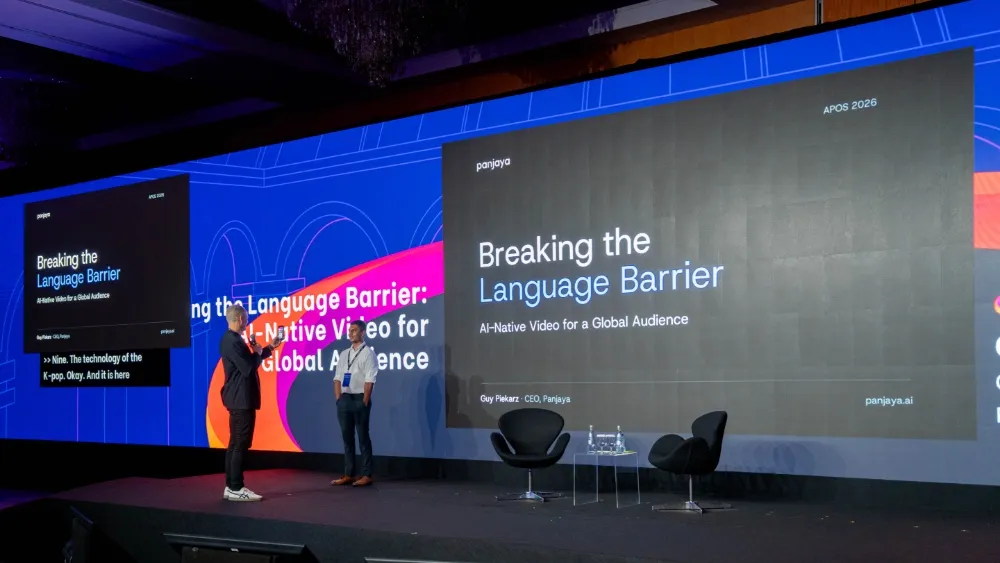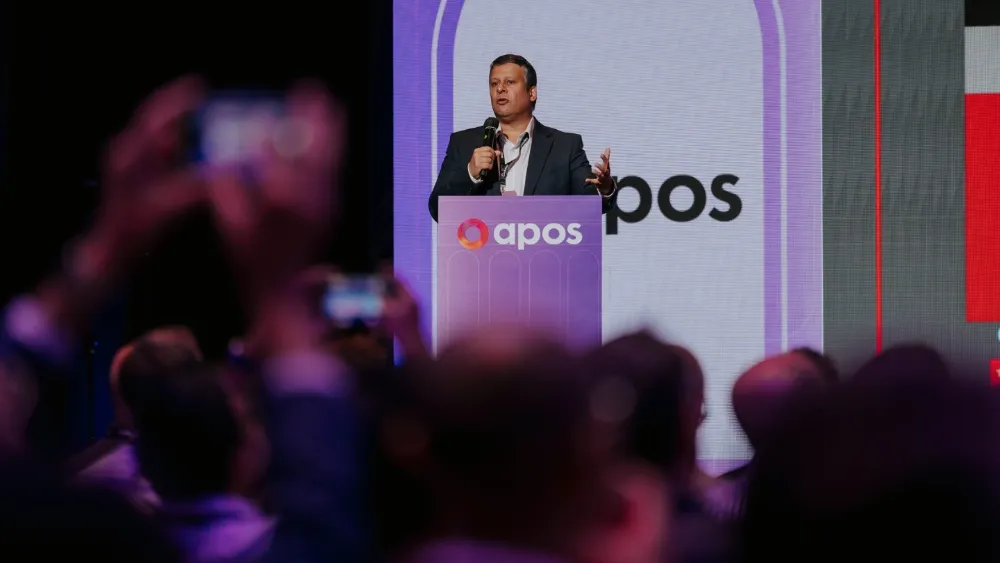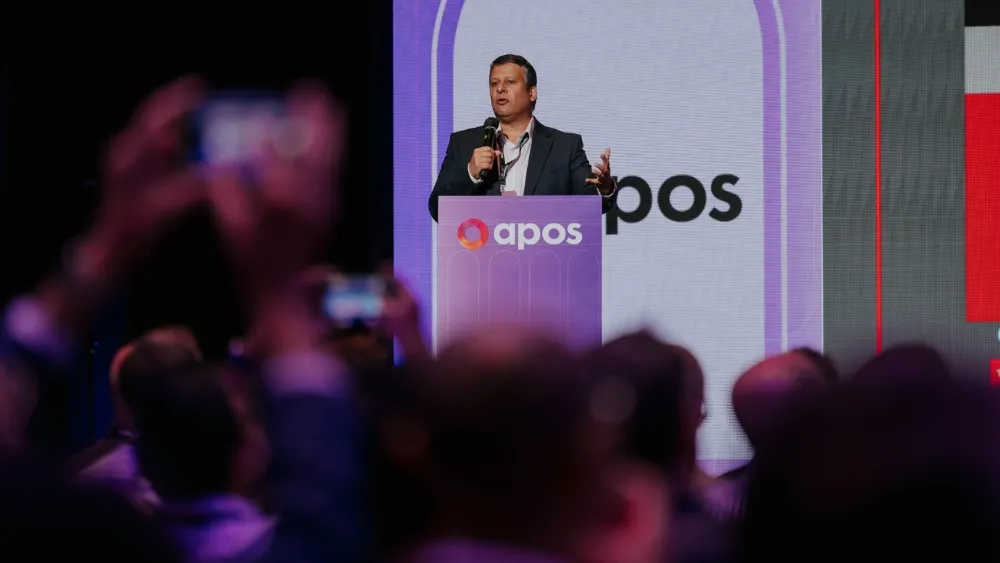
The Asia-Pacific screen economy is projected to reach $179 billion in 2026 and $200 billion by 2031 – but the story behind those numbers is one of structural reallocation rather than headline growth, Media Partners Asia executive director Vivek Couto told the APOS 2026 conference in his opening address Wednesday.
Couto framed the sector’s trajectory around what he called four forces driving a single reset: the scale of the region’s screen base, which he projected at 5.2 billion screens by 2031; the shift in monetization toward retail media and commerce; the convergence of video, social and commerce onto unified platforms; and AI, which he described as resetting the cost, speed and formats of content production.
The central tension running through his presentation was a per-capita gap that remains vast. APAC earns roughly $46 per capita annually against roughly $890 in the U.S. “That gap is the single largest pool of latent value anywhere in global media,” Couto said, “and the whole question for the next five years is who is equipped to close it – because closing it is no longer about adding reach. It is about converting reach into money.”
On subscriptions, Couto said the debate over streaming versus pay-TV is settled. SVOD overtook pay-TV subscriptions as far back as 2022 and is on track to out-subscribe pay-TV by more than five to one by 2031. India is the primary engine of that growth, adding 366 million SVOD subscriptions across the decade – more than the rest of APAC ex-China combined – with the JioHotstar bundle driving a step-change in 2025. JioHotstar surpassed $1 billion in revenue last year and is on track to surpass YouTube in total revenue by year’s end. Bundling, he argued, has moved from a promotional tactic to a structural pillar: the mechanism through which streaming reaches the next hundred million homes across India, Indonesia and Thailand, and through which mature platforms in Australia, Japan and Korea defend their subscriber bases.